Free Daily Podcast Summary
The Epstein Chronicles: Daily Summaries Delivered
by Bobby Capucci
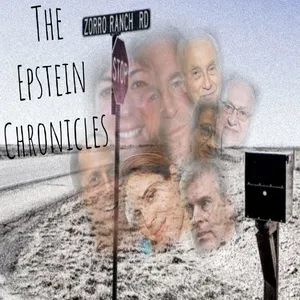
Jeffrey Epstein was a multi millionaire who had political and business ties to some of the most rich and powerful people in the world. From businessmen to politicians at the highest levels, Epstein broke bread with them all. Yet for years the Legacy media and the rest of high society looked the other way and ignored his behavior as multiple women came forward with allegations of abuse. Even after he was convicted and subsequently received a sweetheart deal those same so called elites welcomed him back with open arms. Now after his death and the arrest of Maxwell, the real story is starting to come together and the curtain has begun to be drawn back and what it has revealed is truly disturbing. From Princes to Ex Presidents, the cast of scoundrels in this play spans continents and political affiliations leaving us with a transcontinental criminal conspiracy possibly unlike any we have ever seen before. In this podcast we will e
Latest Episodes
The most recent episodes — sign up to get AI-powered summaries of each one.
- Today47 min
That Time A Journalist From Mother Jones Called Everyone In Epstein's Black Book
In 2020, journalist Leland Nally undertook one of the most exhaustive attempts to penetrate Jeffrey Epstein’s social network by calling every person listed in Epstein’s 97-page “little black book.” Nally made close to 2,000 phone calls, reaching out to billionaires, bankers, CEOs, scientists, celebrities, models, politicians and people who had been personally close to Epstein and Ghislaine Maxwell. What stood out was how many people were surprised that anyone had contacted them at all. Some spoke on the record, others only anonymously, and many tried to minimize or distance themselves from their connections to Epstein. Nally found that the book was not simply a roster of elite associates; it also contained assistants, employees, family members, service workers, household contacts and people whose inclusion may have reflected nothing more than a passing interaction. His reporting therefore showed both the extraordinary breadth of Epstein’s network and the danger of treating every name in the book as evidence of wrongdoing.The larger significance of Nally’s project was what those calls revealed about how Epstein moved through powerful social circles for years with remarkably little scrutiny. Again and again, people described limited relationships, forgotten encounters or social connections they insisted had been insignificant, while others provided glimpses into Epstein’s personality, his obsession with status and intelligence, and the way Maxwell helped connect him to broader elite networks. Nally also came away struck by how little systematic follow-up had been done with many of the people whose names appeared in one of the most famous pieces of evidence associated with Epstein. The result was less a discovery of one definitive “client list” than a portrait of an enormous, messy and deeply interconnected contact network in which Epstein accumulated names, numbers and access across finance, academia, entertainment, politics and high society.to contact me:bobbycapucci@protonmail.comBecome a supporter of this podcast: https://www.spreaker.com/podcast/the-epstein-chronicles--5003294/support.
- Today12 min
Mother Jones Hits The BOP With A FOIA Lawsuit Due To The Ghislaine Maxwell Transfer
Mother Jones filed a FOIA lawsuit against the Bureau of Prisons after the BOP stonewalled basic questions surrounding Ghislaine Maxwell’s abrupt and unusually opaque transfer following her conviction. The magazine sought records explaining why Maxwell was moved, who authorized it, what security assessments were conducted, and whether any deviations from standard BOP transfer protocols occurred. Instead of transparency, the BOP responded with heavy redactions, delays, and categorical refusals, even though Maxwell is one of the most high-profile federal inmates in modern history and her custody directly implicates public confidence in the system after Jeffrey Epstein’s death. Mother Jones argued that the BOP’s secrecy was not about safety, but about insulating itself from scrutiny after years of documented failures, incompetence, and credibility collapse tied to Epstein and his network.The lawsuit highlights how the BOP reflexively treats accountability as a threat rather than an obligation, especially when the case touches Epstein-related fallout. Mother Jones made clear that this was not a fishing expedition, but a narrow request aimed at understanding whether Maxwell received preferential treatment, whether political or institutional pressure influenced her placement, and whether the BOP was quietly rewriting its own narrative to avoid further embarrassment. The BOP’s resistance only reinforced suspicions, because routine transfers are normally documented, logged, and explainable. By forcing the issue into federal court, the lawsuit underscored a broader pattern in the Epstein-Maxwell saga: when transparency is most warranted, federal agencies choose silence, obstruction, and delay, daring the public to forget rather than proving they have nothing to hide.to contact me:bobbycapucci@protonmail.comsource:Mother Jones Sues the Bureau of Prisons for Ghislaine Maxwell Records – Mother JonesBecome a supporter of this podcast: https://www.spreaker.com/podcast/the-epstein-chronicles--5003294/support.
- Today13 min
Tyler Robinson Preliminary Hearing Transcripts (Day 3 Part 7) (10/7/26)
Day three of Tyler Robinson’s preliminary hearing focused largely on what happened after Robinson turned himself in following the killing of Charlie Kirk. Utah State Bureau of Investigation agent Brian Davis testified that he was sent to St. George after authorities learned that a man was preparing to surrender in connection with the shooting. Davis said Robinson arrived at the Washington County Sheriff’s Office with his parents and family friend Mike Mitchell, was formally arrested in the early morning hours of September 12, and later had his phone, clothing, fingerprints and DNA collected pursuant to warrants and booking procedures. Davis also testified about searches of Robinson’s parents’ home and the residence Robinson shared with Lance Twiggs. The hearing additionally touched on a live .223 round found on the roof of a different campus building, though testimony indicated that location did not have a clear line of sight to where Kirk was shot.A major portion of the shortened hearing was consumed by a fight over whether prosecutors could publicly play a recorded interview with Twiggs, Robinson’s roommate and romantic partner. Davis testified that Twiggs had been interviewed twice and had been granted limited use immunity for his statements. Prosecutors wanted to introduce the later recorded interview with relatively few restrictions, while Robinson’s attorneys argued that large portions should be redacted to protect his right to a fair trial and prevent potentially prejudicial material from being widely circulated before a jury was ever selected. The Kirk family’s attorney argued in favor of greater public access, while Judge Tony Graf said he had to balance transparency against Robinson’s constitutional rights. Graf ultimately directed prosecutors to return with an edited version of the video, leaving the dispute to carry over into the next day of the preliminary hearing.to contact me:bobbycapucci@protonmail.comBecome a supporter of this podcast: https://www.spreaker.com/podcast/the-epstein-chronicles--5003294/support.
- Today15 min
The Cornell 7: Jane Doe And Her Allegations Against Chi Phi And Cornell University (Part 3) (10/7/26)
A Jane Doe plaintiff sued Cornell University, the Chi Phi fraternity and its national organizations, Tri Delta and its related entities, Moonies Bar & Nightclub, seven Cornell students and several other defendants over an alleged sexual assault at the Chi Phi house in October 2024. According to the complaint, Doe was a 20-year-old Cornell student and Tri Delta member who became heavily intoxicated during a sorority event, was served alcohol at Moonies despite being marked as under 21, and later went to the Chi Phi house. She alleges that fraternity members gave her additional alcohol, marijuana and what they described as ketamine before multiple men sexually assaulted her while she was too intoxicated and drugged to consent. The complaint alleges that one fraternity member posted a message to a Chi Phi Snapchat group inviting others upstairs while the assault was underway, after which additional members entered the room. Doe says the assaults continued for hours, ending shortly before 6 a.m., and that she later reported what happened to Cornell police. Cornell subsequently suspended the fraternity and several students, opened a Title IX investigation, and publicly described the allegations as involving drug abuse and sexual violence; the complaint says the matter also remained under investigation by Ithaca police.The lawsuit goes beyond the individual students and argues that Cornell, Chi Phi, Tri Delta and other institutional defendants failed to protect Doe despite years of warnings about sexual assault, drugging and alcohol-related misconduct within Greek life. The complaint points to prior reports of sexual assaults and druggings connected to Cornell fraternities, campus reform efforts dating back years and policies that allegedly demonstrated the university and Greek organizations understood the risks. Doe accuses the institutional defendants of negligence, negligent supervision and retention, breach of contract and other failures, while asserting sexual assault, sexual battery and emotional-distress claims against the individual students. She also brings claims under New York’s Human Rights Law, education law and Dram Shop Act, alleging that Moonies unlawfully served her alcohol despite clear indications that she was underage and visibly intoxicated. The suit seeks compensatory and punitive damages, attorneys’ fees, interest and a jury trial, while making clear that the allegations remain civil claims that the defendants are entitled to contest in court.to contact me:bobbycapucci@protonmail.comsource:doe-cornell-new-york-supreme.pdfBecome a supporter of this podcast: https://www.spreaker.com/podcast/the-epstein-chronicles--5003294/support.
- Today11 min
Darren Indyke And His Epstein Related Congressional Transcript (Part 4) (10/8/26)
Darren Indyke’s March 19, 2026 deposition before the House Oversight Committee offered one of the clearest looks yet at how Jeffrey Epstein’s longtime lawyer described his own role inside Epstein’s operation. Indyke, who represented Epstein for roughly two decades, participated at least loosely in his Florida defense team, assisted with his sex-offender registration litigation, handled real-estate and corporate matters, worked with Epstein-connected foundations and trusts, and later became co-executor of his estate. Yet Indyke repeatedly insisted that he had no knowledge of Epstein’s sexual abuse, telling investigators Epstein maintained a professional life that was separate from the private life in which the abuse occurred. That denial stood at the center of the testimony because congressional investigators confronted him with evidence of just how deeply involved he had been in Epstein’s financial and legal machinery. Indyke acknowledged making repeated $7,500 cash withdrawals from Epstein’s accounts, with committee questioning putting the total at more than $725,000 over roughly four years; Indyke said the money went to Epstein’s accounting office for ordinary household expenses and that he had no reason to believe it was being used improperly. He also confirmed that Epstein’s trust contemplated a $50 million bequest to him, although Indyke stressed that the payment depended on money remaining after the estate’s obligations were satisfied.The questioning also drilled into areas that have become increasingly important to understanding Epstein’s infrastructure. Indyke acknowledged familiarity with the Florida Science Foundation, explaining that the name was associated with the older COUQ Foundation and confirming that a separate Florida Science Foundation entity had been incorporated in November 2007, after Epstein’s arrest and while his federal plea negotiations were underway. He also acknowledged that Epstein wanted a scientific organization through which he could perform work release, although Indyke said he did not know why the separate entity had originally been created. Investigators questioned him about alleged sham marriages, immigration matters, Epstein’s trusts, his relationship with Ghislaine Maxwell, his connections to Les and Abigail Wexner and the financial transactions he handled on Epstein’s behalf. Throughout the nearly seven-hour deposition, Indyke’s basic position remained remarkably consistent: he had been intimately involved with Epstein professionally, legally and financially, but claimed that he had not seen, participated in or understood the criminal conduct occurring around him. That tension between the breadth of Indyke’s responsibilities and the narrowness of what he claimed to know was ultimately the defining feature of his congressional testimony.to contact me:bobbycapucci@protonmail.comBecome a supporter of this podcast: https://www.spreaker.com/podcast/the-epstein-chronicles--5003294/support.
- Today11 min
Darren Indyke And His Epstein Related Congressional Transcript (Part 3) (10/8/26)
Darren Indyke’s March 19, 2026 deposition before the House Oversight Committee offered one of the clearest looks yet at how Jeffrey Epstein’s longtime lawyer described his own role inside Epstein’s operation. Indyke, who represented Epstein for roughly two decades, participated at least loosely in his Florida defense team, assisted with his sex-offender registration litigation, handled real-estate and corporate matters, worked with Epstein-connected foundations and trusts, and later became co-executor of his estate. Yet Indyke repeatedly insisted that he had no knowledge of Epstein’s sexual abuse, telling investigators Epstein maintained a professional life that was separate from the private life in which the abuse occurred. That denial stood at the center of the testimony because congressional investigators confronted him with evidence of just how deeply involved he had been in Epstein’s financial and legal machinery. Indyke acknowledged making repeated $7,500 cash withdrawals from Epstein’s accounts, with committee questioning putting the total at more than $725,000 over roughly four years; Indyke said the money went to Epstein’s accounting office for ordinary household expenses and that he had no reason to believe it was being used improperly. He also confirmed that Epstein’s trust contemplated a $50 million bequest to him, although Indyke stressed that the payment depended on money remaining after the estate’s obligations were satisfied.The questioning also drilled into areas that have become increasingly important to understanding Epstein’s infrastructure. Indyke acknowledged familiarity with the Florida Science Foundation, explaining that the name was associated with the older COUQ Foundation and confirming that a separate Florida Science Foundation entity had been incorporated in November 2007, after Epstein’s arrest and while his federal plea negotiations were underway. He also acknowledged that Epstein wanted a scientific organization through which he could perform work release, although Indyke said he did not know why the separate entity had originally been created. Investigators questioned him about alleged sham marriages, immigration matters, Epstein’s trusts, his relationship with Ghislaine Maxwell, his connections to Les and Abigail Wexner and the financial transactions he handled on Epstein’s behalf. Throughout the nearly seven-hour deposition, Indyke’s basic position remained remarkably consistent: he had been intimately involved with Epstein professionally, legally and financially, but claimed that he had not seen, participated in or understood the criminal conduct occurring around him. That tension between the breadth of Indyke’s responsibilities and the narrowness of what he claimed to know was ultimately the defining feature of his congressional testimony.to contact me:bobbycapucci@protonmail.comBecome a supporter of this podcast: https://www.spreaker.com/podcast/the-epstein-chronicles--5003294/support.
- Today10 min
The Epstein Death Question Revisited With Dr. Michael Freeman’s New Findings (10/8/26)
Dr. Michael Freeman, a professor of forensic medicine and editor-in-chief of the Journal of Forensic and Legal Medicine, concluded after reviewing Jeffrey Epstein’s full autopsy materials that the injuries documented on Epstein’s body were far more consistent with homicide than suicide. Freeman was given access to the medical examiner’s file and unreleased autopsy photographs by Epstein’s brother, Mark, and conducted a biomechanical analysis of the ligature injuries. He focused on the pattern of bruising and cuts across Epstein’s neck, face and shoulder, as well as the angle of the ligature furrow, arguing that the combination suggested movement and struggle rather than a straightforward hanging. Freeman said the injuries were so atypical for suicide that, if Epstein had actually killed himself in the manner officially described, it would represent an extraordinarily unusual hanging.Freeman also identified major problems with the original forensic investigation, including the absence of photographs showing Epstein’s body as it was found in the cell and the failure to preserve and properly examine the ligature itself. Those omissions made it impossible to fully reconstruct the mechanics of the hanging after the fact. Freeman’s analysis was not based simply on the well-known fractures in Epstein’s neck, but on the total injury pattern and the amount, direction and location of force that would have been required to produce it. His position was that the physical evidence pointed toward another person applying force to Epstein’s neck during a struggle, rather than Epstein creating the injuries through partial suspension from his bunk. Freeman was preparing to publicly present the biomechanical findings and release the underlying autopsy material so that the homicide-versus-suicide question could be evaluated on the forensic evidence itself.to contact me:bobbycapucci@protonmail.comsource:'Jeffrey Epstein's death was more likely a struggle, not suicide - this is the evidence' | News US | Metro NewsBecome a supporter of this podcast: https://www.spreaker.com/podcast/the-epstein-chronicles--5003294/support.
- Today16 min
Leon Botstein Resigns From Bard as Epstein Scrutiny Intensifies (10/8/26)
Leon Botstein resigned from all of his remaining positions at Bard College after House Judiciary Committee Democrats called for a criminal investigation into his relationship with Jeffrey Epstein. The latest scrutiny centered on a 2014 email that lawmakers Jamie Raskin and Madeleine Dean said was sent from Botstein’s Bard email account to Epstein concerning a young foreign model and aspiring singer whom they said Epstein was grooming and trafficking. According to the lawmakers, Epstein had used his relationship with Botstein to convince the woman that he could help advance her musical career, and she was sent to meet Botstein in May 2014. The email attributed to Botstein asked Epstein whether the woman was “for me, or are you keeping her for yourself.” Botstein denied authoring or sending the message and rejected any suggestion that he knew about or participated in Epstein’s criminal conduct. Bard’s board accepted his resignation unanimously and said it was conducting a full review while cooperating with the congressional investigation.The controversy added to months of damaging revelations about Botstein’s ties to Epstein. An independent WilmerHale review commissioned by Bard previously found that Botstein had made about 25 visits to Epstein’s Manhattan townhouse, spent two days on Little St. James, and hosted Epstein twice at Bard, with some visits involving women later identified as Epstein victims. The review concluded that the frequency and nature of the interactions could have alerted Botstein to the possibility that he and Bard were helping facilitate Epstein’s abuse. Congressional investigators also said they had heard from more than a dozen whistleblowers alleging decades of unpunished sexual misconduct at Bard, further widening the inquiry beyond Botstein’s Epstein relationship alone. Botstein, who had led Bard for roughly 50 years and stepped down as president earlier in 2026, said he was resigning from his remaining roles to prevent the allegations from damaging the institution, while maintaining that the claims against him were false.to contact me:bobbycapucci@protonmail.comsource:Leon Botstein resigns from Bard roles as key Democrat demands investigation into Epstein links | Jeffrey Epstein | The GuardianBecome a supporter of this podcast: https://www.spreaker.com/podcast/the-epstein-chronicles--5003294/support.
Get The Epstein Chronicles summaries in your inbox
Free AI-powered daily recaps. Key takeaways, quotes, and mentions — in a 5-minute read.
Get Free Summaries →Free forever for up to 3 podcasts. No credit card required.
You Might Also Like
Listeners also like.

The Tara Palmeri Show
A political journalist reveals behind-the-scenes dynamics and unfiltered realities of power in Washington and beyond.

Sidebar with Katie Phang
Legal and political analysis from a former prosecutor cutting through spin to deliver factual clarity on major headlines.

True Sunlight
Journalists investigate true crime and systemic corruption, focusing on victims and accountability with rigorous, empathetic reporting.

MK True Crime
Covers high-profile trials, true crime cases, and legal analysis with expert hosts and insider perspectives.

The Megyn Kelly Show
Provocative conversations with influential figures in politics, law, and culture, featuring candid and fearless dialogue.

Julian Dorey Podcast
Discusses wild stories, true crime, geopolitics, history, and technology with diverse guests from New York City.
Matthew Cox | Inside True Crime Podcast
A former con man shares unique and bizarre true crime stories from his time in prison and beyond.

Legal AF by MeidasTouch
A legal analysis podcast examining high-profile cases and political developments through expert commentary from seasoned attorneys.

The Dropout
An investigative journey into the rise and fall of Elizabeth Holmes and her fraudulent biotech company, Theranos.

Drop Dead Serious With Ashleigh Banfield
A veteran journalist explores true crime cases with a personal perspective and investigative depth.

Juicy Crimes with Heather McDonald
Explores sensational true crime cases with a focus on greed, deception, and celebrity, blending humor and insight with guest experts.

The Counsel
A former prosecutor analyzes high-profile legal cases and the intersection of law, politics, and current events.
About The Epstein Chronicles
Jeffrey Epstein was a multi millionaire who had political and business ties to some of the most rich and powerful people in the world. From businessmen to politicians at the highest levels, Epstein broke bread with them all. Yet for years the Legacy media and the rest of high society looked the other way and ignored his behavior as multiple women came forward with allegations of abuse. Even after he was convicted and subsequently received a sweetheart deal those same so called elites welcomed him back with open arms. Now after his death and the arrest of Maxwell, the real story is starting to come together and the curtain has begun to be drawn back and what it has revealed is truly disturbing. From Princes to Ex Presidents, the cast of scoundrels in this play spans continents and political affiliations leaving us with a transcontinental criminal conspiracy possibly unlike any we have ever seen before. In this podcast we will e
Customized Recaps
AI-powered recaps with compact key takeaways, quotes, and insights.
Straight to Your Inbox
Get key takeaways from The Epstein Chronicles in a 5-minute read.
Save Hours Every Week
Stay current on your favorite podcasts without falling behind.
Frequently Asked Questions
What is Podzilla's The Epstein Chronicles daily summary?
It's a free AI-powered email that summarizes new episodes of The Epstein Chronicles as soon as they're published. You get the key takeaways, notable quotes, and links & mentions — all in a quick read.
How does the The Epstein Chronicles podcast summary work?
When a new episode drops, our AI transcribes and analyzes it, then generates a personalized summary tailored to your interests and profession. It's delivered to your inbox every morning.
Is this an official The Epstein Chronicles product?
No. Podzilla is an independent service that summarizes publicly available podcast content. We're not affiliated with or endorsed by Bobby Capucci.
Can I get summaries of other podcasts too?
Absolutely! The free plan covers up to 3 podcasts. Upgrade to Pro for 15, or Premium for 50. Browse our full catalog at /podcasts.
How often does The Epstein Chronicles release new episodes?
The Epstein Chronicles publishes daily. Our AI generates a summary within hours of each new episode.
What topics does The Epstein Chronicles cover?
The Epstein Chronicles covers topics including News, Commentary, Daily News. Our AI identifies the specific themes in each episode and highlights what matters most to you.
Start getting The Epstein Chronicles summaries tomorrow morning.
Free forever for up to 3 podcasts. No credit card required.
Free forever for up to 3 podcasts. No credit card required.