Free Daily Podcast Summary
The Great Women Artists: Daily Summaries Delivered
by Katy Hessel
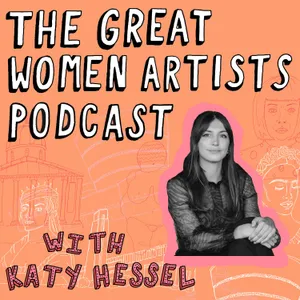
Created off the back of @thegreatwomenartists Instagram, this podcast is all about celebrating women artists. Presented by art historian and curator, Katy Hessel, this podcast interviews artists on their career, or curators, writers, or general art lovers, on the female artist who means the most to them.
Latest Episodes
The most recent episodes — sign up to get AI-powered summaries of each one.
- 2 days ago44 min
Joan Snyder
TODAY on the GWA Podcast is the esteemed painter Joan Snyder. Hailed for her large-scale gestural canvases that pulsate with colour, line and text, and are often layered with, buried in, or imploded with images of flowers, faces, or bodies, Snyder's all-encompassing works are nothing but electric. Sometimes large scale, with brushstrokes that populate the canvas like gemstones or musical scores with a whole range of keys: look at Snyder's work for a while, and it's like whole worlds emerge. Simultaneously soft but violent, beautiful yet aggressive, her works can evoke every season of emotion, just as she once wrote in her journal in 1972: "The strokes in my painting speak of my life and experiences. They are sometimes soft, they sometimes laugh, and are often violent. They bleed and cry. I speak of love and anguish, of fear, and mostly of hope." Born in 1940, Snyder came to art not straight away, but by chance during her studies at Rutgers University, when she was studying sociology in preparation for a career in social work. But it was under the mentorship of Billy Prichard that she pivoted to art, showing just how important teachers can be. Today we meet Joan in her Brooklyn studio, where she remains one of the legendary artists of her time. A recipient of a MacArthur Fellowship and an American Academy of Arts and Letters Award, and in museum collections all over the world, Snyder, at 85 – nearly 86 – is painting more than ever and this summer, will take to Paris for her upcoming show, Earthsongs at Thaddaeus Ropac Paris, and I cannot wait to find out more. Joan Snyder: Earthsongs opens 6 June at Thaddeus Ropac Paris https://ropac.net/exhibitions/796-joan-snyder-earthsongs/ THIS EPISODE IS GENEROUSLY SUPPORTED BY THE LEVETT COLLECTION: www.famm.com/en/ www.instagram.com/famm_mougins // www.merrellpublishers.com/9781858947037 Follow us: Katy Hessel: @thegreatwomenartists / @katy.hessel Sound editing by Tory Pope Co-produced with Molly LaFosse Music by Ben Wetherfield
- May 5, 202642 min
Venice Biennale Bonus Episode: Lubaina Himid
TODAY on the GWA Podcast: a very special bonus episode with Lubaina Himid, on her British Council Commission for the British Pavilion at Venice Biennale 2026, "Presenting History: Testing Translation". Returning to the podcast for the second time, Lubaina Himid is an acclaimed Lancashire-based artist working in paintings, sculpture, installations, archives, and more, whose career spans from the 1980s – when she was established as one of the leaders and trailblazers of Britain's Black Arts movement – to the 2020s, where she uses her art and her training in theatre to create all-encompassing works that tackle silenced histories. While you can go to episode 33 to hear a deep dive into Himid's life and work, today we are focusing on her pavilion for Great Britain at the 61st Venice Biennale! An event that happens every two years, thought of as the most important space to showcase art and artists, the Venice Biennale revolves around a central exhibition, this year curated by the late Koyo Kouoh, titled "In Minor Keys", and is often a signifier to define not just what is happening in the world, but how we can understand it through art. The rest of the Biennale is made up of pavilions – think of it like the Olympics of art, whereby countries have exhibition spaces, nominating an artist to stage a show to compete for the gold medal equivalent, The Golden Lion. For the British Pavilion this year Himid will showcase large multi-panel paintings drenched in her signature vibrant palette. In conversation with the British Pavilion's neoclassical architecture, the installation will present Britain as welcoming and airy, brimming with potential, albeit with an underlying sense of unease as the texts, images, and soundscape (made in collaboration with artist Magda Stawarska) subtly introduce tension. And I can't wait to find out more. Lubaina Himid's British Council Commission for the British Pavilion at the Venice Biennale will run from the 9th of May to the 22nd of November, 2026, and is curated by Ese Onojeruo.
- Apr 29, 202645 min
Briony Fer on Sophie Taeuber-Arp
TODAY on the GWA Podcast: esteemed art historian Briony Fer on the avant-garde icon, Sophie Taeuber-Arp. The Professor of History of Art at University College London and a Fellow of the British Academy, Briony Fer is one of the leading art historians in the world. Writing and publishing extensively on modern and contemporary art, specialising in the history of abstraction in the 20th century, Fer has curated monumental exhibitions on artists such as Anni Albers at the Tate Modern, Louise Bourgeois at the National Museum, Oslo, Eva Hesse at the Fruitmarket, Mel Bochner at Whitechapel, and more But the reason we are speaking with Fer today is because she has also just curated an exhibition “Sophie Taeuber-Arp: The Rule of Curves” at Hauser & Wirth Paris, and published a stunning book on the great artist, dancer, performer, puppet maker, bag weaver, teacher, stained-glass maker, sculptor, architect, and so much more, Sophie Taeuber-Arp… Born in Switzerland in 1889, Taeuber-Arp is famously associated with the Dada movement, a group of artists who formed post-devastation of World War I to make sense of a nonsensical world. Performing dance routines set to Hugo Ball poetry and turning to her geometric abstractions, full of explosions of colour, that can look equally mechanical as they are made with a human hand – as Fer writes, "diagrammatic and decorative” – Taebuer-Arp was at the forefront of modernism, conjuring new ways of working with form and colour, and exploring – and twisting – the grid, the icon of modern art, for the modern world - and I can’t wait to find out more. The book: https://shop.hauserwirth.com/products/sophie-taeuber-arp-la-regle-des-courbes-the-rule-of-curves THIS EPISODE IS GENEROUSLY SUPPORTED BY THE LEVETT COLLECTION: www.famm.com/en/ www.instagram.com/famm_mougins // www.merrellpublishers.com/9781858947037 Follow us: Katy Hessel: @thegreatwomenartists / @katy.hessel Sound editing by Mikaela Carmichael Music by Ben Wetherfield
- Apr 22, 202638 min
Deborah Levy on Gertrude Stein
TODAY on The Great Women Artists podcast is the esteemed writer, Deborah Levy on avant-garde pioneer Gertrude Stein. The author of several novels, including August Blue, Hot Milk and Swimming Home, alongside the critically acclaimed Living Autobiography trilogy (some of my favourite books of all time): Things I Don't Want to Know, The Cost of Living and Real Estate, Deborah Levy is one of the most recognisable and influential writers working today. She has been shortlisted twice each for the Goldsmiths Prize and the Booker Prize, is a fellow of the Royal Society of Literature, and has written for the Royal Shakespeare Company. But the reason why we are speaking with Levy today is because she has just published a new novel, My Year in Paris with Gertrude Stein, which follows a narrator who has travelled to Paris to find out more about Stein, the enigmatic, trailblazing writer and patron; a woman who bolted through the 19th to the 20th century and paved the way for modernism as we know it today, with her daring, experimental writing, from Tender Buttons to The Autobiography of Alice B. Toklas, and her patronage of artists such as Picasso, Cezanne, and Matisse – and I can’t wait to find out more. My Year in Paris with Gertrude Stein https://www.waterstones.com/book/my-year-in-paris-with-gertrude-stein/deborah-levy/2928377373535 THIS EPISODE IS GENEROUSLY SUPPORTED BY THE LEVETT COLLECTION: www.famm.com/en/ www.instagram.com/famm_mougins // www.merrellpublishers.com/9781858947037 Follow us: Katy Hessel: @thegreatwomenartists / @katy.hessel Sound editing by Mikaela Carmichael Music by Ben Wetherfield
- Apr 14, 202650 min
Alyce Mahon on Dorothea Tanning
TODAY on the GWA Podcast, is art historian, Alyce Mahon discussing the great Surrealist, Dorothea Tanning. Born in Illinois in 1910, where she said “nothing happened but the wallpaper”, Tanning immersed herself in gothic literature to escape to other worlds. Travelling to Paris to hunt down the Surrealists, Tanning “entered” or “birthed” herself into art in 1942 with her self-portrait “Birthday”, which sees her bare-breasted and standing in front of slightly ajar doors that seemingly lead to nowhere. Settling in NYC, where she exhibited with Peggy Guggenheim, it was then to the wide-open landscape of Sedona Arizona, where she painted Caspar David Friedrich-like paintings of herself standing before nature – ”asserting the centrality of woman” (as Mahon wrote in her new book). She then returned to postwar France and, switching up her style, moved into a cloud-like and splintered abstractions, before turning to bodily-like soft-sculptures. Although she famously said, "don’t ask me to explain my paintings". Professor of Modern and Contemporary Art and a Fellow of Trinity College at the University of Cambridge, Mahon is one of the leading scholars on Surrealism in the world today. The author of numerous books including Surrealism and the Politics of Eros, 1938-1968 (2005), Eroticism & Art (2005), The Marquis de Sade and the Avant-Garde (2020), Mahon has also curated or advised on exhibitions on the likes of Leonor Fini, the great Argentine-born artist known for her meticulously rendered, proto-punk renaissance-like works, who she discussed with us on episode 48, as well as the Indian-born, once Cornish-based Ithell Colquhoun. Mahon was the curator of the monumental exhibition at Tate Modern in 2018, and now – has just published a brilliant, extensive book: Dorothea Tanning, a Surrealist world – our with Yale UP this month – that charts her life story across the places she lived in America and France and the place she imagined in her art, bringing alive her works, steeping them in history, and introducing us to Tanning’s surreal world – and I can’t wait to find out more. Alyce's book: https://yalebooks.co.uk/book/9780300244601/dorothea-tanning/ –– THIS EPISODE IS GENEROUSLY SUPPORTED BY THE LEVETT COLLECTION: www.famm.com/en/ www.instagram.com/famm_mougins // www.merrellpublishers.com/9781858947037 Follow us: Katy Hessel: @thegreatwomenartists / @katy.hessel Sound editing by Nada Smiljanic Music by Ben Wetherfield
- Apr 7, 202647 min
Sonnet Stanfill on Elsa Schiaparelli
TODAY on the GWA podcast: curator SONNET STANFILL on ELSA SCHIAPARELLI! Sonnet is the Senior Curator of Fashion at the V&A, where she has worked since 1999. Stanfill has curated numerous highly acclaimed exhibitions, such as New York Fashion Now, Ballgowns: British Glamour since 1950, and the landmark The Glamour of Italian Fashion (2014), which traveled to several museums across the US. She has published and lectured widely on various aspects of fashion design and holds an MA in the history of dress. But the reason why we are speaking with her today is because she has just curated the monumental exhibition, Elsa Schiaparelli: Fashion Becomes Art at the V&A, which charts the fearless life and daring work of the artist, designer, surrealist, influencer and general pioneer of who the modern woman was and what she could be. A creator of surrealist wonderlands with her fantastical gowns with floating eyes, lips, and lobsters, woven jackets embellished with astrological symbolism and mirrors inspired by Versailles, plus carrot-shaped buttons with embroidered cauliflowers, Schiaparelli – who also made jewellery and perfumes and wrote extensively – was one of the most inventive people of the 20th century. Born in Rome in 1890, she fled her conservative life for London, New York, and later Paris, where she befriended the surrealists and built a business on a scale hardly any woman had done before. Elsa Schiaparelli: Fashion Becomes Art, V&A South Kensington https://www.vam.ac.uk/exhibitions/schiaparelli?srsltid=AfmBOormAlPprtKeObeDZhw4NDLACOBGb9Z-ApA9ZHIsKAio0A3mDHAZ THIS EPISODE IS GENEROUSLY SUPPORTED BY THE LEVETT COLLECTION: www.famm.com/en/ www.instagram.com/famm_mougins // www.merrellpublishers.com/9781858947037 Follow us: Katy Hessel: @thegreatwomenartists / @katy.hessel Sound editing by Mikaela Carmichael. Music by Ben Wetherfield
- Apr 2, 202653 min
Diane Apostolos-Cappadona on Mary Magdalene
TODAY on the GWA Podcast: the esteemed scholar, author, and art historian DIANE APOSTOLOS-CAPPADONA on MARY MAGDALENE! Professor Emerita of Religious Art & Cultural History and Haub Director of the Catholic Studies Program at Georgetown University, and Distinguished Visiting Scholar in the Art History Program at The George Washington University, Apostolos-Cappadona has written extensively on art history. The author of Mary Magdalene: A Visual History (2023); A Guide to Christian Art (2020); Encyclopedia of Women in Religious Art (1996); Dictionary of Christian Art (1994); and The Spirit and the Vision: The Influence of Christian Romanticism on the Development of 19th-Century American Art (1995), and “In Search of Mary Magdalene: images and traditions” (2002)... Apostolos-Cappadona is one of the leading scholars in the world on religious art and, in particular, the image of Mary Magdalene. So - today - unlike in episodes where we deep-dive into a single artist, we will be taking an approach like we've previously done with Marina Warner on Eve, or Natalie Haynes on Medusa, and deep-diving into one of the most popular yet enigmatic figures in art: Mary Magdalene, who has been documented by artists in paint, sculpture, and more, for the past 16 centuries – and counting… and who seems to be portrayed differently every time. After all, Apostolos-Cappadona has referred to her as the most flexible figure in art. Look at images of her and you’ll see a reader, preacher, follower and witness; crying at the foot of the Cross, washing Christ’s feet or looking up to the heavens – repenting her sins with pearl-like tears – and too often conveniently exposing her chest. Sometimes identified by her jar of ointment or red robe (a contrast to the sanctified Virgin Mary’s blue), she is most popularly known, today, as Christ’s lover or a prostitute, despite no passage in the Bible describing her as such. Yet, the truth is we don’t know who she was, and it seems artists have adopted her in ways that coincide with their needs, and the needs of the time. THIS EPISODE IS GENEROUSLY SUPPORTED BY THE LEVETT COLLECTION: https://www.famm.com/en/ https://www.instagram.com/famm_mougins // https://www.merrellpublishers.com/9781858947037 Follow us: Katy Hessel: @thegreatwomenartists / @katy.hessel Sound editing by Tory Peters and Nada Smiljanic. Music by Ben Wetherfield
- Mar 31, 202643 min
Meryl Tankard on Pina Bausch
TODAY on the GWA Podcast: choreographer Meryl Tankard on her mentor and friend, the legendary dancer and choreographer: PINA BAUSCH (1940-2009). Artist, choreographer, visionary, and trailblazer in bringing dance into the modern world, Pina Bausch – one of the most popular names when it comes to artists' influences – was hailed for her raw, haunting, experimental dances, and all-encompassing productions. Born in 1940 in Germany in the midst of WW2, from an early age Pina took ballet and dance lessons. In the 1950s, a scholarship at Juilliard took her to NYC, a time of great artistic reinvention, and then back to Germany, where she founded Tanztheater Wuppertal and created her groundbreaking choreographies. While the group, at first, faced hostility, the crowd – and the world – soon realized her innovations. On the magic of dancing with Pina Bausch, Meryl told me: "Every time we moved it had an emotion behind it ... that's what really shocked everyone at the beginning, because dance had always hidden the pain, hidden the insecurities; we had beautiful hair and costumes. And Pina went, 'let's forget all that. Let's talk about what you are really feeling'. She choreographed vulnerability. She choreographed all our insecurities, and she put music to it. People were just like, wow, that's me. They could see themselves." I meet with Meryl Tankard on the occasion of her creating a new encounter with Bausch's piece "Kontakthof", with “Kontakthof – Echoes of ‘78”, to be performed at Sadler’s Wells here in London (7–11 April). With nine of the original dancers returning to their roles, the production will integrate projections of archival footage from the original performance, reflecting the passage of time since its creation. And I can't wait to find out more! THIS EPISODE IS GENEROUSLY SUPPORTED BY THE LEVETT COLLECTION: https://www.famm.com/en/ https://www.instagram.com/famm_mougins // https://www.merrellpublishers.com/9781858947037 Follow us: Katy Hessel: @thegreatwomenartists / @katy.hessel Sound editing by Nada Smiljanic Music by Ben Wetherfield "Kontakthof – Echoes of '78" https://www.sadlerswells.com/on-tour/current-productions/kontakthof-echoes-of-78/
About The Great Women Artists
Created off the back of @thegreatwomenartists Instagram, this podcast is all about celebrating women artists. Presented by art historian and curator, Katy Hessel, this podcast interviews artists on their career, or curators, writers, or general art lovers, on the female artist who means the most to them.
Customized Recaps
AI-powered recaps with compact key takeaways, quotes, and insights.
Straight to Your Inbox
Get key takeaways from The Great Women Artists in a 5-minute read.
Save Hours Every Week
Stay current on your favorite podcasts without falling behind.
Frequently Asked Questions
What is Podzilla's The Great Women Artists daily summary?
It's a free AI-powered email that summarizes new episodes of The Great Women Artists as soon as they're published. You get the key takeaways, notable quotes, and links & mentions — all in a quick read.
How does the The Great Women Artists podcast summary work?
When a new episode drops, our AI transcribes and analyzes it, then generates a personalized summary tailored to your interests and profession. It's delivered to your inbox every morning.
Is this an official The Great Women Artists product?
No. Podzilla is an independent service that summarizes publicly available podcast content. We're not affiliated with or endorsed by Katy Hessel.
Can I get summaries of other podcasts too?
Absolutely! The free plan covers up to 3 podcasts. Upgrade to Pro for 15, or Premium for 50. Browse our full catalog at /podcasts.
How often does The Great Women Artists release new episodes?
The Great Women Artists publishes weekly. Our AI generates a summary within hours of each new episode.
What topics does The Great Women Artists cover?
The Great Women Artists covers topics including Arts. Our AI identifies the specific themes in each episode and highlights what matters most to you.
Start getting The Great Women Artists summaries tomorrow morning.
Free forever for up to 3 podcasts. No credit card required.
Free forever for up to 3 podcasts. No credit card required.