Free Daily Podcast Summary
The History Podcast: Daily Summaries Delivered
by BBC Radio 4
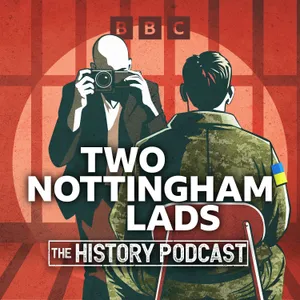
How two British men from Nottingham end up on opposite sides of the war in Ukraine.
Latest Episodes
The most recent episodes — sign up to get AI-powered summaries of each one.
- 1 weeks ago15 min
The Hitler Diaries Scandal: 10. Downfall
Andrew Hunter Murray tracks down Hitler’s faked diaries to the Bundesarchiv – the Federal Archive – in Koblenz. How did these slim A4 notebooks cause such enormous trouble? But the archivists have one more surprise in store. After all these years, are we any closer to understanding the motivation behind this forgery? Was it purely financial, or was it - as some say - a deliberate effort to rehabilitate Hitler? And what does the whole story tell us about our willingness to let ourselves be deceived? Writer and broadcaster Andrew Hunter Murray uncovers last century’s biggest ever publishing scandal, a forgery which rocked the world and destroyed reputations. It’s a tale of greed, obsession and mass delusion. It includes Hermann Göring’s yacht, Nazi-themed honeymoons, Idi Amin’s underpants, and more details almost too unbelievable for words. Andrew interviews the people who were there as the diaries were announced to the world, and as the story fell apart - the archivist tasked with authenticating the diaries in Germany, the TV producer led around the homes of retired Nazis to film a promotional documentary for the scoop, and the Fleet Street editor given 24 hours to create a world-beating story based on fraudulent material.In our own time of AI, fake news and disinformation, are there any lessons we can take from the greatest hoax of the last 50 years? Gerd Heidemann tapes part of the Gerd Heidemann collection, Hoover Institute, copyright Stanford University.Presenter: Andrew Hunter Murray Producer: Ruth Abrahams Story Editor: Andrew Dickson Sound Design: Joel Cox Mix Engineer: Nigel Appleton Executive Producers: David Prest and Robert Nicholson Commissioning Editor: Dan ClarkeA Whistledown production for BBC Sounds and Radio 4
- 1 weeks ago14 min
The Hitler Diaries Scandal: 9. The Trial
It’s May 1983, and everything is falling apart for Gerd Heidemann. Now the heat is on forger Konrad Kujau too. How long can he stay incognito? Millions of Deutschmarks are unaccounted for, reputations lie in tatters. Who will take the blame? Who will fall? And why does the world of Nazi memorabilia hold such fascination for collectors inside Germany and across the world? Writer and broadcaster Andrew Hunter Murray uncovers last century’s biggest ever publishing scandal, a forgery which rocked the world and destroyed reputations. It’s a tale of greed, obsession and mass delusion. It includes Hermann Göring’s yacht, Nazi-themed honeymoons, Idi Amin’s underpants, and more details almost too unbelievable for words. Andrew interviews the people who were there as the diaries were announced to the world, and as the story fell apart - the archivist tasked with authenticating the diaries in Germany, the TV producer led around the homes of retired Nazis to film a promotional documentary for the scoop, and the Fleet Street editor given 24 hours to create a world-beating story based on fraudulent material.In our own time of AI, fake news and disinformation, are there any lessons we can take from the greatest hoax of the last 50 years? Gerd Heidemann tapes part of the Gerd Heidemann collection, Hoover Institute, copyright Stanford University.Presenter: Andrew Hunter Murray Producer: Ruth Abrahams Story Editor: Andrew Dickson Sound Design: Joel Cox Mix Engineer: Nigel Appleton Executive Producers: David Prest and Robert Nicholson Commissioning Editor: Dan ClarkeA Whistledown production for BBC Sounds and Radio 4
- 1 weeks ago14 min
The Hitler Diaries Scandal: 8. Bunker Mentality
Stern’s editorial and management team dig in, sticking by their story and their journalist Gerd Heidemann. Hugh Trevor-Roper returns to Cambridge shaken, hiding away in the master’s lodge at Peterhouse. Meanwhile, Dr Josef Henke of the Federal archives gets to work – finally with whole volumes of diaries. At last he can run the proper checks and read the text. What kind of Hitler emerges from the pages? Writer and broadcaster Andrew Hunter Murray uncovers last century’s biggest ever publishing scandal, a forgery which rocked the world and destroyed reputations. It’s a tale of greed, obsession and mass delusion. It includes Hermann Göring’s yacht, Nazi-themed honeymoons, Idi Amin’s underpants, and more details almost too unbelievable for words. Andrew interviews the people who were there as the diaries were announced to the world, and as the story fell apart - the archivist tasked with authenticating the diaries in Germany, the TV producer led around the homes of retired Nazis to film a promotional documentary for the scoop, and the Fleet Street editor given 24 hours to create a world-beating story based on fraudulent material.In our own time of AI, fake news and disinformation, are there any lessons we can take from the greatest hoax of the last 50 years? Gerd Heidemann tapes part of the Gerd Heidemann collection, Hoover Institute, copyright Stanford University.Presenter: Andrew Hunter Murray Producer: Ruth Abrahams Story Editor: Andrew Dickson Sound Design: Joel Cox Mix Engineer: Nigel Appleton Executive Producers: David Prest and Robert Nicholson Commissioning Editor: Dan ClarkeA Whistledown production for BBC Sounds and Radio 4
- 1 weeks ago14 min
The Hitler Diaries Scandal: 7. An Opera Set for Hell
It’s Monday, 25 April 1983, the day of the big press conference at Stern’s offices in Hamburg. The world’s media is assembled, awaiting the ‘scoop of the century’. The room is packed and Stern’s team, along with British historian Hugh Trevor-Roper, are ready to reveal the diaries. History looks set to be rewritten. But not everyone is convinced. In fact, the key authenticator is having doubts and there’s an intervention from the back of the room. Is this coup collapsing before Stern’s eyes? Writer and broadcaster Andrew Hunter Murray uncovers last century’s biggest ever publishing scandal, a forgery which rocked the world and destroyed reputations. It’s a tale of greed, obsession and mass delusion. It includes Hermann Göring’s yacht, Nazi-themed honeymoons, Idi Amin’s underpants, and more details almost too unbelievable for words. Andrew interviews the people who were there as the diaries were announced to the world, and as the story fell apart - the archivist tasked with authenticating the diaries in Germany, the TV producer led around the homes of retired Nazis to film a promotional documentary for the scoop, and the Fleet Street editor given 24 hours to create a world-beating story based on fraudulent material.In our own time of AI, fake news and disinformation, are there any lessons we can take from the greatest hoax of the last 50 years? Gerd Heidemann tapes part of the Gerd Heidemann collection, Hoover Institute, copyright Stanford University.Presenter: Andrew Hunter Murray Producer: Ruth Abrahams Story Editor: Andrew Dickson Sound Design: Joel Cox Mix Engineer: Nigel Appleton Executive Producers: David Prest and Robert Nicholson Commissioning Editor: Dan ClarkeA Whistledown production for BBC Sounds and Radio 4
- 1 weeks ago13 min
The Hitler Diaries Scandal: 6. Final Proofs
It’s April 1983 and in Hamburg, Stern is just putting the final touches to its coverage and its promotional film. But for TV producer Barbara Dickmann, something seems very off with her final interviewee – the journalist behind the scoop, Gerd Heidemann. Over in the Sunday Times offices in London, features editor Magnus Linklater is getting pulled onto the biggest story of his life. In Koblenz, West Germany, Dr Josef Henke finally gets the police results from the forensic tests which will prove whether the Hitler diaries are real or not. And back in Cambridge, historian Hugh Trevor-Roper is having second thoughts about his seal of approval. Writer and broadcaster Andrew Hunter Murray uncovers last century’s biggest ever publishing scandal, a forgery which rocked the world and destroyed reputations. It’s a tale of greed, obsession and mass delusion. It includes Hermann Göring’s yacht, Nazi-themed honeymoons, Idi Amin’s underpants, and more details almost too unbelievable for words. Andrew interviews the people who were there as the diaries were announced to the world, and as the story fell apart - the archivist tasked with authenticating the diaries in Germany, the TV producer led around the homes of retired Nazis to film a promotional documentary for the scoop, and the Fleet Street editor given 24 hours to create a world-beating story based on fraudulent material.In our own time of AI, fake news and disinformation, are there any lessons we can take from the greatest hoax of the last 50 years? Gerd Heidemann tapes part of the Gerd Heidemann collection, Hoover Institute, copyright Stanford University.Presenter: Andrew Hunter Murray Producer: Ruth Abrahams Story Editor: Andrew Dickson Sound Design: Joel Cox Mix Engineer: Nigel Appleton Executive Producers: David Prest and Robert Nicholson Commissioning Editor: Dan ClarkeA Whistledown production for BBC Sounds and Radio 4
- 2 weeks ago13 min
The Hitler Diaries Scandal: 5. Money for Old Roper
It’s spring 1983 and Stern magazine’s inner circle is making frenzied preparations to launch its scoop of the century. Deals are being cut in media empires from London to Paris to New York.The Times and Sunday Times, newly acquired by Rupert Murdoch, are keen. Murdoch wants a quick authentication and calls in Britain’s foremost historian, Hugh Trevor-Roper.He accepts the mission and flies out to Zurich where the diaries are now locked away in a bank vault. Trevor-Roper has just a few hours to make his judgement.Meanwhile, TV journalist, Barbara Dickmann, has been commissioned by Stern to make a promotional film starring Gerd Heidemann about his big find.Dickmann is taken around the homes of old Nazis where Heidemann receives a warm welcome. Even more alarmingly, he starts telling Dickmann that he’s on speaking terms with a senior Nazi who died in 1945.Writer and broadcaster Andrew Hunter Murray uncovers last century’s biggest ever publishing scandal, a forgery which rocked the world and destroyed reputations. It’s a tale of greed, obsession and mass delusion. It includes Hermann Göring’s yacht, Nazi-themed honeymoons, Idi Amin’s underpants, and more details almost too unbelievable for words. Andrew interviews the people who were there as the diaries were announced to the world, and as the story fell apart - the archivist tasked with authenticating the diaries in Germany, the TV producer led around the homes of retired Nazis to film a promotional documentary for the scoop, and the Fleet Street editor given 24 hours to create a world-beating story based on fraudulent material.In our own time of AI, fake news and disinformation, are there any lessons we can take from the greatest hoax of the last 50 years? Gerd Heidemann tapes part of the Gerd Heidemann collection, Hoover Institute, copyright Stanford University.Presenter: Andrew Hunter Murray Producer: Ruth Abrahams Story Editor: Andrew Dickson Sound Design: Joel Cox Mix Engineer: Nigel Appleton Executive Producers: David Prest and Robert Nicholson Commissioning Editor: Dan ClarkeA Whistledown production for BBC Sounds and Radio 4
- 2 weeks ago14 min
The Hitler Diaries Scandal: 4. Fried Potatoes and Forgery
It’s early 1981 and the forger Konrad Kujau and the journalist Gerd Heidemann are about to come face to face. Everything’s in motion - Stern management and a small team of editorial staff are on board, sworn to secrecy from colleagues and the outside world.In the next few months, millions of Deutschmarks will travel in suitcases in exchange for diaries, which are – so Kujau says – being smuggled across the iron curtain, from East to West Germany. Despite Stern’s best efforts, by late 1982, rumours are circulating among memorabilia collectors that significant previously unseen Nazi documents have come to light. The Sunday Times gets a call.Writer and broadcaster Andrew Hunter Murray uncovers last century’s biggest ever publishing scandal, a forgery which rocked the world and destroyed reputations. It’s a tale of greed, obsession and mass delusion. It includes Hermann Göring’s yacht, Nazi-themed honeymoons, Idi Amin’s underpants, and more details almost too unbelievable for words. Andrew interviews the people who were there as the diaries were announced to the world, and as the story fell apart - the archivist tasked with authenticating the diaries in Germany, the TV producer led around the homes of retired Nazis to film a promotional documentary for the scoop, and the Fleet Street editor given 24 hours to create a world-beating story based on fraudulent material.In our own time of AI, fake news and disinformation, are there any lessons we can take from the greatest hoax of the last 50 years? Gerd Heidemann tapes part of the Gerd Heidemann collection, Hoover Institute, copyright Stanford University.Presenter: Andrew Hunter Murray Producer: Ruth Abrahams Story Editor: Andrew Dickson Sound Design: Joel Cox Mix Engineer: Nigel Appleton Executive Producers: David Prest and Robert Nicholson Commissioning Editor: Dan ClarkeA Whistledown production for BBC Sounds and Radio 4
- 2 weeks ago13 min
The Hitler Diaries Scandal: 3. Champagne Connie
Andrew Hunter Murray travels to the scene of the crime, just outside Stuttgart, from where the forger Konrad Kujau ran his cottage industry.Who was this man, prone to splash the cash in local bars and have a good time while knocking out forgeries? Curator of the Konrad Kujau museum, Marc Oliver Boger, reveals more.Our story takes us to 1980 in Hamburg, where the Stern journalist Gerd Heidemann is down on his luck. He has serious money problems, sinking thousands into maintaining Göring’s old yacht and still nothing to show for it. Lucky for him that a huge story is about to become tantalisingly close. All he needs is to persuade his magazine, Stern.Writer and broadcaster Andrew Hunter Murray uncovers last century’s biggest ever publishing scandal, a forgery which rocked the world and destroyed reputations. It’s a tale of greed, obsession and mass delusion. It includes Hermann Göring’s yacht, Nazi-themed honeymoons, Idi Amin’s underpants, and more details almost too unbelievable for words. Andrew interviews the people who were there as the diaries were announced to the world, and as the story fell apart - the archivist tasked with authenticating the diaries in Germany, the TV producer led around the homes of retired Nazis to film a promotional documentary for the scoop, and the Fleet Street editor given 24 hours to create a world-beating story based on fraudulent material.In our own time of AI, fake news and disinformation, are there any lessons we can take from the greatest hoax of the last 50 years? Gerd Heidemann tapes part of the Gerd Heidemann collection, Hoover Institute, copyright Stanford University.Presenter: Andrew Hunter Murray Producer: Ruth Abrahams Story Editor: Andrew Dickson Sound Design: Joel Cox Mix Engineer: Nigel Appleton Executive Producers: David Prest and Robert Nicholson Commissioning Editor: Dan ClarkeA Whistledown production for BBC Sounds and Radio 4
Get The History Podcast summaries in your inbox
Free AI-powered daily recaps. Key takeaways, quotes, and mentions — in a 5-minute read.
Get Free Summaries →Free forever for up to 3 podcasts. No credit card required.
You Might Also Like
Listeners also like.
Adolf Hitler: Rise and Downfall
A narrative biography of Adolf Hitler’s life, from birth to death, exploring his rise to power and ultimate downfall.

British Scandal
Examines British political and social scandals, focusing on power, accountability, and the people behind historic events.

Nazis: The Road to Power
Traces Adolf Hitler's rise from leader of a minor extremist group to head of Germany's dominant political party within 13 years.
Behind the Bastards
Explores the twisted lives and bizarre realities of history’s most notorious figures, from dictators to dangerous extremists.
The Rest Is History
Historians Tom Holland and Dominic Sandbrook analyze major historical events and figures with narrative depth and scholarly insight.

History's Heroes
Profiles real-life historical figures whose courage, innovation, or resilience changed the course of history.
WW2 Pod: We Have Ways of Making You Talk
A comedian and historian explore World War II through detailed analysis, personal stories, and dark humor.

The Coming Storm
A journalist investigates the roots and rise of American conspiracy theories, from Cold War paranoia to modern claims of a Deep State.
HistoryExtra podcast
Covers global history from ancient to modern times through expert interviews on events, figures, and eras.

Witness History
First-hand accounts of pivotal historical moments, from global events to cultural milestones, told by those who lived them.

American Scandal
A deep dive into infamous American scandals, exploring the lies, corruption, and ambition behind the fall of powerful figures.
The History Hour
A weekly compilation of recent Witness History programmes covering global historical events.
About The History Podcast
How two British men from Nottingham end up on opposite sides of the war in Ukraine.
Customized Recaps
AI-powered recaps with compact key takeaways, quotes, and insights.
Straight to Your Inbox
Get key takeaways from The History Podcast in a 5-minute read.
Save Hours Every Week
Stay current on your favorite podcasts without falling behind.
Frequently Asked Questions
What is Podzilla's The History Podcast daily summary?
It's a free AI-powered email that summarizes new episodes of The History Podcast as soon as they're published. You get the key takeaways, notable quotes, and links & mentions — all in a quick read.
How does the The History Podcast podcast summary work?
When a new episode drops, our AI transcribes and analyzes it, then generates a personalized summary tailored to your interests and profession. It's delivered to your inbox every morning.
Is this an official The History Podcast product?
No. Podzilla is an independent service that summarizes publicly available podcast content. We're not affiliated with or endorsed by BBC Radio 4.
Can I get summaries of other podcasts too?
Absolutely! The free plan covers up to 3 podcasts. Upgrade to Pro for 15, or Premium for 50. Browse our full catalog at /podcasts.
How often does The History Podcast release new episodes?
The History Podcast publishes weekly. Our AI generates a summary within hours of each new episode.
What topics does The History Podcast cover?
The History Podcast covers topics including History. Our AI identifies the specific themes in each episode and highlights what matters most to you.
Start getting The History Podcast summaries tomorrow morning.
Free forever for up to 3 podcasts. No credit card required.
Free forever for up to 3 podcasts. No credit card required.