Free Daily Podcast Summary
The Homestead Education Podcast: Daily Summaries Delivered
by Kody Hanner
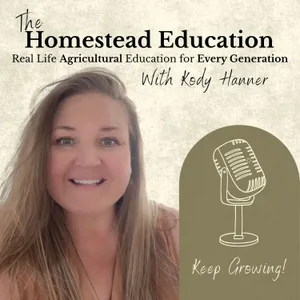
Everyone deserves an agricultural education — to understand food, land, and responsibility at a scale that fits real life. Hosted by Kody Hanner, agricultural educator, homeschool mom of six, and lifelong rural advocate, The Homestead Education Podcast explores how accessible, small-scale agricultural education can build capable people, strengthen families, and create resilient local food systems. Drawing from generations of rural knowledge, educated in animal science, and years of teaching families outside traditional systems, Kody breaks down complex food and education topics into practical, usable skills for homes, classrooms, and communities. Each week, you’ll hear honest conversations about food systems, small-scale agriculture, homeschooling, and real-world education — designed for families, educators, and anyone who believes we shouldn’t outsource our lives. Whether you live on acreage, in town, or somewhere in between, this podcast will help you understand where your food comes from, why it matters, and how practical agricultural knowledge can create meaningful change.
Latest Episodes
The most recent episodes — sign up to get AI-powered summaries of each one.
- 2 weeks ago48 min
Episode 186: How to Prepare for Rising Gas Prices & Food Shortages
What happens when rising gas prices don't just hurt at the pump—but begin affecting the cost and availability of nearly everything else? In this episode of The Homestead Education Podcast, I'm joined by my husband, Ron Hanner, to talk about what higher fuel costs can mean for truckers, farmers, food prices, local businesses, and the supply chain—and, more importantly, what ordinary families can actually do about it. This isn't about preparing for the end of the world. It's about preparing for the unprecedented. A job loss. A power outage. A winter storm. A supply-chain disruption. Rapidly rising gas prices. Or simply discovering that the groceries your family buys every week suddenly cost far more than they did a year ago. Ron and I talk through the ripple effect that fuel prices can have across agriculture and transportation, including the pressure on independent truck drivers and the importance of the trucks that move food, fuel, medical supplies, manufacturing materials, and countless everyday necessities. We also discuss why even a short disruption can expose just how dependent modern communities are on products arriving exactly when they're needed. But most of this episode is about what you can do before you're scrambling. In This Episode: How rising gas prices can increase the cost of food and other necessities Why independent truck drivers are especially vulnerable to major fuel-price increases What a transportation or supply-chain disruption could mean for everyday families Why preparedness doesn't have to mean extreme prepping Simple ways to store drinking water How to secure a dependable protein source Buying beef, pork, eggs, and milk directly from local farmers Splitting bulk meat purchases with friends or family to lower the upfront cost Stretching meat across multiple meals Stocking inexpensive staples like potatoes and other root vegetables Preserving grocery-store produce when your garden doesn't produce enough Small-batch canning, freezing, fermenting, and refrigerator pickling Why you don't need to preserve hundreds of pounds of food at once How buying in bulk can make higher-quality food more affordable Getting multiple foods from one ingredient—like turning raw milk into drinking milk, yogurt, cream, butter, or cheese Reducing food waste by creating a more circular household or homestead food system Why supporting your local farmer before a crisis matters so much One of the biggest misconceptions about preparedness is that you need a huge pantry, acres of land, or thousands of dollars to get started. You don't. Start with one thing. Buy an extra staple when it's inexpensive. Find someone locally who sells eggs. Split a bulk beef purchase with another family. Learn how to preserve one food your family already eats. Store a little water. Cook an extra portion and put it away. The goal isn't fear. The goal is creating enough margin in your life that the unexpected doesn't immediately become an emergency. We also talk about one of the most important pieces of preparedness that can't be stored on a pantry shelf: relationships. A functioning local food system exists only when local farmers have enough customers to keep producing food. Waiting until grocery shelves are empty to find your local farmer is too late. Supporting those producers consistently helps ensure that farms, ranches, dairies, and small food businesses are still there when your community needs them. And because this is our family, the conversation naturally includes cows getting ready to calve, a chicken tractor that we accidentally built too large to get off the porch, kids who name animals destined for the freezer, plans for a multigenerational family homestead—and Ron abruptly leaving the podcast when his fire department pager goes off. Real life doesn't stop because you're recording a podcast. Neither does the unexpected. The best time to prepare for it is before you need to. Resources Mentioned Visit The Homestead Education for resources on food production, agriculture, preservation, homesteading, and teaching the next generation practical skills. If you have a question you'd like us to answer in a future episode, reach out at hello@thehomesteadeducation.com. And until next week—keep growing. Epis
- 3 weeks ago1h 23m
Episode 185: How I Actually Get It All Done on a Homestead
In this episode, I’m answering one of the questions I get asked all the time: How do I get it all done? Between running a homestead, raising livestock, homeschooling, managing multiple businesses, traveling, running a co-op, and keeping up with a very full household, the real answer is—I don’t do it all. I’m sharing what actually helps me keep things moving: delegating, building systems, choosing priorities, managing the mental load, using tools that work with my brain, knowing when to hire help, and accepting that sometimes “good enough” really is good enough. I also share plenty of real-life homestead chaos along the way—from new piglets and heritage hogs to chicken disasters, ducks, harvest season, and the reality of trying to prepare for winter while running a business. If you’ve ever felt like you’re working constantly but somehow still falling behind, this episode is for you. Episode Links Autumn of the Homestead Activity Book: https://www.thehomesteadeducation.com/product/seasons-on-the-homestead-autumn-educational-activity-book/ Hanner Homestead: info@hannerhomestead.com 80/20 Rule Book: https://amzn.to/4AeMfTl The Gut Health Product That Changed My Life: https://shareplex.us/share/8qE7_VL Kody’s Link Homestead Education Curriculum – http://thehomesteadeducation.com/homesteadeducationcurriculum Homestead Family Reading List – https://www.thehomesteadeducation.com/homestead-summer-reading-list/ ESA Funding: https://www.thehomesteadeducation.com/funding/ Instagram – https://instagram.com/homestead_education Facebook – https://facebook.com/thehomesteadeducation Raising Self-Sufficient Kids Book – https://www.thehomesteadeducation.com/product/raising-self-sufficient-children/
- Sep 8, 202653 min
Episode: 184 Part 2: Good Food and Stubborn Wives | Living a Natural Life After a Terminal Diagnosis
Kody Hanner and Ron Hanner share a raw, practical story about marriage, parenting, homesteading, and rebuilding health after Ron was told he had end-stage liver disease and might have only a year to live. What follows is a story of fear, grit, and gradual change that led their family to rethink food, home life, and what it means to fight for one another. This episode matters because it connects nutrition, mindset, family systems, and healing in a way that feels lived in rather than theoretical. In this episode: Kody and Ron explain how they met, blended two families, and quickly built a new life together in Oregon Ron describes the shock of being told he was "a little cirrhotic" and later diagnosed with compensated end-stage liver disease at 35 They talk through the emotional fallout, including fear, withdrawal, PTSD, and the strain the diagnosis put on the marriage Kody shares how the doctor’s vague advice to pursue a more natural lifestyle became the first thing she could grab onto They break down the drastic changes they made to food, including cooking from scratch, avoiding preservatives, and sourcing cleaner ingredients The move to homesteading in North Idaho becomes a major turning point as they begin producing more of their own food Ron explains how he managed chronic pain and disability through a spinal cord stimulator instead of narcotics They discuss homeschooling, family meetings, chore systems, and how they learned to make the whole household part of the process Kody and Ron share how they moved toward cleaner living with homemade cleaners, tallow and lard, fewer artificial scents, and more herbal remedies The episode closes on their broader message: be proactive, be intentional, and do not hide from the hard things Ron's Links Hanner Homestead: www.hannerhomestead.com Hanner Homestead IG: www.instagram.com/thehannerhomestead Hanner Homestead FB: www.facebook.com/thehannerhomestead Kody's Links Homestead Education Curriculum – http://thehomesteadeducation.com/homesteadeducationcurriculum Homestead Family Reading List – https://www.thehomesteadeducation.com/homestead-summer-reading-list/ Instagram – https://instagram.com/homestead_education Facebook – https://facebook.com/thehomesteadeducation Raising Self-Sufficient Kids Book - https://www.thehomesteadeducation.com/product/raising-self-sufficient-children/
- Sep 1, 202648 min
Episode: 183 Good Food and Stubborn Wives | Living a Natural Life After a Terminal Diagnosis
Kody Hanner and Ron Hanner share a raw, practical story about marriage, parenting, homesteading, and rebuilding health after Ron was told he had end-stage liver disease and might have only a year to live. What follows is a story of fear, grit, and gradual change that led their family to rethink food, home life, and what it means to fight for one another. This episode matters because it connects nutrition, mindset, family systems, and healing in a way that feels lived in rather than theoretical. In this episode: Kody and Ron explain how they met, blended two families, and quickly built a new life together in Oregon Ron describes the shock of being told he was "a little cirrhotic" and later diagnosed with compensated end-stage liver disease at 35 They talk through the emotional fallout, including fear, withdrawal, PTSD, and the strain the diagnosis put on the marriage Kody shares how the doctor’s vague advice to pursue a more natural lifestyle became the first thing she could grab onto They break down the drastic changes they made to food, including cooking from scratch, avoiding preservatives, and sourcing cleaner ingredients The move to homesteading in North Idaho becomes a major turning point as they begin producing more of their own food Ron explains how he managed chronic pain and disability through a spinal cord stimulator instead of narcotics They discuss homeschooling, family meetings, chore systems, and how they learned to make the whole household part of the process Kody and Ron share how they moved toward cleaner living with homemade cleaners, tallow and lard, fewer artificial scents, and more herbal remedies The episode closes on their broader message: be proactive, be intentional, and do not hide from the hard things Ron's Links Hanner Homestead: www.hannerhomestead.com Hanner Homestead IG: www.instagram.com/thehannerhomestead Hanner Homestead FB: www.facebook.com/thehannerhomestead Kody's Links Homestead Education Curriculum – http://thehomesteadeducation.com/homesteadeducationcurriculum Homestead Family Reading List – https://www.thehomesteadeducation.com/homestead-summer-reading-list/ Instagram – https://instagram.com/homestead_education Facebook – https://facebook.com/thehomesteadeducation Raising Self-Sufficient Kids Book - https://www.thehomesteadeducation.com/product/raising-self-sufficient-children/
- Aug 19, 20261h 16m
Episode 182: Agriculture, food policy, and county fair lessons from a summer on the homestead
Kody Hanner shares a solo episode that mixes personal life updates from a wildfire-filled summer with a practical rundown of major agriculture and food safety headlines. She also closes with a long reflection on county fairs, 4-H, and how local agricultural education shapes capable, community-minded kids. In this episode, Kody connects homestead life, livestock management, food policy, and youth ag education into one big picture of how agriculture touches daily life far beyond the farm. She also explains why she thinks local food systems matter more than ever when large-scale supply chains, regulations, and public health issues all collide. Key topics Kody explains how a major wildfire near her home pulled most of her family into fire duty for much of the summer, leaving her to run the farm, the business, and the home largely on her own. She gives a homestead update, including 31 piglets across four litters, her mixed pig breeding program, and her goal of growing Hanner Homestead into a recognizable source of quality heritage pork. She talks about a new Brown Swiss bull calf, A2A2 testing, and how that information helps shape long-term dairy and beef management decisions. Kody shares poultry plans for the year, including raising meat birds later than usual and using new Idaho laws to make direct retail sales easier. She introduces her homemade udder balm, which she says has become a practical chafing cream for firefighters and may soon be offered more broadly. We discuss the Cargill and Tyson meatpacking antitrust and price-fixing settlement, and Kody breaks down how monopolistic control can squeeze farmers while raising consumer prices. She covers a feedlot study that found unexpected lactation in some cattle and heifers, then walks through possible causes, including hormone implants, high-concentrate grain diets, plant estrogen activity, and mold exposure. Kody reviews the tension between commercial feedlot management and her own preference for grass-fed livestock and smaller-scale production decisions. She provides an educational explanation of recent food safety outbreaks, including Cyclospora and Salmonella cases linked to produce, and emphasizes how contamination can occur at many points in the supply chain. She explains the difference between common public assumptions about imported produce and the actual layers of certification, inspection, sanitation, and testing that major food systems use. Kody discusses the effort to define ultra-processed foods more clearly and the push to reform the GRAS system, which allows certain additives to bypass deeper review. She highlights ingredients and additives she sees as problematic, including BHA, BHT, azodicarbonamide, red dye number two, brominated vegetable oil, and other questionable compounds. The episode closes with a detailed look at county fairs as agricultural education, community infrastructure, youth development, and a major economic force in rural life. Episode Links Udder Balm Recipe: https://www.thehomesteadeducation.com/udder-balm/ The Cargill Lawsuit: https://www.reuters.com/legal/government/us-judge-rules-beef-purchasers-can-pursue-price-fixing-class-actions-2026-07-17/ Lactating Steers: https://members.acresusa.com/lactating-steers-hormonal-implants/ FDA Outbreak Updates: https://www.fda.gov/food/outbreaks-foodborne-illness/investigation-multistate-outbreak-cyclospora-illnesses-iceberg-lettuce-july-2026 GRAS definition: https://www.fda.gov/food/food-ingredients-packaging/generally-recognized-safe-gras Homestead Education Links Homestead Education Curriculum – http://thehomesteadeducation.com/homesteadeducationcurriculum Homestead Family Reading List – https://www.thehomesteadeducation.com/homestead-summer-reading-list/ Instagra
- Jul 28, 202643 min
Episode: 181 How to Teach Your Kids Home Economics | Real-Life Skills That Build Confident, Capable Adults
How do you teach home economics when most schools don't? For many families, home economics has become a forgotten subject. But cooking, sewing, meal planning, budgeting, gardening, and creating with your hands are the very skills that build confidence, resilience, and independence. In this episode of The Homestead Education Podcast, Kody Hanner sits down with Jessica Clark of The Lark Life to discuss why practical life skills deserve a place alongside traditional academics—and how families can begin teaching them today. Jessica shares how teaching her children to cook, sew, quilt, and create has transformed their confidence and given them ownership over their education. Together, they explore why children were designed to be creators rather than passive consumers, and how giving kids meaningful responsibilities helps them develop problem-solving skills that last a lifetime. Whether you homeschool, attend public school, or simply want to raise more capable kids, this conversation offers practical encouragement for bringing home economics back into everyday family life. In This Episode Why home economics is making a comeback Teaching cooking, sewing, quilting, and practical life skills Helping children become creators instead of consumers Building confidence through responsibility and hands-on learning Why mistakes are one of the best teachers Raising kids who contribute to the family instead of simply being entertained Teaching boys and girls the same practical skills Creating a home where learning happens naturally Jessica's new Foundations in Quilting curriculum for homeschool families What "Keep Growing" means and why lifelong learning matters Key Takeaways Home economics is about far more than cooking—it's about preparing children for adulthood. Kids gain confidence when they're trusted with real responsibilities. Creativity, problem-solving, and resilience are learned by doing, not by watching. Families don't need expensive equipment or perfect conditions to begin teaching practical skills. Some of the most meaningful education happens around the kitchen table, in the garden, or beside a sewing machine. Jessica Clark's Links Jessica Clark – The Lark Life: www.TheLarkLife.com Foundations in Quilting homeschool curriculum (get 20% off with code HE20): https://quilt-lab.teachery.co/foundations-in-quilting-semester-1?a=eaAH2dFT Beginner sewing resources and machine basics: https://amzn.to/45caVhj Instagram: https://www.instagram.com/the_lark_life/ Facebook: https://www.facebook.com/profile.php?id=61577853711059 Kody Hanner's Links Homestead Education Curriculum – http://thehomesteadeducation.com/homesteadeducationcurriculum Homestead Family Reading List – https://www.thehomesteadeducation.com/homestead-summer-reading-list/ Instagram – https://instagram.com/homestead_education Facebook – https://facebook.com/thehomesteadeducation Subscribe If you're passionate about raising capable kids, practical agriculture, and real-world education, be sure to follow The Homestead Education Podcast. Each week, we share conversations that help families reconnect with the skills, knowledge, and confidence to thrive—whether you live on a farm, in town, or somewhere in between.
- Jul 21, 202649 min
Episode 180: How Hands-On Experience Transforms Future Farmers and Ranchers with Trent Van Leuven
In this episode, Trent Van Leuven shares insights on transforming agricultural education through experiential learning, fostering resilience, and building bridges between different facets of agriculture. Discover how hands-on experiences, community engagement, and inventive teaching methods are shaping the next generation of ag professionals. Key Topics: Trent's background growing up on a dairy farm and his journey into agricultural education Differences between urban/suburban and rural agricultural experiences The importance of vocabulary and foundational knowledge in agriculture Unique programs at Mackey High School, including fish hatcheries, greenhouse projects, and fish monitoring The role of community, authenticity, and passion in effective farm tours and field trips Strategies for teaching ag without traditional farm access, including creative lab solutions The significance of teaching financial literacy, entrepreneurship, and career pathways in ag Cross-disciplinary collaborations between ranchers and fish biologists to promote sustainable practices The impact of experiential learning on students’ future careers and community involvement The "Keep Growing" philosophy about overcoming failures and continuous learning Connect with Trent Take a Little Field Trip (Book) - https://amzn.to/4fq3CXE Author Facebook Page: https://www.facebook.com/p/Trent-Van-Leuven-Educator-Author-61580158103061/ Podcast Links and Resources Homestead Education Curriculum – http://thehomesteadeducation.com/homesteadeducationcurriculum Homestead Family Reading List – https://www.thehomesteadeducation.com/homestead-summer-reading-list/ Kody's Links Instagram – https://instagram.com/homestead_education Facebook – https://facebook.com/thehomesteadeducation
- Jul 7, 202652 min
Episode 179: Living Freely on the Fringes: Embracing Authenticity and Freedom in Homesteading & Homeschooling
Living Freely on the Fringes: Embracing Authenticity and Freedom in Homesteading & Homeschooling In this episode, Kody Hanner shares her raw, honest journey of redefining success, identity, and freedom within the homestead and homeschool lifestyle. She explores the pressures of social media, the importance of authenticity, and how to stay true to ourselves without falling into societal traps or comparisons. This episode is a powerful reminder that true freedom comes from living in alignment with your values, beyond public approval or perfect appearances. Key Topics: The shift from chasing societal success to embracing personal authenticity on the homestead The pressure to perform and curate a perfect life online versus real, messy life How living on the fringes offers freedom and independence from mainstream expectations The importance of privacy and choosing what to share in a digital age Redefining success based on real-world outcomes like capability, health, and joy Overcoming the comparison game—garden wins, follower counts, and perfectionism The emotional journey of living through hardship, illness, and rebuilding purpose The significance of community, family, and land in cultivating a meaningful, free life Resources & Links: Homestead Education Curriculum - http://thehomesteadeducation.com/homesteadeducationcurriculum Homestead Family Reading List - https://www.thehomesteadeducation.com/homestead-summer-reading-list/ Connect with Kody: Instagram - https://instagram.com/homestead_education Facebook - https://facebook.com/thehomesteadeducation Share your thoughts: Feel inspired? Leave a review or comment on social media. I’d love to hear how you’re reclaiming your freedom and authenticity in your homesteading and homeschooling journey.
Get The Homestead Education Podcast summaries in your inbox
Free AI-powered daily recaps. Key takeaways, quotes, and mentions — in a 5-minute read.
Get Free Summaries →Free forever for up to 3 podcasts. No credit card required.
You Might Also Like
Listeners also like.
Everyday Homesteading
Practical homesteading tips for busy families to grow, cook, and preserve food using proven methods from experienced homesteaders.

Homesteading Made Simple I Joyfully Prepared
Practical homesteading skills for everyday life, covering gardening, food preservation, self-reliance, and real estate choices.
Pioneering Today Podcast - Homesteading in a Modern World
Homesteading skills like gardening, food preservation, livestock care, and natural remedies for a self-sufficient life in the modern world.
The Two Acre Homestead
A couple shares their experiences moving from suburban to rural homesteading, covering gardening, self-sufficiency, and country living.

Honey! I'm Homeschooling The Kids
Explores alternative education, parenting, and building a joyful, intentional family life.

Simple Farmhouse Life
A mother of eight discusses from-scratch cooking, natural living, handmade projects, and homeschooling alongside home business management.
The Acres U.S.A. Podcast
Explores organic and regenerative farming practices through interviews and insights aimed at building a sustainable, profitable food system.

The Christy-Faith Show
A podcast offering educational and homeschooling insights for intentional parents.
The 1000 Hours Outside Podcast
A podcast exploring how spending time outdoors helps children and adults thrive by choosing real-world experiences over screen-based ones.
The Homeschool Sisters Podcast
Two sisters share practical advice and encouragement for homeschooling parents raising children with unique learning needs.
The Beginner's Garden with Jill McSheehy
A practical guide for new gardeners, breaking down gardening basics and terminology to help beginners grow confidently.
Grassfed Life
Covers small-scale farming, grass-fed livestock, and farm-based entrepreneurship with seasonal insights and practical guidance.
About The Homestead Education Podcast
Everyone deserves an agricultural education — to understand food, land, and responsibility at a scale that fits real life. Hosted by Kody Hanner, agricultural educator, homeschool mom of six, and lifelong rural advocate, The Homestead Education Podcast explores how accessible, small-scale agricultural education can build capable people, strengthen families, and create resilient local food systems. Drawing from generations of rural knowledge, educated in animal science, and years of teaching families outside traditional systems, Kody breaks down complex food and education topics into practical, usable skills for homes, classrooms, and communities. Each week, you’ll hear honest conversations about food systems, small-scale agriculture, homeschooling, and real-world education — designed for families, educators, and anyone who believes we shouldn’t outsource our lives. Whether you live on acreage, in town, or somewhere in between, this podcast will help you understand where your food comes from, why it matters, and how practical agricultural knowledge can create meaningful change.
Customized Recaps
AI-powered recaps with compact key takeaways, quotes, and insights.
Straight to Your Inbox
Get key takeaways from The Homestead Education Podcast in a 5-minute read.
Save Hours Every Week
Stay current on your favorite podcasts without falling behind.
Frequently Asked Questions
What is Podzilla's The Homestead Education Podcast daily summary?
It's a free AI-powered email that summarizes new episodes of The Homestead Education Podcast as soon as they're published. You get the key takeaways, notable quotes, and links & mentions — all in a quick read.
How does the The Homestead Education Podcast podcast summary work?
When a new episode drops, our AI transcribes and analyzes it, then generates a personalized summary tailored to your interests and profession. It's delivered to your inbox every morning.
Is this an official The Homestead Education Podcast product?
No. Podzilla is an independent service that summarizes publicly available podcast content. We're not affiliated with or endorsed by Kody Hanner.
Can I get summaries of other podcasts too?
Absolutely! The free plan covers up to 3 podcasts. Upgrade to Pro for 15, or Premium for 50. Browse our full catalog at /podcasts.
How often does The Homestead Education Podcast release new episodes?
The Homestead Education Podcast publishes weekly. Our AI generates a summary within hours of each new episode.
What topics does The Homestead Education Podcast cover?
The Homestead Education Podcast covers topics including Leisure, Education, Garden, Kids & Family, Home & Garden. Our AI identifies the specific themes in each episode and highlights what matters most to you.
Start getting The Homestead Education Podcast summaries tomorrow morning.
Free forever for up to 3 podcasts. No credit card required.
Free forever for up to 3 podcasts. No credit card required.