Free Daily Podcast Summary
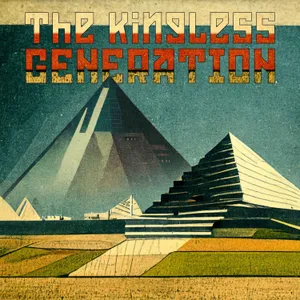
The Kingless Generation: Daily Summaries Delivered
by Fergal Schmudlach
A podcast on the deep history of class struggle, paleo-parapolitics, and the demonology of capital. Hosted on Acast. See acast.com/privacy for more information.
Latest Episodes
The most recent episodes — sign up to get AI-powered summaries of each one.
- Yesterday45 min
Truth and Testimony, Drugs and Attachment in Bourgeois-Revolutionary Baghdad [PREVIEW]: Re-Orienting Ibn Bakkār and Shams-al-Nahār in the Arabic manuscript of the 1,001 Nights
I dust off my Arabic for some weird scenes in Silk Road–era Baghdad: a story of drugs and ego death, deadly secrets and the workers who keep them. The only tragic love story in the Nights, the story of the Persian prince Ibn Bakkār and the courtesan Shams-al-Nahār also features, only in this earliest available Arabic manuscript tradition, a meta-narrative device whereby first-person interviews with certain characters—such as would be collected by a prosecutor as evidence for a trial—are interspersed throughout this story of elite parties, exotic drugs, and forbidden obsessions. Hosted on Acast. See acast.com/privacy for more information.
- 1 weeks ago1h 5m
1,001 Nights: A murdered ancestor to European Romance
Hosted on Acast. See acast.com/privacy for more information.
- Jun 24, 202647 min
Eranos 4 [PREVIEW]: It was us (all along)...
In anticipation of future outings on some of the more interesting figures we've met thus far, we bring our introductory series on the Eranos milieu to a close with a discussion of the final years, as one august old racket came to an end but was simultaneously demolitioned, flipped, spun off, and otherwise psycho-entrepreneurially aufgehoben into various other cultic milieux just as our current moment of cultic conquest of civil society began. Hosted on Acast. See acast.com/privacy for more information.
- Jun 10, 20261h 18m
Eranos 3: Mircea Eliade, Mellon Fellow of Death, w/ Scott Ryan of the Dustlight Archives
Hosted on Acast. See acast.com/privacy for more information.
- May 29, 202635 min
Eranos pᵗ 2 w/ Scott [PREVIEW]: Furio Jesi vs the Satanic-Orientalists
More ideological and world-historical groundwork, as we introduce, for me, the real hero of this story, the Jewish Italian Communist mythologist Furio Jesi (1941–1980), a rival to many in the Eranos crowd who critiqued their Aryo-heroic, Christian-Kabbalist, and I would say satanic-orientalist project from the outside. He got a professorship at the University of Palermo on sheer merit despite being a high school dropout, but then after moving his family to a country house for their safety after his organizing work got him in some heat during the Years of Lead, he died at age 39 when his water heater suddenly malfunctioned and gave him carbon monoxide poisoning in the night. Join me and Scott Ryan of the Dustlight Archives Podcast as we discover an important Kingless Generation ancestor. Hosted on Acast. See acast.com/privacy for more information.
- May 20, 20261h 12m
Aether Whores: Eranos and the 20th-c liberal-bourgeois vanguard, w/ Scott of the Dustlight Archives
From 1933 to 1988, the liberal spiritualist wing of the trans-Atlantic bourgeoisie had something of a think tank for spiritual and cult technology and grand strategy in the yearly gatherings of philosophers, psychologists, and anthropologists like Carl Jung, Mircea Eliade, and Gershom Scholem, known as Eranos and organized by the wealthy socialite and occultist Olga Fröbe-Kapteyn at a lakeside resort in Switzerland. Jung disciple Gustav Heyer memorably called their activities there Aetherhurerei “aether whoredom”. I am joined by Scott Ryan of The Dustlight Archives Podcast for the opening episode of a series on this little-known but very important gathering which has deep links both with earlier modern “gnostic” and bourgeois-occult, satanic-orientalist secret society movements, contemporaneous developments like the Nazis as well as the proto-hippie youth movements of which Nazism was the shadow, and also NXIVM and other present-day developments of the same social and spiritual technologies of the ruling-class vanguard, which Scott is covering so brilliantly on his show. Hosted on Acast. See acast.com/privacy for more information.
- May 7, 202634 min
(15)90s kids: Thomas Nashe [PREVIEW], A Son of the Silk Road in Merry Old England
We continue our study of Elizabethan England, which is often mistakenly treated as an origin point of bourgeois revolutionary culture but which I hope to show is actually an endpoint for the subjectivity of the “Sons of the Silk Road” of Arabic literature, whose literary, religious, cryptographic, and financial antics in the bazaars and marketplaces of West Eurasia, Africa, and the European Ummah, inspired imitators among the crusaders and (re)conquistadors of Spain and Italy and, through them, a strange little island nation called England. This time we savor the acerbic wit of Thomas Nashe, poet of the continental wanderers known as intelligencers and used to great effect by Elizabeth’s spymaster Francis Walsingham. Hosted on Acast. See acast.com/privacy for more information.
- Apr 10, 20261h 5m
(15)90s Kids Know: Lizzie’s bois, overture
Building on our discussion of the Water Margin (the most important surviving versions dating to the 1590s), we go “back”—notice the scare quotes!—to what is usually at least passively assumed to be the source of the culture of capitalist modernity, merry aul England. What we will find, of course, is that we need to re-orient our view of the birth of modern capitalism along the lines long established by world historians like Janet Abu-Lughod, Andre Gunder Frank, Samir Amin, Emmanuel Wallerstein, Giovanni Arrighi, et al, because Europe was in fact a late-comer to industrial modernity, borrowing all the basic innovations necessary for capitalism from the Afro-Asiatic silk road powers: the Muslim world, India, and China. The same is true for the cultural superstructure of capitalism, as all the core elements of modern, novelistic, secular modernity can also be found first in Afro-Asiatic forms like the Arabic Maqama, the Arabian Nights, the vernacular epics of early modern India, and the Ming Dynasty novel. It was from here that “modern consciousness” spread to the North Mediterranean, and from there to the imaginary homeland of chivalry in the mind of a nascent “Europe”, Britannia. This time we outline the basic activities and characteristics of several lesser-known English writers of the 1590s, all of whom played important roles in the rise of state pageantry, venture capitalism, and intelligence agencies in that storied isle: this time we mainly discuss Christopher Marlowe, Thomas Nashe, and Anthony Munday. Hosted on Acast. See acast.com/privacy for more information.
About The Kingless Generation
A podcast on the deep history of class struggle, paleo-parapolitics, and the demonology of capital. Hosted on Acast. See acast.com/privacy for more information.
Customized Recaps
AI-powered recaps with compact key takeaways, quotes, and insights.
Straight to Your Inbox
Get key takeaways from The Kingless Generation in a 5-minute read.
Save Hours Every Week
Stay current on your favorite podcasts without falling behind.
Frequently Asked Questions
What is Podzilla's The Kingless Generation daily summary?
It's a free AI-powered email that summarizes new episodes of The Kingless Generation as soon as they're published. You get the key takeaways, notable quotes, and links & mentions — all in a quick read.
How does the The Kingless Generation podcast summary work?
When a new episode drops, our AI transcribes and analyzes it, then generates a personalized summary tailored to your interests and profession. It's delivered to your inbox every morning.
Is this an official The Kingless Generation product?
No. Podzilla is an independent service that summarizes publicly available podcast content. We're not affiliated with or endorsed by Fergal Schmudlach.
Can I get summaries of other podcasts too?
Absolutely! The free plan covers up to 3 podcasts. Upgrade to Pro for 15, or Premium for 50. Browse our full catalog at /podcasts.
How often does The Kingless Generation release new episodes?
The Kingless Generation publishes biweekly. Our AI generates a summary within hours of each new episode.
What topics does The Kingless Generation cover?
The Kingless Generation covers topics including Science, Religion & Spirituality, Philosophy, Culture, Society & Culture, Social Sciences. Our AI identifies the specific themes in each episode and highlights what matters most to you.
Start getting The Kingless Generation summaries tomorrow morning.
Free forever for up to 3 podcasts. No credit card required.
Free forever for up to 3 podcasts. No credit card required.