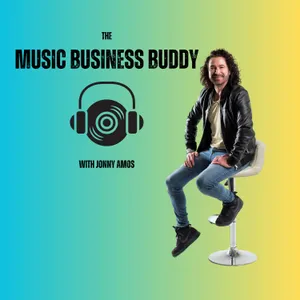
Free Daily Podcast Summary
The Music Business Buddy: Daily Summaries Delivered
by Jonny Amos
The Music Business Buddy is a podcast about the future of music careers. Each episode explores how artists and creators are navigating today’s evolving music industry — from AI and streaming to publishing, sync licensing, branding and fan growth. Featuring conversations with music executives, creatives, entrepreneurs and innovators, the show offers practical insights into how the modern music business really works. The Music Business Buddy is hosted by award winning UK based music professional Jonny Amos. Author of The Music Business For Music Creators (Routledge, 2024), Jonny is a music industry consultant, artist manager, producer and educator.
Latest Episodes
The most recent episodes — sign up to get AI-powered summaries of each one.
- 6 days ago41 min
Episode 117: How Artists Can Build Real Fan Relationships
How OpenStage Is Changing the Artist–Fan RelationshipWhat if artists could build a direct relationship with their fans — rather than relying on social platforms, streaming services and other third parties?In this episode of The Music Business Buddy, Jonny Amos speaks with Rob Sealy from OpenStage about the gap between having an audience and actually knowing who your fans are.The conversation explores why follower counts and streaming numbers don't tell the whole story, why consented fan data matters, and how artists can build deeper relationships with the people who genuinely support their careers.In This EpisodeRob’s financial services background and how it shaped his approach to music.How his son’s band highlighted the disconnect between artists, fans and audience data.Why artists may know their follower numbers without knowing their most valuable fans.The financial reality facing artists and why gross income doesn't always mean sustainable earnings.Why streaming, social media and mailing lists can create a false sense of audience ownership.Why genuine fan relationships can be more valuable than raw reach or follower counts.How OpenStage helps artists capture consented fan data and build direct relationships.How personalised access, rewards and tiered experiences can build loyalty.How fan insight can improve touring, ticketing, marketing and campaigns.Timestamps00:00 — Introducing Rob Sealy and OpenStage01:12 — Rob’s background in financial services03:18 — How his son’s band sparked OpenStage05:42 — The disconnect between artists and fans07:15 — Why artists don't always know their real fans09:03 — The 7–10% revenue reality for artists11:26 — The problem with streaming and social platforms13:48 — Reach versus genuine fan relationships15:32 — How OpenStage works17:41 — Consent, fan data and audience ownership19:56 — Creating personalised fan experiences22:14 — Rewards and building loyalty24:36 — Fan insight, touring and ticketing27:02 — Understanding engaged fans29:18 — Turning data into meaningful relationships31:42 — Examples of OpenStage in action34:05 — The future of the artist–fan relationship36:12 — Why direct relationships matterKey TakeawaysReach Isn't the Same as RelationshipFollowers, streams and views don't necessarily mean an artist has a meaningful relationship with their audience. Understanding and engaging with fans directly can be far more valuable.Artists Need Greater OwnershipSocial platforms and streaming services provide huge reach, but artists don't control those platforms or necessarily have direct access to their audiences. Consented, first-party fan relationships can provide greater control and insight.Data Should Create Better ExperiencesFan data is most valuable when it leads to better engagement — from personalised access and rewards to smarter touring, ticketing and marketing.The Future Is More PersonalAs technology makes it easier to reach huge audiences, genuine artist–fan relationships may become even more important.The question isn't simply:“How many people can I reach?”It's:“How well do I know the people who genuinely care about what I do?”About OpenStageOpenStage helps artists build stronger, more direct relationships with their fans through consented audience data and tools designed to create meaningful fan experiences.https://openstage.live
- 1 weeks ago36 min
Episode 116: From Songwriting to Sync - Inside Independent Music Publishing
Phil Simpson on Independent Music Publishing, Sync and the Power of Human TasteJonny Amos speaks with Phil Simpson, founder of First Original Music, about independent music publishing, sync, and why human relationships and taste remain at the heart of the business.Phil explains how First Original Music works with songwriters across publishing, administration and sync, what he looks for in a writer, and why a strong first approach can make such a difference.The conversation explores what makes a song genuinely useful for sync, how production and arrangement can affect opportunities, and why metadata, stems, instrumental versions and good presentation can improve a songwriter’s chances of being discovered and placed.In This EpisodeFirst Original Music’s approach to publishing, administration and sync.What Phil looks for in songwriters beyond simply making great music.Why personalised emails get attention while generic industry outreach is often ignored.What makes a song sync-friendly, including production, pacing and lyrical flexibility.How recording and arrangement choices can make a great song harder to place.The role of publishers as sounding boards in a writer’s long-term development.The growth of streaming content and the increasing competition for sync opportunities.Why metadata, stems, lyrics, instrumental versions and clean presentation matter.First Original Music’s move from global administration towards a network of independent international publishing partners.Why human taste and relationships remain crucial as technology and AI develop.Timestamps00:00 — Introducing Phil Simpson and music publishing01:00 — First Original Music’s deal models and sync focus03:06 — What Phil looks for in a writer05:36 — Why personalised emails get read07:52 — What makes a song work for sync08:22 — Production, pacing and lyrical ambiguity10:44 — When recording choices affect sync opportunities11:14 — Publishers as sounding boards12:30 — More opportunities, but more music competing13:26 — Metadata, stems, lyrics and codes15:12 — Using stems for an editorial brief16:34 — Specific songs for brands and shows17:26 — Taste, timing and interpretation19:54 — Why First Original moved away from global administration21:48 — Building international indie publishing relationships23:11 — Why smaller publishers can respond faster24:44 — The future of independent publishing26:09 — Human judgment and the limits of search tools27:50 — AI, taste and human connection28:31 — AI, attribution and provenance29:36 — Building genuine publisher relationships31:17 — Alignment, values and the importance of a strong first emailKey TakeawaysDon’t Write “For Sync” — Write Great SongsThe strongest sync opportunities often come from authentic songs that are emotionally flexible and can be interpreted in different ways.Independent Publishing Is About Adding ValueGreat independent publishers bring taste, relationships, industry knowledge and hands-on support — not simply rights administration.Presentation MattersGood metadata, lyrics, stems, instrumental versions and organised assets make music easier for publishers and music supervisors to discover and use.Human Taste Still MattersTechnology can improve discovery and attribution, but human judgment, instinct and relationships remain essential.Notable Quotes“What can we do to add value here?”“The fatal flaw in AI that will always be there is taste.”
- 2 weeks ago23 min
Episode 115: The Future of Music Supervision - Sync, Streaming, TikTok and AI
This episode delves deeply into the evolving role of music supervision, exploring its historical context, current challenges, and future trends. Jonny Amos discusses the dual nature of music supervisors as both creative and business-oriented professionals, the impact of social media and AI on music discovery, and the increasing importance of independent artists in the sync landscape. The discussion also highlights the rise of production music and the need for music supervisors to act as cultural tastemakers in a rapidly changing media environment.Keywordsmusic supervision, future of music, music licensing, AI in music, social media impact, independent artists, sync placements, production music, cultural tastemakers, music industryKey TopicsHistory and role of music supervisorsImpact of social media on music discoveryAI's role in music licensing and searchChanges in sync licensing economicsIndependent artists and media opportunitiesFuture trends in media and immersive experiencesSound Bites"Music supervisors can break an artist's career""Music is crucial for storytelling in media""Independent artists can influence media discovery"Chapters00:00 Introduction to music supervision and its importance01:47 Historical evolution of music supervision in film and TV03:53 Key partnerships: Directors and music supervisors05:59 Economic factors influencing sync licensing fees07:59 Social media's role in music discovery and culture10:00 AI's impact on search, clearance, and creative prompting12:04 The shift towards independent artists in media use13:57 Proactive relationships between artists, managers, and supervisors15:59 Production music and new media experiences18:08 The future of music supervision in immersive and interactive media19:58 The human element and integrity in music supervision21:54 Understanding the evolving role of music supervisors22:49 Conclusion: The future of music supervision and collaboration
- 3 weeks ago58 min
Episode 114: Building a Record Label From Scratch in 2026 (with Jamie Sellers)
I speak with hit producer Jamie Sellers about how music creation has changed now that artists can get a demo most of the way there on their own, but still need experienced ears to finish a record. Jamie explains why his role has shifted from building songs from scratch to acting more like a finisher and exec producer, and why that experience gap is still the difference between a good demo and a release-ready record. We also get into Jamie’s new label, Caledonia, including why he started it, what kind of artists he signs, and how he is thinking about ownership, licensing, publishing, and building a catalogue of assets for the long term.Key topicsJamie argues that technology and tutorials can get artists about 60 to 70 percent of the way to a solid record, but the final 30 percent still comes from experience, instinct, and nuance.He describes his production role as becoming more like a finisher or exec producer, helping artists bring projects to release-ready standard.The conversation covers the shift in artist economics, where a more efficient model is to let artists build a strong demo first and then bring in experienced help to complete it.He says a senior label contact encouraged him to stop waiting for a label job and instead build his own imprint, using his producer background and network.Caledonia is designed to feel artist-first and music-first, with the values of older label eras but a 21st century approach.He shares that he has signed two artists so far and both came through existing creative relationships.Jamie and Jonny talk through deal structures, including licensing versus assignment, and the long-term goal of building a catalogue of assets through both Caledonia Sound and Caledonia Songs.They finish on the importance of trust, artist motivation, and making sure the label relationship works both creatively and commercially.Timestamps Demo-to-record mindset Why experience still matters after the first 70 percent The final 30 percent only comes from time in the studio Why Jamie is moving toward a more selective, finishing role Why starting a label made sense Interviews, A and R conversations, and the advice that changed everything Why Jamie chose to start his own thing instead of chasing a label job The need for infrastructure after the studio session ends Caledonia’s ethos - heritage label values with a modern approach Working artist-first without big advances or big marketing budgets Imposter syndrome, then confidence from experience Signed potential versus evidence of momentum in modern music What Jamie looks for in artists he signs Producers as early-stage investors in artist development Why trust and work rate matter before signing How Dia Day became a key example of the label’s direction What her independence and momentum proved Balancing artistic instinct with market reality Why Jamie still thinks like a producer first Picking battles and keeping artists excited enough to promote Artists as CEOs of their own careers The future shape of the label and possible scaling options Assignment deal versus licensing deal Why one release was licensed and one was assigned Building a catalogue and the Caledonia Sound and Caledonia Songs structure Why the name Caledonia felt right Scotland, the song Caledonia, and the label identity Legacy, ambition, and what comes next Closing praise and plans to revisit the label in future
- Sep 1, 202627 min
Episode 113: What Every Songwriter Should Know About Music Publishing
In this episode, Jonny Amos explores the ins and outs of music publishing, focusing on what songwriters should know about choosing the right publisher, deal structures, and long-term relationships. Perfect for songwriters looking to understand how to navigate the complex world of music publishing.Keywordsmusic publishing, songwriters, publishing deals, royalties, sub-publishing, music rights, music industry, publishing contractsKey TopicsRole of music publishers in a songwriter's careerHow to identify suitable publishersDifferences between admin and control dealsImportance of understanding royalty rates and splitsGlobal collection and sub-publishing nuancesLong-term relationships and partnership strategiesNegotiating advances and deal termsMetadata and catalog management for songwritersSound bites"A music publisher is like a songwriter’s best friend.""Choose a publisher that fits your genre and goals.""Know your songs and their metadata."Chapters00:00 Introduction to Music Publishing and Its Role01:17 What Do Music Publishers Actually Do?02:15 Long-Term Relationships and Developing Songwriters04:38 Choosing the Right Publisher: Major vs. Independent06:22 Genre-Specific Publishers and Niche Markets07:48 Understanding Collection and Royalties Worldwide12:05 Admin Deals vs. Control Deals13:50 Deal Terms: Advances, Term, and Retention16:38 Royalty Rates and Income Streams17:35 Legal Aspects and Contract Clauses19:04 Co-Writing Opportunities and Relationships20:07 Managing Expectations and Communication22:01 Preparing Your Catalog for Publishing25:11 Investing in People, Not Just Songs26:36 The Language of Songs and Metadata27:30 Summary and Final ThoughtsResourcesKobalt Music Publishing - https://www.kobaltmusic.comTrue Love Music - https://truelovemusic.comRalph W Peer and Peer Music - https://peermusic.com
- Aug 25, 202641 min
Episode 112: How The Creator Economy Is Changing Music Licensing (With Chordal CEO Grayson Sanders)
In this episode, Chordal CEO Grayson Sanders joins me, Jonny Amos, for a discussion on the complexities of music licensing in the digital age, the potential of AI in rights management, and the future of micro-licensing for the creator economy. We explore how technology is transforming the industry and what it means for artists, rights holders, and content creators.Keywordsmusic licensing, AI rights management, micro-licensing, digital content, creator economy, rights clearance, TikTok music, music industry innovationKey TopicsMusic licensing complexities in the internet ageAI's role in rights management and licensingMicro-licensing as a scalable revenue modelThe future of music licensing by 2035TikTok's music licensing innovationsThe role of human curation vs algorithms in music discoveryChallenges faced by independent artists in licensingThe impact of AI on music rights and discoveryTakeawaysMusic rights are owned by multiple parties, making licensing complex.AI is used for rights cleaning, matching, and discovery, not for generating music.Micro-licensing is becoming essential due to internet content volume.Traditional blockbuster licensing will coexist with micro-licensing.Platforms like TikTok are pioneering scalable licensing solutions.Human curation remains vital despite AI advancements.Independent artists often lack knowledge about licensing requirements.AI can help manage rights more efficiently and fairly.Guest NameGrayson Sanders - CEO of ChordalSound bites"Music licensing is more complex than ever.""AI helps manage rights, not just create music.""Community curation will outpace algorithms."Chapters00:00 Introduction to music licensing challenges in the digital age01:57 How music rights are owned and the complexity of licensing03:53 The impact of the internet on licensing speed and scalability06:10 Chordal's platform and its role in licensing and rights management07:57 Expanding licensing to independent artists and creators11:02 The rise of micro-licensing and its importance13:58 The influence of AI in rights management and licensing17:04 Future of licensing in 2035: human vs. platform transactions20:00 The cultural shift back to human curation and community-based discovery22:52 The role of AI in managing rights and enhancing discovery25:56 The impact of platforms like TikTok on licensing and music use33:01 The importance of fair remuneration and rights holder control36:00 Final thoughts: coexistence of traditional and new licensing modelsResourcesChordal Platform - https://chordal.comMusic Ally Article on TikTok Commercial Music Library - https://musically.com/2026/05/11/chordal-got-5bn-tiktok-views-for-commercial-music-library-tracks/
- Aug 18, 202636 min
Episode 111: The Business Beyond The Music (with Lucas Rizzo)
In this episode, I am joined by Hekta Music Group CEO Lucas Rizzo who also operates as a Fractional Partner Across Brands, Tech and Capital. Lucas shares insights from his unique journey through music, tech, and startups, highlighting the interconnectedness of these worlds and how they shape his approach to artist development and catalog management.Keywordsmusic industry, startups, artist development, catalog acquisition, authenticity, creator economy, music tech, AI in musicKey TopicsInterconnection of music, tech, and startupsThe importance of authenticity in musicData-driven artist development strategiesThe role of catalog acquisition in musicBalancing passion and business in musicTakeawaysCross-industry experience provides a unique edge in music.Authenticity remains crucial despite industry pressures.Data and intuition together inform artist strategies.Catalog management is a key to sustainable success.Embracing being lost is part of finding your true path.Guest NameLucas RizzoSound bites"The interconnectedness of it all.""The DSP element is part of market fit.""Getting lost is part of the process."Chapters00:00 Introduction to Lucas and His Journey03:08 Interconnectedness of Music, Tech, and Startups05:55 Realising Success vs. Fulfilment09:00 The Transition from Artist to Business11:52 Goals in Catalogue Acquisition and Artist Development16:01 Navigating the Creator Economy20:07 Wisdom from Parallel Lives22:59 Authenticity in the Age of Social Media25:59 Finding Your True Self Through the JourneyResourcesHekta Music Group - https://hektamusicgroup.comChartmetric - https://www.chartmetric.com/Ovo by Drake - https://www.octobersveryown.com/
- Aug 11, 20261h 1m
Episode 110: How Song Royalties Are Being Miscounted — And How Technology Could Fix It (with Audoo CEO Ryan Edwards)
Your music can be playing in thousands of real-world places right now: cafés, shops, gyms, pubs, restaurants, clubs and grassroots venues. The uncomfortable truth is that public performance royalties are still often calculated from surveys, proxies and best guesses, not from actual usage. That means creators can be underpaid or overpaid, and a lot of value ends up drifting into the black box instead of reaching the people who wrote and performed the work. I’m joined by Ryan Edwards, CE...
Get The Music Business Buddy summaries in your inbox
Free AI-powered daily recaps. Key takeaways, quotes, and mentions — in a 5-minute read.
Get Free Summaries →Free forever for up to 3 podcasts. No credit card required.
You Might Also Like
Listeners also like.
Creative Entrepreneur: A Podcast For Business Growth and Trending News
Examines how entrepreneurship, creativity, and media trends shape modern business and personal branding.

The SonicScoop Podcast | Music Production, Audio Engineering, and The Business of Music
Explores music production, audio engineering, and creative business practices through interviews and tutorials.

And The Writer Is...with Ross Golan
A weekly conversation with influential songwriters about the creative process and behind-the-scenes realities of the music industry.

Music Matters with Darrell Craig Harris
In-depth interviews with major music artists, producers, and industry leaders shaping the global music landscape.

Right About Now - Legendary Business Advice
Raw business insights from founders and industry leaders, revealing real wins, failures, and actionable strategies without the fluff.

The Cast Nexa Show
Explores how AI, creativity, and digital storytelling are reshaping business, communication, and content in the modern era.

B2B Vault: The Biz To Biz Podcast
A veteran entrepreneur explores business technology, fintech, and regulatory trends shaping how companies operate and scale.
Everybody's Business
A weekly look at business news from Wall Street to unusual ventures, with insights from Bloomberg Businessweek journalists.

Music Saved Me Podcast
Artists share how music transformed their lives and aided emotional healing through personal stories and journeys of resilience.

Popcast
A weekly look at the latest in pop music, featuring criticism, interviews, and cultural trends from New York Times journalists.

The Money Mondays
Business discussions on investments, side hustles, and entrepreneurship with experts, athletes, and influencers in personal settings.

Everyone Hates Marketers | No-BS Marketing & Brand Strategy Podcast
A marketing podcast offering practical insights on branding, strategy, and customer research from industry professionals.
About The Music Business Buddy
The Music Business Buddy is a podcast about the future of music careers. Each episode explores how artists and creators are navigating today’s evolving music industry — from AI and streaming to publishing, sync licensing, branding and fan growth. Featuring conversations with music executives, creatives, entrepreneurs and innovators, the show offers practical insights into how the modern music business really works. The Music Business Buddy is hosted by award winning UK based music professional Jonny Amos. Author of The Music Business For Music Creators (Routledge, 2024), Jonny is a music industry consultant, artist manager, producer and educator.
Customized Recaps
AI-powered recaps with compact key takeaways, quotes, and insights.
Straight to Your Inbox
Get key takeaways from The Music Business Buddy in a 5-minute read.
Save Hours Every Week
Stay current on your favorite podcasts without falling behind.
Frequently Asked Questions
What is Podzilla's The Music Business Buddy daily summary?
It's a free AI-powered email that summarizes new episodes of The Music Business Buddy as soon as they're published. You get the key takeaways, notable quotes, and links & mentions — all in a quick read.
How does the The Music Business Buddy podcast summary work?
When a new episode drops, our AI transcribes and analyzes it, then generates a personalized summary tailored to your interests and profession. It's delivered to your inbox every morning.
Is this an official The Music Business Buddy product?
No. Podzilla is an independent service that summarizes publicly available podcast content. We're not affiliated with or endorsed by Jonny Amos.
Can I get summaries of other podcasts too?
Absolutely! The free plan covers up to 3 podcasts. Upgrade to Pro for 15, or Premium for 50. Browse our full catalog at /podcasts.
How often does The Music Business Buddy release new episodes?
The Music Business Buddy publishes weekly. Our AI generates a summary within hours of each new episode.
What topics does The Music Business Buddy cover?
The Music Business Buddy covers topics including Music, Education, Business, Marketing, Careers, How To, Commentary, Comedy Interviews. Our AI identifies the specific themes in each episode and highlights what matters most to you.
Start getting The Music Business Buddy summaries tomorrow morning.
Free forever for up to 3 podcasts. No credit card required.
Free forever for up to 3 podcasts. No credit card required.