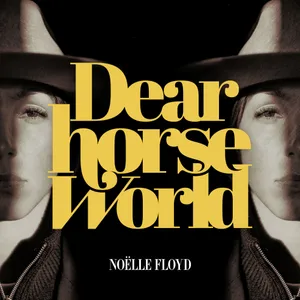
Free Daily Podcast Summary
The NOËLLE FLOYD Podcast: Daily Summaries Delivered
by NOËLLE FLOYD
Join Noëlle each week, as she embarks on a journey to explore the vast and diverse world of horses, delving into the many sub-communities and cultures that shape our shared passion. This podcast is about more than just riding styles or training techniques; it's about celebrating the deep connection between humans and horses, and understanding the common threads that tie us together. Whether you're a seasoned rider or just starting out, you'll find inspiration, knowledge, and a sense of belonging in every episode.
Latest Episodes
The most recent episodes — sign up to get AI-powered summaries of each one.
- 6 days ago55 min
The Horse Husband: How Evan Went From Terrified to the Barn Every Day ] No Stupid Questions with Evan the Groom
The same patience it takes to earn a horse's trust is the patience Evan Grooms brings to teaching the rest of us. He came to horses the way most people never do — from the outside, with no background, terrified of the biggest one in the barn — and turned that beginner's-eye view into an education. Today he does the horse grooming and horse care in his wife's dressage business, and the horse world knows him as the viral comedian who makes the barn make sense to people who have never touched a horse. This is a No Stupid Questions episode, and it is one of my favorites we have done. Evan explains horses the way he once needed them explained to him — no jargon, no ego, just plain answers to the things beginners are too embarrassed to ask out loud. He was an engineer turning algae into protein. Then marketing. Then the pandemic took his job, his wife Ashley needed help at the barn, and he picked up a camera. The videos were meant to make his own family laugh — people who knew nothing about horses. Instead they built a following, and somewhere in there Evan became something he never trained to be: an educator. We get into the skill he rates above all others and hears discussed least — observation, watching for the thing that is off today — and how six years of it on the ground is only now showing up in the saddle. His advice for every "horse husband" and non-horse partner out there: just support that. Why he would rather make a video so ridiculous you remember it than one only horse people understand, and how a loogie teaches you the word "hock." The groom's real job when no one is watching: being the horse's constant. And the mare who taught him the most — a year to earn her trust, and then, he says, she gives you everything. There is also a talking pony named Piper, a children's book about a lost little bird, and — as of last week — his first ride off the lunge line. If someone in your life doesn't understand the horse thing — or if you're the one at the rail — send them this. Evan is a groom, content creator, and horse-care specialist in Southern California, where he works alongside his wife, dressage trainer Ashley Donant. He built his following making horses funny and reachable for people who have never touched one. Total Feeds Our mission to provide quality nutrition to people and animals puts us in contact with all manner of interesting folks. Whether you're interested in our animal feed, or the people involved in the animal industry: you'll find it at Total Feeds! Check out our line of Quality Animal Feeds here: https://totalfeeds.com Interested in more from Noëlle? Noëlle's writing again — head to her Substack for essays, observations, and the kind of thinking that doesn't fit in an episode. https://noellefloyd.substack.com Every episode is also on YouTube, where the conversation continues in the comments. https://www.youtube.com/@noellefloyd_plus And if you're ready to go deeper, NF+ is where the real work happens — masterclasses, curated content, and a community that takes horses seriously. https://noellefloydplus.com You can also download the app - NF+ App Thank you for your listening!
- 1 weeks ago53 min
How Steffen Peters Trains a Horse: Self-Carriage, Groundwork & a New Stallion (Part 2)
A horse has two choices. Learn to accept the bit, or fight it for the rest of its life. That's Steffen Peters, and this is the half where his hands are on the reins. If you heard Part 1, you met the man — six Olympics, the dark place, the way back. This one is the horse training — the groundwork up through Grand Prix. Forty years of it, distilled into the way he starts a five-year-old and the way he brought a brand-new stallion into the ring after two weeks together. Here's the thing that runs through all of it: he doesn't push a horse into the bridle. Ever. He thinks ninety-five percent of horses are ridden with too much contact, and he'll tell you why "more hind legs, more into the hand" was never the answer for him. What he wants is suppleness, self-carriage, lightness — a soft rein you can see, and a horse that carries itself instead of leaning on your hand. We get into where that starts, and it is earlier than you would think. The groundwork — on a lead rope, in a halter — the horse that stops when you stop without a pull on the rope. He calls it cooperation, not submission, and he means the difference exactly. From there it's the walk work most riders rush past, the half halt that becomes a reflex, the spur as a reminder and never a crutch, and the three aids he says are the only tools you really have. There's the new stallion — fourteen, extremely smart, the horse that trained his rider to say "don't quit." There's Totilas, and what it takes to watch someone beat you and mean it when you call it good. And there's the compliment two vets paid him without knowing he could hear: at Steffen's barn, they can't make any money — because of the walk breaks, and what they save. If Part 1 was how he learned to manage himself, this is how he manages the conversation with the horse. Same man. Now the method. Steffen Peters is a German-born American dressage rider, a six-time Olympian and multiple Olympic medalist, and one of the most decorated dressage athletes in United States history. He returned to competition this year, opening his season aboard a new stallion with wins across the Prix St. Georges, the Intermediaire I, and the Grand Prix. Chapters: 0:00 Riding Becomes Training 01:39 Flow State With New Stallion 02:19 Suppleness Over Hind Legs 04:37 Stop the Nagging Leg 05:52 Feel Over Looks 08:16 How Much Contact 11:57 Western Lightness Lessons 13:45 Warmup Is Training 17:30 Mindful Aids and Tools 20:38 Reliable Tests and Nerves 22:32 Refining Pressure Release 25:05 Walk Work and Discipline 27:12 Quiet Coaching Shift 27:54 Trainer Judge Clinics 29:06 From Thinking To Reflex 31:02 Flow State In Competition 34:09 Building Presence On Ground <span class= "text-default-fg-primary label-1-regular Te
- 2 weeks ago50 min
Steffen Peters: The Six-Time Olympian on the Dark Place Behind the Medals (Part 1)
When did you make it? Ask most riders that question and they'll point to a medal. Steffen Peters points somewhere else — to the darkest place he has ever been, and the way back out of it. This is Part 1 of my conversation with a six-time Olympian, and we barely touch a rein. Forty years of horse training sit behind this man, and the first thing he wants to talk about isn't a horse. It's the thing underneath the ribbons. The neuropathy in his hands and feet after Paris that twenty-five doctors couldn't explain. The cold plunge and the vagus nerve, and the natural experiment that gave him relief when the medications didn't. The one ride in Tokyo — September 27th, 2018, a date he can still name — that sent him spiraling, and what it taught him about himself that no arena ever did. He says you cannot manage stress. You can only manage yourself. He learned it, in his own words, way too late. The quality of your thoughts becomes the quality of your life, and for a while his thoughts were trying to take him under. We get into the ego leaving, and the pride that stays. Why he loves that strangers in an airport call him "the rave horse" and never say his name. Why exposing weakness became the strength he's known for. What radical acceptance looks like at a Grand Prix, standing at the gate. And how the same sensitivity that can tip a person toward anxiety is the exact instrument that reads a horse — the sensitivity that is the whole art of his horse training, and also the thing that nearly broke him. Dr. Reiner Klimke is here too, in a story Steffen didn't learn the truth of until five years after it had already set the course of his career. If you have ever carried a bad day home and let it live in you overnight, this hour is for you. It is a rider telling you what the podium doesn't show. Steffen Peters is a German-born American dressage rider, a six-time Olympian and multiple Olympic medalist, and one of the most decorated dressage athletes in United States history. He returned to competition this year after stepping away following the Paris Games, opening his season with wins in the Prix St. Georges, the Intermediaire I, and the Grand Prix. Chapters: 00:00 When It Got Dark 02:04 Neuropathy After Paris 06:36 Managing Thoughts Not Stress 08:28 World Games Spiral 12:34 Why Horses Deserve Credit 17:55 Flow Junkies Explained 20:15 Stepping Away To Heal 22:30 Las Vegas Highs And Lows 25:07 Vulnerability And The Brain 27:23 Tools for Dark Days 29:15 Radical Acceptance Practice 30:34 Sensitivity as Superpower 33:05 Awareness in the Saddle 35:05 Judged Sport Pressure 36:35 How Dressage Judging Evolved 41:02 Modern Horse vs Tradition 42:10 Klimke Sponsorship Story 45:26 What Made Dr. Klimke Great <span class= "text-defau
- Sep 2, 202648 min
She Remade Black Beauty. Now She's Fighting to Save America's Wild Horses | Ashley Avis
There's one horse you would cross the country for. You know the one. The horse who found you when you had the least to give and somehow handed you back to yourself. Now hold that horse in your mind, and sit with this: roughly 20,000 of them a year get loaded onto trailers bound for Canada and Mexico, and it reaches every kind of horse — the show jumper, the Thoroughbred who ran too slow, the lesson pony grown old, the wild horses rounded up off land that was meant to protect them. Ashley Avis has looked straight at it. She sewed a button cam into her shirt and walked into the Texas auctions where kill buyers wait. She founded the Wild Beauty Foundation, directed the mustang documentary Wild Beauty: Mustang Spirit of the West, and remade Black Beauty for Disney+. And she has turned all of it toward one aim: passing the SAFE Act in the year of the horse. This conversation goes to the place most people flinch from. Ashley and I talk about why horse people, of all people, find horse slaughter the hardest thing to watch — and how she makes you look anyway, through ninety-second films voiced by Mackenzie Foy, Jessica Springsteen, and Diane Lane, and scored by Billie Eilish's "What Was I Made For?" We talk about my mare Lady, one of those wild horses herself, who ran feral for fifteen years before she came to me, and who could have ridden that same truck to Mexico. We talk about the black colt with pneumonia that Ashley coaxed out of a kill buyer's pasture, and the economics that let a man triple his price on a horse's life. And we talk about Black Beauty — what Anna Sewell did in 1877 by writing from a horse's point of view, and why it still rearranges the people who meet it. Then Ashley tells you exactly what two minutes of your day can do. A microsite. Your zip code. A pre-written letter your member of Congress will read. If you have ever been remade by a single horse, this is the reason to pull the car over. Ashley Avis is a filmmaker and the founder of the Wild Beauty Foundation. She directed Disney+'s Black Beauty and the mustang documentary Wild Beauty: Mustang Spirit of the West, and her Lost Horses campaign is carrying the SAFE Act toward a vote. Make the call to Congress to pass the SAFE Act: Call the U.S. Capitol Switchboard to directed to your Senators and Representative: 202-224-3121. Once connected, all you have to say is, "Hi, my name is [NAME] and I am calling from [City/State] to ask that the [Senator/Representative] pass the SAFE Act (H.R. 1661, S. 775) to protect American horses, both domestic and wild, from being exported out of the United States to slaughter. Thank you." Share the Lost Horses PSA: The Lost Horses campaign and legislation to stop horse slaughter is gaining momentum and we must keep up the awareness. Please share the PSA on social media and with your friends and family. Vimeo, YouTube, Instagram, Facebook. Donate to the Lost Horses campaign: Help continue to reach the masses so that no horse is lost again. losthorses.org/support Episode Sponsor: YETI Made for early mornings in the barn and long days in the saddle. Whether you're hauling feed, chasing daylight on the trail, or loading up for a weekend on the road, YETI coolers and drinkware are built to handle it. No shortcuts. No compromise. Just gear that works as hard as you do. Explore more at <a href="https://www.y
- Aug 26, 20261h 21m
What this Dressage Rider Learned From a Cowboy - Kasey Perry-Glass
You get the thing you chased for five years. And the ride is the worst one you've ever put down. Kasey Perry-Glass reached the Olympic Games on the horse she bought to take her there — Doublé — and came home into a depression that blindsided her. This is the conversation under the medal photo. What it costs to want something that badly, and what she found on the far side of it. She married a cowboy. Dana Glass starts colts and takes in the horses other people gave up on — the rearers, the buckers, the bolters, carrying baggage nobody unpacked. Two worlds under one roof: her classical dressage, his groundwork. What one taught the other is most of this hour. We get into the perfectionism that dressage rewards and then punishes — a score out of 100 that stays out of reach, a sport where the best mark is a C or a D on a good day. Why she stopped posting to social media. The line Martin Black uses, let them cook, and why ending a ride a little early beats grinding it into the ground. Pain versus behavior, and the checklist she taught Dana: clear the ulcers, the hindgut, the teeth, before anyone calls it attitude. Then the mental game she learned the hard way. Finding her number with Annette Paterakis — the exact pitch of nerves and calm that lets her ride her best. The work with Dr. Jenny Susser. Blacking out in the saddle, ten minutes gone, grinding the same movement. Boundaries. Getting told she was "too nice" for this sport, and what she kept anyway. Behind the vertical, point of balance, throughness without a single draw rein — she explains the dressage the way she explained it to Dana, the sport he first met through her. This one is for anyone who has wanted something so badly it made them small, and found their way back to the size they actually are. Kasey Perry-Glass is a US Olympic dressage rider — team bronze at Rio 2016 (America's first Olympic dressage medal since 2004) and team silver at the 2018 World Equestrian Games — who competes as Kasey Perry. Her longtime partner was the Grand Prix gelding Doublé (Goerklintgaards Dublet), now retired; she currently campaigns Heartbeat W.P. She and her husband, cowboy and colt-starter Dana Glass, run Two Worlds Equestrian, joining Western horsemanship and Grand Prix dressage under one program. To Learn more about Kasey Perry-Glass: website | instagram | facebook In This Episode You'll Learn What it costs to reach an Olympic Games and ride your worst test there, and the depression Kasey came home to The perfectionism dressage rewards and then punishes, chasing a score out of 100 in a sport where a great mark is a C Let them cook: why ending a ride a little early beats grinding a movement into the ground The pain-versus-behavior checklist Kasey taught Dana — ulcers, hindgut, teeth, before anyone calls it attitude Finding your number with sports psychologist Annette Paterakis — the exact pitch of nerves and calm that lets you ride your best Blacking out in the saddle, ten minutes gone on the same movement, and the mental work that pulled her out Behind the vertical made plain: the poll as the highest point, and why a horse's own point of balance can't be copied and pasted Throughness without a single draw rein, and how groundwork gave an Olympic rider tools her dressage babies never had Chapters: 0:00 How Kasey met a cowboy 4:51 What Dana does: colt starting & unpacking a horse's trauma 8:41 Groundwork, the rope halter & being a beginner again 14:34 [ad: Total Feeds] 15:14 The perfectionism dressage rewards and punishes 19:51 Let them cook: ending on a good note 23:17 Pain vs. behavior: what we blame on the horse 29:05 Bringing two worlds together 30:36 Welfare, eliminations & the "blood" rule 33:44 [ad: Noëlle's Substack] 36:07 Judging transparency & educating the viewer 39:21 Behind the vertical, explained 41:44 Point of balance & throughness without draw reins 44:47 Training aids as tools; groundwork informs the saddle 49:34 The Olympics — and the depression after 53:44 Patience in a same-day world 57:22 The mental game: finding your number 1:02:29 Boundaries, thick skin & remaking herself 1:07:19 Tough vs. strong; raising horses and kids 1:12:50 Rapid-fire questions Episode Sponsor: Connaway & Ass
- Aug 17, 20261h 6m
The Move Most People Get Backwards With a Cow — and What It Teaches About Horse Training | Martin Black (Pt. 2)
You think the cow is the hard part. She isn't. You are. You get ahead of her to turn her, and she beats you to the herd every time. You spur, you pull, the horse's head comes up, and now nobody is watching the cow at all. Martin Black has read millions of head of cattle, and the horse training lesson underneath all of it is the one almost everybody gets backwards. To cut one cow out, you leave her alone and stir the herd around her. To turn her, you turn away — not toward. The horse rates the cow the way a foal learns to rate its mother in the first thirty minutes of life. It's already in there. Our job is to stay out of the road so the horse can use it. This is Part 2 of my week with Martin on his ranch in the Great Basin. Part 1 is the ranch, the horses, and reading the moment — start there. We work the balance point and the flight zone, and why a cow reads your horse's head like a horn and your horse's hip like something softer. Why getting in front of a cow to block her only sends her faster. What Tom Dorrance told Martin decades ago about turning tail, and how that one idea makes a green horse handier by the day. Gene Lewis, his mother's cousin, and jumpers that rate a fence with nobody telling them where to put their feet. Then the part that reshaped how I keep my own horses. Turnout over stalls. Bare feet when the ground allows. A crick to cross and rocks to pick through, because a horse who has to sort out the terrain grows savvy, and a horse who never has to stays a passenger. Martin runs horses as a business, not a companion animal, and says his vet bills will stand against anyone's. Colic almost unheard of. Feet the ground keeps honest. It made me ask what I was really protecting when I bubble-wrapped mine. The horse training here is subtraction, not addition. Cows think more like horses than you'd guess, and empathy runs under all of it. Martin Black is a lifelong Great Basin horseman and stockman from a multi-generation ranching family, working in the vaquero tradition and the lineage of Tom Dorrance. He spent ten years starting young horses at Calumet Farm in Lexington and now teaches horsemanship and stockmanship through clinics and a ranch school. If you want to go further with your own horse, NF+ has 70+ masterclasses at noellefloydplus.com or through the app link in the show notes. In This Episode You'll Learn The move almost everyone gets backwards: to hold a single cow, you leave her alone and stir the herd around her Why getting in front of a cow to block her only sends her faster back to the herd — and what to do the instant she turns How a cow reads your horse's head like a horn and your horse's hip like something softer, so a leg-yield moves her where a headbutt would spook her <li class= "font-claude-response-body whitespace-normal break-words pl-2" data-sourcepos="85:1-85:123
- Aug 10, 20261h 0m
Why You Should Stop Patting Your Horse | Martin Black on Western Horse Training
We pat our horses to tell them they did well. Martin Black says the horse would rather we kept our hands to ourselves. He has spent a life inside western horse training — starting close to five hundred colts a year on the same Great Basin country his family has ranched since the 1860s, seventy miles from his nearest neighbor, the road over the mountain closed all winter. And what he showed me this week is that the pat is for us. The reward the horse is after is chemical: the flood of serotonin and dopamine that arrives when pressure lifts and the body comes home to rest. Martin calls it the cocktail. Rouse the horse, bring him down, and he licks his lips — he got his drink, and he will go to that edge with you again because he knows you will take him to the bar after. This is western horse training as one of its living masters practices it, and almost none of it looks like technique. Martin reads a colt the way the rest of us read a single sentence — ten things at once. He calls it peripheral thinking. The predator in us locks onto the prey: the outcome, the lead change, the plan for the day. Martin holds the objective and lets the plan bend to whatever the horse hands him. The seed that wants to grow today gets watered today. The one that is not ready waits. We talk about the hours. I could shadow him in Idaho for years and still not own his timing, because feel does not transfer. You earn it one horse at a time, and no clinic sells it. We talk about why he trains his cattle the way his family has since the 1860s — the rodear, the old vaquero work that crossed from Spain and reached Texas two centuries late — and why a dressage horse belongs on a cow as much as any ranch gelding does. And we go into the cowboy neuroscience of it: sympathetic arousal, homeostasis, pressure and its relief as one thing rather than two. Dr. Steve Peters pulled Martin out of a lineup for this. Martin calls himself a bartender. He once waited forty-five minutes on a traumatized cutting mare, feeling her heartbeat through the saddle horn, until she finally licked her lips and found her way home. Part one of two. In part two, Martin takes it to the ground — reading cattle by the million, and moving one cow out of a herd by leaving her alone. Martin Black is a Great Basin horseman and colt starter who has started close to five hundred colts a year, working the same remote Idaho country his family has ranched since the 1860s. He carries the lineage of Tom Dorrance and Ray Hunt into a plainer, harder question: what does the horse in front of you need? In This Episode You'll Learn Why the pat you give after a good round is for you, and what the horse is asking for instead. The cocktail — how serotonin and dopamine turn pressure and its release into the reward the horse remembers. Peripheral thinking: reading ten things at once, and why the predator in us locks onto only one. Why Martin holds the objective and lets the horse choose which seed grows today. <li class= "font-
- Aug 4, 202618 min
Monty Roberts, Alexandra Kurland, and the Future of Horse Training
When I was eleven, my mom handed me The Man Who Listens to Horses. Last week, the man who wrote it died. Within days, the horse world also lost Alexandra Kurland — the woman who spent decades convincing us that a clicker and a handful of food belonged in serious horse training. This is a solo episode. An essay, read aloud, on two pioneers who stood in opposite corners of horse training and still moved the same conversation forward. On join up, and what it asks of a flight animal sent around a round pen. On positive reinforcement, and why handing a horse food never automatically creates consent. On the disputed parts of Monty's story, and why we can hold gratitude and discernment at the same time. And underneath it all, the question I keep circling: why do we need our teachers to be heroes? We put trainers on pedestals. The flaws appear — they always do — and reverence flips to contempt overnight. Either way, the person is never allowed to be human. And pedestals are useless to horses. A pedestal has never once made a horse feel safer, calmer, or less confused about what we are asking. I believe we are living through the biggest shift in the human-horse relationship since machines took horses out of our fields and our wars. The question used to be: can the horse do it? The question becoming ours is: what does it cost the horse to do it? Did the horse understand, or did it simply stop resisting? Does the absence of conflict mean the horse feels safe? One day, we will be the outdated ones. The next generation will see pressure we could not recognize and pain we rationalized. I hope so. If they never outgrow us, we failed to help them see farther. Monty Roberts and Alexandra Kurland do not need us to decide which one was right. They need us to carry the torch. And the torch is not join up. The torch is not the clicker. The torch is the responsibility to keep listening. Thank you, Monty. Thank you, Alexandra. This one is for the lineage — and for my mom, who put that book in my hands. In This Episode: Why join up is pressure and release in learning-theory terms — and why naming that honors Monty more than sainthood ever could The question Alexandra Kurland made possible: how do I create a learning environment where the horse becomes an active participant What the clicker teaches the human — poor timing, criteria that jump too fast, a missed try; the horse reports every one Why food on its own creates neither agency nor consent, and what positive reinforcement still demands of the person holding it Becky Moody at the top of dressage: trained with Carl Hester, embracing clicker work — evolution over allegiance The pedestal inversion: how reverence flips to contempt when the flaws appear, and why both extremes abandon the horse The three sentences responsible learning gets to say: this is what you made possible, this is where I believe you were wrong, this is what I will carry forward Learn more about Monty Roberts: website | facebook | youtube Learn more about Alexandra Kurland: <a href= "https://www.theclickercenter.com/" target="_bla
Get The NOËLLE FLOYD Podcast summaries in your inbox
Free AI-powered daily recaps. Key takeaways, quotes, and mentions — in a 5-minute read.
Get Free Summaries →Free forever for up to 3 podcasts. No credit card required.
You Might Also Like
Listeners also like.
Listening to the Horse by Elaine Heney | Equine training, education, psychology, horsemanship, groundwork, riding & dressage for the equestrian. With horse care, health, ownership, knowledge, communication, mind, connection & behaviour information tips.
Teaches horse training and horsemanship through groundwork, riding, and behavioral understanding to build trust and connection.
Straight from the Horse Doctor's Mouth
A veterinarian and host discuss horse healthcare and proper care for all horse owners.
DarkHorse Podcast
Biologists Bret Weinstein and Heather Heying apply evolutionary theory to analyze culture, science, and societal challenges.
The Prancing Pony Podcast
A weekly discussion exploring J.R.R. Tolkien's Middle-earth with humor and deep fan insight.
The Full Tilt Podcast
Examines the mindset, discipline, and sacrifices of elite athletes and high achievers through in-depth interviews.

Get Obsessed : With Living Your Best Life
Two hosts explore transformative stories and taboo topics with people challenging norms and living unfiltered lives.
Dalton Fischer Podcast
Conducts in-depth interviews that highlight the personal stories of guests through thoughtful questions and active listening.

The Drop the Needle Podcast
Interviews exploring spirituality, mindset, and music, featuring healers, artists, and teachers discussing personal growth and meaningful songs.

The Noco Moto Motorcycle Podcast
Two hosts explore and rate motorcycles worldwide while discussing the culture and philosophy of motorcycling.

Your Family Dog Podcast
Trainer Tina Spring offers practical advice for families solving everyday dog behavior challenges.
Grassfed Life
Covers small-scale farming, grass-fed livestock, and farm-based entrepreneurship with seasonal insights and practical guidance.
Enrichment for the Real World
Emily Strong and Allie Bender discuss animal enrichment, care strategies, and caregiver well-being for pet guardians.
About The NOËLLE FLOYD Podcast
Join Noëlle each week, as she embarks on a journey to explore the vast and diverse world of horses, delving into the many sub-communities and cultures that shape our shared passion. This podcast is about more than just riding styles or training techniques; it's about celebrating the deep connection between humans and horses, and understanding the common threads that tie us together. Whether you're a seasoned rider or just starting out, you'll find inspiration, knowledge, and a sense of belonging in every episode.
Customized Recaps
AI-powered recaps with compact key takeaways, quotes, and insights.
Straight to Your Inbox
Get key takeaways from The NOËLLE FLOYD Podcast in a 5-minute read.
Save Hours Every Week
Stay current on your favorite podcasts without falling behind.
Frequently Asked Questions
What is Podzilla's The NOËLLE FLOYD Podcast daily summary?
It's a free AI-powered email that summarizes new episodes of The NOËLLE FLOYD Podcast as soon as they're published. You get the key takeaways, notable quotes, and links & mentions — all in a quick read.
How does the The NOËLLE FLOYD Podcast podcast summary work?
When a new episode drops, our AI transcribes and analyzes it, then generates a personalized summary tailored to your interests and profession. It's delivered to your inbox every morning.
Is this an official The NOËLLE FLOYD Podcast product?
No. Podzilla is an independent service that summarizes publicly available podcast content. We're not affiliated with or endorsed by NOËLLE FLOYD.
Can I get summaries of other podcasts too?
Absolutely! The free plan covers up to 3 podcasts. Upgrade to Pro for 15, or Premium for 50. Browse our full catalog at /podcasts.
How often does The NOËLLE FLOYD Podcast release new episodes?
The NOËLLE FLOYD Podcast publishes weekly. Our AI generates a summary within hours of each new episode.
What topics does The NOËLLE FLOYD Podcast cover?
The NOËLLE FLOYD Podcast covers topics including Leisure, Education, Sports, Hobbies, Wilderness, Self-Improvement. Our AI identifies the specific themes in each episode and highlights what matters most to you.
Start getting The NOËLLE FLOYD Podcast summaries tomorrow morning.
Free forever for up to 3 podcasts. No credit card required.
Free forever for up to 3 podcasts. No credit card required.