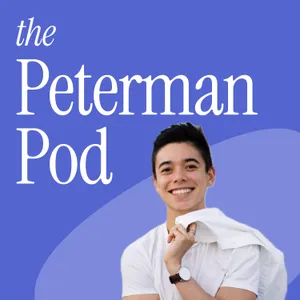
Free Daily Podcast Summary
The Peterman Pod: Daily Summaries Delivered
by Ryan Peterman
Sharing the transparent career stories of technical people. Hosted by an ex-Staff engineer at Instagram
Latest Episodes
The most recent episodes — sign up to get AI-powered summaries of each one.
- 3 days ago55 min
How Two First-Timers Created the World’s Most Popular Processor | Steve Furber
In 1984, two first-time chip designers, Steve Furber and Sophie Wilson, created what would become the most popular processor in the world (ARM). I interviewed Steve about how they did it with such a small team that had no formal training. We also covered a bunch of questions about hardware design and his answers were so clear. I learned a lot and hope you enjoy the episode!• My ergonomic keyboard project I mentioned, you can follow along here: https://read.compose.llc/• The Kickstarter page for it: https://www.kickstarter.com/projects/ryanlpeterman/compose-simple-ergonomics-beautifully-donePodcast links:• YouTube: https://www.youtube.com/watch?v=3K9L0dRRzOs• Apple: https://podcasts.apple.com/us/podcast/the-peterman-pod/id1777363835• Transcript: https://www.developing.dev/p/e075-steve-furberThank you to this episode's sponsors for supporting my work:• WorkOS: makes your app Enterprise Ready with easy to use APIs to add SSO, SCIM, RBAC, and more in just a few lines of code, check them out at https://workos.com/• Chargebee: billing and monetization infrastructure for the AI economy, so your pricing can evolve alongside your product, check them out at https://www.chargebee.com/Timestamps: Intro Building his first computer BBC Micro Designing the ARM processor Why their design was better Emulators and interpreters Instruction sets and microarchitecture How they learned chip design Why they were so successful America vs UK Why Acorn failed Neuromorphic computing Winning an IMO medal His most proud engineering Top technical book recommendation Advice for young people OutroWhere to find Steve:• Personal website: https://personalpages.manchester.ac.uk/staff/steve.furber/• University of Manchester research profile: https://research.manchester.ac.uk/en/persons/steve.furber/• X: https://x.com/FurberSteve• LinkedIn: https://www.linkedin.com/in/stevebfurber/• GitHub: https://github.com/sfurber• ORCID: https://orcid.org/0000-0002-6524-3367• Google Scholar: https://scholar.google.com/citations?user=jLnsiBEAAAAJ• Wikipedia: https://en.wikipedia.org/wiki/Steve_FurberWhere to find Ryan:• Newsletter: https://www.developing.dev/• X/Twitter: https://x.com/ryanlpeterman• LinkedIn: https://www.linkedin.com/in/ryanlpeterman/• Threads: https://www.threads.com/@ryanlpeterman• Instagram: https://www.instagram.com/ryanlpeterman• TikTok: https://www.tiktok.com/@ryanlpetermanReferenced in this episode:• Reduced Instruction Set Computer Architectures for VLSI: https://mitpress.mit.edu/9780262111034/reduced-instruction-set-computer-architectures-for-vlsi/• Computer Architecture: A Quantitative Approach: https://shop.elsevier.com/books/computer-architecture/hennessy/978-0-443-15406-5• Computer Organization and Design: The Hardware/Software Interface: https://shop.elsevier.com/books/computer-organization-and-design/patterson/978-0-08-050257-1
- 1 weeks ago42 min
Nobel Prize Winner: AI’s Impact On Drug Discovery And Biology | Venki Ramakrishnan
Venki Ramakrishnan (Molecular biologist, Nobel Prize): "The experimental part [of drug discovery] is always going to be the bottleneck."Recent headlines about using AI to speed up drug discovery made me curious about what that looks like and where it is today. So I flew to the UK to interview Venki Ramakrishnan who is on the scientific advisory board of Demis Hassabis' Isomorphic Labs.He has described himself as a "failed physicist" starting originally with a physics PhD who changed fields because he felt his work was incremental. After pivoting into molecular biology without a degree he discovered the field of work that eventually led to his Nobel prize.So aside from drug discovery, I also asked him about how AI is impacting the field of biology, how biology compares to physics, and the politics behind the Nobel prize.• My ergonomic keyboard project I mentioned, you can follow along here: https://read.compose.llc/• The Kickstarter page for it: https://www.kickstarter.com/projects/ryanlpeterman/compose-simple-ergonomics-beautifully-donePodcast links:• YouTube: https://www.youtube.com/watch?v=-1q0zA21AkY• Apple: https://podcasts.apple.com/us/podcast/the-peterman-pod/id1777363835• Transcript: https://www.developing.dev/p/e074-venki-ramakrishnanThank you to this episode's sponsor for supporting my work:• WorkOS: makes your app Enterprise Ready with easy to use APIs to add SSO, SCIM, RBAC, and more in just a few lines of code, check them out at https://workos.com/Timestamps: Intro How drugs are designed Why drug testing remains difficult How AI will impact the field of biology Switching from physics to biology How to choose research problems that matter Did lacking a credential hurt his career Physics vs biology Why physicists succeed in other fields The politics of the Nobel Prize Top scientific book recommendations Advice for young people OutroWhere to find Venki:• Personal website (MRC Laboratory of Molecular Biology): https://mrclmb.ac.uk/research-leaders/venki-ramakrishnan/• Google Scholar: https://scholar.google.com/citations?hl=&user=oTI5BjIAAAAJ• Royal Society: https://royalsociety.org/people/venki-ramakrishnan-12139/?page=43• Nobel Prize: https://www.nobelprize.org/prizes/chemistry/2009/ramakrishnan/biographical/• Wikipedia: https://en.wikipedia.org/wiki/Venki_RamakrishnanWhere to find Ryan:• Newsletter: https://www.developing.dev/• X/Twitter: https://x.com/ryanlpeterman• LinkedIn: https://www.linkedin.com/in/ryanlpeterman/• Threads: https://www.threads.com/@ryanlpeterman• Instagram: https://www.instagram.com/ryanlpeterman• TikTok: https://www.tiktok.com/@ryanlpetermanReferenced in this episode:• Isomorphic Labs: https://www.isomorphiclabs.com/• AlphaFold: https://deepmind.google/science/alphafold/• AlphaGenome: https://deepmind.google/blog/alphagenome-ai-for-better-understanding-the-genome/• Neutron-Scattering Studies of the Ribosome (Scientific American, 1976): https://www.scientificamerican.com/article/neutron-scattering-studies-of-the-r/• Surely You're Joking, Mr. Feynman!: https://wwnorton.com/books/Surely-Youre-Joking-Mr-Feynman/• The Double Helix: https://www.simonandschuster.com/books/The-Double-Helix/James-D-Watson/9780743216302
- 2 weeks ago1h 21m
Microsoft Distinguished Eng: Why And How To Port Your Entire Codebase to Rust | Stephen Toub
Stephen Toub is a Distinguished Engineer at Microsoft who single-handledly rewrote the GitHub Copilot runtime (400,000-line codebase) in Rust. We talked about why/how he did it, how Rust compared with other languages, and everything he learned in the process.• My ergonomic keyboard project I mentioned, you can follow along here: https://read.compose.llc/• The Kickstarter page for it: https://www.kickstarter.com/projects/ryanlpeterman/compose-simple-ergonomics-beautifully-donePodcast links:• YouTube: https://www.youtube.com/watch?v=PLMOVlZC4eU• Apple: https://podcasts.apple.com/us/podcast/the-peterman-pod/id1777363835• Transcript: https://www.developing.dev/p/e073-stephen-toubThank you to this episode's sponsor for supporting my work:• WorkOS: makes your app Enterprise Ready with easy to use APIs to add SSO, SCIM, RBAC, and more in just a few lines of code, check them out at https://workos.com/Timestamps: Intro Why the Copilot runtime needed a Rust port Why he chose Rust Discussing rollout strategies How he caught regressions Guiding the agents Catching regressions before prod Which models he used The end benefit and costs When to do a full rewrite Career learnings on the way to Distinguished Top technical book recommendation Advice for young engineers OutroWhere to find Stephen:• GitHub: https://github.com/stephentoub• X: https://twitter.com/stephentoub• LinkedIn: https://www.linkedin.com/in/stephen-toub-75979745/Where to find Ryan:• Newsletter: https://www.developing.dev/• X/Twitter: https://x.com/ryanlpeterman• LinkedIn: https://www.linkedin.com/in/ryanlpeterman/• Threads: https://www.threads.com/@ryanlpeterman• Instagram: https://www.instagram.com/ryanlpeterman• TikTok: https://www.tiktok.com/@ryanlpetermanReferenced in this episode:• Stephen Toub’s post on porting the GitHub Copilot runtime to Rust: https://github.blog/ai-and-ml/generative-ai/migrating-the-github-copilot-runtime-to-rust-using-copilot/• Jarred Sumner’s post on porting Bun to Rust: https://bun.com/blog/bun-in-rust• Code: The Hidden Language of Computer Hardware and Software: https://www.charlespetzold.com/code/index.html
- 3 weeks ago1h 28m
Brian Kernighan: Inside Bell Labs, The Best Programmer, Why C Won
Brian Kernighan is a former Bell Labs member of technical staff, co-author of the original C book, and the one who popularized “Hello World.” We talked about what Bell Labs was like and the stories behind all the famous tools that were built there.• My ergonomic keyboard project I mentioned, you can follow along here: https://read.compose.llc/• The Kickstarter page for it: https://www.kickstarter.com/projects/ryanlpeterman/compose-simple-ergonomics-beautifully-donePodcast links:• YouTube: https://www.youtube.com/watch?v=sMllOlxVgD0• Apple: https://podcasts.apple.com/us/podcast/the-peterman-pod/id1777363835• Transcript: https://www.developing.dev/p/e072-brian-kernighanThank you to this episode's sponsor for supporting my work:• WorkOS: makes your app Enterprise Ready with easy to use APIs to add SSO, SCIM, RBAC, and more in just a few lines of code, check them out at https://workos.com/Timestamps: Intro What Bell Labs was and how he got hired Why so many inventions came from Bell Labs A day in the life at Bell Labs The most impressive people he worked with The AT&T film explaining Unix Why C was so influential How awk was created What he misses most about Bell Labs Are LLMs bad for computer science education His 1972 commit in the Go repo Grace Emlen, the fake Bell Labs employee Why he writes so many books His favorite and least favorite languages Advice for students and young people OutroWhere to find Brian:• Personal website: https://www.cs.princeton.edu/~bwk/• Princeton University faculty profile: https://www.cs.princeton.edu/people/profile/bwk• Wikipedia: https://en.wikipedia.org/wiki/Brian_KernighanWhere to find Ryan:• Newsletter: https://www.developing.dev/• X/Twitter: https://x.com/ryanlpeterman• LinkedIn: https://www.linkedin.com/in/ryanlpeterman/• Threads: https://www.threads.com/@ryanlpeterman• Instagram: https://www.instagram.com/ryanlpeterman• TikTok: https://www.tiktok.com/@ryanlpetermanReferenced in this episode:• UNIX: Making Computers Easier to Use: https://www.youtube.com/watch?v=XvDZLjaCJuw• Brian Kernighan’s first Harvard CS50 lecture (1996): https://www.youtube.com/watch?v=6Ba1XFVy7qw• A Beautiful Mind: https://www.universalpicturesathome.com/movies/a-beautiful-mind• Shifts: Important Ideas in Computing: https://www.amazon.com/Shifts-Nine-Ideas-Revolutionized-Computing/dp/0262064294/• Labscam (Penn & Teller at Bell Labs, 1989): https://www.nokia.com/bell-labs/about/dennis-m-ritchie/labscam.html• Labscam video: https://www.youtube.com/watch?v=qnsmDNamd2g• Understanding the Digital World (new edition): https://www.amazon.com/Understanding-Digital-World-Computers-Internet/dp/0691288879
- Oct 19, 202653 min
The Story Behind Creating DNS | Paul Mockapetris
This interview is with Paul Mockapetris, the creator of the internet's Domain Name System (DNS). I talked to him about the story behind building it and certain design choices he made.• My ergonomic keyboard project I mentioned, you can follow along here: https://read.compose.llc/• The Kickstarter page for it: https://www.kickstarter.com/projects/ryanlpeterman/compose-simple-ergonomics-beautifully-donePodcast links:• YouTube: https://www.youtube.com/watch?v=LT4iVeUoL18• Apple: https://podcasts.apple.com/us/podcast/the-peterman-pod/id1777363835• Transcript: https://www.developing.dev/p/e071-paul-mockapetrisThank you to this episode's sponsor for supporting my work:• WorkOS: makes your app Enterprise Ready with easy to use APIs to add SSO, SCIM, RBAC, and more in just a few lines of code, check them out at https://workos.com/Timestamps: Intro What computing was like before DNS Why URLs are inverted How DNS works How he migrated the internet to DNS Why do companies host DNS servers What is an RFC How he got into computing Advice for his younger self OutroWhere to find Paul:• Wikipedia: https://en.wikipedia.org/wiki/Paul_MockapetrisWhere to find Ryan:• Newsletter: https://www.developing.dev/• X/Twitter: https://x.com/ryanlpeterman• LinkedIn: https://www.linkedin.com/in/ryanlpeterman/• Threads: https://www.threads.com/@ryanlpeterman• Instagram: https://www.instagram.com/ryanlpeterman• TikTok: https://www.tiktok.com/@ryanlpetermanReferenced in this episode:• Original DNS RFC 882: https://www.rfc-editor.org/info/rfc882/• Original DNS RFC 883: https://www.rfc-editor.org/info/rfc883/
- Oct 12, 20261h 1m
Scott Aaronson: The Mathocalypse, Will Intelligence Matter Anymore?
Scott Aaronson is one of the world's leading quantum computing researchers and spent two years at OpenAI working on AI safety. We talked about why he thinks the singularity has already begun for math, who gets credit when AI writes the proof, and whether intelligence will still matter once machines do the thinking.• My ergonomic keyboard project I mentioned, you can follow along here: https://read.compose.llc/• The Kickstarter page for it: https://www.kickstarter.com/projects/ryanlpeterman/compose-simple-ergonomics-beautifully-donePodcast links:• YouTube: https://www.youtube.com/watch?v=ORlscppGGh4• Apple: https://podcasts.apple.com/us/podcast/the-peterman-pod/id1777363835• Transcript: https://www.developing.dev/p/e070-scott-aaronsonThank you to this episode's sponsor for supporting my work:• WorkOS: makes your app Enterprise Ready with easy to use APIs to add SSO, SCIM, RBAC, and more in just a few lines of code, check them out at https://workos.com/Timestamps: Intro Why he updated so hard on AI The people still denying AI progress The singularity has already begun for math Will human-driven math research survive Who gets credit for AI-written papers OpenAI's $15M Navier-Stokes proof What if AI proved P = NP Why AI is so good at finding counterexamples The goalposts keep moving Why AI disclosure matters in research The fake Monet experiment Why he blogs instead of getting rich Are AI labs racing too fast Will intelligence still matter Book recommendations Advice for students today Reacting live to a new AI result OutroWhere to find Scott:• Personal website: https://www.scottaaronson.com/• Blog — Shtetl-Optimized: https://scottaaronson.blog/• Wikipedia: https://en.wikipedia.org/wiki/Scott_AaronsonWhere to find Ryan:• Newsletter: https://www.developing.dev/• X/Twitter: https://x.com/ryanlpeterman• LinkedIn: https://www.linkedin.com/in/ryanlpeterman/• Threads: https://www.threads.com/@ryanlpeterman• Instagram: https://www.instagram.com/ryanlpeterman• TikTok: https://www.tiktok.com/@ryanlpetermanReferenced in this episode:• OpenAI's Navier–Stokes Millennium Prize solution: https://cdn.openai.com/pdf/32d9f210-8b73-45e0-91bc-82a30aef8a9a/navier-stokes.pdf• Rebecca Goldstein's The Mind-Body Problem: https://rebeccagoldstein.com/the-mind-body-problem-contemporary-american-fiction/• Andrew Hodges's Alan Turing: The Enigma: https://www.turing.org.uk/book/• The Man Who Knew Infinity: https://www.simonandschuster.com/books/The-Man-Who-Knew-Infinity/Robert-Kanigel/9781476763491• The Adventures of Huckleberry Finn: https://www.gutenberg.org/ebooks/76• Anthropic's subquadratic 3SUM result: https://arxiv.org/abs/2610.06783
- Oct 5, 202634 min
Neetcode: Google vs Amazon, Programming Interviews, Quitting Big Tech
Neetcode is the most well-known coding interview prep creator with over 1M+ subs on YouTube. I interviewed him about the latest on coding interviews, his career at Amazon vs Google, and what it was like quitting big tech to do his own thing.• My ergonomic keyboard project I mentioned, you can follow along here: https://read.compose.llc/• The Kickstarter page for it: https://www.kickstarter.com/projects/ryanlpeterman/compose-simple-ergonomics-beautifully-donePodcast links:• YouTube: https://youtu.be/K15dND_Kfvg• Apple: https://podcasts.apple.com/us/podcast/the-peterman-pod/id1777363835• Transcript: https://www.developing.dev/p/neetcode-google-vs-amazon-programmingThank you to this episode's sponsor for supporting my work:• WorkOS: makes your app Enterprise Ready with easy to use APIs to add SSO, SCIM, RBAC, and more in just a few lines of code, check them out at https://workos.com/Timestamps: Intro Quitting Amazon after 2 months Testing Neetcode on Leetcode Memorizing vs deriving solutions and intelligence The story behind Neetcode Getting a job at Google How it was quitting big tech What he hated most about Google Top technical book recommendation Advice for his younger self OutroWhere to find Neetcode:• LinkedIn: https://www.linkedin.com/in/navdeep-singh-3aaa14161/• Twitter/X: https://x.com/neetcode1• His website: https://neetcode.io/• YouTube: https://www.youtube.com/@NeetCodeIO• GitHub: https://github.com/neetcode-gh• Instagram: https://www.instagram.com/neetcodeio/• TikTok: https://www.tiktok.com/@neetcode.io• Discord: https://discord.gg/ddjKRXPqtkWhere to find Ryan:• Newsletter: https://www.developing.dev/• X/Twitter: https://x.com/ryanlpeterman• LinkedIn: https://www.linkedin.com/in/ryanlpeterman/• Threads: https://www.threads.com/@ryanlpeterman• Instagram: https://www.instagram.com/ryanlpeterman• TikTok: https://www.tiktok.com/@ryanlpetermanReferenced in this episode:• Neetcode's "Maybe Some People Should Just Give Up" video: https://www.youtube.com/watch?v=rsoEipuwXiI• Designing Data-Intensive Applications: https://www.amazon.com/Designing-Data-Intensive-Applications-Reliable-Maintainable/dp/B08VL1BLHB
- Sep 28, 20263h 7m
Amazon VP: Questions On Corporate Politics But They Get Increasingly Darker | Ethan Evans
In this episode, I asked Ethan Evans (ex-Amazon VP) questions about common situations in corporate politics but they get increasingly darker.• My ergonomic keyboard project I mentioned, you can follow along here: https://read.compose.llc/• The Kickstarter page for it: https://www.kickstarter.com/projects/ryanlpeterman/compose-simple-ergonomics-beautifully-donePodcast links:• YouTube: https://www.youtube.com/watch?v=KhjhRRz3VJw• Apple: https://podcasts.apple.com/us/podcast/the-peterman-pod/id1777363835• Transcript: https://www.developing.dev/p/e068-ethan-evansThank you to this episode's sponsor for supporting my work:• WorkOS: makes your app Enterprise Ready with easy to use APIs to add SSO, SCIM, RBAC, and more in just a few lines of code, check them out at https://workos.com/Timestamps: Intro How to receive credit for your work Ways for quiet people to get visibility How to be trusted for top projects How to defend from others taking your project How to reject bad projects How to be first for promo How to handle managers that dislike career growth talk What if your manager is in the way Did he ever have overly political reports How to fire a bad manager What gives you leverage How to defend against peers undermining you What if everyone is good at politics How Jeff Bezos burned him for empire building How to retain your headcount Career recommendations for the current landscape How to avoid negative layoff optics How to develop executive presence How to network in a natural way How to network with powerful people How to learn hidden incentives What happens behind the scenes with HR Did he burn people to get ahead What he says to people who hate politics Top book recommendations on power dynamics How he would speedrun career growth today OutroWhere to find Ethan:• Personal website: https://www.ethanevans.com/• Newsletter: https://levelupwithethanevans.substack.com/• LinkedIn: https://www.linkedin.com/in/ethanevansvp/• YouTube: https://www.youtube.com/@EthanEvansVP• X/Twitter: https://x.com/EthanEvansVP• Facebook: https://www.facebook.com/ethanevansvpWhere to find Ryan:• Newsletter: https://www.developing.dev/• X/Twitter: https://x.com/ryanlpeterman• LinkedIn: https://www.linkedin.com/in/ryanlpeterman/• Threads: https://www.threads.com/@ryanlpeterman• Instagram: https://www.instagram.com/ryanlpeterman• TikTok: https://www.tiktok.com/@ryanlpetermanReferenced in this episode:• Never Split the Difference: https://www.blackswanltd.com/never-split-the-difference• Leadership and Self-Deception: https://arbinger.com/bookstore/leadership-and-self-deception• The 48 Laws of Power: https://www.penguinrandomhouse.com/books/330912/the-48-laws-of-power-by-robert-greene/
Get The Peterman Pod summaries in your inbox
Free AI-powered daily recaps. Key takeaways, quotes, and mentions — in a 5-minute read.
Get Free Summaries →Free forever for up to 3 podcasts. No credit card required.
You Might Also Like
Listeners also like.
TechStuff
TechStuff explores how technology, AI, and the internet reshape culture, identity, and power, from Silicon Valley to everyday life.

Lenny's Podcast: Product | Career | Growth
Conversations with top product and growth leaders offering practical strategies for building, launching, and scaling successful products.
Search Engine
Explores curious questions about the world with investigative storytelling and thoughtful analysis.
The Pragmatic Engineer
Insightful deep dives with experienced engineers on real-world software development challenges and lessons.
Random Access Memories
Conversations with tech professionals reveal the personal stories behind their careers in cybersecurity, AI, startups, and leadership.

Accidental Tech Podcast
Three nerds discuss technology, Apple, programming, and related topics.

The Kevin Rose Show
Conversations with technologists, scientists, and thinkers exploring tech, markets, longevity, and performance.
Unriveted
Discusses technology, AI, machine learning, data engineering, cloud services, and the startup experience.

Hackaday Podcast
A weekly exploration of creative tech projects, from hacking electronics to building robots and 3D printing.

Another Podcast
Two tech insiders with differing perspectives analyze the societal impact of emerging technology through candid, unfiltered conversations.
The David Guttman Podcast
Conversations with top leaders on building wealth, integrity, and a meaningful life through real-world lessons and authentic mentorship.

David Senra
David Senra hosts conversations with the greatest living founders.
About The Peterman Pod
Sharing the transparent career stories of technical people. Hosted by an ex-Staff engineer at Instagram
Customized Recaps
AI-powered recaps with compact key takeaways, quotes, and insights.
Straight to Your Inbox
Get key takeaways from The Peterman Pod in a 5-minute read.
Save Hours Every Week
Stay current on your favorite podcasts without falling behind.
Frequently Asked Questions
What is Podzilla's The Peterman Pod daily summary?
It's a free AI-powered email that summarizes new episodes of The Peterman Pod as soon as they're published. You get the key takeaways, notable quotes, and links & mentions — all in a quick read.
How does the The Peterman Pod podcast summary work?
When a new episode drops, our AI transcribes and analyzes it, then generates a personalized summary tailored to your interests and profession. It's delivered to your inbox every morning.
Is this an official The Peterman Pod product?
No. Podzilla is an independent service that summarizes publicly available podcast content. We're not affiliated with or endorsed by Ryan Peterman.
Can I get summaries of other podcasts too?
Absolutely! The free plan covers up to 3 podcasts, any in the catalog. Basic raises that to 15, Pro to 40 and Max to 100. Browse our full catalog at /podcasts.
How often does The Peterman Pod release new episodes?
The Peterman Pod publishes weekly. Our AI generates a summary within hours of each new episode.
What topics does The Peterman Pod cover?
The Peterman Pod covers topics including Technology. Our AI identifies the specific themes in each episode and highlights what matters most to you.
Start getting The Peterman Pod summaries tomorrow morning.
Free forever for up to 3 podcasts. No credit card required.
Free forever for up to 3 podcasts. No credit card required.