Free Daily Podcast Summary
The Shift: Daily Summaries Delivered
by Trisha Carter
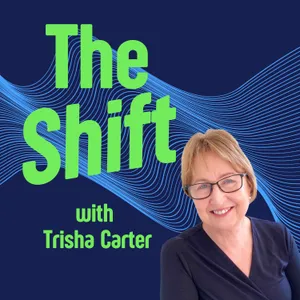
In a series of interviews with authors and experts from around the world, The Shift unpacks how to increase awareness of ourselves, and others and to shift our perspectives to see things differently. Join Trisha Carter, an Organisational Psychologist and explorer of Cultural Intelligence as she dives into cultural meta-cognition and learns more about how to experience those Shifts.
Latest Episodes
The most recent episodes — sign up to get AI-powered summaries of each one.
- 6 days ago4 min
The Shift Recommends
This week, Trisha steps back from a full episode to point you towards two conversations worth your time. She recently appeared as a guest on Victoria Rennoldson's Culture Cuppa podcast — and being on the other side of the microphone had her reflecting in ways she didn't quite expect. The episode, Leading Across Difference, is a candid conversation between two Cultural Intelligence (CQ) practitioners about the future of CQ and where hope lives within it.Trisha also invites you to revisit Episode 28 with Sharon Gray — a Kamilaroi and Scottish woman whose wisdom is woven into the episode's very title. With National Reconciliation Week unfolding in Australia, there's no better moment to listen, or listen again.Both links are in the show notes below.Culture Cuppa — Leading Across Difference with Trisha Carter: https://culturecuppa.com/podcasts/leading-across-difference-with-trisha-carter/Episode 28 — Winanga Guru: Listen Deeply, Go Slowly and Respect Everything with Sharon Gray: https://the-shift-with-trisha-carter.captivate.fm/episode/sharon-gray-winangar-guru-listen-deeply-go-slowly-and-respect-everything/Join Trisha in this journey of growth and discovery throughout the year via Substack or LinkedIn.
- 1 weeks ago23 min
The Cost of Sameness - Voices from Three Continents
In this special episode, Trisha steps back and hands the mic to three voices from three continents — each responding to the same question: what does it feel like when someone says, "We're all the same"?What emerges is something that Cultural Intelligence (CQ) frameworks can name but can't fully capture on their own — the lived experience of cultural blindness. From South Africa, the United States, and Northern Ireland, these three perspectives share a quiet, consistent thread: the weight of being asked to make yourself smaller in the name of fairness.This episode is both a companion to Episode 79 and a milestone — Episode 80 — and it marks the occasion the only way that feels right: by listening.Join Trisha in this journey of growth and discovery throughout the year via Substack or LinkedIn.Voices in this episode: Samkelo Blom (Episode 37) You can learn more about Samkelo and the work of his organisation here and connect with him on Linked In here.Dr. Kristal Walker (Episode 58) Connect with Dr Kristal Walker on LinkedIn.Sarah Black (Episode 9 and Episode 48) Check out Sarah Black on LinkedIn and sign up for her Newsletter.
- 4 weeks ago22 min
Cultural Blindness- When Fairness isn’t Fair
In this solo episode, Trisha unpacks a concept that often masquerades as unity but can quietly erase the experiences of those it claims to include. What happens when "treating everyone the same" actually means treating everyone as if they share your starting point? How do well-intentioned statements like "I just see you as a person" land on someone whose difference has shaped their entire life?Drawing on insights from her conversation with Chika Miyamori about the Intercultural Development Continuum, Trisha explores the minimization stage, where we focus on what we share while downplaying the significance of difference. She contrasts this with the overview effect experienced by the Artemis II crew, showing how one mindset expands our capacity to see while the other diminishes it. For cultural trainers, coaches, and facilitators, she offers a practical three-question reflection sequence to move groups from minimization toward genuine co-creation.Resources mentioned include Episode 78 (Moon Joy and the Overview Effect) and Episode 75 with Chika Miyamori (Intercultural Development Continuum and the IDI).Join Trisha in this journey of growth and discovery throughout the year via Substack or LinkedIn.
- Apr 26, 202615 min
Moon Joy and Cultural Intelligence
In this solo episode, Trisha explores what happens when astronauts return from space transformed by what they've seen — and whether Cultural Intelligence (CQ) might help us experience something similar without leaving Earth.What can the Artemis II crew's awe and perspective shifts teach us about seeing ourselves as one crew on a fragile lifeboat? How does the overview effect connect to figure-ground shifts in cultural intelligence work? And if we're wired to see each other as "us" and "them," can CQ help us cultivate a different way of seeing — one where our shared humanity becomes the figure against the vast ground of space?Trisha reflects on concepts introduced by CQ researchers Kok-Yee Ng and Thomas Rockstuhl, connecting astronaut insights to practical CQ applications. She leaves listeners with a question to sit with until next week's continuation of this thread.Resources mentioned:Ng, K. Y., Ang, S., & Rockstuhl, T. (2022). Cultural intelligence: From intelligence in context and across cultures to intercultural contexts. In R. J. Sternberg & D. D. Preiss (Eds.), Intelligence in context: The cultural and historical foundations of human intelligence (pp. 177–200). Palgrave Macmillan. https://doi.org/10.1007/978-3-030-92798-1_8White, F. (2014). The Overview Effect: Space Exploration and Human Evolution. AIAA.NASA photo library: https://images.nasa.gov/Referenced in this episode: Episodes 76 and 77: Dr. David Livermore on the Prism framework Episode 8: Dr. Mark Williams - Shifts and the BrainJoin Trisha in this journey of growth and discovery throughout the year via Substack or LinkedIn.
- Apr 4, 202626 min
Dr. David Livermore - Beyond CQ - Part Two; Expanding Your Leadership Archetype
In this episode, Trisha interviews Dr. David Livermore, researcher, author, and one of the world's leading voices on Cultural Intelligence (CQ), in Part 2 of their conversation on the Prism framework for global leadership.What does it actually take for a leader to see their own archetype clearly — and what gets in the way? This conversation explores how Prism and CQ work together, challenges the assumption that great leadership means doubling down on your strengths, and asks what becomes possible when leaders are willing to try on something unfamiliar — even just 10%.Learn more about David Livermore's work at davidlivermore.com and globalteamlead.com. Connect with David on LinkedInJoin Trisha in this journey of growth and discovery throughout the year via Substack or LinkedIn.Resources mentioneddavidlivermore.comglobalteamlead.comLeading with Cultural Intelligence by Dr. David LivermoreGlobal Team Lead Master Certification Virtual certification programme for coaches and trainers to become accredited to use the Prism tool and deliver the Global Team Lead curriculum. Next intake: 15–16 April 2026. Details and registration at globalteamlead.com.
- Mar 27, 202630 min
Dr. David Livermore — Beyond CQ; What 3,700 Global Voices Told Us
In this episode, Trisha interviews Dr. David Livermore, renowned social scientist, professor at Boston University, founder of the Cultural Intelligence Center, and author of the bestselling Leading with Cultural Intelligence, now in its third edition.After more than two decades of CQ research, what happens when the framework itself needs to grow and shift? Dr. Livermore shares the research journey behind Prism — a new leadership framework built on over 3,700 interviews across 27 countries — and explores why the pain points keeping global leaders awake at night demanded something genuinely new.Learn more about David Livermore's work at davidlivermore.com and globalteamlead.com. Connect with David on LinkedInJoin Trisha in this journey of growth and discovery throughout the year via Substack or LinkedIn.Resources mentioneddavidlivermore.comglobalteamlead.comLeading with Cultural Intelligence by Dr. David LivermoreGlobal Team Lead Master Certification Virtual certification programme for coaches and trainers to become accredited to use the Prism tool and deliver the Global Team Lead curriculum. Next intake: 15–16 April 2026. Details and registration at globalteamlead.com.
- Mar 20, 202641 min
Chika Miyamori - Building Bridges Across Differences
In this episode, Trisha interviews Chika Miyamori, Chief Culture Officer at Ideal Leaders and founder of CQ Lab in Japan, whose lifelong mission is building bridges across differences and turning them into power.What happens when a strong organisational culture becomes its own blind spot? Chika draws on her corporate career spanning Suntory, HP, and GE across more than 50 nationalities, weaving together CQ, the Hofstede cultural dimensions, and the Intercultural Development Inventory (IDI) into a powerful integrated approach — and explores what it truly takes for organisations to move from merely managing differences to thriving with them.Show NotesConnect with Chika Miyamori on LinkedIn.Resources mentioned in this episode:Thriving on Differences: How CQ Shapes Strong Organizational Cultures by Chika Miyamori (currently available in Japanese — an English version is in the works!)Hofstede Insights: hofstede-insights.com — including the Cultural Workplace Questionnaire (CWQ)The Intercultural Development Inventory (IDI): idiinventory.comJoin Trisha in this journey of growth and discovery throughout the year via Substack or LinkedIn.
- Mar 13, 202611 min
Not Just a Bit of Fun - Jokes and the Pyramid of Hate
In this solo episode, Trisha unpacks what happens in the split second after a racist joke lands — and what Cultural Intelligence (CQ) has to do with it.What does it mean when your gut reacts before your thinking can catch up? How do biased jokes connect to something far more serious — and what does it take to decide, in real time, who you want to be? This episode explores the ADL Pyramid of Hate and where so-called "harmless" humour sits within it, alongside the very human challenge of maintaining CQ Drive when the world is contracting with fear and uncertainty.Trisha also invites you to join a free virtual gathering for anyone using, learning, or simply curious about cultural intelligence.Resources mentioned in this episode:The ADL Pyramid of Hate — Anti-Defamation League: adl.orgRegister for Trisha's free virtual CQ gathering (Friday 20 March, 10:00 AM Sydney time): Register hereReferenced: Episode 53 — The PAUSE FrameworkJoin Trisha in this journey of growth and discovery throughout the year via Substack or LinkedIn.
About The Shift
In a series of interviews with authors and experts from around the world, The Shift unpacks how to increase awareness of ourselves, and others and to shift our perspectives to see things differently. Join Trisha Carter, an Organisational Psychologist and explorer of Cultural Intelligence as she dives into cultural meta-cognition and learns more about how to experience those Shifts.
Customized Recaps
AI-powered recaps with compact key takeaways, quotes, and insights.
Straight to Your Inbox
Get key takeaways from The Shift in a 5-minute read.
Save Hours Every Week
Stay current on your favorite podcasts without falling behind.
Frequently Asked Questions
What is Podzilla's The Shift daily summary?
It's a free AI-powered email that summarizes new episodes of The Shift as soon as they're published. You get the key takeaways, notable quotes, and links & mentions — all in a quick read.
How does the The Shift podcast summary work?
When a new episode drops, our AI transcribes and analyzes it, then generates a personalized summary tailored to your interests and profession. It's delivered to your inbox every morning.
Is this an official The Shift product?
No. Podzilla is an independent service that summarizes publicly available podcast content. We're not affiliated with or endorsed by Trisha Carter.
Can I get summaries of other podcasts too?
Absolutely! The free plan covers up to 3 podcasts. Upgrade to Pro for 15, or Premium for 50. Browse our full catalog at /podcasts.
How often does The Shift release new episodes?
The Shift publishes biweekly. Our AI generates a summary within hours of each new episode.
What topics does The Shift cover?
The Shift covers topics including Education, Business, Management, Culture, Society & Culture, Self-Improvement. Our AI identifies the specific themes in each episode and highlights what matters most to you.
Start getting The Shift summaries tomorrow morning.
Free forever for up to 3 podcasts. No credit card required.
Free forever for up to 3 podcasts. No credit card required.