Free Daily Podcast Summary
The Structural Engineering Podcast: Daily Summaries Delivered
by Zach and Max
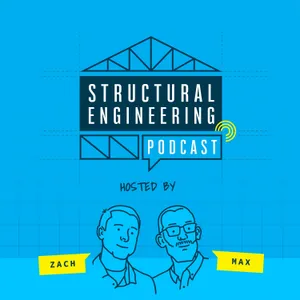
Hosted by Max and Zach, The Structural Engineering Podcast dives into the world of structural design, real-world engineering challenges, and the stories behind the structures that shape our world. Whether you're a practicing engineer, an aspiring student, or just curious about how buildings stand tall, tune in for expert insights, industry interviews, and relatable experiences from the field.
Latest Episodes
The most recent episodes — sign up to get AI-powered summaries of each one.
- May 27, 20261h 0m
Episode 114 - Yielding for a Better Brace
In Episode 114, we dig into buckling restrained braced frames with Brandt Saxey, SE, of CoreBrace.We talk through how BRBFs work, what makes them different from traditional concentrically braced frames, and why yielding in both tension and compression without global buckling makes them such an effective seismic system. The conversation also covers brace behavior, energy dissipation, detailing considerations, coordination with manufacturers, common design misconceptions, and how BRBs are being used in mass timber and other modern structural systems.Guest Profile:Brandt Saxey, SE, is the VP of Preconstruction Sales / Technical Director at CoreBrace. He brings deep technical experience in buckling restrained brace systems, including design support, preconstruction coordination, and helping engineers understand how BRBFs behave in real projects. His work sits at the intersection of seismic design, constructability, manufacturer coordination, and practical application of BRBs in modern structures.Sponsor: This episode is sponsored by IDEA StatiCa. Download the latest version of IDEA StatiCa Software | IDEA StatiCa 14-Day Free Trial | IDEA StatiCaLinks & Resources:StructurEd (our free study tool): TheEngineeringPodcast.com/StructurEdReach out to us:TheEngineeringPodcast.comInstagramLinkedinDisclaimer: Here
- May 27, 202628 min
Episode 113 - How Software Leaders See the Future of Structural Engineering
In this episode, we dig into the future of structural engineering software with the North American CEO and Chief Product Officer of IDEA StatiCa.We talk through why connection design is such a difficult problem to solve digitally, where traditional spreadsheets and simplified checks can fall short, and how engineers can balance speed, analytical rigor, and judgment. The conversation also covers AI, automation, interoperability, software adoption, and what skills young engineers need to build as structural design workflows continue to evolve.Guest Profile:Stephanie Bourgeois Kennard is the North American CEO of IDEA StatiCa, bringing a leadership perspective on software adoption, customer needs, and how structural engineering workflows are evolving across the industry.Vojtěch Chalupa is the Chief Product Officer at IDEA StatiCa, where he helps guide product strategy and development for tools used by structural engineers around the world. His work focuses on improving connection design workflows, interoperability, and practical software solutions for real-world engineering problems.Sponsor: This episode is sponsored by IDEA StatiCa.Download the latest version of IDEA StatiCa Software | IDEA StatiCa 14-Day Free Trial | IDEA StatiCa Links & Resources:StructurEd (our free study tool): TheEngineeringPodcast.com/StructurEdReach out to us:TheEngineeringPodcast.comInstagramLinkedinDisclaimer: Here
- May 17, 202652 min
Episode 112 – Good Connections Make Great Structures
In this episode, we dig into structural connection design and explore why connections are far more than just the final step of a project. We talk through how engineers approach connections as critical components that influence constructability, architectural expression, fabrication efficiency, and even the overall behavior of the structure itself.We break down how engineers think about clean and efficient connection detailing, why exposed connections often require much earlier coordination in the design process, and how lessons from tension structures and “form follows force” design can shape the way engineers approach everyday projects. The conversation also covers the balance between engineering judgment and software automation, the risks of black-box design workflows, how digital tools can improve collaboration between engineers, fabricators, and detailers, and what AI and parametric design may mean for the future of connection engineering.Guest Profile: Andrea Castelo is a Technical Manager - Structural Engineer at IDEA StatiCa specializing in steel connection design, constructability, and engineering workflows that improve collaboration between engineers, detailers, and fabricators. Johan Lozada is a Product Engineer at IDEA StatiCa focused on structural steel connection design, BIM integration, and workflow automation for complex steel structures. Together, they work closely with the structural engineering industry to help engineers solve challenging connection problems and streamline real-world design workflows.Sponsor: This episode is sponsored by IDEA StatiCa. Download the latest version of IDEA StatiCa Software | IDEA StatiCa 14-Day Free Trial | IDEA StatiCaLinks & Resources:StructurEd (our free study tool): TheEngineeringPodcast.com/StructurEdReach out to us:TheEngineeringPodcast.comInstagramLinkedinDisclaimer: Here
- May 17, 20261h 13m
Episode 111 - Can Glass Really Be Structural?
In this episode, we dig into structural glass design and explore why glass in buildings can be far more than a transparent enclosure. We talk through how engineers approach glass as a true structural material in systems where stiffness, redundancy, detailing, and post-breakage behavior can be just as important as ultimate strength.We break down how engineers think about glass in tension, compression, and bending, how laminated assemblies and interlayers improve resilience, and why connections often control the performance of the entire system. The conversation also covers the differences between annealed, heat-strengthened, and fully tempered glass, how standards and testing inform design, common misconceptions about brittleness and safety, and why close collaboration between architects, fabricators, and engineers is essential when ambitious transparent structures are the goal.Guest Profile:Matt Soda, P.Eng., PE, SE is a Structural Project Engineer with RJC Engineers, where he specializes in structural glass and facade engineering. His work focuses on delivering high-performance glass systems that balance architectural vision with structural behavior, constructability, and long-term durability. He brings hands-on experience designing elegant transparent structures and insight into one of the most technically demanding materials used in modern construction. Links & Resources:StructurEd (our free study tool): TheEngineeringPodcast.com/StructurEdExcellent references for architects and engineers interested in glass design: Home - Structural Glass Design Manual Erin Mills Town Centre – Globe Structure | glassonweb.com Structural Glass Engineering in North America - RJC EngineersReach out to us:TheEngineeringPodcast.comInstagramLinkedin
- May 17, 20261h 7m
Episode 110 - Venues Aren’t “Just Code”: Vibration, Rigging & Mall Reuse
In this episode, we dig into entertainment and retail design and explore why venues can’t be engineered by code compliance alone. We talk through how structural engineers approach performance-driven spaces like concert venues, theaters, and experiential retail where vibration, rigging, sightlines, and serviceability often control the design more than strength.We break down how engineers think about vibration tolerance and human perception, how rigging grids are designed for unknown future shows, and why exposed structure can either elevate architecture or become a liability. The conversation also covers adaptive reuse of malls and anchor boxes, what engineers look for when evaluating existing buildings, common misconceptions about reuse and overbuilding, how structural testing and “detective work” inform decisions, and why early engineering involvement is critical when design intent is ambitious but budgets and sites are constrained.Guest Profile:Travis Corigliano, PE, SE, is a Principal at Magnusson Klemencic Associates (MKA) in Seattle, where he leads the firm’s Retail & Entertainment market sector. His work focuses on designing spaces where people actively choose to go like concert venues, immersive entertainment, and redeveloped retail environments balancing strong architectural intent with structural performance, constructability, and long‑term flexibility.Links & Resources:StructurEd (our free study tool): TheEngineeringPodcast.com/StructurEdStructural Trivia:Sign up for our structural trivia! A quick email mid-week will keep you sharp.Reach out to us:TheEngineeringPodcast.comInstagramLinkedin
- May 17, 20261h 1m
Episode 109 – How Coastal Structures Hold Back the Ocean
In this episode, we dig into flood and wave design and explore when water transitions from a site consideration into a true structural load case. We talk through how engineers identify flood risk, interpret FEMA flood maps, and determine when flood, wave, or debris loads must be considered—especially for engineers who typically design in dry conditions.We break down the difference between flood loads and wave impact, how elevated structures, piles, and breakaway walls behave under water-driven forces, and where standard structural intuition starts to fall apart. The conversation also covers how ASCE 7, ASCE 24, and FEMA guidance are used in practice, common misconceptions around seawalls and shoreline protection, how engineers communicate risk to clients, and what the future of coastal design may look like as conditions continue to evolve. Links & Resources:StructurEd (our free study tool): TheEngineeringPodcast.com/StructurEdStructural Trivia:Sign up for our structural trivia! A quick email mid-week will keep you sharp.Reach out to us:TheEngineeringPodcast.comInstagramLinkedin
- May 17, 202652 min
Episode 108 - What LEGO Can Teach Structural Engineers
In this episode, we explore structural engineering through an unexpected lens: LEGO. What starts as a simple building toy becomes a powerful way to explain fundamental concepts like load paths, stability, and structural behavior.We discuss how the idea began, why physical models can communicate more clearly than sketches or equations, and the first moment it became clear this approach actually works. The conversation highlights which concepts translate best to LEGO, where the analogies break down, and how to balance simplicity with technical accuracy.Links & Resources:StructurEd (our free study tool): TheEngineeringPodcast.com/StructurEdStructural Trivia:Sign up for our structural trivia! A quick email mid-week will keep you sharp. Reach out to us:TheEngineeringPodcast.comInstagramLinkedin
- May 17, 202657 min
Episode 107 – The Structural Logic of High‑End Residential Design
In this episode, we explore the realities of high‑end residential structural engineering, using custom homes in the Hamptons to examine how architectural ambition, homeowner expectations, and constructability intersect. Although single‑family homes dominate the U.S. building stock, this conversation shows why residential work especially at the high end demands careful coordination and judgment.We discuss how the engineer–architect–owner relationship shapes project outcomes, how engineers respond to open‑concept demands and social‑media‑driven ideas, and where early decisions can either unlock or constrain the design. The conversation also dives into renovations, including when selective demolition is necessary, common surprises hidden in existing construction, and how engineers adapt when plans change midstream.Finally, we reflect on lessons learned from managing scope creep and value engineering, to coordinating with contractors and mechanical systems, to handling complex roofs and tight architectural tolerances. The episode closes with practical advice for engineers new to residential work and insights that often surprise those coming from commercial design.Links & Resources:StructurEd (our free study tool): TheEngineeringPodcast.com/StructurEdStructural Trivia:Sign up for our structural trivia! A quick email mid-week will keep you sharp. Reach out to us:TheEngineeringPodcast.comInstagramLinkedin Sponsor:This episode is brought to you by CalcBook, the go-to calculation platform built specifically for structural engineers. Whether you're designing steel connections, concrete members, or timber framing, CalcBook helps you create transparent, organized, and code-referenced calculations in a fraction of the time.Spend less time formatting spreadsheets and more time engineering. Check them out at CalcBook.com.
Get The Structural Engineering Podcast summaries in your inbox
Free AI-powered daily recaps. Key takeaways, quotes, and mentions — in a 5-minute read.
Get Free Summaries →Free forever for up to 3 podcasts. No credit card required.
You Might Also Like
Listeners also like.

The Fine Homebuilding Podcast
Answers homeowner and builder questions on construction, design, and building science using industry best practices.
The Integral Principles of the Structural Dynamics of Flow
Steven Conrad
A is for Architecture Podcast
Discussions with architects and theorists explore how buildings and society influence each other.
The Engineering Leadership Podcast
Insights and practices from top software engineering leaders to advance leadership skills in the tech industry.

Math & Physics Podcast
Two University of Toronto students discuss topics in math and physics.

The Contextual Electronics Podcast
People share how they use electronics to solve real-world problems, teaching practical techniques and applications.
Construction Genius
Construction company owners and experts share practical insights on leadership, profitability, talent management, and business growth in the building industry.

The David Guttman Podcast
Conversations with top leaders on building wealth, integrity, and a meaningful life through real-world lessons and authentic mentorship.

The iDesign Lab Podcast | Where Design, Business, and Culture Shape How We Live and Build
Explores how intentional design in business, culture, and creativity shapes human behavior, industries, and the way we live.

Shop Sounds Podcast
A woodworking podcast hosted by Jason Hibbs and Keith Johnson.

The Strong Towns Podcast
A weekly conversation exploring how urban design, economics, and community systems can strengthen cities and towns financially and socially.

Human Performance Outliers Podcast with Zach Bitter
Exploring the science and stories behind extreme human performance in endurance, fitness, and nutrition through expert interviews.
About The Structural Engineering Podcast
Hosted by Max and Zach, The Structural Engineering Podcast dives into the world of structural design, real-world engineering challenges, and the stories behind the structures that shape our world. Whether you're a practicing engineer, an aspiring student, or just curious about how buildings stand tall, tune in for expert insights, industry interviews, and relatable experiences from the field.
Customized Recaps
AI-powered recaps with compact key takeaways, quotes, and insights.
Straight to Your Inbox
Get key takeaways from The Structural Engineering Podcast in a 5-minute read.
Save Hours Every Week
Stay current on your favorite podcasts without falling behind.
Frequently Asked Questions
What is Podzilla's The Structural Engineering Podcast daily summary?
It's a free AI-powered email that summarizes new episodes of The Structural Engineering Podcast as soon as they're published. You get the key takeaways, notable quotes, and links & mentions — all in a quick read.
How does the The Structural Engineering Podcast podcast summary work?
When a new episode drops, our AI transcribes and analyzes it, then generates a personalized summary tailored to your interests and profession. It's delivered to your inbox every morning.
Is this an official The Structural Engineering Podcast product?
No. Podzilla is an independent service that summarizes publicly available podcast content. We're not affiliated with or endorsed by Zach and Max.
Can I get summaries of other podcasts too?
Absolutely! The free plan covers up to 3 podcasts. Upgrade to Pro for 15, or Premium for 50. Browse our full catalog at /podcasts.
How often does The Structural Engineering Podcast release new episodes?
The Structural Engineering Podcast publishes daily. Our AI generates a summary within hours of each new episode.
What topics does The Structural Engineering Podcast cover?
The Structural Engineering Podcast covers topics including Science, Technology, Education, Mathematics. Our AI identifies the specific themes in each episode and highlights what matters most to you.
Start getting The Structural Engineering Podcast summaries tomorrow morning.
Free forever for up to 3 podcasts. No credit card required.
Free forever for up to 3 podcasts. No credit card required.