Free Daily Podcast Summary
The Wild Life: Daily Summaries Delivered
by The Wild Life
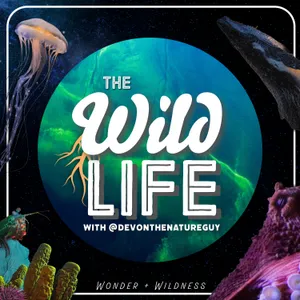
An optimistic, curiosity-chasing show about the wonder and wildness of life, following the threads that connect us to the natural world. The Wild Life is, always has been, and always will be a show about the diversity of life within the animal kingdom, but it's about more than that. It's about connections. It's about how the natural world inspires our culture, movies, and technologies. It's about the patterns that persist throughout not just life, but the universe itself. It's about us.The Wild Life is a place for the curious, the adventurous, the hopeful, and the hopeless to discover the natural world through unique perspectives. Between the blog and podcasts, The Wild Life seeks to bring the traditional naturalist experience into the 21st century by merging immersive storytelling and foley art with technology and creative experiences. It’s an exploration of truth, common ground, and shared places as we attempt to fill each episode with wonder, connectedness, intrigue, and humor.Th
Latest Episodes
The most recent episodes — sign up to get AI-powered summaries of each one.
- Aug 15, 202545 min
Mass Extinctions, Dinosaurs, and Chasing Dreams with Juan-Pablo Piña @paleoauthor
The Earth has ended before.Five times in the last half-billion years, life on this planet has been nearly wiped clean—reset by asteroid impacts, volcanic winters, and cataclysms we can barely imagine. And now? We’re living through number six. The difference? This one’s caused by us.But buried in those ancient endings are stories—lessons about resilience, adaptation, and the strange, beautiful creatures that made it through.In this episode, I’m joined by JP, better known online as @paleoauthor, the mind behind the upcoming book Primordial: A Biology of Ancient Triumphs and Tragedies. Together, we explore:Previous mass extinction events and what they can teach us about the one we’re in nowWhy dinosaurs still capture our collective imaginationThe weirdest prehistoric animals you’ve never heard ofThe influence of media and film on our understanding of deep timeHow telling the stories of the past might help us change the futureIt’s part science, part storytelling, and part love letter to life itself.Links & Resources:Follow JP on Instagram: @paleoauthorSupport The Wild Life on Patreon
- Aug 13, 20255 min
Field Guide of Wonder: The Aye-Aye
Meet the aye-aye (Daubentonia madagascariensis), a creature so strange that early scientists couldn’t even decide if it was a rodent, a squirrel, or… something entirely new. Native to Madagascar and the largest nocturnal primate in the world, the aye-aye sports perpetually growing teeth, a bat-like ear for echolocation, and a freakishly long, bony middle finger that can hook grubs from deep inside tree trunks—or, yes, pick its own nose.In this episode, we dive into its percussive foraging superpower, its evolutionary mystery, and why it fills the same ecological niche as a woodpecker. Field Guide of Wonder is a companion to my main show The Wild Life, giving you quick, vivid snapshots of the planet’s most remarkable creatures.If you enjoy the show and want to help keep it going, consider supporting on PatreonStay weird :)-Devon
- Aug 12, 20256 min
Field Guide of Wonder: The Capybara
Meet the world’s largest rodent—the capybara (Hydrochoerus hydrochaeris), a creature so wonderfully chill it makes a golden retriever look high-strung. In this episode, we dive beyond the memesto explore what makes capybaras such an evolutionary success story.We’ll talk:Why “semi-aquatic social loaf of bread” might be the perfect lifestyleTheir remarkable teeth, digestive superpowers… and yes, why they eat their own poopThe wild variety of vocalizations they use to chat with each otherHow babysitting is a survival strategyThe surprising ways their biology connects to the ecosystems they live inFrom their South American wetlands to their unlikely friendships with everything from birds to caimans, capybaras prove that being laid-back is a legitimate survival tactic.Listen, wonder, and maybe… book a ticket to the Pantanal.Support The Wild Life's Field Guide of Wonder at www.patreon.com/thewildlife for as little as $1 per month
- Aug 8, 20258 min
Field Guide of Wonder: The Honduran White Bat
Hey everyone! I have some news to share 😊Field Guide of Wonder—my social media video series— is getting a podcast companion!And here is the first episode!It'll be short, spectacular stories of the weirdest, wildest, most wonderful creatures on earth, in a format that hopefully gives these animals more room to stretch their wings, claws, pseudopods, or whatever it is they’ve got.It’ll be bite-sized but packed with questions you didn’t know you had, facts that feel like magic, and connections that make this tangled web of life feel even more alive.If you'd like to support the creation of this series, you can join my patreon at www.patreon.com/thewildlife for FREE. You can also support its creation at patreon for as little as $1 per month. Y’all, you know I post A LOT 😅 $1 per month comes out to 1.33 CENTS per piece of content. Like, literally, I did the math 😂Stay weird. Stay curious. Stay wild.
- Aug 6, 202556 min
Go Green with Alexa Pavan
Hey everyone!I’m really excited to share with you all my conversation with the thoughtful and inspiring Alexa Pavan, aka @GoGreenWithAlexa.We dive into everything from accessible sustainability and composting, to coral bleaching, water bottles, and beach cleanups. It’s a chat about progress over perfection, the importance of small, everyday actions, and finding hope in the face of big, global challenges.We talk:🪸 Coral reefs and climate change♻️ Reducing waste without shame🌱 What it actually means to live sustainably💚 How individual choices can ripple outward🌍 Interconnectedness, agency, and actionable hopeIt’s full of insight, encouragement, and gentle reminders that we don’t have to do everything—but we can all do something.As always, thank you for listening to The Wild Life. If you’d like to help continue making episodes like this possible, you can join for as little as $1 per month (a penny per piece of content) at www.patreon.com/thewildlife. Your support means the world—and makes this work sustainable (see what I did there?).-Devon
- Jul 11, 202555 min
Shells, Sunrises, and Side Quests with Emily Hunter
What happens when you follow curiosity wherever it leads?In this episode of The Wild Life, I’m joined by Emily Hunter—a passionate environmental science educator, interpretation specialist, bushwalk guide, and nature communicator currently living and working along Australia’s Ningaloo Reef.Emily shares her journey from being a "tree hugger" kid in Idaho to becoming a globe-trotting interpreter of nature's stories, using awe as a tool for connection. We explore the power of wonder as a precursor to knowledge, how interpretation helps break down scientific gatekeeping, and what it really means to talk on behalf of the land, sea, and sky.Along the way, we dive into:Why knowledge alone doesn’t spark change—but wonder mightThe magic of the Ningaloo ReefWhat it's like to snorkel with first-timers and hike with strangers before sunriseWhy environmental education needs weirdness, joy, and emotional honestyAnd how following a sticker or a Facebook post can change your lifeWhether you’re a student wondering how to get started, a teacher trying to bring passion into your practice, or someone who’s just trying to rekindle that childhood spark of curiosity—this one’s for you.🌏 You don’t have to live near a coral reef to live a rich, curious, nature-connected life.Sometimes it starts with a question. Or a shell. Or a really good sunrise.📣 Share this episode with someone who needs to be reminded that weird is good—and wonder matters.
- Jun 20, 202523 min
Archive of Wonder with Jay Meredith
What do a gaur, an aardvark, a flattened musk turtle, and a Matschie’s tree kangaroo have in common?They’ve all been photographed beautifully, reverently, and intentionally by my next guest—wildlife and zoo photographer Jay Meredith.In this episode, Jay shares the story behind his incredible project, The Animal Archives, documenting over 1,000 animal species across accredited zoos, aquariums, and conservation centers. But this is more than a numbers game. It’s a mission to help people fall in love with the overlooked, the endangered, and the often-forgotten.We talk about how Jay transitioned from zookeeper to photographer, the difference between photographing wild vs. captive animals, what it means to truly see an animal, why education and storytelling are just as important as the image itself, and the little-known species Jay wants everyone to know about!This episode is about photography, yes—but really, it’s about wonder. It’s about noticing. And it’s about how we grow empathy for the world when we take time to look closely.📸 Follow Jay on Instagram: @photos_with_jay_108 🦥 Support The Wild Life and Get Early Access at www.patreon.com/thewildlife
- Jun 8, 20254 min
My Message for World Oceans Day
Today is #WorldOceansDay and I’m feeling a whole lot of things. Wonder. Grief. Hope. Determination.The ocean isn’t just a place to visit. It’s not just a good backdrop for photos.It’s breath. It’s mystery. It’s the engine of life on Earth. And right now? It needs us.This isn’t a doom post. It’s a love letter.To the sea slugs and phytoplankton.To coral metropolises and whales that sing.And to whoever has felt small in the best possible way, standing in front of something as vast and alive as our seas.Let’s protect what’s left.Let’s restore what we can.Let’s be the kind of people the ocean would be proud of.~Devon
About The Wild Life
An optimistic, curiosity-chasing show about the wonder and wildness of life, following the threads that connect us to the natural world. The Wild Life is, always has been, and always will be a show about the diversity of life within the animal kingdom, but it's about more than that. It's about connections. It's about how the natural world inspires our culture, movies, and technologies. It's about the patterns that persist throughout not just life, but the universe itself. It's about us.The Wild Life is a place for the curious, the adventurous, the hopeful, and the hopeless to discover the natural world through unique perspectives. Between the blog and podcasts, The Wild Life seeks to bring the traditional naturalist experience into the 21st century by merging immersive storytelling and foley art with technology and creative experiences. It’s an exploration of truth, common ground, and shared places as we attempt to fill each episode with wonder, connectedness, intrigue, and humor.Th
Customized Recaps
AI-powered recaps with compact key takeaways, quotes, and insights.
Straight to Your Inbox
Get key takeaways from The Wild Life in a 5-minute read.
Save Hours Every Week
Stay current on your favorite podcasts without falling behind.
Frequently Asked Questions
What is Podzilla's The Wild Life daily summary?
It's a free AI-powered email that summarizes new episodes of The Wild Life as soon as they're published. You get the key takeaways, notable quotes, and links & mentions — all in a quick read.
How does the The Wild Life podcast summary work?
When a new episode drops, our AI transcribes and analyzes it, then generates a personalized summary tailored to your interests and profession. It's delivered to your inbox every morning.
Is this an official The Wild Life product?
No. Podzilla is an independent service that summarizes publicly available podcast content. We're not affiliated with or endorsed by The Wild Life.
Can I get summaries of other podcasts too?
Absolutely! The free plan covers up to 3 podcasts. Upgrade to Pro for 15, or Premium for 50. Browse our full catalog at /podcasts.
How often does The Wild Life release new episodes?
The Wild Life publishes monthly. Our AI generates a summary within hours of each new episode.
What topics does The Wild Life cover?
The Wild Life covers topics including Science, Nature, Natural Sciences. Our AI identifies the specific themes in each episode and highlights what matters most to you.
Start getting The Wild Life summaries tomorrow morning.
Free forever for up to 3 podcasts. No credit card required.
Free forever for up to 3 podcasts. No credit card required.