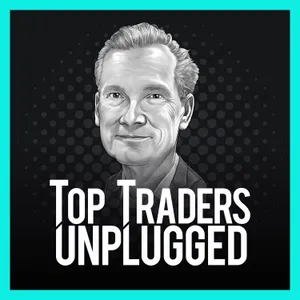
Free Daily Podcast Summary
Top Traders Unplugged: Daily Summaries Delivered
by Niels Kaastrup-Larsen
Top Traders Unplugged is where the world’s best investors come to share how they think - not just what they trade. Hosted by Niels Kaastrup-Larsen, the show goes deep into systematic trend following, global macro, and the principles that drive long-term success. No forecasts. No fads. Just real conversations with hedge fund managers, economists, authors, and allocators - revealing the timeless ideas, mental models, and risk frameworks behind robust performance. If you're building resilient portfolios, allocating capital, or simply looking to cut through the noise - this is your edge. Clear thinking. Deep insights. Real experience.
Latest Episodes
The most recent episodes — sign up to get AI-powered summaries of each one.
- 2 days ago1h 0m
IL54: Why Smart Investors Keep Making Crazy Decisions ft. Alex Edmans
In today’s episode we talk with London Business School professor Alex Edmans. He has spoken at Davos, testified in the UK House of Commons and reached millions through his TED Talks. He joins the show to discuss his new book, THE MADNESS OF MARKETS, WHY SMART INVESTORS MAKE CRAZY DECISIONS AND HOW TO EXPLOIT THEM. Alex explains why “mood matters” for markets and the surprising relationship of football results and music playlists to market movements. We discuss why individual investors sometimes have an advantage over professionals in taking advantage of psychological biases and go through practical ways this can be implemented.-----50 YEARS OF TREND FOLLOWING BOOK AND BEHIND-THE-SCENES VIDEO FOR ACCREDITED INVESTORS - CLICK HERE-----Follow Niels on Twitter, LinkedIn, YouTube or via the TTU website.IT’s TRUE ? – most CIO’s read 50+ books each year – get your FREE copy of the Ultimate Guide to the Best Investment Books ever written here.And you can get a free copy of my latest book “Ten Reasons to Add Trend Following to Your Portfolio” here.Learn more about the Trend Barometer here.Send your questions to info@toptradersunplugged.comAnd please share this episode with a like-minded friend and leave an honest Rating & Review on iTunes or Spotify so more people can discover the podcast.Follow Kevin on SubStack & read his Book.Follow Alex on LinkedIn and Read his Book.Episode TimeStamps: 00:00 - Introduction and Alex Edmans’ new book The Madness of Markets02:46 - How football results can move stock markets07:16 - What Spotify playlists can tell us about investor sentiment11:28 - Why individual investors may have an advantage over professionals16:26 - Specialists, generalists and finding your investing edge21:59 - When benchmarks make active managers too conservative26:18 - Risk, alpha and the equity premium puzzle30:07 - Why momentum works and when it crashes35:35 - Where individual investors can exploit overlooked opportunities37:48 - How round numbers influence buying and selling decisions39:54 - The disposition effect and why investors hold onto losers44:12 - Three practical ways to make better investment decisions47:20 - Why writing down your investment thesis matters52:08 - Outsourcing the ugly decisions55:30 - AI, bubbles and the
- 6 days ago1h 4m
SI420: The Market Might Be More Fragile Than It Looks ft. Cem Karsan
Alan Dunne is joined by Cem Karsan to examine the forces pushing bond yields higher and why he believes markets are becoming increasingly fragile. Cem argues that refinancing pressures, persistent inflation, declining foreign demand for Treasuries and the enormous capital requirements of the AI boom are creating an unusually unstable backdrop. They discuss the concentration of equity market growth around AI, the relationship between government policy and financial markets, and Cem’s expectation that a Treasury market shock could eventually trigger a forceful policy response. They also explore political risk, market volatility, monetary debasement and why traditional stock and bond portfolios may face a very different environment ahead.-----50 YEARS OF TREND FOLLOWING BOOK AND BEHIND-THE-SCENES VIDEO FOR ACCREDITED INVESTORS - CLICK HERE-----Follow Niels on Twitter, LinkedIn, YouTube or via the TTU website.IT’s TRUE ? – most CIO’s read 50+ books each year – get your FREE copy of the Ultimate Guide to the Best Investment Books ever written here.And you can get a free copy of my latest book “Ten Reasons to Add Trend Following to Your Portfolio” here.Learn more about the Trend Barometer here.Send your questions to info@toptradersunplugged.comAnd please share this episode with a like-minded friend and leave an honest Rating & Review on iTunes or Spotify so more people can discover the podcast.Follow Cem on Twitter.Follow Alan on LinkedIn.Episode TimeStamps: 00:00 - Why Cem believes the next V-shaped market move is coming00:58 - Introduction and what’s on Cem’s radar03:34 - A strong year for trend following05:29 - What is driving bond yields higher?09:09 - Inflation, debt and declining foreign demand for Treasuries12:53 - Why short-term interest rate expectations have shifted so dramatically18:01 - Can rising bond yields eventually break the equity market?19:00 - Why Cem questions the sustainability of AI-driven earnings growth25:27 - Market concentration and the growing fragility of the system33:54 - Government intervention and the return of the V-shaped market37:19 - Cem’s case for a coming Treasury market shock42:50 - Why the US midterm elections could matter for markets46:43 - What the options market is pricing for the months ahead48:27 - Bond volatility and where yields could go next50:41 - Could the US eventually create a sovereign wealth fund?54:34 - Inflation, equities and the importance of real returns01:00:13 - Why the traditional 60/40 portfolio may face a different futureCopyright © 2025 – CMC AG – All Rights Reserved----PLUS: Whenever you're ready... here are 3 ways I can help you in your investment Journey:1. eBooks that cover key topics that you need to know about In my eBooks, I put together some key
- 1 weeks ago1h 6m
TTU153: Why Investors Keep Getting Trend Following Wrong ft. Patrick Welton
Niels Kaastrup-Larsen and Alan Dunne are joined by Welton Investment Corporation founder Patrick Welton to explore what four decades in markets have taught him about trading, risk and managing other people’s money. Pat shares lessons from his encounters with Paul Tudor Jones and John Henry before explaining why taking outside capital fundamentally changes a manager’s responsibility. They discuss the real sources of trend following returns, why managers can damage their edge by listening too closely to clients, and whether replication and multi-strategy funds have changed the landscape. They also explore capacity, changing market regimes and why investor behavior may ultimately matter more than finding the perfect strategy.-----50 YEARS OF TREND FOLLOWING BOOK AND BEHIND-THE-SCENES VIDEO FOR ACCREDITED INVESTORS - CLICK HERE-----Follow Niels on Twitter, LinkedIn, YouTube or via the TTU website.IT’s TRUE ? – most CIO’s read 50+ books each year – get your FREE copy of the Ultimate Guide to the Best Investment Books ever written here.And you can get a free copy of my latest book “Ten Reasons to Add Trend Following to Your Portfolio” here.Learn more about the Trend Barometer here.Send your questions to info@toptradersunplugged.comAnd please share this episode with a like-minded friend and leave an honest Rating & Review on iTunes or Spotify so more people can discover the podcast.Follow Alan on Twitter.Find out more about DUNN Capital.Follow Patrick on LinkedIn.Episode Timestamps:Copyright © 2025 – CMC AG – All Rights Reserved----PLUS: Whenever you're ready... here are 3 ways I can help you in your investment Journey:1. eBooks that cover key topics that you need to know about In my eBooks, I put together some key discoveries and things I have learnt during the more than 3 decades I have worked in the Trend Following industry, which I hope you will find useful. Click Here2. Daily Trend Barometer and Market Score One of the things I’m really proud of, is the fact that I have managed to published the Trend Barometer and Market Score each day for more than a decade...as these tools are really good at describing the environment for trend following managers as well as giving insights into the general positioning of a trend following strategy! Click Here3. Other Resources that can help youAnd if you are hungry for more useful resources from the trend following world...check out some precious resources that I have found over the years to be really valuable. Click HerePrivacy
- 1 weeks ago1h 6m
SI419: What Happens When AI Starts Building the Portfolio ft. Nick Baltas
Alan Dunne is joined by Nick Baltas to discuss a strong period for trend following and what the latest research says about adapting systematic strategies to changing markets. They examine whether volatility can help determine how quickly trend models should react, and why Nick remains skeptical of relying on regime triggers with limited statistical evidence. The conversation then turns to agentic AI and a new framework for using specialized AI agents in asset allocation. Nick explores how agents could analyze macro regimes, challenge competing portfolio approaches and help investment committees make decisions faster, while also confronting problems around look-ahead bias, reproducibility and human oversight.-----50 YEARS OF TREND FOLLOWING BOOK AND BEHIND-THE-SCENES VIDEO FOR ACCREDITED INVESTORS - CLICK HERE-----Follow Niels on Twitter, LinkedIn, YouTube or via the TTU website.IT’s TRUE ? – most CIO’s read 50+ books each year – get your FREE copy of the Ultimate Guide to the Best Investment Books ever written here.And you can get a free copy of my latest book “Ten Reasons to Add Trend Following to Your Portfolio” here.Learn more about the Trend Barometer here.Send your questions to info@toptradersunplugged.comAnd please share this episode with a like-minded friend and leave an honest Rating & Review on iTunes or Spotify so more people can discover the podcast.Follow Nick on Twitter.Episode TimeStamps:00:00 - Introduction and what’s on Nick’s radar02:05 - The extraordinary concentration inside the S&P 50004:46 - Why global bond yields are moving higher08:56 - A strong month and year for trend following13:54 - Why the bond move has happened without a volatility spike16:29 - Can volatility make trend following better?21:17 - What the latest research actually tells us24:27 - How Nick uses volatility in portfolio construction27:38 - Why making trend models more complicated may not help30:19 - V-shaped markets and the problem with regime triggers32:36 - How agentic AI could reshape asset allocation44:48 - What actually drives an AI-built portfolio?50:19 - The problem with backtesting AI investment models55:16 - Could the same AI framework work for trend following?58:33 - Using AI to manage multiple investment objectives01:02:19 - When will we see portfolios run by AI agents?Copyright © 2025 – CMC AG – All Rights Reserved----PLUS: Whenever you're ready... here are 3 ways I can help you in your investment Journey:1. eBooks that cover key topics that you need to know about In my eBooks, I put together some key discoveries and things I have learnt during the more than 3 decades I have worked in the Trend Following industry, which I hope you will find useful. Click Here2. Daily Trend Barometer and Market Sc
- 2 weeks ago59 min
OI24: Why Power Trading Is 10 Times Crazier Than Crypto ft. Cory Paddock
Moritz Seibert is joined by GBE Energy co-founder Cory Paddock for a look inside the unusual world of proprietary power trading. Cory explains how electricity markets combine weather, physics and economics, and why understanding supply and demand can create opportunities in markets where prices can change dramatically within minutes. They explore the psychology behind taking risk, why a handful of exceptional days can define an entire year, and the lessons Cory learned from his biggest wins and losses. They also discuss GBE’s approach to developing young traders and how AI is accelerating the process of turning raw talent into real trading ability.-----50 YEARS OF TREND FOLLOWING BOOK AND BEHIND-THE-SCENES VIDEO FOR ACCREDITED INVESTORS - CLICK HERE-----Follow Niels on Twitter, LinkedIn, YouTube or via the TTU website.IT’s TRUE ? – most CIO’s read 50+ books each year – get your FREE copy of the Ultimate Guide to the Best Investment Books ever written here.And you can get a free copy of my latest book “Ten Reasons to Add Trend Following to Your Portfolio” here.Learn more about the Trend Barometer here.Send your questions to info@toptradersunplugged.comAnd please share this episode with a like-minded friend and leave an honest Rating & Review on iTunes or Spotify so more people can discover the podcast.Follow Moritz on Twitter.Follow Cory on LinkedIn.Episode TimeStamps:00:00 - Knowing when to walk away from a losing trade01:03 - Introducing Cory Paddock and GBE Energy04:35 - How US power markets actually work08:21 - PJM and the changing US electricity mix11:07 - Why North America effectively has three separate power grids14:42 - What a power trader actually trades19:40 - Why electricity trading never really stops21:48 - Finding an edge through supply, demand and weather28:13 - Why power markets remain so attractive to traders30:37 - What “10 times crypto” volatility looks like33:50 - The four stages of becoming a power trader36:07 - Conviction, sizing and getting comfortable with being uncomfortable38:15 - The trades that helped create GBE Energy40:42 - What a painful losing trade taught Cory43:16 - Why GBE changed the way it recruits traders48:57 - What Cory looks for in aspiring traders50:50 - How quickly can someone learn to trade power?53:31 - AI, data centers and the future of electricity marketsCopyright © 2025 – CMC AG – All Rights Reserved----PLUS: Whenever you're ready... here are 3 ways I can help you in your investment Journey:1. eBooks that cover key topics that you need to know about In my eBooks, I put together some key discoveries and things I have learnt during the more than 3 decades I have worked in the Trend Following industry, which I hope you will f
- 2 weeks ago1h 15m
SI418: Why Markets Are More Alive Than We Think ft. Richard Brennan
Niels Kaastrup-Larsen and Richard Brennan explore what the science of complex adaptive systems can teach us about markets and trend following. Drawing on research from the Santa Fe Institute, they examine why markets may be better understood as evolving systems shaped by the participants within them rather than machines moving toward equilibrium. They discuss reflexivity, increasing returns and how trends can begin to reinforce themselves, before asking what this means for systematic investors. Along the way, Richard explains why backtests are evidence rather than promises, why taking profits too early can be costly, and why responding to markets may ultimately matter more than predicting them.-----50 YEARS OF TREND FOLLOWING BOOK AND BEHIND-THE-SCENES VIDEO FOR ACCREDITED INVESTORS - CLICK HERE-----Follow Niels on Twitter, LinkedIn, YouTube or via the TTU website.IT’s TRUE ? – most CIO’s read 50+ books each year – get your FREE copy of the Ultimate Guide to the Best Investment Books ever written here.And you can get a free copy of my latest book “Ten Reasons to Add Trend Following to Your Portfolio” here.Learn more about the Trend Barometer here.Send your questions to info@toptradersunplugged.comAnd please share this episode with a like-minded friend and leave an honest Rating & Review on iTunes or Spotify so more people can discover the podcast.Follow Rich on Twitter.Episode TimeStamps:00:00 - Why trend following’s edge may have moved rather than disappeared03:26 - What three years of research revealed about trend following06:50 - Why big trends and outliers are structural features of markets11:35 - Trend following performance and what’s moving markets16:49 - Should trend followers ever take profits early?21:03 - What the Santa Fe Institute can teach us about markets25:51 - Why markets are complex adaptive systems29:46 - Reflexivity and how investors help create market outcomes35:18 - Why equilibrium may be the wrong way to think about markets40:22 - Mean reversion, positive feedback and why trends persist42:55 - Increasing returns and the lessons of VHS versus Betamax50:01 - How market movements begin to feed on themselves54:11 - Why trend following emerged inside an artificial stock market58:20 - How every system eventually gets gamed01:01:47 - What backtests can and cannot tell us about the future01:08:31 - How trend followers prepare for a future they cannot predictCopyright © 2025 – CMC AG – All Rights Reserved----PLUS: Whenever you're ready... here are 3 ways I can help you in your investment Journey:1. eBooks that cover key topics that you need to know about In my eBooks, I put together some key discoveries and things I have learnt during the more than 3 decades I have worked in the Trend Following industry, which I hope you will find useful. <a href="https://www.toptradersunplugged.com/resources/ebooks/" rel="noo
- 3 weeks ago1h 3m
IL53: How Bonds Quietly Built the Modern World ft. Robin Wigglesworth
Today we talk with the editor of the Financial Times’ Alphaville blog, Robin Wigglesworth. Robin is the author of A Fabulous Debt - the Epic Story of How Bonds Built the Modern World. He tells the story of the bond market’s beginnings in Venice and how the ability to issue and trade bonds was an essential aspect of its rise to power. Robin explains why historically bond markets and democracy have gone hand-in-hand. Innovations in how bonds are structured and traded also have the ability alter market fundamentals and he explains how this happened with the US junk bond market pioneered by Michael Milken. We talk about likely future innovations and finish with a discussion of current bond market turmoil and the implications for both the Fed and Treasury.-----50 YEARS OF TREND FOLLOWING BOOK AND BEHIND-THE-SCENES VIDEO FOR ACCREDITED INVESTORS - CLICK HERE-----Follow Niels on Twitter, LinkedIn, YouTube or via the TTU website.IT’s TRUE ? – most CIO’s read 50+ books each year – get your FREE copy of the Ultimate Guide to the Best Investment Books ever written here.And you can get a free copy of my latest book “Ten Reasons to Add Trend Following to Your Portfolio” here.Learn more about the Trend Barometer here.Send your questions to info@toptradersunplugged.comAnd please share this episode with a like-minded friend and leave an honest Rating & Review on iTunes or Spotify so more people can discover the podcast.Follow Kevin on SubStack & read his Book.Follow Robin on X and Read his Book.Episode TimeStamps: 00:00 - How junk bonds changed the market00:56 - Introducing Robin Wigglesworth and A Fabulous Debt03:39 - Why ignorance can actually help you understand history07:50 - How Venice accidentally invented the bond market12:55 - How bonds helped strengthen democracy and accountability17:31 - How Britain turned bonds into a global reserve asset24:43 - Why strong bond markets often create stronger countries28:56 - Could Europe ever create a true Eurobond market?32:19 - How the modern international bond market was born39:39 - Michael Milken and the rise of junk bonds44:21 - How Milken changed the market he was studying48:51 - Tokenization and the next evolution of fixed income49:28 - Why bond ETFs may have actually improved liquidity55:24 - What Treasury buybacks are really trying to achieve57:33 - Why Robin thinks the buybacks won’t solve the problemCopyright © 2025 – CMC AG – All Rights Reserved----PLUS: Whenever you're ready... here are 3 ways I can help you in your investment
- 3 weeks ago1h 8m
SI417: What Happens When AI Starts Trading the Markets ft. Rob Carver
Niels Kaastrup-Larsen and Rob Carver discuss a market that feels unusually calm despite growing pressure beneath the surface. They look at rising concerns around government debt and bond yields, recent changes to a major managed futures ETF, and why style drift matters for systematic investors. Rob explains why simplicity and robustness remain essential when building trading systems, and where discretion can and cannot fit into a systematic process. They also explore the risks of using AI in quantitative investing, whether AI-driven traders could change market behavior, and why adapting trend speed to volatility may be more complicated than it first appears.-----50 YEARS OF TREND FOLLOWING BOOK AND BEHIND-THE-SCENES VIDEO FOR ACCREDITED INVESTORS - CLICK HERE-----Follow Niels on Twitter, LinkedIn, YouTube or via the TTU website.IT’s TRUE ? – most CIO’s read 50+ books each year – get your FREE copy of the Ultimate Guide to the Best Investment Books ever written here.And you can get a free copy of my latest book “Ten Reasons to Add Trend Following to Your Portfolio” here.Learn more about the Trend Barometer here.Send your questions to info@toptradersunplugged.comAnd please share this episode with a like-minded friend and leave an honest Rating & Review on iTunes or Spotify so more people can discover the podcast.Follow Rob on Twitter.Episode TimeStamps:00:00 - Introduction and Rob’s return from the summer break02:03 - Why everyone is suddenly talking about bonds05:07 - Treasury buybacks and the potential for new bond trends07:40 - What happened to the Simplify managed futures ETF?14:34 - Style drift, investor expectations and changing strategies17:15 - Why it feels like something is about to happen in markets20:23 - Trend following performance and the year so far23:32 - How much should systematic investors actually optimize?31:38 - Can discretion and systematic trading really work together?36:37 - Where human judgment belongs in a trading strategy40:55 - Why traders may be better at buying than selling44:21 - AI, quant research and the risks of automated trading52:42 - Revisiting volatility and trend following55:47 - Why not all high-volatility markets are the same01:00:23 - The quant winter and why manager diversification mattersCopyright © 2025 – CMC AG – All Rights Reserved----PLUS: Whenever you're ready... here are 3 ways I can help you in your investment Journey:1. eBooks that cover key topics that you need to know about In my eBooks, I put together some key discoveries and things I have learnt during the more than 3 decades I have worked in the Trend Following industry, which I hope you will find useful. Click Here2. Daily Trend Barometer and Market Score One of the things I’
Get Top Traders Unplugged summaries in your inbox
Free AI-powered daily recaps. Key takeaways, quotes, and mentions — in a 5-minute read.
Get Free Summaries →Free forever for up to 3 podcasts. No credit card required.
You Might Also Like
Listeners also like.
InvestTalk
Daily stock market and investment advice covering portfolios, retirement, inflation, and economic trends through listener-driven analysis.

The Investor's Podcast (We Study Billionaires) - The Investor’s Podcast Network
Analyzes the investment strategies of billionaire investors and explores lessons from legendary financiers on wealth, wisdom, and life.
Invest Like the Best with Patrick O'Shaughnessy
Interviews with top investors and business leaders exploring their strategies, decisions, and insights on investing and leadership.

All-In with Chamath, Jason, Sacks & Friedberg
Four tech investors discuss technology, markets, politics, and poker with candid, in-depth analysis.
The Knowledge Project
Conversations exploring mental models, decision-making, and the foundational principles behind success in business and life.

The Compound and Friends
Expert analysis and candid discussions on business and investing trends with a rotating panel of financial professionals.

Prof G Markets
Daily market news and analysis on earnings, geopolitics, Big Tech, and AI with clear, no-jargon insights.
Market Mondays
A weekly discussion on stock market strategies and investment advice, featuring live caller questions and insights from financial experts.

The Best One Yet
A daily 20-minute podcast breaking down the three key business stories with sharp, accessible takes.
How I Invest with David Weisburd
Interviews with top institutional investors about their strategies and decision-making.

The Julia La Roche Show
In-depth interviews with top business leaders, investors, and thinkers, focusing on insights from guests rather than the host.

The Kevin Rose Show
Conversations with experts in tech, science, and performance to uncover unconventional wisdom for personal and professional growth.
About Top Traders Unplugged
Top Traders Unplugged is where the world’s best investors come to share how they think - not just what they trade. Hosted by Niels Kaastrup-Larsen, the show goes deep into systematic trend following, global macro, and the principles that drive long-term success. No forecasts. No fads. Just real conversations with hedge fund managers, economists, authors, and allocators - revealing the timeless ideas, mental models, and risk frameworks behind robust performance. If you're building resilient portfolios, allocating capital, or simply looking to cut through the noise - this is your edge. Clear thinking. Deep insights. Real experience.
Customized Recaps
AI-powered recaps with compact key takeaways, quotes, and insights.
Straight to Your Inbox
Get key takeaways from Top Traders Unplugged in a 5-minute read.
Save Hours Every Week
Stay current on your favorite podcasts without falling behind.
Frequently Asked Questions
What is Podzilla's Top Traders Unplugged daily summary?
It's a free AI-powered email that summarizes new episodes of Top Traders Unplugged as soon as they're published. You get the key takeaways, notable quotes, and links & mentions — all in a quick read.
How does the Top Traders Unplugged podcast summary work?
When a new episode drops, our AI transcribes and analyzes it, then generates a personalized summary tailored to your interests and profession. It's delivered to your inbox every morning.
Is this an official Top Traders Unplugged product?
No. Podzilla is an independent service that summarizes publicly available podcast content. We're not affiliated with or endorsed by Niels Kaastrup-Larsen.
Can I get summaries of other podcasts too?
Absolutely! The free plan covers up to 3 podcasts. Upgrade to Pro for 15, or Premium for 50. Browse our full catalog at /podcasts.
How often does Top Traders Unplugged release new episodes?
Top Traders Unplugged publishes 2x weekly. Our AI generates a summary within hours of each new episode.
What topics does Top Traders Unplugged cover?
Top Traders Unplugged covers topics including News, Business, Investing. Our AI identifies the specific themes in each episode and highlights what matters most to you.
Start getting Top Traders Unplugged summaries tomorrow morning.
Free forever for up to 3 podcasts. No credit card required.
Free forever for up to 3 podcasts. No credit card required.