Free Daily Podcast Summary
Vedanta Society of Western Washington: Daily Summaries Delivered
by Vedanta Society of Western Washington
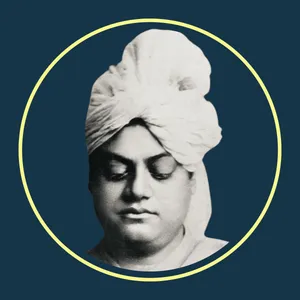
The Vedanta Society of Western Washington presents illuminating talks on Vedanta, the timeless philosophy that teaches the divinity of the soul, the unity of existence, and the harmony of all spiritual paths. This podcast brings together lectures from our resident swamis of the Ramakrishna Order alongside guest speakers dedicated to exploring spiritual Truth.These talks draw from classical Hindu scriptures as well as universal spiritual principles shared across religious traditions. You’ll hear reflections on the nature of the mind, the art of meditation, the search for meaning, navigating suffering, cultivating love and wisdom, and discovering inner freedom.The tone of the series is contemplative, thoughtful, and practical. Rather than offering quick fixes or slogans, these lectures guide listeners toward inner transformation through discernment, devotion, selfless service, and meditation. For seekers who value depth, clarity, and authenticity, this podcast offers a steady voice gro
Latest Episodes
The most recent episodes — sign up to get AI-powered summaries of each one.
- Jan 28, 201852 min
Two Challenges of Spiritual Life — Swami Manishananda
Recorded at the Vedanta Society of Western Washington on January 28, 2018.In this talk, Swami Manishananda examines two fundamental challenges encountered in spiritual life: developing a spiritual understanding of existence and purifying the mind. He explains that spiritual growth is a gradual process, requiring patience, perseverance, and the willingness to examine deeply established habits of thought and behavior. Drawing on the Vedantic perspectives of dualism, qualified non-dualism, and non-dualism, he describes how different understandings of the relationship between God, humanity, and the universe can guide spiritual practice. He emphasizes that spiritual understanding must extend beyond intellectual conviction and become an active influence in daily life, while recognizing that enthusiasm and spiritual experiences naturally fluctuate over time.Turning to the purification of the mind, Swami Manishananda explains how impressions accumulated through past experiences remain in the subconscious and continue to influence thoughts and actions. Using the analogies of a cluttered basement and an inkwell gradually cleansed with fresh water, he illustrates how positive thoughts, spiritual practices, and wholesome associations progressively displace undesirable tendencies. Drawing on Sri Ramakrishna’s teachings, he distinguishes between the immature ego, centered on selfish attachments, and the mature ego, which increasingly identifies with God and higher spiritual ideals. He concludes by acknowledging the familiar difficulty of putting spiritual understanding into practice, encouraging seekers not to become discouraged when their ideals advance more rapidly than their ability to live according to them. Steady effort, patience, and divine grace remain essential throughout the spiritual journey.
- Jan 21, 201851 min
Saints in a Hostile World — Swami Bhaskarananda
Recorded at the Vedanta Society of Western Washington on January 21, 2018.In this talk, Swami Bhaskarananda examines why genuine saints have so often encountered hostility, persecution, and misunderstanding throughout history. Drawing on Vedantic philosophy, he explains that the world is characterized by pairs of opposites, including good and evil, while God transcends these distinctions. Saints, having attained knowledge of their inherent divinity, embody spiritual qualities that may provoke resentment or opposition from those whose understanding and values differ. Through examples from several religious traditions, including the persecution of Zarathustra, the Sufi mystic Mansur al-Hallaj, and Swami Vivekananda, he illustrates how spiritual greatness has frequently been met with intolerance, suspicion, and even violence.Swami Bhaskarananda distinguishes between prejudice arising from unfamiliarity, which may be overcome through greater understanding, and deeply ingrained bigotry, which is far more difficult to change. He also considers the tendency of people to admire outward displays of spirituality while failing to recognize genuine holiness. Drawing on George Bernard Shaw’s portrayal of Joan of Arc, whose condemnation and later canonization reveal the contradictions of public attitudes toward saints, he reflects on the difficulty society has in accepting those who challenge its established beliefs and expectations. The talk concludes by recalling the persecution of Jesus and asking when humanity will become sufficiently receptive to recognize and welcome genuine saints during their own lifetimes.
- Jan 14, 201850 min
Are We Really Reborn? — Swami Bhaskarananda
Recorded at the Vedanta Society of Western Washington on January 14, 2018.In this talk, Swami Bhaskarananda examines the question of rebirth and the continuity of existence beyond physical death from the perspective of Vedanta. Beginning with humanity’s ancient attempts to understand what happens after death, he discusses the gradual development of religious and philosophical knowledge and the methods used in Indian philosophy to distinguish truth from mistaken belief. He considers perception, inference, comparison, and reliable testimony, emphasizing the importance of testimony in understanding matters that lie beyond ordinary sense experience. Drawing on Hindu scriptures, Buddhist teachings, and references to reincarnation in other religious traditions, including early Christianity, he presents rebirth as a teaching that has appeared across different cultures and periods of history.Swami Bhaskarananda explains the Vedantic understanding of the subtle body, which survives the death of the physical body and carries the mind, intellect, and other subtle faculties into subsequent existence. He describes different planes of existence and the relationship between a person’s spiritual development and the conditions experienced after death. Through accounts of saints and individuals who reportedly remembered previous lives, he offers examples supporting the traditional belief in reincarnation. He concludes by explaining that, according to Vedanta, the cycle of birth and death continues until one attains knowledge of the Self and experiences one’s inherent divinity, thereby transcending rebirth and attaining lasting freedom and peace.
- Jan 7, 201855 min
Vivekananda: A Versatile Genius — Swami Manishananda
Recorded at the Vedanta Society of Western Washington on January 7, 2018.In this talk, Swami Manishananda explores the extraordinary life and character of Swami Vivekananda, describing him as a versatile genius whose accomplishments extended far beyond his spiritual teachings. A gifted scholar, musician, orator, writer, and independent thinker, Vivekananda combined intellectual brilliance with profound spiritual experience and a universal outlook. Swami Manishananda places particular emphasis on Vivekananda’s relationship with Sri Ramakrishna, recounting their early encounters and the young Narendra’s determination to test religious claims through reason and direct experience. Despite their contrasting backgrounds and approaches, the two developed a remarkable spiritual relationship through which Sri Ramakrishna prepared Vivekananda to carry his message of the harmony of religions, the divinity of humanity, and the oneness of existence to the modern world.Through accounts of Vivekananda’s childhood, his historic appearance at the 1893 Parliament of Religions in Chicago, and his encounters with prominent figures in the West, Swami Manishananda illustrates the breadth of his abilities and the influence of his personality. Particular attention is given to Vivekananda’s meeting with John D. Rockefeller, demonstrating his conviction that wealth carries a responsibility to serve humanity. Throughout the talk, Vivekananda emerges as a figure in whom reason and faith, intellectual strength and compassion, spiritual knowledge and practical service found a remarkable harmony. His enduring contribution, Swami Manishananda explains, rests not merely in his exceptional talents but in the universal spiritual vision that guided their expression.
- Dec 17, 201757 min
Spiritual Initiation and Its Utility — Swami Bhaskarananda
Recorded at the Vedanta Society of Western Washington on December 17, 2017.In this talk, Swami Bhaskarananda explains the meaning and purpose of spiritual initiation, or mantra diksha, in the Vedanta tradition. When a person develops a sincere yearning to know God, a qualified spiritual teacher, or guru, gives the disciple a mantra—a holy name of God to be repeated as a spiritual practice. Swami Bhaskarananda describes how repetition of the mantra gradually fills the mind with divine thoughts, purifying it and allowing the divinity already present within a person to become increasingly manifest. He discusses the traditional qualifications of a true guru, including knowledge of the scriptures, purity of character, freedom from selfish motives, and the humility to recognize that God alone is the real teacher. He also describes qualities important in a disciple, particularly sincere yearning, reverence for the teacher, truthfulness, self-control, concern for the welfare of others, and simplicity of life.Through stories from the Upanishads, accounts of saints, and experiences from his own spiritual life, Swami Bhaskarananda emphasizes the special relationship between guru and disciple and the importance of faithfully practicing the mantra received at initiation. A mantra, he explains, is not merely a word or formula but a spiritual discipline whose power becomes effective through regular practice and the guidance of a genuine teacher. He concludes with accounts illustrating the enduring bond between teacher and disciple and the assurance that divine grace accompanies the sincere seeker throughout the spiritual journey.
- Dec 10, 201748 min
Jesus: A Divine Outlaw — Swami Manishananda
Recorded at the Vedanta Society of Western Washington on December 10, 2017.In this talk, Swami Manishananda describes Jesus as a “divine outlaw”—not one who breaks or defies law, but a divine incarnation who stands beyond the ordinary law of karma. Drawing parallels between Christianity and Vedanta, he presents Jesus alongside figures such as Sri Krishna, Buddha, and Sri Ramakrishna as manifestations of the Divine who enter human life not through karmic necessity but for the spiritual welfare of humanity. He examines teachings of Jesus through the Vedantic perspectives of dualism, qualified non-dualism, and non-dualism, showing how sayings such as “Our Father who art in heaven,” the image of the vine and its branches, and “I and my Father are one” can speak to seekers at different stages of spiritual understanding.Swami Manishananda emphasizes that spiritual life still requires effort: prayer, truthfulness, discipline, devotion, and sustained focus gradually purify the mind and remove the coverings that obscure our divine nature. Drawing on Sri Ramakrishna’s teachings about divine incarnation and Swami Vivekananda’s reflections on Christ, he portrays Jesus as a continuing spiritual influence whose life and teachings have inspired generations toward unselfishness, devotion, and the search for God. The talk concludes with Vivekananda’s vision of Christ as a world teacher whose message belongs not to any individual or institution, but to the universal truth toward which spiritual life leads.
- Dec 3, 201758 min
Sarada Devi: The Universal Mother — Swami Bhaskarananda
Recorded at the Vedanta Society of Western Washington on December 3, 2017.In this talk, Swami Bhaskarananda presents Sri Sarada Devi, known as the Holy Mother, as an embodiment of the universal motherhood of God. Beginning with the Vedantic understanding that the one, impersonal Divine may be approached as Father, Mother, child, or friend, he explains how Sri Ramakrishna regarded Sarada Devi as the Divine Mother in human form. Through incidents from her life, Swami Bhaskarananda illustrates how her motherhood extended beyond family, social standing, religion, nationality, and even the distinction between human beings and animals. She welcomed those considered virtuous as well as those regarded as sinful, teaching, “I am the mother of the good and the mother of the wicked also.” Her compassion expressed itself not merely as an ideal but through service, forgiveness, acceptance, and an unwillingness to reject anyone who approached her as Mother.Swami Bhaskarananda connects this universal motherhood with the Vedantic ideal of expanding one's sense of belonging until the entire world is regarded as one's own family. He emphasizes Sarada Devi’s teaching not to dwell on the faults of others, but to recognize one’s own shortcomings and learn to embrace the whole world as one’s own. Her life, he explains, demonstrates the spiritual growth by which the mind becomes increasingly pure and unselfish, allowing the divinity already present within every being to become more fully manifest.
- Nov 26, 201744 min
Prayer — Swami Avikarananda
Recorded at the Vedanta Society of Western Washington on November 26, 2017.In this lecture, Swami Avikarananda reflects on prayer as a spiritual practice and on the role it played during his own period of doubt about the existence of God. He begins with Sri Ramakrishna's teaching that a seeker should keep holy company, repeat the name of God, sing divine glories, and practice unceasing prayer. As a young spiritual seeker, Swami Avikarananda found some of these practices difficult to understand, but prayer seemed approachable even while he remained uncertain whether God actually listened. He recalls questioning the usefulness of prayer, especially when so many prayers are selfish, contradictory, or attempts to impose personal desires upon God. Drawing on Christianity, he revisits the Lord's Prayer and Jesus' instruction to pray privately rather than for public recognition, emphasizing sincerity over outward display. He also describes the influence of Thomas à Kempis's The Imitation of Christ, whose searching examination of human weakness led him toward humility and away from complete reliance on personal effort. Gradually, he came to understand prayer less as a means of obtaining desired objects and more as a way of seeking strength, peace, clarity, and the ability to endure life's difficulties without bitterness.The second half of the lecture explores how prayer can deepen into an intimate and continuous relationship with God. Swami Avikarananda explains that Hinduism allows the Divine to be approached through many relationships—as Father, Mother, child, friend, master, or beloved—according to the seeker's temperament. He recalls his own habit of walking alone and praying not primarily for himself but for others who were suffering, eventually forming prayers for the welfare of all. Sri Ramakrishna's life becomes his chief example of unceasing prayer. Looking upon God as the Divine Mother Kali, Sri Ramakrishna prayed not for wealth, knowledge, or worldly gain, but for pure love of God, surrendering both virtue and vice, purity and impurity, knowledge and ignorance. Through the parable of the kitten calling only for its mother, Swami Avikarananda illustrates complete dependence upon God, while stressing that such dependence does not mean passivity but trust. He concludes that sincere prayer gradually transforms from petition into communion: instead of asking God to remove every hardship, the seeker asks for strength to endure without losing faith. When prayer, thought, speech, and action become harmonized, he says, one's whole life itself can become an unceasing prayer.
Get Vedanta Society of Western Washington summaries in your inbox
Free AI-powered daily recaps. Key takeaways, quotes, and mentions — in a 5-minute read.
Get Free Summaries →Free forever for up to 3 podcasts. No credit card required.
You Might Also Like
Listeners also like.

Wisdom Tantra Freedom
Two tantrikas discuss spiritual practice, self-inquiry, and the challenges of living authentically in the modern world.
Sri Ramana Teachings
Explores the spiritual practices of self-investigation and self-surrender according to the teachings of Bhagavan Ramana.

Wayne Dyer Podcast
Teachings on self-empowerment, spiritual growth, and inner peace from Dr. Wayne Dyer.

Geeta Unraveled: Conversations on Timeless Wisdom
Explores the Bhagavad Gita verse by verse, translating its spiritual and philosophical teachings into practical guidance for modern life.
The Arun Pandit Show
Discusses the intersection of Vedic science and modern success through interviews with spiritual and business leaders.
The Sadhguru Podcast - Of Mystics and Mistakes
A yogi and mystic explores spiritual wisdom with practical insights for modern life.

Being Unlimited
Explores spiritual awakening and the boundless nature of true being through conversations with Adyashanti.

The Soul Mirror Podcast
Explores spiritual insights and personal healing through reflective conversations about identity and inner truth.
Ram Dass Here And Now
Ram Dass shares heart-centered spiritual teachings from decades of lectures, introduced by Raghu Markus.

Nārāyaṇīyaṃ - Learn to Chant
A Sanskrit devotional chant from the Nārāyaṇīyaṃ scripture, broken down for learning and recitation.

Next Level Soul Podcast with Alex Ferrari
Discusses spirituality, consciousness, and existential questions with teachers and experts in metaphysics, near-death experiences, and personal growth.

BYU Speeches
BYU Speeches
About Vedanta Society of Western Washington
The Vedanta Society of Western Washington presents illuminating talks on Vedanta, the timeless philosophy that teaches the divinity of the soul, the unity of existence, and the harmony of all spiritual paths. This podcast brings together lectures from our resident swamis of the Ramakrishna Order alongside guest speakers dedicated to exploring spiritual Truth.These talks draw from classical Hindu scriptures as well as universal spiritual principles shared across religious traditions. You’ll hear reflections on the nature of the mind, the art of meditation, the search for meaning, navigating suffering, cultivating love and wisdom, and discovering inner freedom.The tone of the series is contemplative, thoughtful, and practical. Rather than offering quick fixes or slogans, these lectures guide listeners toward inner transformation through discernment, devotion, selfless service, and meditation. For seekers who value depth, clarity, and authenticity, this podcast offers a steady voice gro
Customized Recaps
AI-powered recaps with compact key takeaways, quotes, and insights.
Straight to Your Inbox
Get key takeaways from Vedanta Society of Western Washington in a 5-minute read.
Save Hours Every Week
Stay current on your favorite podcasts without falling behind.
Frequently Asked Questions
What is Podzilla's Vedanta Society of Western Washington daily summary?
It's a free AI-powered email that summarizes new episodes of Vedanta Society of Western Washington as soon as they're published. You get the key takeaways, notable quotes, and links & mentions — all in a quick read.
How does the Vedanta Society of Western Washington podcast summary work?
When a new episode drops, our AI transcribes and analyzes it, then generates a personalized summary tailored to your interests and profession. It's delivered to your inbox every morning.
Is this an official Vedanta Society of Western Washington product?
No. Podzilla is an independent service that summarizes publicly available podcast content. We're not affiliated with or endorsed by Vedanta Society of Western Washington.
Can I get summaries of other podcasts too?
Absolutely! The free plan covers up to 3 podcasts. Upgrade to Pro for 15, or Premium for 50. Browse our full catalog at /podcasts.
How often does Vedanta Society of Western Washington release new episodes?
Vedanta Society of Western Washington publishes weekly. Our AI generates a summary within hours of each new episode.
What topics does Vedanta Society of Western Washington cover?
Vedanta Society of Western Washington covers topics including Religion & Spirituality, Spirituality, Hinduism. Our AI identifies the specific themes in each episode and highlights what matters most to you.
Start getting Vedanta Society of Western Washington summaries tomorrow morning.
Free forever for up to 3 podcasts. No credit card required.
Free forever for up to 3 podcasts. No credit card required.