Free Daily Podcast Summary
Version History: Daily Summaries Delivered
by The Verge
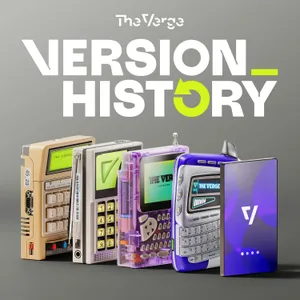
Version History is a show about the best gadgets ever. And the worst ones. And the ones that might have changed the world, if they ever actually shipped. Every week, your favorite people from The Verge and beyond hang out to tell and debate the story of a gadget, app, website, or any other tech product, and try to determine the item’s true legacy. Because not every product is a hit, but every product has a story. And the ones that really matter aren’t always the ones you think.
Latest Episodes
The most recent episodes — sign up to get AI-powered summaries of each one.
- 6 days ago1h 18m
OLPC XO-1: The price of free
The idea was big, exciting, and inspiring: What if we could get every kid in the world access to a computer? For a bunch of thinkers and executives in Silicon Valley, it felt like the way to fix everything. But the One Laptop Per Child initiative, and the XO-1 laptop designed to be given away, were both more complicated than anyone expected. David Pierce is joined by The Verge’s Adi Robertson and tech journalist David Imel to figure out why OLPC didn’t work, whether there’s anything to learn from the XO-1’s innovative design, and whether this kind of computer giveaway could ever actually succeed. Learn more about your ad choices. Visit podcastchoices.com/adchoices
- 1 weeks ago1h 16m
TI-84: Monopoly math
The same calculator has been on most kids’ back to school shopping list since the early 2000s. And the dominance of Texas Instruments’ calculator division goes back even farther. David Pierce is joined by The Verge’s Nilay Patel and Victoria Song to tell the story of the calculator, and how one company managed to take over the market and never let it go. Learn more about your ad choices. Visit podcastchoices.com/adchoices
- 2 weeks ago1h 12m
Oregon Trail: Saddle up
Whether you played it in the back of your classroom or on your computer at home, if you were a kid in the last 30 years you almost certainly grew up playing Oregon Trail. David Pierce is joined by gaming journalist Chris Grant and Philip Bouchard, the designer and team leader of the game’s most iconic version, to talk about the academic origins of Oregon Trail, the game’s complicated legacy, and whether anyone ever really died of dysentery. Learn more about your ad choices. Visit podcastchoices.com/adchoices
- Aug 12, 202640 min
Vergecast: ELIZA, the world's first chatbot
From The Vergecast, this episode takes a look back at one of the earliest chapters in the history of AI. Before Alexa and Siri, there was ELIZA. The first chatbot ever was the creation of a man named Joseph Weizenbaum, who built the bot almost as a magic trick — and then couldn't believe how many people fell for it. David Berry and Mark Marino, two members of a team dedicated to restoring and understanding ELIZA, explain how Weizenbaum created the virtual conversant, why he came to regret it, and what ELIZA can teach us about life in the AI age. We’re also on video! Check us out on YouTube. Subscribe to The Verge for unlimited access to theverge.com, subscriber-exclusive newsletters, and our ad-free podcast feed. We love hearing from you! Email your questions and thoughts to vergecast@theverge.com or call us at 866-VERGE11. Learn more about your ad choices. Visit podcastchoices.com/adchoices
- Jul 19, 20261h 14m
The Clapper: Light work
Clap on. Clap off. The Clapper may not have been a very good product, but it came with one of the all-time great marketing campaigns. And it might have even been a great, ahead of its time idea. The Verge's David Pierce and Victoria Song are joined by Allison Marsh, a writer and professor at The University of South Carolina, to talk through the Clapper's whole history. It involves lawsuits, broken gadgets, and a pioneering idea about laziness and the smart home. We’re also on video! Check us out on YouTube. Subscribe to The Verge for unlimited access to theverge.com, subscriber-exclusive newsletters, and our ad-free podcast feed. We love hearing from you! Email your questions and thoughts to vergecast@theverge.com or call us at 866-VERGE11. Learn more about your ad choices. Visit podcastchoices.com/adchoices
- Jul 12, 20261h 11m
Philips Hue: The smart home’s light bulb moment
The humble light bulb might be the ultimate success story in the smart home. Our connected, adaptable homes are supposed to be customizable, connected to everything, and incredibly easy to use, and nothing has made that work quite like Philips Hue lights. In this episode, The Verge's David Pierce and Jennifer Pattison Tuohy are joined by smart home journalist and expert Richard Gunther to tell the Hue's story. We trace the product's history from its origins in the smartphone revolution, try to figure out how Philips managed to turn a staggeringly expensive lightbulb into a must-have gadget, and look at whether there's even more invention left in the future of lighting. We’re also on video! Check us out on YouTube. Subscribe to The Verge for unlimited access to theverge.com, subscriber-exclusive newsletters, and our ad-free podcast feed. We love hearing from you! Email your questions and thoughts to vergecast@theverge.com or call us at 866-VERGE11. Learn more about your ad choices. Visit podcastchoices.com/adchoices
- Jul 5, 20261h 18m
Keurig: The K-Cup invasion
The Keurig is a simple idea – what if it was really easy to make pretty good coffee, one cup at a time? — with a wildly complicated history. David Pierce is joined by Eater editor Melissa McCart and champion barista and author Morgan Eckroth to discuss the whole history of Keurig, from its creation in a Boston apartment to its invasion of seemingly every house, doctor's office and conference room in the US. Keurig was certainly a success, but was it a good thing? For coffee, for the world? That's more complicated. We’re also on video! Check us out on YouTube. Subscribe to The Verge for unlimited access to theverge.com, subscriber-exclusive newsletters, and our ad-free podcast feed. We love hearing from you! Email your questions and thoughts to vergecast@theverge.com or call us at 866-VERGE11. Learn more about your ad choices. Visit podcastchoices.com/adchoices
- Jun 28, 202658 min
Nest: The iPod of thermostats
Thermostats were ugly. Best case scenario, you never had to think about it. Then a couple of Apple legends decided they could make something better, and set out to turn changing the temperature into a high-tech experience. On this episode, David Pierce, Nilay Patel, and Jennifer Pattison Tuohy tell the full story of the Nest Learning Thermostat, from its complex development to its huge debut. The Nest was the beginning of a crucial era in the smart home — could it have been something even bigger? We have some ideas. We’re also on video! Check us out on YouTube. Subscribe to The Verge for unlimited access to theverge.com, subscriber-exclusive newsletters, and our ad-free podcast feed. We love hearing from you! Email your questions and thoughts to vergecast@theverge.com or call us at 866-VERGE11. Learn more about your ad choices. Visit podcastchoices.com/adchoices
Get Version History summaries in your inbox
Free AI-powered daily recaps. Key takeaways, quotes, and mentions — in a 5-minute read.
Get Free Summaries →Free forever for up to 3 podcasts. No credit card required.
You Might Also Like
Listeners also like.
The Vergecast
Daily discussions on tech news, gadgets, and software, exploring their impact on life and recommendations for what to use.

Decoder with Nilay Patel
Conversations with innovators and policymakers exploring the impact of technology and business on the future.
Upgrade
Explores how technology impacts daily life, from personal devices to digital entertainment.
What Future with Joshua Topolsky
Explores modern culture through reflective monologues and eclectic conversations with thinkers, experts, and outliers.

TWiT News (Audio)
Covers breaking tech news and product announcements from major technology companies with expert analysis.
Witness History
First-hand accounts of pivotal historical moments, from global events to cultural milestones, told by those who lived them.

HISTORY This Week
A weekly look at pivotal historical events and the people behind them, from famous figures to lesser-known individuals who shaped the world.
TechLinked
A weekly news show covering technology and gaming culture.

Daily Tech News Show
A daily briefing covering the latest developments in technology news from an independent and trustworthy source.

Endless Thread
Untold histories and unsolved mysteries from online and real life, explored through investigative storytelling.
Forever Ago
Explores the surprising history behind everyday things, from ice cream to video games, making the past engaging for all ages.

Primary Technology
Tech news covering consumer gadgets, AI, and major industry stories explained for a general audience.
About Version History
Version History is a show about the best gadgets ever. And the worst ones. And the ones that might have changed the world, if they ever actually shipped. Every week, your favorite people from The Verge and beyond hang out to tell and debate the story of a gadget, app, website, or any other tech product, and try to determine the item’s true legacy. Because not every product is a hit, but every product has a story. And the ones that really matter aren’t always the ones you think.
Customized Recaps
AI-powered recaps with compact key takeaways, quotes, and insights.
Straight to Your Inbox
Get key takeaways from Version History in a 5-minute read.
Save Hours Every Week
Stay current on your favorite podcasts without falling behind.
Frequently Asked Questions
What is Podzilla's Version History daily summary?
It's a free AI-powered email that summarizes new episodes of Version History as soon as they're published. You get the key takeaways, notable quotes, and links & mentions — all in a quick read.
How does the Version History podcast summary work?
When a new episode drops, our AI transcribes and analyzes it, then generates a personalized summary tailored to your interests and profession. It's delivered to your inbox every morning.
Is this an official Version History product?
No. Podzilla is an independent service that summarizes publicly available podcast content. We're not affiliated with or endorsed by The Verge.
Can I get summaries of other podcasts too?
Absolutely! The free plan covers up to 3 podcasts. Upgrade to Pro for 15, or Premium for 50. Browse our full catalog at /podcasts.
How often does Version History release new episodes?
Version History publishes weekly. Our AI generates a summary within hours of each new episode.
What topics does Version History cover?
Version History covers topics including History, Technology. Our AI identifies the specific themes in each episode and highlights what matters most to you.
Start getting Version History summaries tomorrow morning.
Free forever for up to 3 podcasts. No credit card required.
Free forever for up to 3 podcasts. No credit card required.