Free Daily Podcast Summary
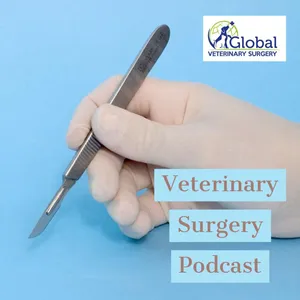
Veterinary Surgery Podcast: Daily Summaries Delivered
by Jolle Kirpensteijn
The Veterinary Surgery Podcast is a first of its kind podcast that focuses on surgical advances in veterinary medicine with host Dr. Jolle Kirpensteijn. Jolle is a diplomate of the American and European Colleges of Veterinary Surgery and has lots of experience in veterinary surgery. Jolle will interview fellow surgeons, review articles that are recently published and will discuss 2 books he will be working on in the near future.
Latest Episodes
The most recent episodes — sign up to get AI-powered summaries of each one.
- 1 weeks ago35 min
Does lorazepam work in cats with urinary obstruction with Dr. Jody Lulich
This podcast episode featured Dr. Jolle interviewing Dr. Jody Lulich about their recent study published in JAVMA titled "Lorazepam Reduces Recurrence of Urethral Obstruction in Male Cats." Dr. Lulich, who is head of the Minnesota Urolith Center that analyzes approximately 100,000 stone submissions annually, discussed their groundbreaking prospective randomized double-blind placebo-controlled study involving 80 cats. The study found that cats treated with lorazepam (a skeletal muscle relaxant) and a therapeutic urinary diet had zero re-obstructions compared to 14-15% recurrence rate in the placebo group, demonstrating the effectiveness of a multimodal approach including diet modification, pain medication, and environmental enrichment. Dr. Lulich explained that surgical removal of urinary stones actually leaves stones in about 20% of cases, making medical dissolution a more compassionate and effective treatment option. The discussion also covered the historical shift away from surgical intervention for struvite stones, the limitations of previous smooth muscle relaxant drugs like prazosin, and the significant cultural challenge of changing veterinary practices despite clear evidence supporting non-surgical approaches.Article: https://avmajournals.avma.org/view/journals/javma/264/9/javma.26.01.0045.xmlThe Veterinary Surgery Podcast is a first of its kind podcast that focuses on surgical advance in veterinary medicine with host Dr. Jolle Kirpensteijn. Jolle is a diplomate of the American and European Colleges of Veterinary Surgery and has lots of experience in veterinary surgery. Jolle will interview fellow surgeons, review articles that are recently published and will discuss 2 books he will be working on in the near future. You can also follow Jolle on his Global Veterinary Surgery Facebook or Instagram pages.
- 3 weeks ago24 min
Skin fold flaps for the rescue!
This Week's Episode: A Look Back — 1995 and the Skin Fold Advancement FlapThis week we travel back three decades to revisit a foundational paper in small animal reconstructive surgery: Geraldine Hunt's 1995 description of the skin fold advancement flap for closing large sternal and inguinal wounds in dogs and cats. Before this technique was described, surgeons facing large ventral defects in these regions had limited options beyond skin grafts or leaving wounds to heal by second intention — both often impractical in mobile, high-tension areas like the groin and chest.Hunt's insight was elegant: the flank fold (near the inguinal region) and the elbow fold (near the sternum) are natural double-layered skin folds with a robust subdermal blood supply, fed by the deep circumflex iliac artery and lateral thoracic artery respectively. By dividing the fold's attachments to the limb, "unfolding" it into a single U-shaped flap, and advancing it into the defect, surgeons could achieve reliable, tension-free coverage using local tissue — with a donor site simple enough to close primarily. Nearly 30 years later, this technique remains a workhorse in general and specialty practice, and it laid the groundwork for later refinements, including Hunt's own 2001 follow-up extending the approach to proximal limb and trunk defects more broadly.Reference:Hunt GB. Skin fold advancement flaps for closing large sternal and inguinal wounds in cats and dogs. Veterinary Surgery. 1995;24(2):172–175. Link: https://onlinelibrary.wiley.com/journal/1532950xThe Veterinary Surgery Podcast is a first of its kind podcast that focuses on surgical advance in veterinary medicine with host Dr. Jolle Kirpensteijn. Jolle is a diplomate of the American and European Colleges of Veterinary Surgery and has lots of experience in veterinary surgery. Jolle will interview fellow surgeons, review articles that are recently published and will discuss 2 books he will be working on in the near future. You can also follow Jolle on his Global Veterinary Surgery Facebook or Instagram pages.
- 4 weeks ago16 min
Complications in reconstructive surgery and other news!
Dr Jolle is back with a short episode because he will be in NYC this week. He is discussing Chapter 10 of his new reconstruction book, focusing on complications in reconstructive surgery. He also looks at some news about veterinary surgery in the various general journals. More info about his book: https://www.routledge.com/Colour-Atlas-of-Reconstructive-Techniques-in-the-Dog-and-Cat/Kirpensteijn-Stanley-terHaar/p/book/9780367029999
- Sep 3, 202635 min
Does the Funnel sign in GDV help differentiating between GD and GDV?
This episode of the Vet Surgery Podcast hosted by Dr. Jolle Kirpensteijn is featuring Dr. Elizabeth Maxwell (Assistant Professor of Surgical Oncology, University of Florida) and Dr. Federico Vilaplana Grosso (Associate Professor in Diagnostic Imaging, University of Florida), who co-authored a recent JAVMA article.Topic: Differentiating 360° GDV from Simple Gastric Dilatation The discussion centered on the caudal esophageal "twist sign" — a funnel-shaped appearance in the lower esophagus that helps identify 360-degree gastric dilatation-volvulus (GDV), which is notoriously difficult to distinguish from regular gastric dilatation on radiographs.Key findings from the study: The research compared 29 dogs with 360° GDV to 38 dogs with simple gastric dilatation. The twist sign was present in all dogs with esophageal dilation, except when the esophagus had been decompressed by tube placement. Unlike typical 180° GDV cases (which show classic signs like abnormal pylorus positioning), 360° twists return the stomach to its normal anatomic position, making radiographic diagnosis much harder. Clinical perspectives: Dr. Maxwell noted that unsuccessful oral gastric tubing and endoscopy attempts were more common in 360° cases. Dr Vilaplana Grosso shared that the funnel sign was not part of his standard diagnostic approach before collaborating with Dr. Maxwell. The group discussed differing institutional practices on whether to image first or decompress first in emergency GDV situations.
- Aug 27, 202629 min
A novel Bostonpexy technique for diaphragmatic hernias with Dr. Sarah Boston
In this episode of the Veterinary Surgery Podcast, Dr. Jolle Kirpensteijn sits down with repeat guest Dr. Sarah Boston, a veterinary cancer surgeon, for a wide-ranging conversation. They start with recent literature on staphylectomy techniques before turning to the contentious topic of continued French Bulldog breeding given the breed's well-documented health complications. Dr. Boston walks through her path into veterinary medicine, from deciding on the career at age six to finally landing a surgical residency on her third attempt. The discussion then moves into her own research contributions: a new diaphragmatic hernia repair technique she calls the "BostonPexy," which uses a kidney plug method, and a combined-approach mandibulectomy technique developed for large dogs. The episode closes with Dr. Boston naming the veterinary surgery papers that shaped her thinking most, citing Duncan Lascelles' work on maxillectomy approaches and Charles Koontz's research on vaccine-associated sarcomas.
- Aug 20, 202621 min
To fold or not to fold part 2 with Dr. Bryden Stanley
We are not done talking soft palate issues! As a follow up from last week I am discussing the folded flap versus traditional staphylectomy technique for treating brachycephalic airway syndrome in dogs with Dr. Bryden Stanley. Bryden shared her experience using folded flaps when palate thickness exceeds 1.2-1.5 centimeters on CT scans, particularly for patients who haven't responded to traditional staphylectomy. She emphasized the technique requires a robust suture pattern using interrupted 2.0 and 3.0 monocryl sutures and noted the learning curve involved. Jolle mentioned recent studies showing no significant difference between the two techniques, but Bryden argued the literature remains controversial and individual patient factors are crucial in determining the best approach. They discussed how variations in technique and patient selection could explain conflicting results in the current research.
- Aug 13, 202636 min
Traditional versus the folded flap? That is the question with Dr. Ameet Singh
In this episode of the Veterinary Surgery Podcast, Dr. Jolle Kirpenstein interviewed Dr. Ameet Singh about a recently published article in JAVMA comparing folded flap palatoplasty (FPP) and traditional staphylectomy for soft palate surgery in French Bulldogs with BOAS. Dr. Singh summarized the study’s main finding that both techniques resulted in similar positive clinical outcomes, with the key being to perform either technique aggressively. They discussed the study’s methods, including CT measurements and exercise tolerance testing, and acknowledged limitations such as small sample size and challenges with follow-up. Dr. Singh described the surgical techniques, potential complications, and the importance of addressing multiple components of BOAS during surgery. They also touched on the popularity of brachycephalic breeds, personal experiences, and the value of the study for clinical practice.
- Jul 23, 202615 min
Ureteroneocystostomy in Cats
This lecture, delivered by DrJolle, reviews a JAVMA article from April 2026 titled "Ureteroneocystostomy as a Treatment for Benign Ureteral Obstruction and Ectopic Ureter in Cats: Thirty-Seven Cases." The retrospective study of 37 cases from the Ryan Veterinary Hospital at the University of Pennsylvania evaluates outcomes and complications of ureteroneocystostomy. Findings indicate this surgery is a viable treatment for benign ureteral obstructions and extramural ectopic ureters in cats, with a long median survival time (1980 days) and a relatively low complication rate compared to alternatives such as subcutaneous ureteral bypass (SUB) devices or stents. Preoperative azotemia (elevated BUN, creatinine, and phosphorus) was a significant risk factor for increased 30-day mortality. Ureteral stents, when used, were commonly associated with long-term complications necessitating removal.
Get Veterinary Surgery Podcast summaries in your inbox
Free AI-powered daily recaps. Key takeaways, quotes, and mentions — in a 5-minute read.
Get Free Summaries →Free forever for up to 3 podcasts. No credit card required.
You Might Also Like
Listeners also like.
Straight from the Horse Doctor's Mouth
A veterinarian and host discuss horse healthcare and proper care for all horse owners.

The Curbsiders Internal Medicine Podcast
Expert-led internal medicine discussions with clinical insights and humor for primary care and hospital medicine providers.

DGTL Voices with Ed Marx
Conversations with leaders and innovators driving digital transformation in healthcare.

The Retrievals
An investigation into why many patients experience severe pain during C-sections and the efforts to address this underreported issue.

The Internet Book of Critical Care Podcast
A podcast exploring critical care medicine through chapter discussions and evidence-based updates from The Internet Book of Critical Care.

Red Pill Your Healthcast
Two healthcare providers discuss overlooked health issues and empower listeners to make informed decisions for their families.
Goat Talk with the Goat Doc
A practicing veterinarian shares practical insights on goat medicine and farm management based on years of hands-on experience.

The House of Pod
A gastrointestinal doctor and colleagues discuss medicine with humor and insight.

Data & Science with Glen Wright Colopy
Discusses healthcare technology with experts, focusing on data science and engineering innovations in clinical applications.

Dr. Jockers Functional Nutrition
Science-based strategies for reducing inflammation, improving brain and gut health, burning fat, and supporting wellness through functional nutrition.

This Week in Cardiology
A weekly summary and analysis of key developments in cardiology for healthcare professionals.

The VPZD Show
Two physicians discuss healthcare, medicine, and policy from a contrarian, middle-ground perspective.
About Veterinary Surgery Podcast
The Veterinary Surgery Podcast is a first of its kind podcast that focuses on surgical advances in veterinary medicine with host Dr. Jolle Kirpensteijn. Jolle is a diplomate of the American and European Colleges of Veterinary Surgery and has lots of experience in veterinary surgery. Jolle will interview fellow surgeons, review articles that are recently published and will discuss 2 books he will be working on in the near future.
Customized Recaps
AI-powered recaps with compact key takeaways, quotes, and insights.
Straight to Your Inbox
Get key takeaways from Veterinary Surgery Podcast in a 5-minute read.
Save Hours Every Week
Stay current on your favorite podcasts without falling behind.
Frequently Asked Questions
What is Podzilla's Veterinary Surgery Podcast daily summary?
It's a free AI-powered email that summarizes new episodes of Veterinary Surgery Podcast as soon as they're published. You get the key takeaways, notable quotes, and links & mentions — all in a quick read.
How does the Veterinary Surgery Podcast podcast summary work?
When a new episode drops, our AI transcribes and analyzes it, then generates a personalized summary tailored to your interests and profession. It's delivered to your inbox every morning.
Is this an official Veterinary Surgery Podcast product?
No. Podzilla is an independent service that summarizes publicly available podcast content. We're not affiliated with or endorsed by Jolle Kirpensteijn.
Can I get summaries of other podcasts too?
Absolutely! The free plan covers up to 3 podcasts. Upgrade to Pro for 15, or Premium for 50. Browse our full catalog at /podcasts.
How often does Veterinary Surgery Podcast release new episodes?
Veterinary Surgery Podcast publishes monthly. Our AI generates a summary within hours of each new episode.
What topics does Veterinary Surgery Podcast cover?
Veterinary Surgery Podcast covers topics including Science, Life Sciences. Our AI identifies the specific themes in each episode and highlights what matters most to you.
Start getting Veterinary Surgery Podcast summaries tomorrow morning.
Free forever for up to 3 podcasts. No credit card required.
Free forever for up to 3 podcasts. No credit card required.