Free Daily Podcast Summary
We Da People Podcast: Daily Summaries Delivered
by We Da People Network
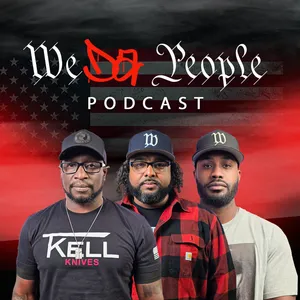
We Da People is more than a podcast — it's a platform for raw, unapologetic conversations at the intersection of culture, firearms, freedom, and real life. Hosted by everyday Americans with something to say and nothing to prove, this show brings you barbershop energy, tactical insights, and honest takes on everything from 2A rights to rap lyrics, training, current events, and community stories.
Latest Episodes
The most recent episodes — sign up to get AI-powered summaries of each one.
- 2 days ago1h 0m
The Dark Side of AI: Jobs, Privacy and Surveillance | We Da People Podcast EP43
Artificial intelligence is already changing how people work, communicate, create, shop, and consume information. But is it helping us think more clearly—or teaching us to stop thinking for ourselves? In this episode of We Da People, Shelton, Colin, and Fred explore the tension between AI’s benefits and its growing risks. They break down the difference between today’s large language models and true artificial general intelligence, then discuss why confident-sounding AI answers can still be wrong. The conversation expands into job displacement, automated customer service, self-driving transportation, AI-generated resumes, and the pressure workers may face to adapt. The crew also examines Flock cameras, phone tracking, medical data, and the larger question of what happens when governments, corporations, or individuals misuse powerful surveillance systems. They also challenge the role of social media algorithms in promoting rage, division, and conflict—especially inside the 2A community—while highlighting practical ways people can use AI for business, education, preparedness, and greater independence. The technology is not slowing down. The real challenge is learning how to benefit from it without giving up privacy, judgment, or human connection. Follow the show and leave a rating if you’re enjoying it. More links: https://wedapeople.deals/
- 1 weeks ago1h 4m
EDC Gun Belts vs Battle Belts: What You Actually Need | We Da People Podcast EP42
Your firearm is only the beginning of a dependable carry setup. In this episode of We Da People, Shelton, Colin, and Fred break down why the right EDC gun belt or battle belt can improve comfort, retention, consistency, and your draw—and why a regular department-store belt may be holding your entire setup back. The crew compares rigid concealed carry belts, ratcheting systems, Cobra buckles, inner-and-outer range belts, MOLLE mounting, and different ways to organize a practical loadout. They discuss their real-world experiences with Kore Essentials, Blue Alpha, Safariland retention holsters, magazine pouches, dump pouches, medical kits, leg straps, ride height, and the compromises between competition gear, survival gear, and everyday carry. This is not about copying somebody else’s belt. It is about building mission-specific gear around your body type, environment, training style, firearm, weapon light, optic, and budget. The crew also explains why testing your equipment through movement, weather, extended wear, and realistic training matters more than how tactical it looks online. Shop deals from We Da People affiliates and partners: https://wedapeople.deals/ Interested in turning your passion for firearms into a career? Learn more about Sonoran Desert Institute: https://sdi.edu/we-da-people/ Hidden Hybrid Holsters: https://alnk.to/g3eXeIs NeoMag https://alnk.to/gVOOR2W Safariland Holster: https://alnk.to/gp4rPWc
- 2 weeks ago1h 19m
How to Start Hunting: Lessons From Eric Morris
Hunting is about far more than carrying a rifle into the woods. It requires patience, fieldcraft, sound decision-making, respect for the land, and the ability to remain calm when a situation goes wrong. In this episode of We Da People, experienced hunter, outdoor educator, and television producer Eric Morris joins the crew to discuss hunting for beginners, Black representation in the outdoor industry, survival skills, wild game, youth education, and what it takes to become a capable outdoorsman. Eric shares lessons gathered from roughly four decades of hunting, including experiences in Georgia, Alaska, South Africa, Namibia, and beyond. He explains why hunter education alone does not fully prepare someone for the field, how to recognize animal tracks and feeding areas, and why new hunters need hands-on mentorship. The conversation also covers the three-shot emergency distress signal, what to do when lost in the woods, .223 and 5.56 for deer hunting, 300 Blackout subsonic ammunition, hog hunting, shot placement, wild game flavor, and the importance of selecting the right ammunition for the animal being hunted. In this episode we cover: How to begin hunting with no previous experience The three-shot distress signal for lost hunters Why stopping can save you when you are lost .223 and 5.56 ammunition for deer hunting Hog hunting and beginner-friendly hunting options Wild game versus store-bought meat Black hunters and outdoor representation Self-sufficiency, confidence, and outdoor education
- 3 weeks ago53 min
Why Digital Night Vision Might Be the Smart Buy | EP40
Digital night vision is changing fast — and GoodNiteGear is helping make that technology more accessible for everyday shooters, prepared families, and people who want real capability without jumping straight into a $10,000–$15,000 analog setup. In this episode of We Da People, the crew breaks down the real-world pros, cons, costs, and use cases behind digital NVGs, analog night vision, thermal, and beginner-friendly night vision setups. Big shoutout to our sponsor GoodNiteGear for sending out multiple units for us to test, compare, and put through real use. We got hands-on with the NVG30, NVG40, NVG50, and NVG90 Pro — and the NVG90 Pro had even the analog guys giving digital night vision its respect. From latency and battery life to onboard recording, light discipline, helmet setups, bump helmets, IR lasers, and training under night vision, this episode gets into what actually matters before you spend serious money. The bigger conversation: do you really need a high-dollar analog setup, or is a digital night vision monocular a smarter starting point for survival, preparedness, camping, night shooting, and family use? Check out GoodNiteGear here: https://goodnitegearshop.com/?ref=wdp
- Jun 29, 20261h 8m
When Do Black Lives Really Matter? Culture, Media & the Black Community | EP39
When do Black lives really matter? In this episode of We Da People, the crew gets into a raw conversation about Black Lives Matter, community accountability, culture, family, education, and what it really means to move the culture forward. This is not just a conversation about police brutality, politics, or slogans. The hosts unpack the difference between supporting the idea that Black lives matter and blindly supporting every organization, movement, artist, or public figure just because they are Black. The episode challenges the audience to think deeper about Black identity, Black community violence, media influence, fatherhood, education, exposure, and the responsibility we all have to build something better. The crew also talks about glorifying the struggle, supporting Black businesses with standards, the power of music and media, HBCUs, generational trauma, and why real change has to start with the individual before it reaches the family, community, culture, and system. In this episode we cover: Black Lives Matter as a phrase vs an organization Why accountability matters inside the Black community Community violence, outrage, and selective attention How music, media, and culture shape behavior Why education and exposure can change a life The danger of glorifying struggle and trauma Family, fatherhood, legacy, and responsibility How to push the culture forward with action Key takeaway: Black lives matter every day, not just when the cameras are rolling.
- Jun 22, 20261h 8m
Discord Questions: New Gun Owners Need to Hear This | EP38
Buying your first gun sounds simple until you realize the firearm is only the beginning. In this episode of We Da People, the crew breaks down the real cost of gun ownership, what new shooters need to think about, and why training matters more than internet opinions. Shelton, Colin, and Fred get into the things people usually skip when talking about first-time gun ownership: holsters, safes, ammo costs, range time, legal responsibility, and the mindset that comes with carrying a firearm. They also talk about how often new gun owners should train, why “good enough” can become dangerous, and why being responsible with a firearm means more than just knowing how to pull the trigger. The conversation also gets into zeroing red dots and rifle optics, cheap optics vs quality optics, why your optic needs to hold zero, and how ammo choice can change your results. Then the crew debates whether every American should own an AR-15, common calibers vs niche calibers, 300 Blackout, 6.5 Grendel, 6mm ARC, .308, and what each round is really for. In this episode we cover: The real cost of buying your first gun How often new shooters should train Carry condition and one in the chamber Legal responsibility after a self-defense incident Why zeroing your optic matters Cheap optics vs reliable optics AR-15 ownership and home defense
- Jun 9, 20261h 10m
Stop Building Fantasy Bug Out Bags | EP37
Everybody talks about having a bug out bag, but most people never ask the real question: can you actually carry it, use it, and survive with it when things go bad? In this episode of We Da People, Shelton, Colin, and Fred break down the real-world difference between a bug out bag, get home bag, vehicle survival kit, and everyday preparedness setup. This isn’t fantasy prepper talk. The crew gets into what should actually go in your bag, why your vehicle may be your first get home tool, and why your gear has to match your age, environment, family, training, and daily routine. They also cover medical kits, water purification, rain gear, fire starting, tools, power banks, night vision, thermal, firearms, dry bags, and why training matters more than buying expensive survival gear. Fred brings a deeper preparedness mindset, Colin breaks down practical gear layers, and Shelton shares what he actually keeps in his bag and truck. In this episode we cover: - Bug out bag vs get home bag - Why your vehicle matters in emergency preparedness - How to organize a survival bag with modular kits - Medical kit basics, trauma kits, Narcan, and tourniquets - Water filters, Silcock keys, and water storage - Fire starting tools, rain gear, boots, and dry bags - Why bag weight can ruin your whole plan - Training, field testing, and using the gear you carry
- May 18, 202650 min
Tactical Training vs Competition Shooting | EP36 We Da People Podcast
Suppressors are more popular than ever, but choosing the right one can get confusing fast. In this episode of We Da People, the crew breaks down what actually matters when buying your first suppressor or upgrading your current setup. We talk through the big questions: 5.56 suppressor vs 300 Blackout suppressor, why subsonic ammo matters, how 9mm PCCs fit into the conversation, and why a suppressor is not just about being “movie quiet.” The crew also gets into hearing protection, flash suppression, gas blowback, night shooting, and why your use case should drive the suppressor you choose. From direct thread and tri-lug mounts to hub-compatible suppressors, Plan B mounts, titanium cans, Inconel durability, flow-through suppressors, and traditional baffle cans, this episode gives beginners and experienced shooters a real-world conversation about suppressor setups. In this episode we cover: How to choose a suppressor by caliber and use case Why 5.56 will never be truly silent 300 Blackout vs 9mm PCC for suppressed shooting Flow-through suppressors vs traditional baffle cans Suppressor mounting systems: direct thread, tri-lug, hub, Plan B Titanium vs Inconel suppressor materials Why flash suppression matters for night shooting Why more responsible gun owners should normalize suppressors Key takeaway: Buy the suppressor that fits your setup, your ammo, your training, and your real-world use case.
About We Da People Podcast
We Da People is more than a podcast — it's a platform for raw, unapologetic conversations at the intersection of culture, firearms, freedom, and real life. Hosted by everyday Americans with something to say and nothing to prove, this show brings you barbershop energy, tactical insights, and honest takes on everything from 2A rights to rap lyrics, training, current events, and community stories.
Customized Recaps
AI-powered recaps with compact key takeaways, quotes, and insights.
Straight to Your Inbox
Get key takeaways from We Da People Podcast in a 5-minute read.
Save Hours Every Week
Stay current on your favorite podcasts without falling behind.
Frequently Asked Questions
What is Podzilla's We Da People Podcast daily summary?
It's a free AI-powered email that summarizes new episodes of We Da People Podcast as soon as they're published. You get the key takeaways, notable quotes, and links & mentions — all in a quick read.
How does the We Da People Podcast podcast summary work?
When a new episode drops, our AI transcribes and analyzes it, then generates a personalized summary tailored to your interests and profession. It's delivered to your inbox every morning.
Is this an official We Da People Podcast product?
No. Podzilla is an independent service that summarizes publicly available podcast content. We're not affiliated with or endorsed by We Da People Network.
Can I get summaries of other podcasts too?
Absolutely! The free plan covers up to 3 podcasts. Upgrade to Pro for 15, or Premium for 50. Browse our full catalog at /podcasts.
How often does We Da People Podcast release new episodes?
We Da People Podcast publishes weekly. Our AI generates a summary within hours of each new episode.
What topics does We Da People Podcast cover?
We Da People Podcast covers topics including Leisure, Hobbies. Our AI identifies the specific themes in each episode and highlights what matters most to you.
Start getting We Da People Podcast summaries tomorrow morning.
Free forever for up to 3 podcasts. No credit card required.
Free forever for up to 3 podcasts. No credit card required.