Free Daily Podcast Summary
Weird Studies: Daily Summaries Delivered
by SpectreVision Radio
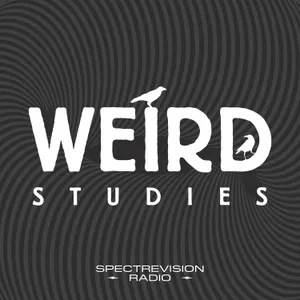
Professor Phil Ford and writer J. F. Martel host a series of conversations on art and philosophy, dwelling on ideas that are hard to think and art that opens up rifts in what we are pleased to call "reality."
Latest Episodes
The most recent episodes — sign up to get AI-powered summaries of each one.
- 1 weeks ago1h 25m
Episode 219 – Composing the Cosmos, with Meredith Rigby
In this episode, JF and Phil are joined by their beloved assistant and invaluable collaborator Meredith Rigby (formerly Meredith Michael) to discuss her recently completed doctoral dissertation, Composing the Cosmos: 20th Century Musical Mythologies of Outer Space. Meredith explains how classical music, in the last century, became a privileged zone for exploring the meaning, threat, and promise of the starry void after the collapse of the old cosmologies. Music: "Fogcutter" from Pierre-Yves Martel's Weird Studies Vol 3. Support Weird Studies on Patreon. Upcoming Events Registration is open for Erik Davis's course on Philip K. Dick's Do Androids Dream of Electric Sheep? , starting October 1, 2026, on Weirdosphere. On September 26, 2026, join JF and Phil at the Brooklyn Public Library for a live recording on dreams and Dostoevsky. Part of the Dream Mapping Symposium, organized by The Dream Mapping Project and the Dream Library Foundation. On October 3 and 4, HitchCon 26 will feature talks on Hitchcock and David Lynch. Speakers include JF and Victoria Nelson. References Meredith Rigby, "Composing the Cosmos: 20th Century Musical Mythologies of Outer Space" Charles Taylor, A Secular Age Henri Bergson, Creative Evolution Jerry Goldsmith, Theme from Star Trek: The Next Generation Richard Strauss, Also Sprach Zarathustra Gustav Holst, "Mars" and "Neptune" from The Planets Lili Boulanger, "Les Sirènes" Alan Leo, The Art of Synthesis Learn more about your ad choices. Visit megaphone.fm/adchoices
- 3 weeks ago1h 14m
Episode 218 — A Mighty Matter of Legend: On J.R.R. Tolkien's 'The Two Towers'
Having taken up the first part of J.R.R. Tolkien's The Lord of the Rings in episode 207, Phil and JF turn to part two, The Two Towers. Together, they peel back the husk of familiarity to reveal the strange object underneath: a story about stories, about life and destiny in a storied world. Music: "Wotan Hangs" from Weird Studies Vol. 1 and "For the Sun" from Weird Studies Vol 3. Support Weird Studies on Patreon. Upcoming Events: JF's course on the metaphysics of the horror genre, The Awful Truth, starts September 17, 2026, on Weirdosphere. Erik Davis's course on Philip K. Dick's Do Androids Dream of Electric Sheep? starts October 1, 2026, on Weirdosphere. Click here for details on JF and Phil's appearance at the Brooklyn Public Library on September 26, 2026. Part of the Dream Mapping Symposium, organized by The Dream Mapping Project and the Dream Library Foundation. Attendance is free. References J. R. R. Tolkien, The Two Towers Viktor Schlovsky, “Art as Technique” Arthur Machen, “A Fragment of Life” Joshua Cutchin, Fourth Wall Phantoms Cristina Campo “On Fairy Tales” J. R. R. Tolkien, “On Fairy Stories” Legend of Zelda: Breath of the Wild Learn more about your ad choices. Visit megaphone.fm/adchoices
- Aug 26, 202645 min
Mid-Hiatus Bonus: A Door in the Fourth Wall
Episode 218 will drop at the end of our summer break on September 9, 2026. Today, enjoy this recent audio extra, originally released for members of the Weird Studies Patreon. In the intro, JF announces two important Weirdosphere events: a talk on language in the age of AI by Emma Stamm, and a new six-week course on the idea of truth in horror cinema and literature. To learn more and enroll, visit Weirdosphere. The musical piece following the intro is "Hypnagogic," from PY Martel's recent album Weird Studies Vol. 3. Learn more about your ad choices. Visit megaphone.fm/adchoices
- Aug 5, 20261h 17m
Episode 217 – Books, Spirits, and Hysteria, with Asti Hustvedt
Researcher Asti Hustvedt joins Phil and JF to discuss a talk she gave at the Lily Dale Symposium this year entitled "Bibliophantoms." The question: What does it mean to "get lost" in a book? Asti's answer, drawing on her research in nineteenth-century neuroscience and spirit mediumship, amounts to a genuine weirding of the act of reading. Asti Hustvedt is an independent scholar and writer with a PhD in French literature. Her work examines the entangled histories of science, psychology, literature, and the occult, with a particular focus on hysteria and Spiritualism. She is the author of Medical Muses: Hysteria in Nineteenth-Century Paris, named an Editors' Choice by the New York Times and a Book of the Year by The Independent, and the editor of The Decadent Reader: Fiction, Fantasy and Perversion in Fin-de-Siècle France. She is currently writing a book on hysteria and the supernatural that examines how Eusapia Palladino and other mediums challenged—and helped shape—the emerging sciences of the mind. New Course! To learn more on JF's upcoming online course on truth in horror literature and cinema, visit Weirdosphere. Image: Detail of The Reader by Jacques-Émile Blanche (1861-1942) Music: "L'Esprit d'escalier" from Weird Studies vol. 3, and "Distant Early Warning" from Weird Studies vol 2. REFERENCES Asti Hustvedt, Medical Muses Jean-Martin Charcot, French physician Pierre Janet, French physician Lon Milo DuQuette, It’s All in Your Head Saint Catherine of Siena, Italian mystic Saint Augustine, Confessions Paul Auster, American writer Julia Kristeva, Bulgarian French philosopher Emily Bronte, Wuthering Heights Lionel Snell, Introduction to Freya Aswynn’s Power and Principles of the Runes Learn more about your ad choices. Visit megaphone.fm/adchoices
- Jul 22, 20261h 34m
Episode 216 – Artworks Are People Too
"Now and then, a mysterious life and potency will flicker out of an artwork and confront you." So began "Artworks Are People Too," a talk Phil presented at the Diverse Intelligences Summer Institute earlier this summer. In this episode, JF and Phil discuss the implications of this idea that some artworks break the mould of the inanimate and act as persons in the world. Are artworks mere creations, or creatures too? To enroll in Questionable Cinema, our live summer series happening in August 2026, visit Weirdosphere. Music: "Hypnagogic," from Weird Studies Vol. 3. References Henri Corbin, Alone with the Alone Alfred Hallowell, "Ojibwa Ontology, Behavior, and Worldview" Martin Buber, I and Thou Charles Taylor, A Secular Age Rainer Maria Rilke, “Archaic Torso of Apollo” Peter Sloterdijk, You Must Change Your Life Carl Jung, “On the Relation of Analytical Psychology to Poetry” Alejandro Jodorowsky, Pyschomagic Dan Sperber, “The Causal Chains of Culture” Paul Stoller, In Sorcery’s Shadow Paul Bowles, The Sheltering Sky Ishmael Reed, Mumbo Jumbo Holly Cusack-McVeigh, Stories Find You Jonathan Haidt, The Righteous Mind Ikea lamp commercial Sam Raimi (dir.), Evil Dead II Learn more about your ad choices. Visit megaphone.fm/adchoices
- Jul 8, 202641 min
Special Episode: Make Art!
Owing to circumstances preventing us from releasing a new show this week, we are offering you one from the archives. This episode was originally released on our Patreon in March 2026. In it, we discuss the splendour and squalor of Victorian London, kung-fu bobbies, the (mis)alignment of society and technology, post-apocalyptic optimism, the emancipating genius of tabletop roleplaying games, the human after AI, and a reason for creating works of art. A new episode of Weird Studies will drop on July 22. For more information on Questionable Cinema, Phil and JF's upcoming online course, visit Weirdosphere. To listen to more tracks from Weird Studies Vol. 3 and purchase the download or LP, visit Pierre-Yves Martel's Bandcamp. Learn more about your ad choices. Visit megaphone.fm/adchoices
- Jun 24, 20261h 29m
Episode 215 – Where No One Can Hear You Scream: On Ridley Scott's 'Alien'
In this episode, JF and Phil discuss Ridley Scott's 1979 sci-fi/horror blockbuster Alien. Together, they wipe off the patina of familiarity that beclouds the film, restoring it to its original weirdness. What is the organism that terrorizes the Nostromo? What's its relation to technology, evolution, industry? How does it differ from the monsters of older horror classics? How does one interpret without explaining away? Music in this episode: "Hypnagogic," from Pierre-Yves Martel's Weird Studies Vol. 3. Events Shannon Taggart's Lily Dale Symposium (July 23-25, 2026Transcendence in the Age of AI, a Weirdosphere chat with Michael Garfield and JF Martel, hosted by Joel Gunz - June 25, 2026 Kickstarter campaign for Artist as Astronaut: The Otherworldly Art of Ionel Talpazan from Strange Attractor Press. The campaign closes June 27! References Ionel Talpazan, Romanian experiencer and artist Ridley Scott (dir.), Alien Peter Bebergal, All Our Famous Monsters (forthcoming) Malachi Martin, Hostage to the Devil Vilhelm Hammershøi, Danish painter H. R. Giger, Swiss artist Simon-Max, French entertainer Eric Wargo, Passion of the Space Jockey Weird Studies, Episode 213 on “Eric” Mel Brooks (dir.), Spaceballs Howard and Emerson, “Hello, Ma Baby” Beowulf Eugene Thacker, In the Dust of This Planet Graham Harman, Weird Reality Pierre Schaeffer, French musician Learn more about your ad choices. Visit megaphone.fm/adchoices
- Jun 10, 20261h 15m
Episode 214 – Fortune's Fools: On Gordon White's Philosophy of Fortune-Telling
It was with heavy hearts that Phil and JF learned of Gordon White's passing. Gordon was a force to be reckoned with: as an author and podcaster on all things occult, he offered unique perspectives and provocative interpretations at every turn. In this episode, your hosts discuss Gordon's thoughts on divination—or fortune-telling, as he preferred to call it... Click here to purchase tickets to the 2026 edition of the Lily Dale Symposium (July 23-25), organized by Shannon Taggart and closing this year with a live recording of Weird Studies. References Rune Soup Fortune’s Fools Oracle Deck Duns Scotus, Scottish priest Marshall Sahlins, The New Science of the Enchanted Universe Henri Bergson, Time and Free Will Ithell Colquhoun, Taro as Colour Lord Dunsany, The Gods of Pegana Learn more about your ad choices. Visit megaphone.fm/adchoices
Get Weird Studies summaries in your inbox
Free AI-powered daily recaps. Key takeaways, quotes, and mentions — in a 5-minute read.
Get Free Summaries →Free forever for up to 3 podcasts. No credit card required.
You Might Also Like
Listeners also like.
hidden experience audio
In-depth interviews exploring the personal impact of UFO contact and the broader UFO mystery.
Knifepoint Horror
Supernatural suspense stories written, produced, and narrated by Soren Narnia.
Somewhere in the Skies
A weekly exploration of UFO phenomena and unexplained aerial encounters hosted by an author and investigator.
Forum Borealis
In-depth interviews with authors and thinkers on unconventional topics in history, science, philosophy, and politics.

Astonishing Legends
Explores unexplained mysteries and paranormal phenomena through investigations and interviews with experts.
Stuff To Blow Your Mind
Explores the strange edges of science, consciousness, and reality through neuroscience, cosmology, evolution, and emerging technology.

Cinema Spectator
Discusses classic films from the cinematic canon to evaluate their relevance and entertainment value for modern, casual audiences.

Wanderer Chronicles Radio
A sentient starship's archivist narrates philosophical science fiction parables from across the cosmos.
Blurry Creatures
Explores biblical perspectives on UFOs, cryptids, the Nephilim, and supernatural phenomena through theology and witness testimony.
The Magnus Archives
A horror anthology podcast exploring supernatural and eldritch mysteries through archived statements investigated by a skeptical archivist.
The Emerald
Explores myth, story, and imagination to reframe modern discourse on society, science, art, and the human experience.
A Voice From Darkness
A parapsychologist takes calls from people experiencing supernatural phenomena on a late-night radio show.
About Weird Studies
Professor Phil Ford and writer J. F. Martel host a series of conversations on art and philosophy, dwelling on ideas that are hard to think and art that opens up rifts in what we are pleased to call "reality."
Customized Recaps
AI-powered recaps with compact key takeaways, quotes, and insights.
Straight to Your Inbox
Get key takeaways from Weird Studies in a 5-minute read.
Save Hours Every Week
Stay current on your favorite podcasts without falling behind.
Frequently Asked Questions
What is Podzilla's Weird Studies daily summary?
It's a free AI-powered email that summarizes new episodes of Weird Studies as soon as they're published. You get the key takeaways, notable quotes, and links & mentions — all in a quick read.
How does the Weird Studies podcast summary work?
When a new episode drops, our AI transcribes and analyzes it, then generates a personalized summary tailored to your interests and profession. It's delivered to your inbox every morning.
Is this an official Weird Studies product?
No. Podzilla is an independent service that summarizes publicly available podcast content. We're not affiliated with or endorsed by SpectreVision Radio.
Can I get summaries of other podcasts too?
Absolutely! The free plan covers up to 3 podcasts. Upgrade to Pro for 15, or Premium for 50. Browse our full catalog at /podcasts.
How often does Weird Studies release new episodes?
Weird Studies publishes biweekly. Our AI generates a summary within hours of each new episode.
What topics does Weird Studies cover?
Weird Studies covers topics including Arts, Philosophy, Culture, Society & Culture. Our AI identifies the specific themes in each episode and highlights what matters most to you.
Start getting Weird Studies summaries tomorrow morning.
Free forever for up to 3 podcasts. No credit card required.
Free forever for up to 3 podcasts. No credit card required.