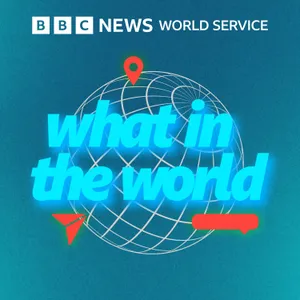
Free Daily Podcast Summary
What in the World: Daily Summaries Delivered
by BBC World Service
Helping you make sense of what’s happening in your world. Big stories, small stories and everything in between. Understand more, feel better.
Latest Episodes
The most recent episodes — sign up to get AI-powered summaries of each one.
- 3 days ago11 min
Location: Tiny Island. Population: YOU
It’s something you might dream of - or only see in films or read in books - moving to a remote island in the middle of the sea. Only wildlife around you. No bars or clubs and barely any people! Sound like a bit of you? Or maybe it’s your worst nightmare. We speak to BBC reporter Georgina Rannard, about why she’s swapping city life to be a farmer on an island in Wales with only three other people. We also hear tips from people that’ve done similar things. Jaleesah lives on Siquijor in the Philippines and Tom works on a research station in Antarctica. Instagram: @bbcwhatintheworld Email: whatintheworld@bbc.co.uk WhatsApp: +44 330 12 33 22 6 Presenter: Hannah Gelbart Producer: Mollie Perella Editor: Emily Horler
- 4 days ago10 min
Is sleepmaxxing actually helpful?
Researching ways to improve your sleep has been popular for years but now it’s evolved and there’s a whole new genre of social media content called ‘Sleepmaxxing’. It shows ways you can build your perfect night’s sleep, by taking magnesium supplements, using black-out curtains or white noise machines. Experts say the popularity has boomed thanks to the accessibility of smart watches which give users sleep scores. We hear from Ollie, who tracks his sleep and is aiming for the perfect score.BBC reporter Ashitha Nagesh who’s been reporting on the trend, tells us why some experts advise against multi-layered sleep routines and an obsessive fixation with sleep called orthosomnia.Plus, sleep expert Sophie Bostock tells us how reliable popular sleep trackers are and what they are really measuring.Instagram: @bbcwhatintheworld Email: whatintheworld@bbc.co.uk WhatsApp: +44 330 12 33 22 6 Presenter: Iqra Farooq Producers: Mollie Perella, Emily Horler and Benita Barden Editor: Verity Wilde
- 5 days ago9 min
Why everyone’s talking about Cornell University
The issue of safety on college campuses is nothing new. But it’s back in the spotlight again because of the re-opening of a case at Cornell University, New York in the US. A woman alleges she was gang raped at a fraternity party in October 2024. The group is being called the ‘Cornell 7’ on social media. The incident was reported to campus police at the time, but no formal charges were made. The woman claims she was drugged and raped at a frat house and says the uni didn’t protect her or adequately punish the men she says were involved. Cornell rejects this. Her lawyer says she was traumatised and dropped out of uni. Now, two years later, state prosecutors have reopened the investigation following a civil lawsuit she’s filed. So - what happened with the case the first time? And what’s different now?We speak to the BBC’s New York correspondent Nada Tawfik about the case and the conversations about consent, accountability and campus sexual assault. If you are affected by any of the issues in this episode, details of help available in many countries can be found at Befrienders Worldwide. www.befrienders.org Instagram: @bbcwhatintheworld Email: whatintheworld@bbc.co.uk WhatsApp: +44 330 12 33 22 6 Presenter: Hannah Gelbart Producer: Mollie Perella Editor: Emily Horler
- 6 days ago12 min
Is it time to find a side hustle?
More and more of us are picking up side hustles - US national employment data shows that the number of people with more than one job is going up year on year, and a survey found that the majority of them are 16-24 year olds. So why are more of us turning to side hustles? And what’s the best way to start one?We hear from Katie (@katiesgarms), Vera (@viavera_) and Shania (@shaniasvault) who have all started successful side hustles. They share how they got into them and their top tips for getting started. And Chelsea Coates from the What in the World team explains why the current global job market is encouraging more people to pick up second jobs - and the things to look out for if you’re thinking of doing this.Instagram: @bbcwhatintheworld Email: whatintheworld@bbc.co.uk WhatsApp: +44 330 12 33 22 6 Presenter: Iqra Farooq Producers: Mollie Perella, Chelsea Coates and Emma-Louise Amanshia Video Journalist: Chelsea Coates Editor: Verity Wilde
- 1 weeks ago10 min
MTV VMAs: Does anyone even watch award ceremonies anymore?
Madonna won Artist of the Year and Taylor Swift made a splash at Sunday’s MTV Video Music Awards - she became the most decorated performer in VMA history, and premiered her music video for Patient Zero, the lead single from the encore to her album The Life of a Showgirl. And there’s a reason the VMAs might have been so keen to have her - award ceremonies aren’t pulling the big audiences that they used to. Millions of people used to tune in and pore over the outfits and the speeches, hoping their favourite artists would win. But now, viewing figures are falling for shows like the Grammys, the Oscars and the Emmys.So… why are award shows in their flop era? And what’s being done to revive them?BBC culture journalist William Lee Adams breaks it all down - and we hear from music fans on whether they think award ceremonies are still relevant.Instagram: @bbcwhatintheworld Email: whatintheworld@bbc.co.uk WhatsApp: +44 330 12 33 22 6 Presenter: Hannah Gelbart Producers: Benita Barden and Chelsea Coates Editor: Emily HorlerVMAs 2026 audio courtesy of MTV/CBS
- 1 weeks ago15 min
Is it OK to bring iced coffee to a job interview?
Would you bring an iced coffee to a job interview? A viral TikTok from Caitlin Wehniainen - a recruiter in Florida - has stirred up a huge debate. It’s after she said that Gen Z candidates turning up to job interviews with an iced coffee can look too casual and unprofessional.But seriously…can an iced latte actually hurt your chances of getting a job? And what does your coffee order have to do with whether you’d be good at it? Grab your drink of choice because we’re getting into it with BBC reporters Baldeep Chahal, Leona Gasper and Stefania Okereke from the What in the World team. BBC journalist Sanjana Idnani tells us about the difficult job market recent graduates are having to contend with. And BBC reporter Basma El Atti shares her thoughts from Nairobi. Plus: We get hot takes from content creators Alexis Wilson (@sucseed_academics), Olivia Monday (@oliviamonday_) and Piper Phillips (@piperphillips) from Instagram, and Coka (@cokafree), Anne-Tso @theportfoliocareercoach, Evan (@thisamericanmess) from TikTok.Instagram: @bbcwhatintheworld Email: whatintheworld@bbc.co.uk WhatsApp: +44 330 12 33 22 6 Presenter: William Lee Adams Producer: Baldeep Chahal Editor: Verity Wilde
- 1 weeks ago10 min
Should we be syncing our workouts to our menstrual cycles?
We’ve seen more and more women talking about cycle-syncing. It’s where you adjust your diet and work outs to match the different phases of your period. Things like eating more in certain phases or taking it easy in others.But does cycle-syncing help you get better results? Does the science back it up or is it just another wellness trend and rule book for women to follow?BBC reporter Zara Salaria takes us through what cycle syncing is, we hear from people who have tried it and a doctor breaks it down for us: does it work?Instagram: @bbcwhatintheworld Email: whatintheworld@bbc.co.uk WhatsApp: +44 330 12 33 22 6 Presenter: Hannah Gelbart Producers: Emily Horler and Benita Barden Video Journalist: Baldeep Chahal Editor: Verity Wilde
- 1 weeks ago11 min
How South Korea keeps most of its food waste out of landfills
Globally more than a billion tonnes of food is wasted each year and much of it ends up in landfills. As the food breaks down it releases huge amounts of methane, making up 10% of the world’s climate-warming emissions. Now many cities and governments are looking to South Korea as a model of how to reduce food waste and boost food recycling.BBC reporter Soo Min Kim explains how South Korea cut household food waste going to landfill from 97% to almost nothing. Among other things, they’ve nudged the public to think about their food waste by making it mandatory to separate food waste and to pay for throwing it away. The country also has special RFID bins to handle disposal and payments, and there are financial penalties for people who don’t comply. We also hear from content creators around the world about how they reduce their food waste. They are: Senjuti Chakraborty in India, Debbi Love in the UK, and Chatty Miss Maddie and Lani Marschall in Australia. Plus BBC reporter William Lee Adams shares some of the surprising food saving hacks he came across on social media. Instagram: @bbcwhatintheworld Email: whatintheworld@bbc.co.uk WhatsApp: +44 330 12 33 22 6 Presenter: Iqra Farooq Producer: William Lee Adams Editor: Verity Wilde
Get What in the World summaries in your inbox
Free AI-powered daily recaps. Key takeaways, quotes, and mentions — in a 5-minute read.
Get Free Summaries →Free forever for up to 3 podcasts. No credit card required.
You Might Also Like
Listeners also like.
The Real Story
Experts and decision makers analyze and debate major news stories.
The World and Everything In It
Delivers news, cultural analysis, and Supreme Court coverage from a Christian worldview.
The Global Story
A daily look at global politics, business, and foreign policy through the lens of US decisions and their worldwide impact.
Learning English from the News
A weekly podcast that teaches English through news stories and headline vocabulary, with special episodes in simple English.
State of the World from NPR
Global news and context from NPR reporters, delivering concise, human-centered stories from around the world every weekday.
The Documentary Podcast
A weekly exploration of global stories through personal voices and in-depth reporting from the BBC World Service.
The Explanation
BBC World Service
The World, the Universe and Us
Explores big scientific questions about life, consciousness, climate, and the cosmos with expert scientists and New Scientist journalists.
Science In Action
The BBC covers the latest weekly developments and news in science.

The Inquiry
The Inquiry explores global trends, forces, and ideas shaping the world beyond the headlines.

CrowdScience
Explores listener-submitted questions about life, Earth, and the universe with scientists at the forefront of research.

Tech Life
Explores how technology shapes global work, learning, and play while examining its societal impacts and innovations.
About What in the World
Helping you make sense of what’s happening in your world. Big stories, small stories and everything in between. Understand more, feel better.
Customized Recaps
AI-powered recaps with compact key takeaways, quotes, and insights.
Straight to Your Inbox
Get key takeaways from What in the World in a 5-minute read.
Save Hours Every Week
Stay current on your favorite podcasts without falling behind.
Frequently Asked Questions
What is Podzilla's What in the World daily summary?
It's a free AI-powered email that summarizes new episodes of What in the World as soon as they're published. You get the key takeaways, notable quotes, and links & mentions — all in a quick read.
How does the What in the World podcast summary work?
When a new episode drops, our AI transcribes and analyzes it, then generates a personalized summary tailored to your interests and profession. It's delivered to your inbox every morning.
Is this an official What in the World product?
No. Podzilla is an independent service that summarizes publicly available podcast content. We're not affiliated with or endorsed by BBC World Service.
Can I get summaries of other podcasts too?
Absolutely! The free plan covers up to 3 podcasts. Upgrade to Pro for 15, or Premium for 50. Browse our full catalog at /podcasts.
How often does What in the World release new episodes?
What in the World publishes daily. Our AI generates a summary within hours of each new episode.
What topics does What in the World cover?
What in the World covers topics including News, Commentary, Daily News. Our AI identifies the specific themes in each episode and highlights what matters most to you.
Start getting What in the World summaries tomorrow morning.
Free forever for up to 3 podcasts. No credit card required.
Free forever for up to 3 podcasts. No credit card required.