Free Daily Podcast Summary
What Is Life?: Daily Summaries Delivered
by Carl Zimmer
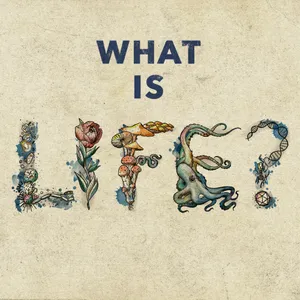
A series of live conversations between writer Carl Zimmer and eight leading thinkers on the question of what it means to be alive. What Is Life? was recorded in front of a live audience at Caveat in New York and is supported by a grant from Science Sandbox, a Simons Foundation initiative.
Latest Episodes
The most recent episodes — sign up to get AI-powered summaries of each one.
- Jan 28, 201948 min
Episode 8. Kate Adamala: Can We Make Life?
Kate Adamala is a chemist at the University of Minnesota. In her Protobiology Lab, she is trying to build a synthetic cell from scratch. Protobiology Lab Adamala's TEDx talk, "Life But Not Alive"
- Jan 28, 201951 min
Episode 7. Donato Giovannelli: Warm Ponds Or Hellish Vents–Where Did Life Begin?
Donato Giovannelli is an assistant professor at the University of Naples "Federico II." He travels to acid lakes and other extreme environments that are the closest thing today to what Earth was like when life began. Giovannelli's web siteGiovannelli on Twitter
- Jan 28, 201951 min
Episode 6. Steven Benner: How Weird Can Life Get?
All the life we know is the same: carbon-based, with DNA for genes. (Okay, except for RNA viruses.) But Steven Benner says it doesn't have to be that way. Benner is a Distinguished Fellow at the Foundation for Applied Molecular Evolution. Benner at FFAME
- Jan 28, 201955 min
Episode 5. Jeremy England: Why Does Life Exist?
Jeremy England is a physicist at MIT. He has developed an influential theory of life as a way for matter to dissipate energy. England's MIT lab site An article about England in Quanta
- Jan 28, 201946 min
Episode 4. Caleb Scharf: How Did Life Begin?
We don't know how life got its start. But as more evidence emerges, explains astrobiologist Caleb Scharf, only a few theories are emerging as leading contenders. Scharf is the director of the Columbia Astrobiology Center at Columbia University. calebscharf.com
- Jan 28, 201945 min
Episode 3. Jim Cleaves: The Origin of Life, from Frankenstein to a Laboratory Spark
H. James Cleaves is a professor at the Earth-Life Science Institute in Tokyo and co-author of A Brief History of Creation: Science and the Search for the Origin of Life. Cleaves at ELSI A Brief History of Creation
- Jan 28, 201947 min
Episode 2. Sara Walker: If We Find Alien Life, Will We Even Know It?
Sara Imari Walker is a physicist and astrobiologist at Arizona State University. She studies life as a physical phenomenon, in order to develop new ways to search for it elsewhere in the universe. Walker at ASU Walker's TEDx talk about a "universal theory of life."
- Jan 25, 201941 min
Episode 1. Carlos Mariscal: What Do We Mean When We Ask, "What Is Life?"
Carlos Mariscal is a philosopher at the University of Nevada Las Vegas. He collaborates with evolutionary biologists and astrobiologists to explore what it means to be alive. When we ask what is life, Mariscal suggests, we may be asking the wrong question.
About What Is Life?
A series of live conversations between writer Carl Zimmer and eight leading thinkers on the question of what it means to be alive. What Is Life? was recorded in front of a live audience at Caveat in New York and is supported by a grant from Science Sandbox, a Simons Foundation initiative.
Customized Recaps
AI-powered recaps with compact key takeaways, quotes, and insights.
Straight to Your Inbox
Get key takeaways from What Is Life? in a 5-minute read.
Save Hours Every Week
Stay current on your favorite podcasts without falling behind.
Frequently Asked Questions
What is Podzilla's What Is Life? daily summary?
It's a free AI-powered email that summarizes new episodes of What Is Life? as soon as they're published. You get the key takeaways, notable quotes, and links & mentions — all in a quick read.
How does the What Is Life? podcast summary work?
When a new episode drops, our AI transcribes and analyzes it, then generates a personalized summary tailored to your interests and profession. It's delivered to your inbox every morning.
Is this an official What Is Life? product?
No. Podzilla is an independent service that summarizes publicly available podcast content. We're not affiliated with or endorsed by Carl Zimmer.
Can I get summaries of other podcasts too?
Absolutely! The free plan covers up to 3 podcasts. Upgrade to Pro for 15, or Premium for 50. Browse our full catalog at /podcasts.
What topics does What Is Life? cover?
What Is Life? covers topics including Science, Natural Sciences. Our AI identifies the specific themes in each episode and highlights what matters most to you.
Start getting What Is Life? summaries tomorrow morning.
Free forever for up to 3 podcasts. No credit card required.
Free forever for up to 3 podcasts. No credit card required.