Free Daily Podcast Summary
When They Were Making It: Daily Summaries Delivered
by Patrick Rankin
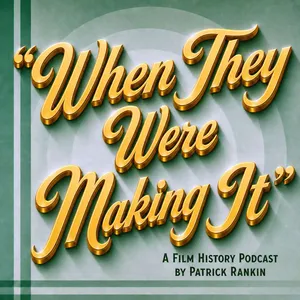
The real human stories behind classic Hollywood's greatest films and legends. Marilyn Monroe. Casablanca. Audrey Hepburn. The Wizard of Oz. Charlie Chaplin. Breakfast at Tiffany's. Alfred Hitchcock. Sunset Boulevard. What do they all have in common? They had to make it first. Each week, we go beyond the legend to explore classic Hollywood's biggest icons and most beloved films. Not the myths. Not the takedowns. The whole human story. From the silent era to the early 1960s — the people, the films, and the impossible work of becoming a legend. WTWMI is written, produced, and hosted by Patrick Rankin. Original artwork by Simone Beech and original music by Lionel Ziblat.
Latest Episodes
The most recent episodes — sign up to get AI-powered summaries of each one.
- 2 days ago1h 27m
James Dean's Rebel Without a Cause (1955): Teen Angst Goes Hollywood — Natalie Wood, Sal Mineo, and a Dangerous Father Figure
James Dean was Hollywood's newest sensation, and Rebel Without a Cause was poised to make him an even bigger star.But none of it would work out that way.From a long-abandoned Warner Bros. project to one of the defining films of the 1950s, the picture took shape under director Nicholas Ray, with James Dean, Natalie Wood, and Sal Mineo at its centre. What began as a B-movie became a landmark portrait of teenage rebellion. But behind the scenes, troubling relationships, blurred boundaries, and the studio's sudden decision to restart production in colour complicated the making of the picture.This week, we're exploring the extraordinary story behind Rebel Without a Cause — from its unlikely origins and Dean's meteoric rise to the creation of his iconic red jacket, the film's release just weeks after his fatal car crash, and its enduring cultural legacy.Along the way, we'll examine Ray's disturbing sexual relationship with sixteen-year-old Natalie Wood, the film's groundbreaking portrayal of teenage alienation and queer identity, and the tragic deaths that would later give rise to the so-called Rebel curse.Beyond the iconic red jacket and the enduring mythology of James Dean lies the story of a film that changed how Hollywood portrayed teenagers — and whose troubled production remains an inseparable part of its legacy.—When They Were Making It is written, produced, and hosted by Patrick Rankin. Original artwork by Simone Beech and original music by Lionel Ziblat.Join WTWMI: The Backlot — our Patreon — for exclusive extras including mini and full-length bonus episodes, episode companion pieces, and behind-the-scenes materials at https://www.patreon.com/WhenTheyWereMakingIt.For episode information, show notes, upcoming episodes, and more, visit whentheyweremakingit.com.Follow WTWMI on Instagram and TikTok: @whentheyweremakingit. On Instagram, we share visual companion pieces for every episode, bringing the images, people, places, and atmosphere behind the story to life.New episodes of When They Were Making It drop every Tuesday. Follow now wherever you get your podcasts. ★ Support this podcast on Patreon ★
- 1 weeks ago1h 54m
Ava Gardner: The World's Most Beautiful Contradiction — MGM, Frank Sinatra, and Leaving Hollywood Behind
She was one of MGM's biggest stars, a celebrated actress widely regarded as one of the most beautiful women in the world. But Ava Gardner was never entirely comfortable with the image that made her famous.From a tobacco farm in North Carolina to the heights of Hollywood stardom, Gardner's rise began almost by accident, after a photograph of her caught the attention of MGM. With The Killers, Mogambo, and The Night of the Iguana, she proved herself a formidable actress, even as her extraordinary beauty threatened to overshadow her talent. Her turbulent marriages to Mickey Rooney, Artie Shaw, and Frank Sinatra kept her in the headlines, while her struggles with alcohol and growing frustrations with the studio system complicated both her career and her personal life.This week, we're exploring the extraordinary life of Ava Gardner — from her unlikely discovery and MGM superstardom to her eventual departure from Hollywood for a new life in Spain and, later, London.Along the way, we'll explore her friendships with Gregory Peck and Grace Kelly, as well as her close bond with Ernest Hemingway. We'll also look at her outspoken support for civil rights, a cause she championed throughout her life.Beyond the glamour and scandalous headlines lies the story of a talented, fiercely independent woman who spent much of her life trying to reconcile the person she was with the image the world had created for her.—When They Were Making It is written, produced, and hosted by Patrick Rankin. Original artwork by Simone Beech and original music by Lionel Ziblat.Join WTWMI: The Backlot — our Patreon — for exclusive extras including mini and full-length bonus episodes, episode companion pieces, and behind-the-scenes materials at https://www.patreon.com/WhenTheyWereMakingIt.For episode information, show notes, upcoming episodes, and more, visit whentheyweremakingit.com.Follow WTWMI on Instagram and TikTok: @whentheyweremakingit. On Instagram, we share visual companion pieces for every episode, bringing the images, people, places, and atmosphere behind the story to life.New episodes of When They Were Making It drop every Tuesday. Follow now wherever you get your podcasts. ★ Support this podcast on Patreon ★
- 2 weeks ago1h 57m
Clara Bow: Hollywood's Original It Girl — The Roaring Twenties, Paramount Superstardom, and the Scandals That Changed Everything
She was the face of the Roaring Twenties, Hollywood's original It Girl, and one of the biggest box-office stars of the silent era. Then the headlines stopped being about her movies.From a Brooklyn tenement to Paramount superstardom, Clara Bow's rise was extraordinary. With Mantrap, It, and the Oscar-winning Wings, she helped define a generation. But the arrival of talking pictures, relentless studio pressures, and a string of explosive scandals threatened everything she'd built. In 1931, the sensational trial of her former secretary, Daisy DeVoe, turned Bow's private life into a national spectacle.This week, we're exploring the extraordinary life of Clara Bow — her difficult childhood, meteoric rise, Hollywood romances, public downfall, and eventual retreat from the spotlight. More than ninety years after her last film, her influence lives on, from Margot Robbie's character in Babylon (2022) to Taylor Swift's song "Clara Bow" on The Tortured Poets Department (2024). Beyond the scandalous headlines and enduring myths lies the story of a remarkably talented actress — whose legacy was as extraordinary as it was complicated.—When They Were Making It is written, produced, and hosted by Patrick Rankin. Original artwork by Simone Beech and original music by Lionel Ziblat.Join WTWMI: The Backlot — our Patreon — for exclusive extras including mini and full-length bonus episodes, episode companion pieces, and behind-the-scenes materials at https://www.patreon.com/WhenTheyWereMakingIt.For episode information, show notes, upcoming episodes, and more, visit whentheyweremakingit.com.Follow WTWMI on Instagram and TikTok: @whentheyweremakingit. On Instagram, we share visual companion pieces for every episode, bringing the images, people, places, and atmosphere behind the story to life.New episodes of When They Were Making It drop every Tuesday. Follow now wherever you get your podcasts. ★ Support this podcast on Patreon ★
- 3 weeks ago1h 49m
Alfred Hitchcock, Part 3: The Final Act — Psycho, The Birds, and the End of an Era
With Psycho, Alfred Hitchcock bet his own money on a low-budget shocker — and changed Hollywood forever. What followed would bring some of his biggest hits, his most troubling partnership, and a final chapter like no other.Concluding our October Halloween series, this is Part 3 of our three-part look at the life of Alfred Hitchcock.When plans for a new thriller starring Audrey Hepburn fell through, Hitchcock turned to something radically different. Working with a modest budget and much of his television crew, he transformed Psycho into a sensation. Janet Leigh's famous shower scene shocked audiences, while an unprecedented publicity campaign helped make it the most profitable film of his career. With greater independence than ever before, Hitchcock began planning a return to the screen for Grace Kelly in Marnie, while moving ahead with his next major production, The Birds. For its leading lady, Hitchcock chose an unknown model named Tippi Hedren, whom he hoped to turn into a major Hollywood star. But their partnership, which continued with Marnie, would end in bitter conflict. Years later, Hedren's allegations of sexual harassment and assault would raise lasting questions about the man behind the camera.Meanwhile, Hollywood was changing around Hitchcock. As a new generation of filmmakers began pushing the boundaries of cinema, he struggled to find his place. His longtime partnership with composer Bernard Herrmann came to an end during Torn Curtain, and the failure of Topaz left his career at a crossroads. A return to Britain, however, would bring a late-career comeback with Frenzy, followed by his final film, Family Plot.From his final years alongside wife, Alma Reville, to his death in 1980 and the reassessment of his work in the decades that followed, this concluding chapter explores the life and complicated legacy of Alfred Hitchcock — the Master of Suspense.—When They Were Making It is written, produced, and hosted by Patrick Rankin. Original artwork by Simone Beech and original music by Lionel Ziblat.Join WTWMI: The Backlot — our Patreon — for exclusive extras including mini and full-length bonus episodes, episode companion pieces, and behind-the-scenes materials at https://www.patreon.com/WhenTheyWereMakingIt.For episode information, show notes, upcoming episodes, and more, visit whentheyweremakingit.com.Follow WTWMI on Instagram and TikTok: @whentheyweremakingit. On Instagram, we share visual companion pieces for every episode, bringing the images, people, places, and atmosphere behind the story to life.New episodes of When They Were Making It drop every Tuesday. Follow now wherever you get your podcasts. ★ Support this podcast on Patreon ★
- Oct 20, 20261h 29m
Alfred Hitchcock, Part 2: Building a Golden Age — Grace Kelly, Vertigo, and the Road to Psycho
When Alfred Hitchcock's first bid for independence failed, he pivoted — and began a career-defining decade that would bring some of his most celebrated films, transform him into a household name, and lead him toward a gamble that would change Hollywood forever.Continuing our October Halloween series, this is Part 2 of our three-part look at the life of Alfred Hitchcock.After Rope and Under Capricorn brought his first attempt at independence to an end, Hitchcock returned to Warner Bros. and began rebuilding. Stage Fright, Strangers on a Train, and I Confess followed — along with new collaborators, including cinematographer Robert Burks, and the beginning of his partnership with Grace Kelly in Dial M for Murder.Then came Paramount. A landmark deal negotiated by Lew Wasserman gave Hitchcock greater freedom, a share of his films' profits, and eventually ownership of some of his greatest work. With Rear Window, To Catch a Thief, The Trouble with Harry, and The Man Who Knew Too Much, he entered the extraordinary run that would make him one of Hollywood's most successful directors.At the same time, Alfred Hitchcock Presents made him a household name. But success brought its own complications: the end of key creative partnerships, Grace Kelly's departure from Hollywood, Hitchcock's plans for Vera Miles, and the difficult production of Vertigo with Kim Novak — a film that initially disappointed, despite eventually becoming one of his most celebrated.This episode follows Hitchcock from the collapse of Transatlantic Pictures to North by Northwest, the spectacular hit that left him with more control than ever before. And then, after the biggest production of his career, he began looking for something smaller, darker, and far more dangerous: Psycho.Part 3 of our Alfred Hitchcock series — covering Psycho, The Birds, Marnie and Tippi Hedren, Hitchcock's struggle to keep pace with a changing Hollywood, Frenzy, and his final years — releases next Tuesday, October 27.—When They Were Making It is written, produced, and hosted by Patrick Rankin. Original artwork by Simone Beech and original music by Lionel Ziblat.Join WTWMI: The Backlot — our Patreon — for exclusive extras including mini and full-length bonus episodes, episode companion pieces, and behind-the-scenes materials at https://www.patreon.com/WhenTheyWereMakingIt.For episode information, show notes, upcoming episodes, and more, visit whentheyweremakingit.com.Follow WTWMI on Instagram and TikTok: @whentheyweremakingit. On Instagram, we share visual companion pieces for every episode, bringing the images, people, places, and atmosphere behind the story to life.New episodes of When They Were Making It drop every Tuesday. Follow now wherever you get your podcasts. ★ Support this podcast on Patreon ★
- Oct 13, 20261h 26m
Alfred Hitchcock, Part 1: Becoming the Master of Suspense — Fear, Power, and the Fight for Control
Before he became the Master of Suspense, Alfred Hitchcock had to start somewhere. He started in a British film industry struggling to survive — and in a fight for control that would carry him all the way to Hollywood.Continuing our October Halloween series, this is Part 1 of our three-part look at the life of Alfred Hitchcock.Over half a century, Alfred Hitchcock perfected the art of suspense, becoming one of the most celebrated filmmakers who ever lived and earning a title that still belongs to him and him alone: the Master of Suspense.But before he got there, before Rear Window, Vertigo, North by Northwest, and Psycho, he had to break free of a small, strictly ordered world, find his way into pictures, and turn his own fears into something he could use.This episode follows Hitchcock from his 1899 birth in Leytonstone to his first job in pictures, designing title cards for silent films at a London studio, where he met Alma Reville — the editor who would become his wife and lifelong collaborator. From there, he became one of Britain's leading filmmakers through The Lodger, Blackmail, The 39 Steps, and The Lady Vanishes.In 1939, David O. Selznick brought Hitchcock to Hollywood. His first American film, Rebecca, became an Oscar-winning hit — but its making also introduced him to a producer determined to control every detail. Over the next decade, as Selznick loaned him to other studios, Hitchcock directed Foreign Correspondent, Mr. & Mrs. Smith, Suspicion, Shadow of a Doubt, Lifeboat, Spellbound, and Notorious, working with Cary Grant, Ingrid Bergman, Joan Fontaine, Carole Lombard, and more of Hollywood's biggest stars.By the end of the 1940s, Hitchcock had made himself one of Hollywood's most successful directors. But he still did not have the control he wanted. Free of Selznick at last, he was about to begin chasing it.Part 2 of our Alfred Hitchcock series — following Hitchcock's first attempt at Hollywood independence and the extraordinary run that made his name synonymous with suspense — releases next Tuesday, October 20.—When They Were Making It is written, produced, and hosted by Patrick Rankin. Original artwork by Simone Beech and original music by Lionel Ziblat.Join WTWMI: The Backlot — our Patreon — for exclusive extras including mini and full-length bonus episodes, episode companion pieces, and behind-the-scenes materials at https://www.patreon.com/WhenTheyWereMakingIt.For episode information, show notes, upcoming episodes, and more, visit whentheyweremakingit.com.Follow WTWMI on Instagram and TikTok: @whentheyweremakingit. On Instagram, we share visual companion pieces for every episode, bringing the images, people, places, and atmosphere behind the story to life.New episodes of When They Were Making It drop every Tuesday. Follow now wherever you get your podcasts. ★ Support this podcast on Patreon ★
- Oct 6, 20261h 36m
King Kong (1933) & Fay Wray: The Making of the Original Scream Queen — RKO, Damsels in Distress, and Hollywood's Impossible Spectacle
The first in our October Halloween series: four weeks of classic Hollywood's darker, stranger, and more monstrous stories.Fay Wray was already one of Hollywood's busiest young leading ladies when RKO cast her in King Kong. She had risen from Hal Roach shorts and the WAMPAS Baby Stars to Erich von Stroheim's The Wedding March, then made a name in the fast, precarious world of early-1930s pictures.This episode follows Wray from her poverty-stricken childhood in Canada and early years in Hollywood through the silent era, Paramount, multiple leading lady roles, The Most Dangerous Game, and the extraordinary production that put her in the hand of a giant ape.Alongside Wray's story is the making of that production, King Kong: Merian C. Cooper and Ernest B. Schoedsack's grand RKO gamble, Willis O'Brien's stop-motion effects, Ruth Rose's screenplay, Max Steiner's score, the Empire State Building, and the film's event-scale 1933 release.King Kong made Fay Wray famous in a way no other role did — but not immediately in the way Hollywood stardom is supposed to work. Over the decades, through reissues, television, and the film's growing reputation, one job among many came to define her public life — whether she wanted it to or not.From the original film's influence on Godzilla to the 1976 remake with Jessica Lange and Peter Jackson’s 2005 version with Naomi Watts, this is the story of Fay Wray, King Kong, and the image that made them both immortal.—When They Were Making It is written, produced, and hosted by Patrick Rankin. Original artwork by Simone Beech and original music by Lionel Ziblat.Join WTWMI: The Backlot — our Patreon — for exclusive extras including mini and full-length bonus episodes, episode companion pieces, and behind-the-scenes materials at https://www.patreon.com/WhenTheyWereMakingIt.For episode information, show notes, upcoming episodes, and more, visit whentheyweremakingit.com.Follow WTWMI on Instagram and TikTok: @whentheyweremakingit. On Instagram, we share visual companion pieces for every episode, bringing the images, people, places, and atmosphere behind the story to life.New episodes of When They Were Making It drop every Tuesday. Follow now wherever you get your podcasts. ★ Support this podcast on Patreon ★
- Sep 29, 20261h 26m
Edward G. Robinson: Hollywood's Literal OG — Little Caesar, the Blacklist Era, and the Man Behind the Movie Gangster
Edward G. Robinson helped invent the modern movie gangster. As Rico Bandello in Little Caesar, he made the short, sharp-eyed criminal not only the centre of a Hollywood picture, but a defining figure in American pop culture. And in doing so, he became a star almost overnight.This episode follows Robinson from his early years as Emanuel Goldenberg, a Romanian Jewish immigrant and serious Broadway actor, through Little Caesar, the Warner Bros. gangster cycle, and his long fight to prove he could be more than Rico. Along the way came The Whole Town's Talking, Confessions of a Nazi Spy, Double Indemnity, The Woman in the Window, Scarlet Street, and Key Largo.Also along the way came the House Un-American Activities Committee — HUAC — and the threat of the Hollywood blacklist.Robinson was never a Communist, but his public support for liberal and anti-fascist causes made him a target. He was not formally blacklisted, but "graylisted" — pushed from major pictures into smaller films and television.What began as a fight to be seen as more than the gangster became a fight to remain in Hollywood at all.This is the story of Edward G. Robinson — one of Hollywood's greatest screen actors, far more than the role that made him famous — and of his fight not only to build a career beyond the gangster, but eventually to save it when Hollywood decided he was through.—When They Were Making It is written, produced, and hosted by Patrick Rankin. Original artwork by Simone Beech and original music by Lionel Ziblat.Join WTWMI: The Backlot — our Patreon — for exclusive extras including mini and full-length bonus episodes, episode companion pieces, and behind-the-scenes materials at https://www.patreon.com/WhenTheyWereMakingIt.For episode information, show notes, upcoming episodes, and more, visit whentheyweremakingit.com.Follow WTWMI on Instagram and TikTok: @whentheyweremakingit. On Instagram, we share visual companion pieces for every episode, bringing the images, people, places, and atmosphere behind the story to life.New episodes of When They Were Making It drop every Tuesday. Follow now wherever you get your podcasts. ★ Support this podcast on Patreon ★
Get When They Were Making It summaries in your inbox
Free AI-powered daily recaps. Key takeaways, quotes, and mentions — in a 5-minute read.
Get Free Summaries →Free forever for up to 3 podcasts. No credit card required.
You Might Also Like
Listeners also like.

HOLLYWOODLAND
Examines crimes connected to Hollywood figures and film history, from murders to conspiracies and scandals.
You Must Remember This
Explores hidden and forgotten stories from Hollywood’s first century, uncovering the truth behind myths, scandals, and iconic figures.

The Old Movie Lady Podcast
Marg, The Old Movie Lady
Critical Darlings
Film critics Richard Lawson and Alison Willmore analyze new movie releases, from blockbusters to indie darlings and awards contenders.

The Film That Blew My Mind
Directors and artists discuss one film that deeply influenced their life and work in conversations led by former Sundance leaders.
WHAT WENT WRONG
Examines the chaotic behind-the-scenes failures and challenges of infamous Hollywood movie productions.

DISGRACELAND
True crime stories behind legendary musicians, exploring the chaos, drama, and human cost of fame with reverence and depth.
Big Lives
Journalists examine cultural icons' lives using BBC archives to reveal their impact on music, film, and comedy.
Clyde Confidential
Hollywood assistants share behind-the-scenes stories of their early careers and the lessons that shaped their paths in the entertainment industry.

Dear Movies, I Love You
Film enthusiasts discuss blockbusters and obscure cinema with enthusiasm, exploring movie culture through personal and critical perspectives.
Deep Thoughts About Stupid Sh*t: A Pop-Culture Comedy Podcast
Two sisters analyze 80s and 90s pop culture through a feminist lens, finding deeper meaning in nostalgic films and TV shows.

Right Answers Mostly
Two hosts discuss dramatic stories from history and pop culture with a cocktail in hand.
About When They Were Making It
The real human stories behind classic Hollywood's greatest films and legends. Marilyn Monroe. Casablanca. Audrey Hepburn. The Wizard of Oz. Charlie Chaplin. Breakfast at Tiffany's. Alfred Hitchcock. Sunset Boulevard. What do they all have in common? They had to make it first. Each week, we go beyond the legend to explore classic Hollywood's biggest icons and most beloved films. Not the myths. Not the takedowns. The whole human story. From the silent era to the early 1960s — the people, the films, and the impossible work of becoming a legend. WTWMI is written, produced, and hosted by Patrick Rankin. Original artwork by Simone Beech and original music by Lionel Ziblat.
Customized Recaps
AI-powered recaps with compact key takeaways, quotes, and insights.
Straight to Your Inbox
Get key takeaways from When They Were Making It in a 5-minute read.
Save Hours Every Week
Stay current on your favorite podcasts without falling behind.
Frequently Asked Questions
What is Podzilla's When They Were Making It daily summary?
It's a free AI-powered email that summarizes new episodes of When They Were Making It as soon as they're published. You get the key takeaways, notable quotes, and links & mentions — all in a quick read.
How does the When They Were Making It podcast summary work?
When a new episode drops, our AI transcribes and analyzes it, then generates a personalized summary tailored to your interests and profession. It's delivered to your inbox every morning.
Is this an official When They Were Making It product?
No. Podzilla is an independent service that summarizes publicly available podcast content. We're not affiliated with or endorsed by Patrick Rankin.
Can I get summaries of other podcasts too?
Absolutely! The free plan covers up to 3 podcasts, any in the catalog. Basic raises that to 15, Pro to 40 and Max to 100. Browse our full catalog at /podcasts.
How often does When They Were Making It release new episodes?
When They Were Making It publishes weekly. Our AI generates a summary within hours of each new episode.
What topics does When They Were Making It cover?
When They Were Making It covers topics including History, Film, TV & Film. Our AI identifies the specific themes in each episode and highlights what matters most to you.
Start getting When They Were Making It summaries tomorrow morning.
Free forever for up to 3 podcasts. No credit card required.
Free forever for up to 3 podcasts. No credit card required.