Free Daily Podcast Summary
World War II with Tom Hanks: Daily Summaries Delivered
by The HISTORY Channel | Back Pocket Studios | Audacy
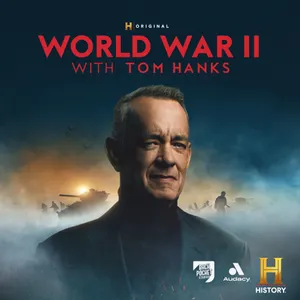
For eighty years, the Second World War has remained the most devastating and defining conflict in human history. World War II with Tom Hanks reexamines the war through the lens of a new century. Told over twenty hours and guided by Tom Hanks, whose lifelong passion for this history has shaped some of the most profound screen portrayals of the era, the series captures the full arc of the war — from the rise of fascism in Europe to the fall of Berlin, from Pearl Harbor to Hiroshima, and the uneasy peace that follows. Each episode uncovers new dimensions of the conflict: the decisions that shaped the battlefield, the unseen networks that sustained the war effort, and the aftershocks that still shape our world today. The series is a definitive retelling of that story for a new generation: a sweeping, deeply human portrait of how the modern world was forged in the fires of global war.
Latest Episodes
The most recent episodes — sign up to get AI-powered summaries of each one.
- 3 weeks ago40 min
The Hunt for Adolf Eichmann: Case Closed (from History's Greatest Mysteries)
Introducing History's Greatest Mysteries—a new History Channel podcast from Rewind Studios—available wherever you get your podcasts. New episodes every Wednesday.At the end of World War II, many Nazi officials were captured and tried for their crimes. But one of the architects of the Holocaust, Adolf Eichmann, slipped through the cracks… repeatedly eluding Nazi hunters from around the globe. How was Adolf Eichmann finally captured after fifteen years on the run?
- Jul 28, 202638 min
Fall Out
The war is over, and the Allies are triumphant. The United States and the Soviet Union initially work together to establish a new world order, but over the course of the next four years these two nations will go from Allies of convenience to ideological adversaries, launching the next phase of global conflict under the shadow of nuclear war.This episode features interviews with (in order of appearance):Michel Paradis, professor, Columbia UniversityJon Meacham, presidential historianSimon Sebag Montefiore, historian and authorTimothy Naftali, senior research scholar, Columbia UniversitySarada Peri, presidential speechwriter and political analystPhillips O’Brien, professor, University of St. AndrewsAlexandra Richie, professor, Collegium CivitasDan Carlin, podcaster, Hardcore HistoryMichael Kimmage, professor, Catholic University of AmericaMichael Neiberg, professor, US Army War CollegeDan Snow, historian and broadcasterA.J. Baime, journalist and authorRobert Citino, senior historian, National WWII Museum
- Jul 28, 202636 min
Endgame
The U.S. determines by early 1945 that Japan will never surrender and will need to be subdued by force. Newly sworn-in President Truman must authorize an invasion of the Japanese home islands at a terrible cost to American lives. Emperor Hirohito hopes to avoid the destruction of his land and people, but his generals are agitating for war. Both men seek a way out, but only one can deploy the most terrible weapon the world has ever seen.This episode features interviews with (in order of appearance):Jon Meacham, presidential historianDan Carlin, podcaster, Hardcore HistoryCraig L. Symonds, military historian and authorChristopher Harding, senior lecturer, University of EdinburghSaul David, military historian and authorNoriko Kawamura, professor, Washington State UniversityYuki Tatsumi, senior director, Institute for Indo-Pacific SecurityJonathan Parshall, military historian, US Naval War CollegeRobert Citino, senior historian, National WWII MuseumMartin Morgan, military historian and authorA.J. Baime, journalist and authorSarada Peri, presidential speechwriter and political analystColonel Douglas Douds, professor, US Army War CollegeBradley Hart, military historian, National WWII MuseumDr. Rebecca Grant, national security analyst
- Jul 21, 202636 min
Last Days of the Reich
In the winter of 1944, as American and British armies are advancing across western Europe, Hitler plans one last major offensive attempt through the Ardennes forest - the Battle of the Bulge - to swing the tide of the war back in Germany’s favor. Meanwhile, the Soviet Red Army is swiftly moving across Eastern Europe to fulfill Stalin’s ultimate wish of taking Berlin.This episode features interviews with (in order of appearance):Robert Citino, senior historian, National WWII MuseumDan Carlin, podcaster, Hardcore HistoryJames Holland, military historian and authorDr. Peter Lieb, military historian and authorMartin Morgan, military historian and authorGeoffrey Wawro, professor, University of North TexasPaul Woodadge, author and Normandy battlefield guideColonel Douglas Douds, professor, US Army War CollegeMichel Paradis, professor, Columbia UniversitySarada Peri, presidential speechwriter and political analystAlexandra Richie, professor, Collegium CivitasSean McMeekin, professor, Bard CollegeSimon Sebag Montefiore, historian and authorJon Meacham, presidential historianDan Snow, historian and broadcaster
- Jul 21, 202638 min
No Surrender
In 1944-45, as Allied victory in Europe seems all but assured, the fighting in the Pacific intensifies. The U.S. and Japan suffer terrible losses in the Philippines and on Iwo Jima. Roosevelt understands what ordinary Americans are only beginning to realize: in a clash between a nation which demands unconditional surrender and a nation which refuses to surrender, the worst is still to come.This episode features interviews with (in order of appearance):Jon Meacham, presidential historianRobert Citino, senior historian, National WWII MuseumJonathan Parshall, military historian, US Naval War CollegeDan Carlin, podcaster, Hardcore HistoryA.J. Baime, journalist and authorBradley Hart, military historian, National WWII MuseumNoriko Kawamura, professor, Washington State UniversityChristopher Harding, cultural historian, University of EdinburghDr. Rebecca Grant, national security analystAnand Toprani, military historian, U.S. Naval War CollegeColonel Douglas Douds, professor, US Army War CollegeSarada Peri, presidential speechwriter and political analystMartin Morgan, military historian and author
- Jul 14, 202638 min
Resistance
Resistance to Nazi occupation and oppression has been a constant throughout the war. In the summer of 1944, two cities revolt against the Nazis but meet very different outcomes. And some, living and dying through the Holocaust, take their fate into their own hands and mount organized resistance in the direst of circumstances.This episode features interviews with (in order of appearance):Colonel Douglas Douds, professor, US Army War CollegeRobert Citino, senior historian, National WWII MuseumDan Snow, historian and broadcasterAlexandra Richie, professor, Collegium CivitasMichael Neiberg, professor, US Army War CollegeMarco Aterrano, associate professor, University of Naples Federico IIMartin Morgan, military historian and authorSimon Sebag Montefiore, historian and authorAnand Toprani, military historian, U.S. Naval War CollegeJames Bulgin, historian, Imperial War MuseumRebecca Erbelding, historian, United States Holocaust Museum
- Jul 14, 202638 min
Home Front
As the tide begins to turn against the Axis powers, the leaders of Germany and Japan deploy opposite strategies on their home fronts. Hitler and his propaganda minister do everything in their power to shield the German people from the war, while Hideki Tojo asks the Japanese to sacrifice more and more to support the war effort. But both governments’ demands of their people will grow more intense – and deadly.This episode features interviews with (in order of appearance):Robert Citino, senior historian, National WWII MuseumAlexandra Richie, professor, Collegium CivitasNicholas Stargardt, historian and authorMartin Morgan, military historian and authorColonel Douglas Douds, professor, US Army War CollegeSheldon Garon, professor, Princeton UniversityYuki Tatsumi, senior director, Institute for Indo-Pacific SecurityChristopher Harding, cultural historian, University of EdinburghDan Carlin, podcaster, Hardcore HistoryJonathan Parshall, military historian, US Naval War CollegeJeremy Yellen, historian and authorNoriko Kawamura, professor, Washington State UniversityBradley Hart, military historian, National WWII MuseumLouise Young, professor, University of Wisconsin-Madison
- Jul 9, 202631 min
How Higgins and His Boats Won the War (from HISTORY This Week)
For more stories just like these, check out HISTORY This Week wherever you get your podcasts.June 6, 1944. As thousands of Allied soldiers prepare to storm the beaches of Normandy, they climb down rope nets into small wooden landing craft bobbing in the dark waters of the English Channel. Within hours, these boats will carry them into the largest amphibious invasion in history.The craft are known as Higgins boats, named for their inventor, Andrew Higgins: a hard-driving New Orleans boatbuilder who built his reputation designing vessels that could speed through swamps, crash through obstacles, and go places other boats couldn't. Higgins was stubborn, abrasive, and relentless. The Navy repeatedly dismissed his ideas. He refused to go away.How does a small-time New Orleans boatbuilder force his way into the military industrial complex? And what exactly is so special about these boxy little Higgins boats?Special thanks to Dr. John Curatola, Samuel Zemurray Stone Senior Historian at the National WWII Museum in New Orleans, Louisiana. His book is Armies Afloat: How the Development of Amphibious Operations in Europe Helped Win World War II.You can find the rest of the books we used to research this episode at historythisweekpodcast.com.
Get World War II with Tom Hanks summaries in your inbox
Free AI-powered daily recaps. Key takeaways, quotes, and mentions — in a 5-minute read.
Get Free Summaries →Free forever for up to 3 podcasts. No credit card required.
About World War II with Tom Hanks
For eighty years, the Second World War has remained the most devastating and defining conflict in human history. World War II with Tom Hanks reexamines the war through the lens of a new century. Told over twenty hours and guided by Tom Hanks, whose lifelong passion for this history has shaped some of the most profound screen portrayals of the era, the series captures the full arc of the war — from the rise of fascism in Europe to the fall of Berlin, from Pearl Harbor to Hiroshima, and the uneasy peace that follows. Each episode uncovers new dimensions of the conflict: the decisions that shaped the battlefield, the unseen networks that sustained the war effort, and the aftershocks that still shape our world today. The series is a definitive retelling of that story for a new generation: a sweeping, deeply human portrait of how the modern world was forged in the fires of global war.
Customized Recaps
AI-powered recaps with compact key takeaways, quotes, and insights.
Straight to Your Inbox
Get key takeaways from World War II with Tom Hanks in a 5-minute read.
Save Hours Every Week
Stay current on your favorite podcasts without falling behind.
Frequently Asked Questions
What is Podzilla's World War II with Tom Hanks daily summary?
It's a free AI-powered email that summarizes new episodes of World War II with Tom Hanks as soon as they're published. You get the key takeaways, notable quotes, and links & mentions — all in a quick read.
How does the World War II with Tom Hanks podcast summary work?
When a new episode drops, our AI transcribes and analyzes it, then generates a personalized summary tailored to your interests and profession. It's delivered to your inbox every morning.
Is this an official World War II with Tom Hanks product?
No. Podzilla is an independent service that summarizes publicly available podcast content. We're not affiliated with or endorsed by The HISTORY Channel | Back Pocket Studios | Audacy.
Can I get summaries of other podcasts too?
Absolutely! The free plan covers up to 3 podcasts. Upgrade to Pro for 15, or Premium for 50. Browse our full catalog at /podcasts.
How often does World War II with Tom Hanks release new episodes?
World War II with Tom Hanks publishes weekly. Our AI generates a summary within hours of each new episode.
What topics does World War II with Tom Hanks cover?
Our AI identifies the specific themes in each episode and highlights what matters most to you.
Start getting World War II with Tom Hanks summaries tomorrow morning.
Free forever for up to 3 podcasts. No credit card required.
Free forever for up to 3 podcasts. No credit card required.