Free Daily Podcast Summary
Artifacts: Stories from the Emotional History of the Internet: Daily Summaries Delivered
by Danny Brown
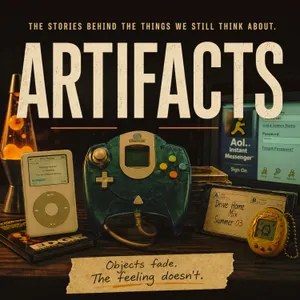
Artifacts is a storytelling podcast about the technology, media, and digital culture we've left behind, and the feelings that remain. Each episode begins with a familiar artifact - a burned CD, a dial-up modem, a movie rental store, a family computer, a paper map - and unfolds into a story about memory, identity, creativity, belonging, curiosity, and the experiences we still carry with us today. This isn't just a show about old technology. It's about the people who grew up alongside it. Hosted by award-winning podcaster Danny Brown, Artifacts blends personal storytelling, cultural history, and thoughtful reflection to explore why some of the most ordinary objects became the milestones of our lives. Because sometimes the objects fade, but the feeling doesn't.
Latest Episodes
The most recent episodes — sign up to get AI-powered summaries of each one.
- 3 days ago12 min
Bonus: This Week in Fandom History
Enjoying the show? Support it here.I recently discovered This Week in Fandom History, a podcast exploring the history of fandom, internet culture and the communities that grow around the things people love. It felt like such a natural fit for the Artifacts audience that I wanted to introduce you to the show properly.For this bonus episode, they've put together a special 10-minute cut of one of their recent episodes.A quick heads-up: this episode contains some adult language, which is natural to This Week in Fandom History but a little different from what you'll normally hear on Artifacts.If you enjoy it, be sure to check out the full show and its back catalogue.Mentioned in this episode:This Week In Fandom History | Discover Fandom Stories — Listen NowGet InvolvedIf you enjoy Artifacts, you can support it with either a one-off tip, or become a monthly Archivist.No commitment - just a simple way to say thanks. Show your support here.If you enjoy the show, I'd love for you to leave a rating or review on your favourite podcast app!And please let your friends know they can listen for free on Apple Podcasts or their preferred podcast app, or online at Artifacts Podcast.The ArchiveThe sister newsletter to the Artifacts podcast, sharing a story that didn't quite fit into an episode, a forgotten corner of the internet I've stumbled across, or a memory that deserves preserving before it quietly fades away.Get the Artifacts NewsletterProducts I Use for ArtifactsNote: these may contain affiliate links, so I get a small percentage of any product you buy when using my link.My equipment:RODE NT1-A large diaphragm condenser micRodecaster Pro II audio production studioSony MDR-7506 Studio Monitor HeadphonesElgato Wave Mic Arm Low ProfileRecommended resources:Captivate.fm podcast hosting, distribution, analytics, and monetizationHindenburg Pro recording and editingAuphonic mastering tool for audio post productionBeehiiv email marketing
- 1 weeks ago6 min
What Season 2 Taught Me About Artifacts
Enjoying the show? Support it here.Season 2 of Artifacts was an experiment.After a first season built around the objects and technology we remember, I wanted to try something different, starting with the experiences technology changed rather than the artifacts themselves.Looking back, I'm glad I did. Not because I think every experiment worked perfectly, but because it helped me understand what makes Artifacts feel like Artifacts.In this bonus episode, I look back at Season 2, the things I learned along the way, the one-star shareware review that reminded me to keep questioning my research, and why Season 3 is going back to the things themselves.Get InvolvedIf you enjoy Artifacts, you can support it with either a one-off tip, or become a monthly Archivist.No commitment - just a simple way to say thanks. Show your support here.If you enjoy the show, I'd love for you to leave a rating or review on your favourite podcast app!And please let your friends know they can listen for free on Apple Podcasts or their preferred podcast app, or online at Artifacts Podcast.The ArchiveThe sister newsletter to the Artifacts podcast, sharing a story that didn't quite fit into an episode, a forgotten corner of the internet I've stumbled across, or a memory that deserves preserving before it quietly fades away.Get the Artifacts NewsletterProducts I Use for ArtifactsNote: these may contain affiliate links, so I get a small percentage of any product you buy when using my link.My equipment:RODE NT1-A large diaphragm condenser micRodecaster Pro II audio production studioSony MDR-7506 Studio Monitor HeadphonesElgato Wave Mic Arm Low ProfileRecommended resources:Captivate.fm podcast hosting, distribution, analytics, and monetizationHindenburg Pro recording and editingAuphonic mastering tool for audio post productionBeehiiv email marketing
- 2 weeks ago9 min
The Memory Cards We Couldn't Bear to Lose
Enjoying the show? Support it here.There was a time when saving a game meant writing down a password, carefully copying a code from the screen, or trusting a little piece of plastic not to lose your progress.In this episode of Artifacts, I look at how memory cards changed the way we played and what happened when our game saves became something we could carry with us, from the early days of dedicated memory cards to the wonderfully weird Dreamcast VMU. And why, years later, those tiny cards can still take us straight back to the people and places we were when we used them.Get InvolvedIf you enjoy Artifacts, you can support it with either a one-off tip, or become a monthly Archivist.No commitment - just a simple way to say thanks. Show your support here.If you enjoy the show, I'd love for you to leave a rating or review on your favourite podcast app!And please let your friends know they can listen for free on Apple Podcasts or their preferred podcast app, or online at Artifacts Podcast.The ArchiveThe sister newsletter to the Artifacts podcast, sharing a story that didn't quite fit into an episode, a forgotten corner of the internet I've stumbled across, or a memory that deserves preserving before it quietly fades away.Get the Artifacts NewsletterProducts I Use for ArtifactsNote: these may contain affiliate links, so I get a small percentage of any product you buy when using my link.My equipment:RODE NT1-A large diaphragm condenser micRodecaster Pro II audio production studioSony MDR-7506 Studio Monitor HeadphonesElgato Wave Mic Arm Low ProfileRecommended resources:Captivate.fm podcast hosting, distribution, analytics, and monetizationHindenburg Pro recording and editingAuphonic mastering tool for audio post productionBeehiiv email marketing
- 3 weeks ago8 min
Gopher: The Internet We Almost Had
Enjoying the show? Support it here.Before the Web became the Internet as we know it, there were other ways of finding your way around. Gopher was one of them - a menu-driven system that made it easier to explore information across the early Internet.For a while, Gopher was a genuine competitor to the World Wide Web. Then the Web became free, Mosaic arrived, and the Internet took a very different path.In this episode of Artifacts, I look at Gopher, what it was like to explore the early Internet through menus and directories, and what its disappearance tells us about the futures technology leaves behind.Mentioned in this episode:Networking & The Web | Timeline of Computer History | Computer History MuseumRFC 1436 - The Internet Gopher Protocol (a distributed document search and retrieval protocol)Internet Gopher — NSFNETThe Cutting Edge: Computing / Technology / Innovation : POSTCARDS FROM CYBERSPACE : Exploring the Depths of the Internet - Los Angeles TimesGet InvolvedIf you enjoy Artifacts, you can support it with either a one-off tip, or become a monthly Archivist.No commitment - just a simple way to say thanks. Show your support here.If you enjoy the show, I'd love for you to leave a rating or review on your favourite podcast app!And please let your friends know they can listen for free on Apple Podcasts or their preferred podcast app, or online at Artifacts Podcast.The ArchiveThe sister newsletter to the Artifacts podcast, sharing a story that didn't quite fit into an episode, a forgotten corner of the internet I've stumbled across, or a memory that deserves preserving before it quietly fades away.Get the Artifacts NewsletterProducts I Use for ArtifactsNote: these may contain affiliate links, so I get a small percentage of any product you buy when using my link.My equipment:RODE NT1-A large diaphragm condenser micRodecaster Pro II audio production studioSony MDR-7506 Studio Monitor HeadphonesElgato Wave Mic Arm Low ProfileRecommended resources:Captivate.fm podcast hosting, distribution, analytics, and monetizationHindenburg Pro recording and editingAuphonic mastering tool for audio post productionBeehiiv email marketing
- Sep 4, 20269 min
The Shareware Games That Asked Us to Trust Them
Enjoying the show? Support it here.Before app stores, digital storefronts and endless in-game purchases, there was shareware. You could get a game for free, play it, and decide whether it was worth sending money to the person who made it.In this episode of Artifacts, I look back at shareware games, registration cards, and the surprisingly personal relationship between creators and players, and how that compares with today's world of DLC, premium editions, and paying to unlock more of what you've already bought.Get InvolvedIf you enjoy Artifacts, you can support it with either a one-off tip, or become a monthly Archivist.No commitment - just a simple way to say thanks. Show your support here.If you enjoy the show, I'd love for you to leave a rating or review on your favourite podcast app!And please let your friends know they can listen for free on Apple Podcasts or their preferred podcast app, or online at Artifacts Podcast.The ArchiveThe sister newsletter to the Artifacts podcast, sharing a story that didn't quite fit into an episode, a forgotten corner of the internet I've stumbled across, or a memory that deserves preserving before it quietly fades away.Get the Artifacts NewsletterProducts I Use for ArtifactsNote: these may contain affiliate links, so I get a small percentage of any product you buy when using my link.My equipment:RODE NT1-A large diaphragm condenser micRodecaster Pro II audio production studioSony MDR-7506 Studio Monitor HeadphonesElgato Wave Mic Arm Low ProfileRecommended resources:Captivate.fm podcast hosting, distribution, analytics, and monetizationHindenburg Pro recording and editingAuphonic mastering tool for audio post productionBeehiiv email marketing
- Aug 28, 20267 min
The Home Videos We Never Meant to Keep
Enjoying the show? Support it here.There was a time when recording video felt like an event. Then cameras got smaller, digital storage made recording easier, and suddenly we were capturing the ordinary moments too - family dinners, holidays, kids playing, conversations and afternoons that didn't seem important at the time.In this episode of Artifacts, Danny Brown looks at how home video changed what we chose to remember, and why those imperfect recordings can become some of the most meaningful artifacts we have.Get InvolvedIf you enjoy Artifacts, you can support it with either a one-off tip, or become a monthly Archivist.No commitment - just a simple way to say thanks. Show your support here.If you enjoy the show, I'd love for you to leave a rating or review on your favourite podcast app!And please let your friends know they can listen for free on Apple Podcasts or their preferred podcast app, or online at Artifacts Podcast.The ArchiveThe sister newsletter to the Artifacts podcast, sharing a story that didn't quite fit into an episode, a forgotten corner of the internet I've stumbled across, or a memory that deserves preserving before it quietly fades away.Get the Artifacts NewsletterProducts I Use for ArtifactsNote: these may contain affiliate links, so I get a small percentage of any product you buy when using my link.My equipment:RODE NT1-A large diaphragm condenser micRodecaster Pro II audio production studioSony MDR-7506 Studio Monitor HeadphonesElgato Wave Mic Arm Low ProfileRecommended resources:Captivate.fm podcast hosting, distribution, analytics, and monetizationHindenburg Pro recording and editingAuphonic mastering tool for audio post production
- Aug 21, 20265 min
Why Owning Software Used to Feel Different
Enjoying the show? Support it here.Do you remember when software came in boxes?Before downloads, cloud accounts, and subscriptions, buying software meant bringing something home.A box. A disc. A manual. Maybe a registration card. And somewhere inside was that tiny product key you absolutely couldn't afford to lose.You installed the software, put the box on a shelf, and knew that you owned it.In this episode of Artifacts, Danny Brown explores the old world of boxed software and the sense of permanence that came with it. From enormous cardboard packages and installation discs to product keys tucked safely away, these weren't just things we used. They were physical evidence of something we'd bought and made part of our lives.Get InvolvedIf you enjoy Artifacts, you can support it with either a one-off tip, or become a monthly Archivist.No commitment - just a simple way to say thanks. Show your support here.If you enjoy the show, I'd love for you to leave a rating or review on your favourite podcast app!And please let your friends know they can listen for free on Apple Podcasts or their preferred podcast app, or online at Artifacts Podcast.The ArchiveThe sister newsletter to the Artifacts podcast, sharing a story that didn't quite fit into an episode, a forgotten corner of the internet I've stumbled across, or a memory that deserves preserving before it quietly fades away.Get the Artifacts NewsletterProducts I Use for ArtifactsNote: these may contain affiliate links, so I get a small percentage of any product you buy when using my link.My equipment:RODE NT1-A large diaphragm condenser micRodecaster Pro II audio production studioSony MDR-7506 Studio Monitor HeadphonesElgato Wave Mic Arm Low ProfileRecommended resources:Captivate.fm podcast hosting, distribution, analytics, and monetizationHindenburg Pro recording and editingAuphonic mastering tool for audio post production
- Aug 14, 20265 min
The Magic of Encarta (When Knowledge Fit on a Disc)
Enjoying the show? Support it here.What did it feel like to discover an entire world inside a CD-ROM? A time before Google, Wikipedia, and instant answers, when there was a different way to explore knowledge.CD-ROM encyclopedias like Microsoft Encarta turned the family computer into a doorway to somewhere much bigger. You could look up the Roman Empire, discover dinosaurs, explore a map, watch a video, and somehow end up learning about something you never intended to find.In this episode of Artifacts, Danny Brown explores the likes of Encarta and the sense of wonder they created. Not simply because they contained an enormous amount of information, but because they encouraged us to wander through it.Because finding an answer is one thing.Discovering something is another.Get InvolvedIf you enjoy Artifacts, you can support it with either a one-off tip, or become a monthly Archivist.No commitment - just a simple way to say thanks. Show your support here.If you enjoy the show, I'd love for you to leave a rating or review on your favourite podcast app!And please let your friends know they can listen for free on Apple Podcasts, Spotify, YouTube, their preferred podcast app, or online at Artifacts Podcast.The ArchiveThe sister newsletter to the Artifacts podcast, sharing a story that didn't quite fit into an episode, a forgotten corner of the internet I've stumbled across, or a memory that deserves preserving before it quietly fades away.Get the Artifacts NewsletterProducts I Use for ArtifactsNote: these may contain affiliate links, so I get a small percentage of any product you buy when using my link.My equipment:RODE NT1-A large diaphragm condenser micRodecaster Pro II audio production studioSony MDR-7506 Studio Monitor HeadphonesElgato Wave Mic Arm Low ProfileRecommended resources:Captivate.fm podcast hosting, distribution, analytics, and monetizationHindenburg Pro recording and editingAuphonic mastering tool for audio post production
Get Artifacts: Stories from the Emotional History of the Internet summaries in your inbox
Free AI-powered daily recaps. Key takeaways, quotes, and mentions — in a 5-minute read.
Get Free Summaries →Free forever for up to 3 podcasts. No credit card required.
You Might Also Like
Listeners also like.
Immaterial: 5,000 Years of Art, One Material at a Time
Explores the history and meaning of art through the lens of individual materials, from clay to jade to paper.

Endless Thread
Untold histories and unsolved mysteries from online and real life, explored through investigative storytelling.

Reply All
A podcast that explores the internet and its impact on modern life through investigative stories and personal narratives.

Things Fell Apart
Traces the origins of modern culture wars through personal stories and pivotal moments that sparked lasting social conflicts.

Better Offline
Ed Zitron and guests explore how the tech industry’s power players shape society, for better or worse.

Art History for All
Explores individual artworks and their broader significance, making art history accessible and meaningful to all audiences.

Accidental Tech Podcast
Three nerds discuss technology, Apple, programming, and related topics.

Family Lore
Explores family legends through guest stories and historical investigations to uncover the truth behind generational tales.

Crazy/Genius
Explores how the internet shapes society, politics, and reality through discussions on AI, misinformation, and digital culture.
Out of Place
A researcher investigates mysterious artifacts that defy known history, uncovering a hidden world lurking beneath reality.

Close All Tabs
A tech journalist explores how digital culture, internet trends, and AI shape real-world behavior and societal norms.

Forever Ago
Explores the surprising history behind everyday things, from ice cream to video games, making the past engaging for all ages.
About Artifacts: Stories from the Emotional History of the Internet
Artifacts is a storytelling podcast about the technology, media, and digital culture we've left behind, and the feelings that remain. Each episode begins with a familiar artifact - a burned CD, a dial-up modem, a movie rental store, a family computer, a paper map - and unfolds into a story about memory, identity, creativity, belonging, curiosity, and the experiences we still carry with us today. This isn't just a show about old technology. It's about the people who grew up alongside it. Hosted by award-winning podcaster Danny Brown, Artifacts blends personal storytelling, cultural history, and thoughtful reflection to explore why some of the most ordinary objects became the milestones of our lives. Because sometimes the objects fade, but the feeling doesn't.
Customized Recaps
AI-powered recaps with compact key takeaways, quotes, and insights.
Straight to Your Inbox
Get key takeaways from Artifacts: Stories from the Emotional History of the Internet in a 5-minute read.
Save Hours Every Week
Stay current on your favorite podcasts without falling behind.
Frequently Asked Questions
What is Podzilla's Artifacts: Stories from the Emotional History of the Internet daily summary?
It's a free AI-powered email that summarizes new episodes of Artifacts: Stories from the Emotional History of the Internet as soon as they're published. You get the key takeaways, notable quotes, and links & mentions — all in a quick read.
How does the Artifacts: Stories from the Emotional History of the Internet podcast summary work?
When a new episode drops, our AI transcribes and analyzes it, then generates a personalized summary tailored to your interests and profession. It's delivered to your inbox every morning.
Is this an official Artifacts: Stories from the Emotional History of the Internet product?
No. Podzilla is an independent service that summarizes publicly available podcast content. We're not affiliated with or endorsed by Danny Brown.
Can I get summaries of other podcasts too?
Absolutely! The free plan covers up to 3 podcasts. Upgrade to Pro for 15, or Premium for 50. Browse our full catalog at /podcasts.
How often does Artifacts: Stories from the Emotional History of the Internet release new episodes?
Artifacts: Stories from the Emotional History of the Internet publishes weekly. Our AI generates a summary within hours of each new episode.
What topics does Artifacts: Stories from the Emotional History of the Internet cover?
Artifacts: Stories from the Emotional History of the Internet covers topics including Leisure, Technology, Documentary, Culture, Society & Culture. Our AI identifies the specific themes in each episode and highlights what matters most to you.
Start getting Artifacts: Stories from the Emotional History of the Internet summaries tomorrow morning.
Free forever for up to 3 podcasts. No credit card required.
Free forever for up to 3 podcasts. No credit card required.