Free Daily Podcast Summary
Basic Folk: Daily Summaries Delivered
by The Bluegrass Situation
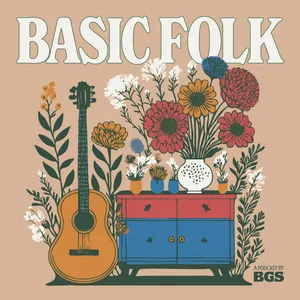
Basic Folk features honest conversations with folk musicians hosted by Cindy Howes and Lizzie No. We approach interviews with warmth, humor and insightful questions. Since 2018, this podcast has dignified under the radar roots musicians by providing a platform that they might not otherwise have. You’ll hear interviews from Three-time Grammy-winning guitar gods like Molly Tuttle, Haitian American folk legends like Leyla McCalla and deep feelers like songwriter John Hiatt. Basic Folk is dedicated to showcasing the best in folk, bluegrass, acoustic and americana including Black, Brown and Queer folx who have been excluded, or felt like they did not belong, in the folk world. Cindy & Lizzie each bring a unique perspective to these honest conversations with folk musicians. We are equally dedicated to repainting the broad landscape of folk music as we are to tearing down the ivory towers of the music industry. What would Bruce Springsteen do if he ever got the keys to that mansion on the hill? Let's find out together on Basic Folk.
Latest Episodes
The most recent episodes — sign up to get AI-powered summaries of each one.
- 6 days ago1h 5m
Michaela Anne: Loving the Mundane in the Middle of the Chaos, ep. 353
Michaela Anne grew up in a military family that moved a lot: Washington, Michigan, California, Virginia, and Italy. She and her family are currently in the middle of a huge, long move. It seems like there are always SO MANY THINGS going on with Michaela in her family and career. One of the constants growing up was listening to music and learning to play. In the mid-2000s, she studied at the New School in New York City, where she met her future husband, musical partner and co-host of their show The Other 22 Hours, Aaron Shafer-Haiss. They eventually relocated to Nashville and are in the middle of relocating to New England via Michigan. In the early 2020s, Michaela's life changed intensely: She got sober, found out she was having a baby, and her mom had a very serious stroke. “My hands were full of the hands of those who needed me,” she says, “and for two years I didn’t pick up my guitar.” She has since released two full-length albums, including 2026's These Are the Days. The new album is her first self-owned album of her career after a decade of recording under traditional indie-label systems. In our conversation, she speaks to her relationship with chaos and how she prefers many, many things going on at once, versus calm and stillness. She talks about her complicated and evolving relationship with beauty and her own physical appearance as she turned 40 this year. She discusses her relationship to masculinity, which is something she is especially thinking about lately as she and her husband are raising a son. Like many people, Michaela's career was transformed because of the pandemic. In addition to that world-changing event, she realized that no one has any control over anything and she was going to stop putting off having children. It was something she had always wanted but put aside, over and over, because of her career. This is a very action-packed and inspiring conversation with Michaela Anne. I learned a lot from her in our hour together and I can't wait to do it again! Follow Basic Folk on social media: https://basicfolk.bio.link/ Sign up for Basic Folk's newsletter: https://bit.ly/basicfolknews Help produce Basic Folk by contributing: https://basicfolk.com/donate/ Interested in sponsoring us? Contact BGS: https://bit.ly/sponsorBGSpods Advertising Inquiries: https://redcircle.com/brands
- 2 weeks ago51 min
Jimbo Mathus: still singing for Rosetta & Squirrel Nut Zippering, ep. 352
Jimbo Mathus grew up in a house full of musicians, and by the time he was 8 years old, he was sitting in on family jam sessions. He dropped out of college, joined the Merchant Marines and eventually settled in Chapel Hill, North Carolina. He formed The Squirrel Nut Zippers in 1993, which experienced massive success in the mid- to late ‘90s. The band was swept into the short-lived swing music revival, alongside The Brian Setzer Orchestra, Big Bad Voodoo Daddy, and movies like The Mask and Swingers. It was a short-lived revival, but the Zippers offered fans something deeper and darker that led to a lifelong career for the ever-curious Mathus. Right around the time the band was rising to stardom, Mathus released the album Play Songs for Rosetta under the name James Mathus and His Knockdown Society. Originally released in 1997, the album was recorded in tribute and as a benefit for Charley Patton's daughter, Rosetta Patton Brown, whom he grew up with. Jimbo learned in his thirties that Rosetta was Charley’s daughter and that she had never received any royalties from his music. (There is a new vinyl addition of the album available for pre-order in a very limited run until Sept. 30, 2026.) In our conversation, Jimbo opens up about his connection to Rosetta and what he learned about Charley Patton through his very private daughter. He talks about his short film called Postcards to Rosetta, which explores the secret moments in the life of Charley Patton and particularly the relationship he had with his daughter. The short film features marionettes interpreting moments in Charley’s life. Mathus also comments on his ethos on genre and talks his band’s new album, which he has been working on for thirty years. Titled The Squirrel Nut Zippers Starring in "Fat City" (The Ballad of Lil' Tony), the album is based on Mathus’ grandfather’s life as a bootlegger, juke joint operator, and big band promoter in the South. Follow Basic Folk on social media: https://basicfolk.bio.link/ Sign up for Basic Folk's newsletter: https://bit.ly/basicfolknews Help produce Basic Folk by contributing: https://basicfolk.com/donate/ Interested in sponsoring us? Contact BGS: https://bit.ly/sponsorBGSpods Advertising Inquiries: https://redcircle.com/brands
- Sep 3, 20261h 10m
Rachel McCartney's Return to Music, Being a Horse Girl, & Accidentally Snubbing David Gray, ep. 351
For 17 years, Rachel McCartney had set aside a music career and all the anxiety and uncertainty that came along with it. She was in her mid-30s and wanted a family and some stability. Once she started a new life as an ICU nurse and mother to two young children, her musical career and the momentum she had created over the past three decades in New England and Western Pennsylvania didn't much cross her mind. I met Rachel when I was 18 years old while at Emerson College. It was the year 2000 and the folk scene in Boston was popping with incredible talent: Lori McKenna, Deb Talan (The Weepies), Anaïs Mitchell and many others were selling out shows left and right in listening rooms across New England. Rachel was a frequent name that popped up in the newspaper, on radio, as a busker in the subway and around town at venues like The Kendall Cafe, Toad and of course, the folk mothership, aka Club Passim. It was a lucrative time for the singer-songwriter with a big voice and great songs. She would frequently appear with another Boston-famous, yet under-the-radar songwriter, the Atlanta-born Brian Webb. Although, their friendship was hard-won after their brief romantic relationship ended. However, they kept performing together as the two were each other's musical kindreds, their voices blending effortlessly. If you were at Rachel's recent album release, you were treated to some Rachel & Brian classics that lit up the WERS Coffeehouse in the early 2000's. Needless to say, I am so thrilled that Rachel's released new music and am very excited that she agreed to be on the podcast today. In our conversation, we discuss her move from Iowa to Massachusetts as a teen and how the impact of that has influenced the way she makes decisions for her kids. She talks about her relationship to the guitar, her singing and her songwriting. She addresses the allegations that, indeed, she is a horse girl through and through. She moved to Pittsburgh in her 20s on a whim, something we have in common. She reflects on Pittsburgh, busking in Boston and what it was like to choose a stable life with a family in nursing. Her new album, Taming Dragons, was produced by Zack Hickman and she shares what it felt like to be in the studio after nearly two decades. I was pleased to point out that dragons also appear on Tori Amos' new album (In the Time of Dragons), which then led Rachel to share what the dragon symbolizes for her. We did this interview in my backyard (like Oprah) and you can hear birds, lawn mowers and Francie in the background, but I think it all adds to the atmosphere. I have interviewed Rachel many times, but it was all before my cerebral cortex was fully formed, so this is basically the first real interview I have done with the fabulous Rachel McCartney! - Cindy Follow Basic Folk on social media: https://basicfolk.bio.link/ Sign up for Basic Folk's newsletter: https://bit.ly/basicfolknews Help produce Basic Folk by contributing: https://basicfolk.com/donate/ Interested in sponsoring us? Contact BGS: https://bit.ly/sponsorBGSpods Advertising Inquiries: https://redcircle.com/brands
- Aug 20, 202658 min
Keb' Mo' Defines the Blues as Honesty Music, ep. 350
We are so honored to welcome Keb' Mo' (aka Kevin Moore) on the show for our 350th episode! After many decades of incredible music, his new solo acoustic album, The Breakdown, was written and recorded at his home studio near Nashville following open-heart surgery and personal life changes. He's also recently released his second collaborative album with the legendary Taj Mahal. We were blown away Keb' Mo's definition of the blues: "honesty music." There's a lot of debate nowadays whether the blues is something that includes a formal set of requirements; is it a genre? Is it a type of sound that's trapped in a particular historical era. Kevin didn't even give the time of day to any of those gatekeeper explanations. He said if the music has that honesty, has the moan and the sense of speaking to Black experience for a Black audience who understand what it's like to struggle that's what the blues is. There's a spectrum of humility to ego in music. There are artists for whom music and the active performing is a vehicle for their own notoriety. During their interview, I was struck by how far on the opposite end of the spectrum Keb' Mo' falls. Kevin went from being a kid growing up in Compton and asking his parents for a guitar knowing how much $25 meant in those days to now being an artist who sponsored by so many guitar companies. He still remembers a time When the idea of having a collection of guitars like was kind of crazy talk. His humility during our conversation is so present. I asked Kevin what does success mean to you and do you think you've achieved it. His answer was "I get to keep playing and I don't have to get a regular job." Even after all these years so many accolades, it's a privilege to play his own original music in front of people and to be a part of this tradition. I just wanna shout out how generous Kevin is as a conversation partner. I came into this interview nervous because he's one of the more legendary guests that we've had on the show. I found myself a number of times having to sit back and receive a compliment. He's the first to say "That was a great question. You're really thoughtful. You're killing it!" So I was really lucky to interview him. Follow Basic Folk on social media: https://basicfolk.bio.link/ Sign up for Basic Folk's newsletter: https://bit.ly/basicfolknews Help produce Basic Folk by contributing: https://basicfolk.com/donate/ Interested in sponsoring us? Contact BGS: https://bit.ly/sponsorBGSpods Advertising Inquiries: https://redcircle.com/brands
- Aug 6, 20261h 9m
Hrishikesh Hirway: From Monikers to Podcasts to Music Under His Own Name, ep. 349
If you have been paying attention to music circles for the past 25+ years, you will be familiar with Hrishikesh Hirway. He formerly released music under the moniker The One AM Radio and has also produced and hosted THE premiere music podcast of the 21st century (the only century with podcasts so far, so clearly we feel strongly): Song Exploder. Until recently, his name had not been front and center on any of his projects until his newest album, 'In the Last Hour of Light.' Hrishi grew up in Massachusetts the son of Indian immigrants, immersed and in love with music. After releasing music as The One AM Radio until 2011, he started the podcast Song Exploder in 2014. He's hosted and produced numerous shows and has been a crucial part of the podcasting landscape for 12 years. In our Basic Folk conversation, Hrishi expands on the power of grief after his mother died and how his came gradually because of her long illness. He spoke of his name and what it's felt like to reclaim it in a public space in 2026 versus 1999, and he gives a little shout out to Obama. He gets into his feelings about his speaking voice and the person who likes it the most (his wife). We also hear from Hrishi about what it's like to be a figure in music that can offer musicians a bigger platform with his podcasts. He is someone who enjoys connecting and collaborating with others, but I wanted to know how it felt when sometimes the equation doesn't always add up. Overall I give this interview a 10/10! It was a pleasure getting to know the wonderful Hrishikesh Hirway. Follow Basic Folk on social media: https://basicfolk.bio.link/ Sign up for Basic Folk's newsletter: https://bit.ly/basicfolknews Help produce Basic Folk by contributing: https://basicfolk.com/donate/ Interested in sponsoring us? Contact BGS: https://bit.ly/sponsorBGSpods Advertising Inquiries: https://redcircle.com/brands
- Jul 23, 20261h 14m
MayaFest: Oliver Wood, Ana Egge, John Craigie, Kristin Andreassen, & Caitlin Canty on Maya de Vitry's New Album, ep. 348
Lancaster, Pennsylvania-born, Nashville-based songwriter Maya de Vitry has been on Basic Folk a half dozen times (she's only second to our fave man-bestie Mark Erelli), because we are so obsessed with her songwriting perspective, from her time in the Stray Birds to her solo work. Every time she's on the show, we try and do something special. She's been on with her siblings (Nina & Lyle), her partner (Ethan Jodziewicz), and her musical besties (Shelby Means & Joel Timmons). When we heard about her fifth studio album, 'All My Faith,' we knew we had to raise the Basic Folk bar on one of the best working songwriters today. When I (Cindy) first heard Maya play these songs live, I thought they were next level. Even though I'm not a musician or songwriter of any kind, I really wanted to know why they were so incredible. I thought it would be a cool exercise to get other songwriter friends of Maya's together to dig deep and explain what's happening with Maya's writing. What is it about the lyrics, the phrasing, the melodies that is really outstanding? Maya was down with this idea and invited Ana Egge, Caitlin Canty, John Craigie, Kristin Andreassen, and Oliver Wood on this episode of Basic Folk, so we could hear from some of HER favorite writers about these new songs. We had everyone here listen to the record a few times before recording the podcast; Maya shared the lyrics, album credits, and a track-by-track write up for the songs. She chose three songs for each person to specifically dig into, but of course everyone is free to share comments on any songs. We knew it was going to be a great experience, but it turned out even better than we had hoped. The insight these writers share intensify Maya's new songs and give an even greater understanding of why they make such an impact. Follow Basic Folk on social media: https://basicfolk.bio.link/ Sign up for Basic Folk's newsletter: https://bit.ly/basicfolknews Help produce Basic Folk by contributing: https://basicfolk.com/donate/ Interested in sponsoring us? Contact BGS: https://bit.ly/sponsorBGSpods Advertising Inquiries: https://redcircle.com/brands
- Jul 9, 202657 min
Lizzie No & Kimaya Diggs Celebrate America's Outlaws, ep. 347
Lizzie No, Kaïa Kater, Nathan Evans Fox, Olivia Ellen Lloyd, Tray Wellington, A.J. Haynes, and more are featured on the new compilation album 'Outlaws’ Almanac,' a response to the 250th anniversary of the United States of America. Led by executive producer Lizzie No, the project features a diverse range of songwriters and storytellers working in broadly-defined folk, Americana, and roots traditions. Lizzie envisioned the compilation as an opportunity to be in conversation with the American project, taking an oft-overlooked perspective. Their curation centers Black, brown, Indigenous, queer, rural, and women’s voices, with traditional and contemporary music melding in a manner that brings to mind America’s promise of being a melting pot. Lizzie and Kimaya join Basic Folk for a candid and vulnerable conversation about the project and its inspirations. We talked about how they each relate to outlaws and the difference between them and those tasked with protection within the law. We also talked about the significance of the album art by Mia Kristen, a folk art-inspired painting of a woman with a guitar riding a donkey surrounded by corn and flowers. I (Cindy) get into the details of some of the bungled celebrations of America's major birthdays (namely the 100th and the 200th) and why those celebrations continually leave out marginalized and overlooked voices. We talk about how there are Black people in the future and why that is actually a radical idea in 2026. We end with a light hearted Lightning Round called "IS THIS OUTLAW?" Thanks to Lizzie and Kimaya for being so open and honest in this intense and special conversation. Follow Basic Folk on social media: https://basicfolk.bio.link/ Sign up for Basic Folk's newsletter: https://bit.ly/basicfolknews Help produce Basic Folk by contributing: https://basicfolk.com/donate/ Interested in sponsoring us? Contact BGS: https://bit.ly/sponsorBGSpods Advertising Inquiries: https://redcircle.com/brands
- Jun 25, 20261h 0m
Alela Diane: Gold in France, That 1990s/1890s Life, and Michael Hurley
Back in the mid 2000's Alela Diane's Gospel Pirate album was ringing my bell and apparently, it was ringing a lot of other people's bells, too, especially Europeans. Alela's debut album went gold in France and she's been able to maintain a pretty decent audience and career across the Atlantic. Meanwhile, at home in The States (she's based in Portland, OR), after 2013, she remained relatively unknown and undiscovered and that was just fine with her. She worked on her music, occasionally flew over to Europe to tour, played local gigs and raised her two daughters with her husband in their 1892 victorian mansion. While they were renovating their crazy old house, they also got their daughters' a landline and a CD player each along with their old CD collections. Everything was pretty chill and great. Then her friend and mentor Michael Hurley, the godfather of freak folk, died last year at the age of 83. After playing a tribute show to Michael, she started connecting with her Portland music community. She would go to shows, inviting people like Anna Tivel over, starting to collaborate with others in town. This all led to her new album, Who’s Keeping Time? This time around, she is really going full stop on a huge tour where she will be gone roughly 40% of the time from May through December of this year. It feels like a huge return for the singer-songwriter who is feeling so inspired by creating, collaborating and being in community again. Follow Basic Folk on social media: https://basicfolk.bio.link/ Sign up for Basic Folk's newsletter: https://bit.ly/basicfolknews Help produce Basic Folk by contributing: https://basicfolk.com/donate/ Interested in sponsoring us? Contact BGS: https://bit.ly/sponsorBGSpods Advertising Inquiries: https://redcircle.com/brands
Get Basic Folk summaries in your inbox
Free AI-powered daily recaps. Key takeaways, quotes, and mentions — in a 5-minute read.
Get Free Summaries →Free forever for up to 3 podcasts. No credit card required.
You Might Also Like
Listeners also like.

Music Matters with Darrell Craig Harris
In-depth interviews with major music artists, producers, and industry leaders shaping the global music landscape.
Everyone Loves Guitar
Conversations with guitarists and music insiders about their lives, careers, and the personal lessons behind their success.
The Drop the Needle Podcast
Interviews exploring spirituality, mindset, and music, featuring healers, artists, and teachers discussing personal growth and meaningful songs.

Music Saved Me Podcast
Artists share how music transformed their lives and aided emotional healing through personal stories and journeys of resilience.

Popcast
A weekly look at the latest in pop music, featuring criticism, interviews, and cultural trends from New York Times journalists.

Girls In Low Places
British women interview country music artists in a candid, irreverent podcast exploring the genre from a UK perspective.
DISGRACELAND
True crime stories behind legendary musicians, exploring the chaos, drama, and human cost of fame with reverence and depth.
Fresh Air
Intimate interviews with prominent figures in arts, culture, and current affairs.

Takin’ A Walk Nashville
Sarah Harralson interviews Nashville musicians about their careers and the city’s diverse music scene, from country to R&B.

基本无害 Mostly Harmless
一档通过非传统视角探讨创作、观点与感受背后机制的播客。
Andy Frasco's World Saving Podcast
Discussions on celebrities, music, comedy, life, and love.

Professor of Rock
Music historian Adam Reader examines the origins and stories of classic rock songs through interviews and detailed episode explorations.
About Basic Folk
Basic Folk features honest conversations with folk musicians hosted by Cindy Howes and Lizzie No. We approach interviews with warmth, humor and insightful questions. Since 2018, this podcast has dignified under the radar roots musicians by providing a platform that they might not otherwise have. You’ll hear interviews from Three-time Grammy-winning guitar gods like Molly Tuttle, Haitian American folk legends like Leyla McCalla and deep feelers like songwriter John Hiatt. Basic Folk is dedicated to showcasing the best in folk, bluegrass, acoustic and americana including Black, Brown and Queer folx who have been excluded, or felt like they did not belong, in the folk world. Cindy & Lizzie each bring a unique perspective to these honest conversations with folk musicians. We are equally dedicated to repainting the broad landscape of folk music as we are to tearing down the ivory towers of the music industry. What would Bruce Springsteen do if he ever got the keys to that mansion on the hill? Let's find out together on Basic Folk.
Customized Recaps
AI-powered recaps with compact key takeaways, quotes, and insights.
Straight to Your Inbox
Get key takeaways from Basic Folk in a 5-minute read.
Save Hours Every Week
Stay current on your favorite podcasts without falling behind.
Frequently Asked Questions
What is Podzilla's Basic Folk daily summary?
It's a free AI-powered email that summarizes new episodes of Basic Folk as soon as they're published. You get the key takeaways, notable quotes, and links & mentions — all in a quick read.
How does the Basic Folk podcast summary work?
When a new episode drops, our AI transcribes and analyzes it, then generates a personalized summary tailored to your interests and profession. It's delivered to your inbox every morning.
Is this an official Basic Folk product?
No. Podzilla is an independent service that summarizes publicly available podcast content. We're not affiliated with or endorsed by The Bluegrass Situation.
Can I get summaries of other podcasts too?
Absolutely! The free plan covers up to 3 podcasts. Upgrade to Pro for 15, or Premium for 50. Browse our full catalog at /podcasts.
How often does Basic Folk release new episodes?
Basic Folk publishes biweekly. Our AI generates a summary within hours of each new episode.
What topics does Basic Folk cover?
Basic Folk covers topics including Music, Arts, Culture, Society & Culture, Performing Arts, Comedy Interviews. Our AI identifies the specific themes in each episode and highlights what matters most to you.
Start getting Basic Folk summaries tomorrow morning.
Free forever for up to 3 podcasts. No credit card required.
Free forever for up to 3 podcasts. No credit card required.