Free Daily Podcast Summary
GTM Uncensored: Daily Summaries Delivered
by Adam Jay & Dale Zwizinski
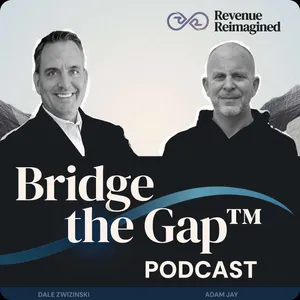
Most GTM content covers the same ground. GTM Uncensored finds the operators actually in the seat and digs into what's true in today's GTM, not what sounds good. Every guest is currently building a company, leading a revenue team, or running a GTM function inside a real business. During the show, Adam and Dale push the envelope until the real story comes out. The show goes where most content won't: The motions that determine whether a company stays in business, or goes under. GTM Uncensored is built for B2B revenue leaders at $5M–$100M ARR who are accountable to a number and need a real-world playbook, not philosophy. Every episode ends with a Monday Morning Move. One specific action you can take this week, and a series of Uncensored Questions where listeners get unfiltered answers from people who've actually been there. What we cover: Pipeline & GTM motion, post-sale architecture, CS & retention, NRR/GRR mechanics, RevOps, AI in the revenue org, executive branding, and more. Your hosts: Adam Jay and Dale Zwizinski are co-founders of Revenue Reimagined. They didn't build a consulting firm. They flipped the fractional CRO model because strategy without execution doesn't move the needle. The questions they ask on air are the same ones they're solving inside real companies right now. GTM Uncensored is the GTM conversations nobody else is having.
Latest Episodes
The most recent episodes — sign up to get AI-powered summaries of each one.
- Todayroundtable44 min5-min read
Cold Outbound Isn't Dead, It's Just Brutal
The core issue in modern B2B SaaS go-to-market (GTM) isn't just poor execution — it's a flawed mindset rooted in outdated language and commoditized tactics. Jared Robin argues that the phrase 'go-to-market' itself creates a dangerous mental model where companies believe they can win by out-tacticaling incumbents in saturated markets. The real fix isn't better cold email or more reps — it's rethinking the entire GTM philosophy: shift from 'going to market' to 'creating the market' by building owned audiences, fostering authentic communities of users (not prospects), and designing products that solve real workflow pain points before sales even begins. Success comes not from volume, but from differentiation, trust, and human-centric engagement.
- 1 weeks agoroundtable46 min7-min read
Sequencers Are Obsolete in 2026
AI is fundamentally reshaping go-to-market operations, rendering legacy tools like email sequencers obsolete. The future lies in AI-native systems that deliver proactive, data-driven next best actions, automate manual workflows, and unify fragmented data into a single source of truth—enabling smarter deal execution and revenue growth. The biggest leverage points aren’t flashy AI features but fixing invisible bottlenecks: poor data hygiene, misrouted leads, and manual processes disguised as best practices.
- 2 weeks agoroundtable31 min4-min read
Stop Selling What Isn't Real
Go-to-market (GTM) strategies fail not because of bad products, but due to siloed teams, misaligned goals, and leadership dysfunction. The real fix isn’t hiring or firing—it’s building unified systems, accountability, and trust across sales, marketing, and customer success. Founders must recognize their own blind spots and step aside when they’re the bottleneck. The journey of Adam Jay and Dale Zwizinski—from early career realizations in 1999 to co-founding Revenue Reimagined—shows how personal experiences with broken GTM led to a mission: to stop great products from becoming shelfware and to extend the tenure of revenue leaders by fixing the root causes of chaos.
- 3 weeks agointerview32 min6-min read
How Great Revenue Leaders Fix Broken Systems
When stepping into a broken revenue organization, especially as a new CRO, success hinges not on accepting top-down forecasts or chasing top-of-funnel volume, but on diagnosing root causes, rebuilding foundational systems, and fostering cross-functional alignment—particularly between sales and customer success—through data trust and iterative problem-solving.
- 4 weeks agoconversational36 min6-min read
The Revenue Mistake Founders Keep Repeating
When growth stalls for 18 months despite a seemingly healthy pipeline and new hires, the real issue isn’t headcount—it’s broken systems, unclear definitions, and misaligned processes. Adam Jay argues that most leaders default to hiring more people instead of diagnosing root causes, but sustainable growth requires honest data analysis, cross-functional alignment, and a willingness to dismantle ineffective go-to-market (GTM) models.
- Jun 24, 2026conversational1 min4-min read
Your GTM Is Broken. Here's How to Fix It. | GTM Uncensored
This episode of 'GTM Uncensored' introduces the show's mission: to cut through theoretical frameworks and AI-generated advice by bringing in real B2B operators who have faced broken go-to-market (GTM) systems, missed revenue targets, and organizational chaos—and rebuilt successfully. The focus is on practical, actionable strategies for founders, CEOs, and revenue leaders in mid-sized companies.
- Jun 10, 2026interview30 min7-min read
Episode #147 The Reason Your B2B Company Needs LinkedIn Advertising
LinkedIn ads offer a precision-targeted, underutilized channel for B2B companies to reach niche professional audiences at specific companies—something platforms like Google and Meta can't match without custom lists. While often perceived as expensive, the real metric is cost per quality lead, where LinkedIn often outperforms due to higher-intent, professionally active users.
- Jun 3, 2026interview34 min6-min read
Episode #146 Fixing the Constraint Holding Back Your Startup Growth
Most revenue problems stem not from lack of data, but from misaligned go-to-market systems and leadership biases, where CROs often focus on closing deals while ignoring upstream acquisition or retention bottlenecks. Jackie Leahy argues that fixing the revenue engine requires diagnosing the true constraint—whether acquisition, conversion, or expansion—and building systems that close the loop across functions. She emphasizes that AI can accelerate work but shouldn’t replace foundational RevOps discipline, and that many companies are flying blind due to poor process hygiene, siloed teams, and leadership overconfidence.
About GTM Uncensored
Most GTM content covers the same ground. GTM Uncensored finds the operators actually in the seat and digs into what's true in today's GTM, not what sounds good. Every guest is currently building a company, leading a revenue team, or running a GTM function inside a real business. During the show, Adam and Dale push the envelope until the real story comes out. The show goes where most content won't: The motions that determine whether a company stays in business, or goes under. GTM Uncensored is built for B2B revenue leaders at $5M–$100M ARR who are accountable to a number and need a real-world playbook, not philosophy. Every episode ends with a Monday Morning Move. One specific action you can take this week, and a series of Uncensored Questions where listeners get unfiltered answers from people who've actually been there. What we cover: Pipeline & GTM motion, post-sale architecture, CS & retention, NRR/GRR mechanics, RevOps, AI in the revenue org, executive branding, and more. Your hosts: Adam Jay and Dale Zwizinski are co-founders of Revenue Reimagined. They didn't build a consulting firm. They flipped the fractional CRO model because strategy without execution doesn't move the needle. The questions they ask on air are the same ones they're solving inside real companies right now. GTM Uncensored is the GTM conversations nobody else is having.
Customized Recaps
AI-powered recaps with compact key takeaways, quotes, and insights.
Straight to Your Inbox
Get key takeaways from GTM Uncensored in a 5-minute read.
Save Hours Every Week
Stay current on your favorite podcasts without falling behind.
Frequently Asked Questions
What is Podzilla's GTM Uncensored daily summary?
It's a free AI-powered email that summarizes new episodes of GTM Uncensored as soon as they're published. You get the key takeaways, notable quotes, and links & mentions — all in a quick read.
How does the GTM Uncensored podcast summary work?
When a new episode drops, our AI transcribes and analyzes it, then generates a personalized summary tailored to your interests and profession. It's delivered to your inbox every morning.
Is this an official GTM Uncensored product?
No. Podzilla is an independent service that summarizes publicly available podcast content. We're not affiliated with or endorsed by Adam Jay & Dale Zwizinski.
Can I get summaries of other podcasts too?
Absolutely! The free plan covers up to 3 podcasts. Upgrade to Pro for 15, or Premium for 50. Browse our full catalog at /podcasts.
How often does GTM Uncensored release new episodes?
GTM Uncensored publishes weekly. Our AI generates a summary within hours of each new episode.
What topics does GTM Uncensored cover?
GTM Uncensored covers topics including Business. Our AI identifies the specific themes in each episode and highlights what matters most to you.
Start getting GTM Uncensored summaries tomorrow morning.
Free forever for up to 3 podcasts. No credit card required.
Free forever for up to 3 podcasts. No credit card required.