Free Daily Podcast Summary
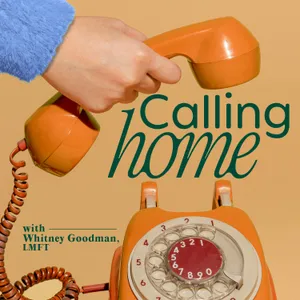
CALLING HOME with Whitney Goodman, LMFT: Daily Summaries Delivered
by Calling Home
Whitney Goodman is a licensed marriage and family therapist and author on a mission to help adult family members have better relationships. Each week, Whitney has conversations with influential guests and real people to help listeners find new ways of looking at old family problems.Calling Home is available every Tuesday and Thursday wherever you get your podcasts. Hosted on Acast. See acast.com/privacy for more information.
Latest Episodes
The most recent episodes — sign up to get AI-powered summaries of each one.
- Yesterday25 min
Myth of the Bad Seed: The Dangerous Belief That Some Children Are Just Broken
“He's been hard since the day he was born.” “Something in her is just off, and always has been.” “Is there something broken with my child?” Whitney traces questions and the fears beneath them to a centuries old belief that some people are simply born bad. It’s a belief that has changed costumes across religion, science, and psychology but never fully gone away. Whitney brings questions like these into the present for the parents living with a child with a mental illness, an addiction, or a disability they can't fix.In this episode, you'll learn:- How the "born bad" idea traveled across history- Why temperament is real but more complicated than you think- How to recognize these fears if you were the "problem child" so you don't hand it downWhitney Goodman is a Licensed Marriage and Family Therapist (LMFT) and the founder of Calling Home, a membership community that helps people navigate complex family dynamics and break harmful cycles.Have a question for Whitney? Send a voice memo or email to whitney@callinghome.coJoin the Family Cyclebreakers Club: https://callinghome.coFollow Whitney on Instagram | sitwithwhitFollow Whitney on YouTube | @whitneygoodmanlmftOrder Whitney's book, Toxic Positivity: https://sitwithwhit.com/toxic-positivitySign up for updates on Whitney's new book: https://cmnyyv4kpyt.typeform.com/to/PHMzjy0oThis podcast is for informational purposes only and is not a substitute for professional mental health advice. Hosted on Acast. See acast.com/privacy for more information.
- 6 days ago31 min
Radical Acceptance in Families That Won't Meet You Halfway
How do you keep giving to a relationship that isn't giving much back? How do you know when you've finally done enough? In this Q&A episode, Whitney answers two questions that arrived from very different places but land in the same spot: radical acceptance. First, a woman exhausted by in-laws who never make the drive, never offer help, and never seem to notice the effort going one direction. Second, a woman whose gone no contact with parents who keep leaving her voicemails claiming they have no idea why.Whitney Goodman is a Licensed Marriage and Family Therapist (LMFT) and the founder of Calling Home, a membership community that helps people navigate complex family dynamics and break harmful cycles.Have a question for Whitney? Send a voice memo or email to whitney@callinghome.coJoin the Family Cyclebreakers Club: https://callinghome.coFollow Whitney on Instagram | sitwithwhitFollow Whitney on YouTube | @whitneygoodmanlmftOrder Whitney's book, Toxic Positivity: https://sitwithwhit.com/toxic-positivitySign up for updates on Whitney's new book: https://cmnyyv4kpyt.typeform.com/to/PHMzjy0oThis podcast is for informational purposes only and is not a substitute for professional mental health advice. Hosted on Acast. See acast.com/privacy for more information.
- 1 weeks ago30 min
When Your Family Runs On Blame
Something goes wrong at home. A glass tips over. Someone forgot to change the laundry, unload the dishwasher. The dog escapes. Within seconds there's a full trial underway about whose fault it is. Whitney breaks down what's actually happening in families that run on blame.In this episode, you'll learn:Why blame feels like accountability but actually prevents itHow the scapegoat and golden child both learn about faultThe three-part anatomy of real repairWhat to do when you can repair and your family can’tHow to stop the cycle blame with your own kidsWhitney Goodman is a Licensed Marriage and Family Therapist (LMFT) and the founder of Calling Home, a membership community that helps people navigate complex family dynamics and break harmful cycles.Have a question for Whitney? Send a voice memo or email to whitney@callinghome.coJoin the Family Cyclebreakers Club: https://callinghome.coFollow Whitney on Instagram | sitwithwhitFollow Whitney on YouTube | @whitneygoodmanlmftOrder Whitney's book, Toxic Positivity: https://sitwithwhit.com/toxic-positivitySign up for updates on Whitney's new book: https://cmnyyv4kpyt.typeform.com/to/PHMzjy0oThis podcast is for informational purposes only and is not a substitute for professional mental health advice. Hosted on Acast. See acast.com/privacy for more information.
- 1 weeks ago28 min
My Sister Didn't Survive Our Family
Content warning: This episode discusses childhood abuse, domestic violence, racial slurs, and the death of a sibling.In this Q&A episode, Whitney reads a single letter from a woman who survived a childhood of severe violence, lost her sister at 24, and is now permanently no contact with a family system that still minimizes what happened. Whitney takes the letter in pieces and answers all three of her questions.In this episode, you'll learn:How to grieve a sibling whose life was overshadowed by abuse, without reducing them to what was done to themWhy thriving after you escape is not a betrayal of the people who didn'tWhat it means when an entire family, including the abuser, admits the violence happened and still asks you to come backWhy grief and boundary-holding almost always have to happen at the same timeWhitney Goodman is a Licensed Marriage and Family Therapist (LMFT) and the founder of Calling Home, a membership community that helps people navigate complex family dynamics and break harmful cycles.Have a question for Whitney? Send a voice memo or email to whitney@callinghome.coJoin the Family Cyclebreakers Club: https://callinghome.coFollow Whitney on Instagram | sitwithwhitFollow Whitney on YouTube | @whitneygoodmanlmftOrder Whitney's book, Toxic Positivity: https://sitwithwhit.com/toxic-positivitySign up for updates on Whitney's new book: https://cmnyyv4kpyt.typeform.com/to/PHMzjy0oThis podcast is for informational purposes only and is not a substitute for professional mental health advice. Hosted on Acast. See acast.com/privacy for more information.
- 2 weeks ago56 min
How to Raise An Emotionally Mature Child with Dr. Lindsay Gibson
Dr. Lindsay Gibson's first book, Adult Children of Emotionally Immature Parents, gave millions of people language for what happened to them growing up. Her new book flips the lens for the people who are now raising kids of their own and are quietly terrified of passing it all down. Whitney sits down with her to talk about what actually builds emotional maturity in a child, and what to do in the moments your own immaturity shows up.In this episode, you'll learn:Why the fear of becoming your own parents is often a sign you won'tWhat emotional maturity actually looks like at different ages, from newborn to teenagerWhy ruling through fear works in the short term and costs you the relationship long termHow to repair with your child in a way that actually changes the pattern instead of pseudo-apologizingWhy you don't have to be the perfect source of everything for your kidConnect with Dr. Lindsay GibsonGet her new book, How to Raise an Emotionally Mature Child: https://amzn.to/4fbX135 [this is an affiliate link - as an Amazon Associate, I earn from qualifying purchases at not additional cost to you.]Whitney Goodman is a Licensed Marriage and Family Therapist (LMFT) and the founder of Calling Home, a membership community that helps people navigate complex family dynamics and break harmful cycles.Have a question for Whitney? Send a voice memo or email to whitney@callinghome.coJoin the Family Cyclebreakers Club: https://callinghome.coFollow Whitney on Instagram | sitwithwhitFollow Whitney on YouTube | @whitneygoodmanlmftOrder Whitney's book, Toxic Positivity: https://sitwithwhit.com/toxic-positivitySign up for updates on Whitney's new book: https://cmnyyv4kpyt.typeform.com/to/PHMzjy0oThis podcast is for informational purposes only and is not a substitute for professional mental health advice. Hosted on Acast. See acast.com/privacy for more information.
- 2 weeks ago33 min
My Mom Chose Her Marriage with My Cheating Dad Over Me
In this Q&A episode, Whitney answers two questions from people trying to figure out where acceptance ends and cutting off begins. First, a woman who thought her mom was finally going to leave her father after a major blowup involving favoritism, triangulation, and infidelity, only to watch her mom stay and start calling her the difficult one instead. Second, a new mother whose parents made her postpartum period worse instead of better, and who's now wondering whether sending a birthday card is worth it after a year and a half of near silence.Whitney Goodman is a Licensed Marriage and Family Therapist (LMFT) and the founder of Calling Home, a membership community that helps people navigate complex family dynamics and break harmful cycles.Have a question for Whitney? Send a voice memo or email to whitney@callinghome.coJoin the Family Cyclebreakers Club: https://callinghome.coFollow Whitney on Instagram | sitwithwhitFollow Whitney on YouTube | @whitneygoodmanlmftOrder Whitney's book, Toxic Positivity: https://sitwithwhit.com/toxic-positivitySign up for updates on Whitney's new book: https://cmnyyv4kpyt.typeform.com/to/PHMzjy0oThis podcast is for informational purposes only and is not a substitute for professional mental health advice. Hosted on Acast. See acast.com/privacy for more information.
- 3 weeks ago1h 3m
Can You Be Brainwashed Into Estrangement?
Estranged parents often say: “We had a perfect relationship, and then something to them. Social media. A therapist. A partner. Their other parents. They were brainwashed. In this episode, Whitney takes that fear seriously and gives it an honest, research-informed answer.This episode explores:The real history of brainwashingWhat social media can and can’t doIf therapists can implant grievances into clientsHow the brainwashing framework offers comfortSources:https://docs.google.com/document/d/1M0YYHl6m_W2HeEAIa5DhM4lH6VdVmhAxTyUuEuG6qXo/edit?usp=sharingWhitney Goodman is a Licensed Marriage and Family Therapist (LMFT) and the founder of Calling Home, a membership community that helps people navigate complex family dynamics and break harmful cycles.Have a question for Whitney? Send a voice memo or email to whitney@callinghome.coJoin the Family Cyclebreakers Club: https://callinghome.coFollow Whitney on Instagram | sitwithwhitFollow Whitney on YouTube | @whitneygoodmanlmftOrder Whitney's book, Toxic Positivity: https://sitwithwhit.com/toxic-positivitySign up for updates on Whitney's new book: https://cmnyyv4kpyt.typeform.com/to/PHMzjy0oThis podcast is for informational purposes only and is not a substitute for professional mental health advice. Hosted on Acast. See acast.com/privacy for more information.
- 3 weeks ago28 min
When is it Time to Accept That Your Parents Were Not Who You Needed Them to Be?
One of the harder truths of estrangement is coming to terms with the fact that your parent was not who you needed them to be and in many cases is not going to become that person. In this episode’s Q&A, two questions circle that theme. First, a couple with two young children trying to integrate not one, but two sets of critical and unsupportive grandparents into their family. Second, a woman asks how to ever reach true acceptance when you’re stuck between anger and still wanting them to be different.Note: Due to a recording issue, part of Whitney's response to the second question was lost. Apologies for the briefer response to the second question!Whitney Goodman is a Licensed Marriage and Family Therapist (LMFT) and the founder of Calling Home, a membership community that helps people navigate complex family dynamics and break harmful cycles.Have a question for Whitney? Send a voice memo or email to whitney@callinghome.coJoin the Family Cyclebreakers Club: https://callinghome.coFollow Whitney on Instagram | sitwithwhitFollow Whitney on YouTube | @whitneygoodmanlmftOrder Whitney's book, Toxic Positivity: https://sitwithwhit.com/toxic-positivitySign up for updates on Whitney's new book: https://cmnyyv4kpyt.typeform.com/to/PHMzjy0oThis podcast is for informational purposes only and is not a substitute for professional mental health advice. Hosted on Acast. See acast.com/privacy for more information.
About CALLING HOME with Whitney Goodman, LMFT
Whitney Goodman is a licensed marriage and family therapist and author on a mission to help adult family members have better relationships. Each week, Whitney has conversations with influential guests and real people to help listeners find new ways of looking at old family problems.Calling Home is available every Tuesday and Thursday wherever you get your podcasts. Hosted on Acast. See acast.com/privacy for more information.
Customized Recaps
AI-powered recaps with compact key takeaways, quotes, and insights.
Straight to Your Inbox
Get key takeaways from CALLING HOME with Whitney Goodman, LMFT in a 5-minute read.
Save Hours Every Week
Stay current on your favorite podcasts without falling behind.
Frequently Asked Questions
What is Podzilla's CALLING HOME with Whitney Goodman, LMFT daily summary?
It's a free AI-powered email that summarizes new episodes of CALLING HOME with Whitney Goodman, LMFT as soon as they're published. You get the key takeaways, notable quotes, and links & mentions — all in a quick read.
How does the CALLING HOME with Whitney Goodman, LMFT podcast summary work?
When a new episode drops, our AI transcribes and analyzes it, then generates a personalized summary tailored to your interests and profession. It's delivered to your inbox every morning.
Is this an official CALLING HOME with Whitney Goodman, LMFT product?
No. Podzilla is an independent service that summarizes publicly available podcast content. We're not affiliated with or endorsed by Calling Home.
Can I get summaries of other podcasts too?
Absolutely! The free plan covers up to 3 podcasts. Upgrade to Pro for 15, or Premium for 50. Browse our full catalog at /podcasts.
How often does CALLING HOME with Whitney Goodman, LMFT release new episodes?
CALLING HOME with Whitney Goodman, LMFT publishes 2x weekly. Our AI generates a summary within hours of each new episode.
What topics does CALLING HOME with Whitney Goodman, LMFT cover?
CALLING HOME with Whitney Goodman, LMFT covers topics including Education, Fitness, Relationships, Culture, Health & Fitness, Society & Culture, Self-Improvement. Our AI identifies the specific themes in each episode and highlights what matters most to you.
Start getting CALLING HOME with Whitney Goodman, LMFT summaries tomorrow morning.
Free forever for up to 3 podcasts. No credit card required.
Free forever for up to 3 podcasts. No credit card required.