Free Daily Podcast Summary
Cannabis Cultivation and Science Podcast: Daily Summaries Delivered
by Tad Hussey
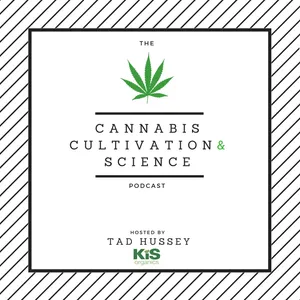
Welcome to the Cannabis Cultivation and Science podcast, I’m your host, Tad Hussey of KIS Organics. This is the podcast where we discuss the cutting edge of organic growing from a science based perspective and draw in top experts from around the industry to share their wisdom and knowledge. If you want to hear the latest in growing technology and methods, this is the place.
Latest Episodes
The most recent episodes — sign up to get AI-powered summaries of each one.
- Aug 19, 20261h 8m
Episode 170: Unlocking Soil Potential: Dr. Colin Bell on Microbial Consortia, Rhizosphere Ecology, and Mammoth P
Key Takeaways & Highlights Mammoth P Relaunch & Product Updates The Return: After stepping away in late 2022 and spending three years working with the Microbial Mass Pro team, Colin bought back and officially relaunched the Mammoth brand. ~70% Price Reduction: Streamlined, scalable manufacturing allowed Colin to drop the price by roughly 70% compared to legacy pricing, making it significantly more accessible for all growers. 3-Year Shelf Life: A subtle reformulation extends the active, non-spore liquid shelf life out to three full years. Application Rate: Continuous weekly applications at 0.6 mL per gallon throughout veg and bloom yield the best results across all substrates (living soil, hydro, coco, and rockwool). Mammoth P vs. Microbial Mass Pro Mammoth P: Uses active (motile), non-spore-forming bacteria selected directly from natural soil samples to liberate phosphorus and trace metals like iron. It is carried in an organic, alfalfa-derived liquid medium. Microbial Mass Pro: Uses dormant Bacillus endospores suspended in a clean, synthetic-like solution. While Bacillus spores require 24–48 hours to germinate once applied, active motile strains start functioning immediately upon contact with the root zone. The Power of Consortia Microbes in nature do not work in isolation. Multi-species consortia offer synergistic functionality (1+1+1+1 = 5, 6, or 7) and greater ecological adaptability across changing pH, moisture levels, and soil micro-pores than single-species products. Addressing Common Grower Myths Brewing into Compost Tea: Discouraged. Tank brewing introduces unpredictable competitive dynamics, risks losing the intended consortia balance, and isn't necessary given the product's concentration and price point. The Triacontanol Myth: Alfalfa meal is used strictly as a carbon and nitrogen source to feed the bacteria, undergoing heavy boiling and filtration to sterilize the media. Independent testing confirmed triacontanol levels were untraceable or present in negligible parts-per-billion amounts—it is not the driver of performance. Pathogen Concerns: Colin debunked rumors regarding human pathogens, explaining strain specificity (the same way safe E. coli strains differ from harmful ones) and highlighting full regulatory approval across international agricultural departments. Hosted by Simplecast, an AdsWizz company. See pcm.adswizz.com for information about our collection and use of personal data for advertising.
- Jul 29, 202659 min
Episode 169: Uncovering THC Potency Variability with Cannabis ChemLab
This episode covers the key scientific drivers behind lab result variability, from instrument calibration down to field sampling practices. Understanding Reference Standards: How analytical instruments use commercially available reference standards to construct calibration curves for testing unknown samples. The Potency Variability Study: Insights from Cannabis ChemLab’s study overlaying 35 different THCA standards, demonstrating how variance between standard manufacturers and product lots leads to drastic differences in reported THC percentages. The Mechanism of Potency Inflation: How calibration curves at the high end of concentration explain "impossible" lab results exceeding 100% cannabinoids in concentrates and diamonds. Neutral vs. Acidic Cannabinoids: Why acidic forms like THCA and CBDA present significantly more analytical variability in the lab compared to decarboxylated neutral forms found in edibles. Heavy Metals and Fertilizer Inputs: An in-depth discussion on ICP-MS heavy metal testing, identifying soil amendments like fishbone meal as a primary source of arsenic accumulation in living soil. Dispelling Marketing Claims: Why ocean-based inputs are not inherently cleaner than other fertilizers, and why growers must screen raw materials rather than relying on marketing claims. Agronomic Mitigation Strategies: How plant biology and strategic tissue management, such as utilizing older lower leaves as heavy metal sinks, can help keep heavy metals out of the final flower. Navigating Unexpected Results: Practical steps for cultivators when faced with surprising lab data, including when a flower batch warrants resampling versus when a process error has occurred. Hosted by Simplecast, an AdsWizz company. See pcm.adswizz.com for information about our collection and use of personal data for advertising.
- Jul 16, 20261h 10m
Episode 168: Is It Really "Bad Weed"? The Science and Data of CHS with Dr. Codi Peterson
The Reality of CHS and the 1,100+ Patient Study Dr. Peterson highlights the scope of his landmark survey, which gathered data from 1,134 CHS sufferers. The study reveals that CHS is not an acute reaction to a single session, but rather a chronic, low-level dysregulation of the endocannabinoid system (ECS) that predominantly impacts heavy, long-term consumers. Frequency of Use: 96.5% of study participants consumed cannabis daily, and 45% consumed more than six times per day. The "Buoy" Metaphor: Dr. Peterson explains the ECS as a master regulatory buoy. While occasional cannabis use gently nudges the buoy, chronic high-dose THC overstimulation completely knocks it over, triggering the cyclical vomiting state. Vapes vs. Flower: The Onset Timeline One of the most significant findings of the paper is how the method of inhalation changes how quickly CHS develops. Vaporizing: Exclusive vapers reported symptoms starting within 1 to 2 years of beginning use. Smoking Flower: Flower smokers took significantly longer to develop CHS, with the most common timeline being 10 years or more. Debunking the Pesticide and Neem Oil Myths A popular theory in the cannabis community is that CHS is actually pesticide or neem oil poisoning. Dr. Peterson challenges this theory using clinical toxicology: The Sourcing Data: Sufferers in the study reported identical CHS symptoms regardless of whether they got their weed from licensed dispensaries, illicit sources, or their own pesticide-free home grows. Neem Oil Toxicity: Ingesting neem oil causes immediate nausea, alongside severe clinical signs like liver damage, seizures, and brain swelling—none of which are observed in CHS patients. Pesticide Toxidromes: Known pesticide exposures (like organophosphates) present with highly specific chemical "toxidromes" that look nothing like cyclical vomiting. Gender Differences in Symptom Severity The study revealed a stark contrast in how CHS manifests between sexes: Men: Frequently reported shorter hyperemetic episodes, often lasting only 1 day. Women: Suffered statistically longer and more severe episodes, with the most common duration being 3 to 5 days, and over 10% suffering for 10 or more days of continuous vomiting. Recognizing the Prodrome and Navigating Recovery The Prodrome Phase: This early warning phase involves morning nausea, abdominal pain, heartburn, and hot/cold flashes. It can linger in the background for years before a full vomiting episode occurs. The Path to Healing: While the clinical textbook demands absolute abstinence, Dr. Peterson shares real-world data showing how patients actually navigate recovery, the limitations of hot baths as temporary relief, and the potential future role of minor cannabinoids like CBG for harm reduction. Hosted by Simplecast, an AdsWizz company. See pcm.adswizz.com for information about our collection and use of personal data for advertising.
- Jun 30, 202654 min
Episode 167: Genetic Degradation in Propagation: Why Clones Lose Vigor Over Time
The Mechanics of Genetic Drift Plants are natural genetic mosaics. As they grow and divide over time, typos naturally accumulate in their DNA code, which are known as somatic mutations. Traditional vegetative cuttings and field-grown plants accumulate these mutations at a very low, linear baseline rate over decades. However, the extreme genomic degradation highlighted in the paper is driven by rapid generational cell cycling in vitro. Forcing an unorganized mass of cells to constantly divide and regenerate bypasses the plant's normal cellular quality control checkpoints. Somatic Embryos vs. Meristem Cultures Somatic embryogenesis involves stripping a plant down to a single cell or callus phase to regenerate an embryo. This is considered high risk for mutations because if the founder cell contains a mutation, that mutation becomes permanently fixed in every single cell of the thousands of plants propagated from it. This differs from meristem tip culture, which is the low risk, predominant form of tissue culture used in cannabis for clearing Hop Latent Viroid. Because meristem tip culture preserves the existing, highly organized architecture of the shoot apical meristem rather than forcing single cells to reprogram, the genetic risk is fundamentally lower. DNA Typos vs. Chromosome Catastrophes The high-stress cell cycling environment caused macroscopic genomic errors, such as whole-chromosome duplications called trisomies. In the walnut clones, these large-scale errors made it incredibly difficult to grow the tissue back out into healthy adult plants. The stress of rapid lab cell cycling also desilenced transposable elements, or jumping genes, allowing pieces of DNA to insert themselves randomly throughout the genome and disrupt normal gene expression. It is worth noting that not all mutations are bad. Small point mutations, or single base changes, happen constantly in nature as life being life. Most occur in non-coding regions and have zero impact, while a rare few can actually create desirable new traits as seen historically in citrus and wine grapes. Genetics vs. Epigenetics The guests distinguish between true genetic mutations, which are permanent changes to the A, C, T, G code, and epigenetic modifications, which act like chemical bookmarks such as methylation that change how a gene is read without altering the underlying sequence. Some instances of a mother plant losing vigor may actually be epigenetic shifts caused by environmental stress or endophyte and pathogen buildup over time, rather than a permanent genetic mutation. Actionable Advice for Cannabis Nurseries Commercial operations scaling up clones to the tens of thousands should utilize genetic sequencing early in the pipeline. Testing the early founder material can easily catch large-scale catastrophic mutations like chromosome duplications or deletions, protecting the nursery from mass-producing defective production plants. Whole-genome sequencing costs have plummeted significantly, and the guests encourage cultivators and nursery operators with unique, degenerating, or shifting clonal lines to collaborate with academic labs to sequence the data and map exactly what is changing. Guest Information and Contact Details J. Grey Monroe is an Associate Professor in the Department of Plant Sciences and the Genome Center at UC Davis. His lab studies how mutations arise across genomes, DNA repair, epigenomics, and genome evolution in plants, with applications in crop improvement and protection. Lab website: https://monroelab.org/ Email: gmonroe@ucdavis.edu Matthew Davis is a fifth year PhD candidate in the Plant Biology Graduate Group co-advised by Grey Monroe and Pat J. Brown. His research focuses on somatic mutation in orchard crops, an understudied genetic process that directly affects one of California’s largest agricultural industries. Bluesky: @davismw.bsky.social Email: mtdavis@ucdavis.edu Research Links and Resources Peer-Reviewed Paper: https://www.pnas.org/doi/10.1073/pnas.2530182123 Shorter general audience article: https://www.ucdavis.edu/blog/not-all-clones-are-created-equal Slightly longer general audience article: https://www.plantsciences.ucdavis.edu/news/davis-monroe-somatic-mutations Hosted by Simplecast, an AdsWizz company. See pcm.adswizz.com for information about our collection and use of personal data for advertising.
- Jun 10, 20261h 11m
Episode 166: Debunking Cannabis Cultivation Myths with Dr. Deron Caplan
In this conversation, host Tad Hussey (KIS Organics) and Dr. Deron Caplan (CannaCribs Horticulture Consulting) discuss the intersection of agricultural science and commercial cannabis cultivation, focusing heavily on irrigation, lighting, and research methodologies. Drought Stress vs. Drybacks: Dr. Caplan clarifies a major industry misconception by distinguishing standard irrigation "drybacks" from actual "drought stress." He explains that drybacks work primarily by pulling oxygen into the root zone (which cannabis loves), whereas true drought stress requires pushing the plant past the point of water availability. The Nuance of Cannabinoid Bumps: While Dr. Caplan’s landmark PhD research found that controlled drought stress in week seven of flowering could boost THC/CBD content by 30% to 40% without losing yield, he notes that repeating this in smaller pots with faster drybacks yielded no positive results. This highlights just how incredibly nuanced and difficult it is to trigger beneficial plant stress without harming the crop. Organics vs. Mineral Salts at Scale: The two debate the logistics of commercial cultivation. While mineral salts offer strict baseline consistency and easier pathogen sterilization for medical export markets, Dr. Caplan notes that data-driven, evidence-based living soil systems have come a long way and are proving to be increasingly scalable. Debunking the Leaf-Tip Cloning Myth: Dr. Caplan shares that his early research on propagation disproved a ubiquitous legacy market myth: cutting the tips off clone leaves actually reduces rooting success, unless leaves are so large that they are actively shading adjacent clones. Advanced Canopy Management: They discuss the massive yield and quality benefits (15% to 20% increases) of under-canopy lighting (UCL). Dr. Caplan details how commercial facilities can use a PAR meter to calculate the Leaf Area Index (LAI) to mathematically standardize how much foliage to prune, rather than relying on visual guesswork. The Future of Research: Dr. Caplan highlights his new commercial R&D facility in Canada designed to test applied science practices. They close by discussing the validity of peer-reviewed data versus private white papers, concluding that regardless of a grower's background, scientific data is the ultimate tool for bridging the gap between organic and conventional cultivation. Hosted by Simplecast, an AdsWizz company. See pcm.adswizz.com for information about our collection and use of personal data for advertising.
- May 19, 20261h 6m
Episode 165: Boosting Yields 50% with a 13-Hour Photoperiod? Debunking Cannabis Science with Dr. Youbin Zheng
In this episode, we discuss: Bridging the Genetic Gap: Looking critically at how horticultural research transfers between high-THC cultivars and industrial hemp. The 13-Hour Photoperiod: Breaking the traditional 12/12 cycle to achieve a 39%–50% yield increase and a 9% THC boost. Linear Light Scaling: The direct relationship between light intensity and flower yield scaling all the way up to 1,800 micromoles under ambient CO2. The UV Reality Check: Why modern high-THC genetics actually showed a decrease in final cannabinoid and terpene content under supplemental UVA and UVB. Light Response Curves: Why relying on a single leaf measurement to guide your facility's light saturation point is fundamentally flawed. The Veg-to-Flower Transition: Practical SOPs for adjusting PPFD and DLI safely without shocking your canopy. Controlled Deficit Irrigation: How a single, targeted late-flower drought stress event triggers a 12%–13% spike in final THC and CBD content. The 60 PPM Phosphorus Rule: Looking at the established replication data proving that excess phosphorus wastes money, reduces yield efficiency, and impacts the environment. Links & Resources Mentioned in This Episode: Visit KIS Organics for commercial living soils, amendments, and consulting: https://www.kisorganics.com Grab Dr. Zheng's textbook, Handbook of Cannabis Production in Controlled Environments: https://www.amazon.com/Handbook-Cannabis-Production-Controlled-Environments/dp/0367712571 Access Dr. Zheng’s open-access research papers on Google Scholar: https://scholar.google.com/citations?user=ciGdnWAAAAAJ&hl=en Connect with us on Instagram: @kisorganics Hosted by Simplecast, an AdsWizz company. See pcm.adswizz.com for information about our collection and use of personal data for advertising.
- Apr 29, 20261h 5m
Episode 164: Mycotoxins & Microclimates: The Science of Cannabis Pathology with Dr. Nicole Gauthier
o keep the audience engaged while highlighting the technical value of the episode, this version focuses on the "why" and the high-level takeaways, leaving the "how" for the audio. Podcast Summary In this episode, Tad Hussey of KIS Organics talks with plant pathologist Dr. Nicole Gauthier to separate fact from fiction regarding cannabis pathogens. The discussion moves past the basics of "mold" to look at the specific science of Fusarium, Botrytis, and the reality of mycotoxins in the supply chain. From the limitations of soil testing to the importance of bud microclimates, Dr. Gauthier provides a professional framework for understanding how plant diseases actually function and how to manage them without relying on "curative" myths. Key Takeaways The Mycotoxin Reality: Why species identification matters more than ever, and a look at which common pathogens actually pose a toxic risk to consumers. Microclimates vs. Room Environment: Understanding why your sensors might say your room is safe while your "chunky buds" are harboring high-humidity infections. The Problem with Broad Testing: A critical look at why generic soil tests and "Total Yeast and Mold" plates often provide misleading or incomplete data for growers. Biological Controls & SAR: The science of "priming" a plant’s immune system and the differing persistence levels of Bacillus and Trichoderma on the leaf surface. The Pathology "Lightning Round": Dr. Gauthier’s professional advice on sanitation protocols, rogueing diseased plants, and the most effective ways to manage an outbreak. Featured Expert Dr. Nicole Gauthier is a researcher and extension specialist at the University of Kentucky. Her work focuses on sustainable disease management and helping growers navigate the intersection of plant health and regulatory compliance. Hosted by Simplecast, an AdsWizz company. See pcm.adswizz.com for information about our collection and use of personal data for advertising.
- Apr 21, 20261h 2m
Episode 163: Concrete Botany: Reconnecting with the Living World in the Age of Disturbance with Joey Santore
Key Takeaways & Discussion Highlights The Railroad Roots: Joey’s transition from a Union Pacific engineer to a "vigilante botanist." He discusses the influence of Carl Sagan’s The Demon-Haunted World and using science as a "candle in the dark" in a consumerist society. Botany for the "Jaded Working Class": Why academic botany often fails to connect with the public and why Joey targets the "cynical, maladjusted stiff" who needs the living world the most. Horticultural Atrocities: A critique of "horticultural fluff"—boxwoods, crepe myrtles, and cloned cultivars that offer no ecological value. Joey explains why he’d rather see a lawn than a line of "garbage" cultivars. The Concrete Cage & Mental Health: How our disconnection from the land and our "unwalkable sprawling excerpts" contribute to a massive mental health crisis. The Field Record: Joey’s process in the wild—using iNaturalist, herbarium vouchers, and photography to document the "living machine." Geology & Evolution: An exploration of edaphic endemics (plants that grow only on specific soils like serpentine or gypsum) and how stressful geology creates new species. Disturbance Ecology: Why "weeds" are actually pioneer species and how disturbance—when understood correctly—is the engine that enables diversity. Beyond "Is it Edible?": Why the question "Can I eat it?" is the most common and least interesting way to interact with a plant. Concrete Botany: A preview of Joey’s new book and his fascination with "unintentional ecology" in neglected urban spaces like railroad tracks and abandoned warehouses. Resources Mentioned Book: Concrete Botany: The Ecology of Plants in the Age of Human Disturbance (Released April 2026) YouTube/Podcast: Crime Pays But Botany Doesn’t App: iNaturalist (Joey’s primary tool for citizen science) Literature: The Demon-Haunted World by Carl Sagan Project: Thornscrub Sanctuary (South Texas conservation) Hosted by Simplecast, an AdsWizz company. See pcm.adswizz.com for information about our collection and use of personal data for advertising.
Get Cannabis Cultivation and Science Podcast summaries in your inbox
Free AI-powered daily recaps. Key takeaways, quotes, and mentions — in a 5-minute read.
Get Free Summaries →Free forever for up to 3 podcasts. No credit card required.
You Might Also Like
Listeners also like.
High on Home Grown, The Cannabis Podcast
Cannabis growers from multiple countries discuss cultivation, news, and interviews with industry figures and medical patients.
Mushroom Revival Podcast
Explores the role of fungi in health, science, technology, and culture.
Cannabis Talk 101
Discusses cannabis benefits, laws, and industry issues while challenging stereotypes and supporting the community.
In Defense of Plants Podcast
Explores the fascinating world of plants, from tiny duckweeds to towering redwoods, celebrating the science and wonder of botany.

PSYCHOACTIVE
Explores humanity's complex relationship with drugs through conversations with users, experts, and critics.
Growing For Market Podcast
Practical advice for small-scale farmers and market gardeners on growing and selling produce, flowers, and plants profitably.

Black in the Garden
Explores the intersection of Black culture and gardening through conversations about plants, identity, and community.
Farm Small Farm Smart Daily
A daily podcast covering practical farming and gardening topics, from soil prep to marketing, for small-scale growers.
Gastropod
Explores the science and history behind food and farming, from ancient feasts to modern aquaculture and everything in between.

Thinking Health Podcast
Explores health and wellness through expert interviews, focusing on low-carb science and practical strategies for improving well-being.

Huberman Lab
Explores neuroscience and science-based tools for understanding and improving brain function, behavior, and health.

The Beginner's Garden with Jill McSheehy
A practical guide for new gardeners, breaking down gardening basics and terminology to help beginners grow confidently.
About Cannabis Cultivation and Science Podcast
Welcome to the Cannabis Cultivation and Science podcast, I’m your host, Tad Hussey of KIS Organics. This is the podcast where we discuss the cutting edge of organic growing from a science based perspective and draw in top experts from around the industry to share their wisdom and knowledge. If you want to hear the latest in growing technology and methods, this is the place.
Customized Recaps
AI-powered recaps with compact key takeaways, quotes, and insights.
Straight to Your Inbox
Get key takeaways from Cannabis Cultivation and Science Podcast in a 5-minute read.
Save Hours Every Week
Stay current on your favorite podcasts without falling behind.
Frequently Asked Questions
What is Podzilla's Cannabis Cultivation and Science Podcast daily summary?
It's a free AI-powered email that summarizes new episodes of Cannabis Cultivation and Science Podcast as soon as they're published. You get the key takeaways, notable quotes, and links & mentions — all in a quick read.
How does the Cannabis Cultivation and Science Podcast podcast summary work?
When a new episode drops, our AI transcribes and analyzes it, then generates a personalized summary tailored to your interests and profession. It's delivered to your inbox every morning.
Is this an official Cannabis Cultivation and Science Podcast product?
No. Podzilla is an independent service that summarizes publicly available podcast content. We're not affiliated with or endorsed by Tad Hussey.
Can I get summaries of other podcasts too?
Absolutely! The free plan covers up to 3 podcasts. Upgrade to Pro for 15, or Premium for 50. Browse our full catalog at /podcasts.
How often does Cannabis Cultivation and Science Podcast release new episodes?
Cannabis Cultivation and Science Podcast publishes biweekly. Our AI generates a summary within hours of each new episode.
What topics does Cannabis Cultivation and Science Podcast cover?
Cannabis Cultivation and Science Podcast covers topics including Leisure, Science, Garden, Natural Sciences, Home & Garden. Our AI identifies the specific themes in each episode and highlights what matters most to you.
Start getting Cannabis Cultivation and Science Podcast summaries tomorrow morning.
Free forever for up to 3 podcasts. No credit card required.
Free forever for up to 3 podcasts. No credit card required.