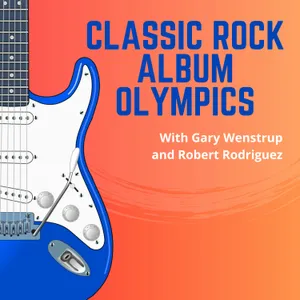
Free Daily Podcast Summary
Classic Rock Album Olympics: Daily Summaries Delivered
by Evergreen Podcasts
The CLASSIC ROCK ALBUM OLYMPICS is a podcast celebrating the most popular albums of the 1960s, 70s and 80s. In each episode music historians Gary Wenstrup and Robert Rodriguez will pull a classic rock album off the shelf and discuss which songs earn our gold, silver and bronze medals. It's a fun, insightful and passionate journey through some of the greatest albums of all-time. Let the games begin!
Latest Episodes
The most recent episodes — sign up to get AI-powered summaries of each one.
- 1 weeks ago55 min
Heart Like A Wheel by Linda Ronstadt...Episode #32
In this episode of Classic Rock Album Olympics music historians Gary Wenstrup and Robert Rodriguez roll Linda Ronstadt's Heart Like A Wheel to select their favorite tracks and award their gold, silver and bronze medals accordingly. Medal Winners Faithless Love Heart Like A Wheel You're No Good Keep Me From Blowing Away When Will I Be Loved Bonus Tracks Different Drum – Stone Ponys Different Drum- Mike Nesmith Long Long Time – Linda Ronstadt Dark End Of The Street – Flying Burrito Brothers The Dark End Of The Street – James Carr Making Love (At The Dark End Of The Street) – Clarence Carter It's So Easy – Linda Ronstadt That'll Be The Day – Linda Ronstadt Blue Bayou – Linda Ronstadt Heart Of Gold – Neil Young You're So Vain – Carly Simon Lonely Boy – Andrew Gold Thank you For Being A Friend – Andrew Gold You're No Good – Betty Everett The Game Of Love – Mindbenderrs The Thrill Is Gone – B.B. King Heart Like A Wheel – Anna McGarrigle Drop Kick Me, Jesus - Paul Craft/Bobby Bare I Will Never Marry – Linda Ronstadt You Can Close Your Eyes – Jame Taylor You Can Close Your Eyes – Linda Ronstadt You're No Good – Van Halen Cathy's Clown – Everly Brothers Willin' – Little Feat Willin' – Linda Ronstadt I Can't Help It (If I'm Still In Love With You) – Hank Williams It Doesn't Matter Anymore – Linda Ronstadt It Doesn't Matter Anymore – Buddy Holly You're Having My Baby – Paul Anka One Man Woman/One Woman Man – Paul Anka Released in November 1974, Heart Like a Wheel was Linda Ronstadt's fifth solo studio album and the record that made her into a major pop superstar. The album was produced by Peter Asher, who had also become Ronstadt's manager and was instrumental in establishing the polished yet emotionally powerful sound that would define her great albums of the 1970s. The musicians were an extraordinary collection of Los Angeles studio players and Ronstadt associates. Andrew Gold played guitar, piano, electric piano, drums and percussion and became one of the album's most important musical architects, while Kenny Edwards, Ronstadt's former Stone Poneys bandmate, played bass. The singles were particularly successful. "You're No Good" reached No. 1 on the Billboard Hot 100, giving Ronstadt her first No. 1 pop single and "When Will I Be Loved" reached No. 2 on the Hot 100. The albu
- 1 weeks ago58 min
Heart Like A Wheel by Linda Ronstadt...Episode #32
In this episode of Classic Rock Album Olympics music historians Gary Wenstrup and Robert Rodriguez roll Linda Ronstadt’s Heart Like A Wheel to select their favorite tracks and award their gold, silver and bronze medals accordingly. Medal Winners Faithless Love Heart Like A Wheel You’re No Good Keep Me From Blowing Away When Will I Be Loved Bonus Tracks Different Drum – Stone Ponys Different Drum- Mike Nesmith Long Long Time – Linda Ronstadt Dark End Of The Street – Flying Burrito Brothers The Dark End Of The Street – James Carr Making Love (At The Dark End Of The Street) – Clarence Carter It’s So Easy – Linda Ronstadt That’ll Be The Day – Linda Ronstadt Blue Bayou – Linda Ronstadt Heart Of Gold – Neil Young You’re So Vain – Carly Simon Lonely Boy – Andrew Gold Thank you For Being A Friend – Andrew Gold You’re No Good – Betty Everett The Game Of Love – Mindbenderrs The Thrill Is Gone – B.B. King Heart Like A Wheel – Anna McGarrigle Drop Kick Me, Jesus - Paul Craft/Bobby Bare I Will Never Marry – Linda Ronstadt You Can Close Your Eyes – Jame Taylor You Can Close Your Eyes – Linda Ronstadt You’re No Good – Van Halen Cathy’s Clown – Everly Brothers Willin’ – Little Feat Willin’ – Linda Ronstadt I Can’t Help It (If I’m Still In Love With You) – Hank Williams It Doesn’t Matter Anymore – Linda Ronstadt It Doesn’t Matter Anymore – Buddy Holly You’re Having My Baby – Paul Anka One Man Woman/One Woman Man – Paul Anka Released in November 1974, Heart Like a Wheel was Linda Ronstadt’s fifth solo studio album and the record that made her into a major pop superstar. The album was produced by Peter Asher, who had also become Ronstadt’s manager and was instrumental in establishing the polished yet emotionally powerful sound that would define her great albums of the 1970s. The musicians were an extraordinary collection of Los Angeles studio players and Ronstadt associates. Andrew Gold played guitar, piano, electric piano, drums and percussion and became one of the album’s most important musical architects, while Kenny Edwards, Ronstadt’s former Stone Poneys bandmate, played bass. The singles were particularly successful. “You’re No Good” reached No. 1 on the Billboard Hot 100, giving Ronstadt her first No. 1 pop single and “When Will I Be Loved” reached No. 2 on the Hot 100. The album itself was an even bigger success. Heart Like a Wheel became Ronstadt’s first No. 1 album on the Billboard. Its impact went far beyond sales. Heart Like a Wheel helped establish the template for the sophisticated country-rock/pop crossover that would dominate much of Ronstadt’s career and influence artists who followed. She demonstrated that an album could move effortlessly between rock, country, R&B, folk and pop without sounding stylistically confused. Just as importantly, Ronstadt became a major interpreter of songs by emerging writers such as J.D. Souther, Lowell George and Anna McGarrigle, often bringing their work to audiences far larger than those they could reach themselves. Ultimately, Heart Like a Wheel was the album that established the Linda Ronstadt formula: an extraordinary singer, first-rate musicians, carefully chosen songs, country roots and rock muscle, all held together by Peter Asher’s elegant production. It was both a commercial breakthrough and an artistic statement—and the beginning of one of the most successful recording careers by an American female artist of the 1970s. Track Listing Side 1 You’re No Good It Doesn’t Matter Anymore Faithless Love The Dark End Of The Street Heart Like A Wheel Side 2 When Will I Be Loved Willin’ I Can’t Help It (If I’m Still In Love With You) Keep Me From Blowing Away You Can Close Your Eyes #LindaRonstadt #HeartLikeAWheel #PeterAsher #AndrewGold #CountryRock #ClassicRock #RockHistory #1970sMusic #YoureNoGood #WhenWillIBeLoved #MusicHistory #AlbumHistory #Grammy #ClassicAlbums Contact Info Website: Gary Wenstrup Podcast Website: Home - Classic Rock Album Olympics YouTube: (556) Classic Rock Album Olympics - YouTube Facebook: (7) Facebook Podcast Facebook: Facebook LinkedIn: (17) Gary Wenstrup | LinkedIn Intro & Outro Music by Flwers Flwers Something About The Beatles Podcast somethingaboutthebeatles.com Learn more about your ad choices. Visit megaphone.fm/adchoices
- Sep 8, 20261h 6m
Automatic For The People by R.E.M...Episode #31
We know "the people" liked it. Did you? In this episode of Classic Rock Album Olympics music historians Gary Wenstrup and Robert Rodriguez analyze R.E.M.’s Automatic For The People add award their gold, silver and bronze medals to the album’s strongest tracks. Medal Winners Ignoreland Everybody Hurts Monty Got A Raw Deal Drive Find The River Released in October 1992, Automatic For The People is widely regarded as one of the defining albums of the 1990s and a peak artistic statement in R.E.M.'s career. Following the massive success of Out of Time, the band moved away from jangly college rock toward a more introspective and melancholic sound. The album’s themes revolve around mortality, aging, loss and memory, giving it a reflective tone that feels both intimate and cinematic. The album was produced by Scott Litt alongside R.E.M. A defining feature of the record is its use of orchestral instrumentation arranged by John Paul Jones (of Led Zeppelin). The production emphasizes acoustic guitars, piano, mellotron, strings, and restrained percussion, marking a stark contrast from the more energetic sound of their earlier work. R.E.M. at this time consisted of Michael Stipe, whose abstract, emotionally direct lyrics and distinctive vocal delivery anchor the album; Peter Buck, whose guitar work shifted toward mandolin, acoustic textures, and subtle melodic layering; Mike Mills, whose bass lines and harmony vocals provide emotional depth; and Bill Berry, whose understated drumming supports the album’s slower, more contemplative pacing. Together, the band created a unified sound that prioritizes mood and atmosphere over traditional rock dynamics. Commercially, Automatic for the People was a major worldwide success. It reached #2 on the Billboard 200 in the United States and charted highly across Europe, including #1 in the UK Albums Chart. The album produced several major singles. “Drive” became a top 30 hit in the United States and a standout track on alternative radio. “Man on the Moon” became one of the band’s signature songs, reaching #30 on the Billboard Hot 100. “Everybody Hurts” became one of R.E.M.’s most emotionally powerful and enduring songs, receiving extensive airplay worldwide and becoming an anthem for empathy and resilience. The cultural significance of Automatic for the People lies in its ability to bring introspective, even somber themes into mainstream rock at a massive commercial scale. At a time when alternative rock was becoming dominant in popular culture, R.E.M. demonstrated that vulnerability and emotional honesty could coexist with chart success. Bonus Tracks Radio Free Europe – R.E.M. Sexual Healing – Marvin Gaye The Right Profile – The Clash Rock On – David Essex This Is The Day – The The Fall On Me – R.E.M. Harbor Town - R.E.M. Nightswimming - R.E.M. New Orleans Instrumental #1 - R.E.M. Man On The Moon - R.E.M. Rockin’ In The Free World – Neil Young Cinnamon Girl – Neil Young Track Listing Drive Side Drive Try Not To Breathe The Sidewinder Sleeps Tonite Everybody Hurts New Orleans Instrumental No. 1 Sweetness Follows Ride Side Monty Got A Raw Deal Ignoreland Star Me Kitten Man On The Moon Nightswimming Find The River Hashtags: #AutomaticForThePeople #REM #AlternativeRock #IndieRock #1992Music #ManOnTheMoon #EverybodyHurts #Drive #Nightswimming #ClassicAlbums #MusicHistory #AlbumHistory #90sMusic #WarnerBros #ScottLitt Info Website: Gary Wenstrup Podcast Website: Home - Classic Rock Album Olympics YouTube: (556) Classic Rock Album Olympics - YouTube Facebook: (7) Facebook Podcast Facebook: Facebook LinkedIn: (17) Gary Wenstrup | LinkedIn Intro & Outro Music by Flwers Flwers Something About The Beatles Podcast somethingaboutthebeatles.com Learn more about your ad choices. Visit megaphone.fm/adchoices
- Sep 8, 20261h 3m
Automatic For The People by R.E.M...Episode #31
We know "the people" liked it. Did you? In this episode of Classic Rock Album Olympics music historians Gary Wenstrup and Robert Rodriguez analyze R.E.M.'s Automatic For The People add award their gold, silver and bronze medals to the album's strongest tracks. Medal Winners Ignoreland Everybody Hurts Monty Got A Raw Deal Drive Find The River Released in October 1992, Automatic For The People is widely regarded as one of the defining albums of the 1990s and a peak artistic statement in R.E.M.'s career. Following the massive success of Out of Time, the band moved away from jangly college rock toward a more introspective and melancholic sound. The album's themes revolve around mortality, aging, loss and memory, giving it a reflective tone that feels both intimate and cinematic. The album was produced by Scott Litt alongside R.E.M. A defining feature of the record is its use of orchestral instrumentation arranged by John Paul Jones (of Led Zeppelin). The production emphasizes acoustic guitars, piano, mellotron, strings, and restrained percussion, marking a stark contrast from the more energetic sound of their earlier work. R.E.M. at this time consisted of Michael Stipe, whose abstract, emotionally direct lyrics and distinctive vocal delivery anchor the album; Peter Buck, whose guitar work shifted toward mandolin, acoustic textures, and subtle melodic layering; Mike Mills, whose bass lines and harmony vocals provide emotional depth; and Bill Berry, whose understated drumming supports the album's slower, more contemplative pacing. Together, the band created a unified sound that prioritizes mood and atmosphere over traditional rock dynamics. Commercially, Automatic for the People was a major worldwide success. It reached #2 on the Billboard 200 in the United States and charted highly across Europe, including #1 in the UK Albums Chart. The album produced several major singles. "Drive" became a top 30 hit in the United States and a standout track on alternative radio. "Man on the Moon" became one of the band's signature songs, reaching #30 on the Billboard Hot 100. "Everybody Hurts" became one of R.E.M.'s most emotionally powerful and enduring songs, receiving extensive airplay worldwide and becoming an anthem for empathy and resilience. The cultural significance of Automatic for the People lies in its ability to bring introspective, even somber themes into mainstream rock at a massive commercial scale. At a time when alternative rock was becoming dominant in popular culture, R.E.M. demonstrated that vulnerability and emotional honesty could coexist with chart success. Bonus Tracks Radio Free Europe – R.E.M. Sexual Healing – Marvin Gaye The Right Profile – The Clash Rock On – David Essex This Is The Day – The The Fall On Me – R.E.M. Harbor Town - R.E.M. Nightswimming - R.E.M. New Orleans Instrumental #1 - R.E.M. Man On The Moon - R.E.M. Rockin' In The Free World – Neil Young Cinnamon Girl – Neil Young Track Listing Drive Side Drive Try Not To Breathe The Sidewinder Sleeps Tonite Everybody Hurts New Orleans Instrumental No. 1 Sweetness Follows Ride Side Monty Got A Raw Deal Ignoreland Star Me Kitten Man On The Moon Nightswimming Find The River Hashtags: #AutomaticForThePeople #REM #AlternativeRock #IndieRock #1992Music #ManOnTheMoon #EverybodyHu
- Aug 25, 20261h 7m
Moondance by Van Morrison...Episode #30
In this episode (#28) of Classic Rock Album Olympics music historians Gary Wenstrup and Robert Rodriguez turn their attention to Moondance by Van Morrison and award their gold, silver and bronze medals for the strongest tracks. Released in January 1970, it was Morrison’s third solo album and transformed him from a critically admired cult artist into a major commercial success. While his previous album, Astral Weeks, had been celebrated for its poetic ambition and jazz-influenced experimentation, Moondance struck a perfect balance between artistic sophistication and accessibility. Blending rock, soul, jazz, folk, blues, rhythm and blues, and Celtic influences, the album showcased Morrison’s extraordinary songwriting while introducing a warmer, more up-tempo sound. Medal Winners – Remarkably Gary and Robert picked the exact same 3 songs in the exact same order – a first and probably a last… Moondance Into The Mystic Caravan Dissatisfied with having limited creative control during the making of Astral Weeks, Morrison assumed responsibility for producing Moondance, carefully shaping the arrangements and performances. The result was a polished yet organic recording that featured tight ensembles, memorable horn arrangements, and an effortless blend of jazz improvisation and pop craftsmanship. The album marked the beginning of Morrison’s long career as a self-directed recording artist and established the musical style that would define much of his greatest work. Van Morrison and John Platania played guitar with Jack Schroer and Collin Tilton on horns, Jef Labes on keyboards, John Klingberg on bass and Gary Mallaber on drums. The musicians created an intimate, swinging sound that perfectly complemented Morrison’s soulful voice songwriting. Commercially, Moondance became Van Morrison’s breakthrough album. It reached #29 on the Billboard 200 in the U.S., #32 on the UK Albums Chart while remaining a steady seller for decades. Come Running was the only single released from the album and reached #39 on the charts. Over time, however, “Moondance,” “Into the Mystic,” “Caravan,” and “And It Stoned Me” became FM radio staples. Moondance has influenced generations of musicians across rock, folk, jazz, Americana, and soul, including Bruce Springsteen, Bonnie Raitt and Elvis Costello. More than fifty years after its release, Moondance remains a beloved album, celebrated for its effortless musicianship and timeless melodies. It is consistently ranked among the greatest albums ever and stands as the defining work in Van Morrison’s remarkable career. Bonus Tracks Moondance – Michael Buble East Of The Sun (And West Of The Moon) – Frank Sinatra Autumn Leaves – Nat King Cole Brown Eyed Girl Domino Gloria – Them Chuck E’s In Love – Rickie Lee Jones Midnight At The Osis – Maria Muldar Caravan from The Last Waltz Punky’s Dilemma – Simon & Garfunkel Come Running And It Stoned Me Glad Tidings Crazy Love Brand New Day Everyone I Shall Be Released – The Band I Shall Be Released – Joe Cocker I Shall Be Released – Nina Simone I Shall Be Released from The Last Waltz Rainy Day Women #12 & 35 – Bob Dylan Doo Doo Doo Doo (Heartbreaker) – Rolling Stones Track Listing Side One And It Stoned Me Moondance Crazy Love Caravan Into The Mystic Side Two Come Running These Dreams of You Brand New Day Everyone Glad Tidings Hashtags: #Moondance #VanMorrison #ClassicRock #SingerSongwriter #JazzRock #FolkRock #SoulMusic #IntoTheMystic #Caravan #1970Music #ClassicAlbums #MusicHistory #AlbumHistory #VinylCommunity #WarnerBros #TimelessMusic Contact Info Website: Gary Wenstrup Podcast Website: Home - Classic Rock Album Olympics YouTube: (556) Classic Rock Album Olympics - YouTube Facebook: (7) Facebook Podcast Facebook: Facebook LinkedIn: (17) Gary Wenstrup | LinkedIn Intro & Outro Music by Flwers Flwers Something About The Beatles Podcast somethingaboutthebeatles.com Learn more about your ad choices. Visit megaphone.fm/adchoices
- Aug 25, 20261h 4m
Moondance by Van Morrison...Episode #30
In this episode (#28) of Classic Rock Album Olympics music historians Gary Wenstrup and Robert Rodriguez turn their attention to Moondance by Van Morrison and award their gold, silver and bronze medals for the strongest tracks. Released in January 1970, it was Morrison's third solo album and transformed him from a critically admired cult artist into a major commercial success. While his previous album, Astral Weeks, had been celebrated for its poetic ambition and jazz-influenced experimentation, Moondance struck a perfect balance between artistic sophistication and accessibility. Blending rock, soul, jazz, folk, blues, rhythm and blues, and Celtic influences, the album showcased Morrison's extraordinary songwriting while introducing a warmer, more up-tempo sound. Medal Winners – Remarkably Gary and Robert picked the exact same 3 songs in the exact same order – a first and probably a last… Moondance Into The Mystic Caravan Dissatisfied with having limited creative control during the making of Astral Weeks, Morrison assumed responsibility for producing Moondance, carefully shaping the arrangements and performances. The result was a polished yet organic recording that featured tight ensembles, memorable horn arrangements, and an effortless blend of jazz improvisation and pop craftsmanship. The album marked the beginning of Morrison's long career as a self-directed recording artist and established the musical style that would define much of his greatest work. Van Morrison and John Platania played guitar with Jack Schroer and Collin Tilton on horns, Jef Labes on keyboards, John Klingberg on bass and Gary Mallaber on drums. The musicians created an intimate, swinging sound that perfectly complemented Morrison's soulful voice songwriting. Commercially, Moondance became Van Morrison's breakthrough album. It reached #29 on the Billboard 200 in the U.S., #32 on the UK Albums Chart while remaining a steady seller for decades. Come Running was the only single released from the album and reached #39 on the charts. Over time, however, "Moondance," "Into the Mystic," "Caravan," and "And It Stoned Me" became FM radio staples. Moondance has influenced generations of musicians across rock, folk, jazz, Americana, and soul, including Bruce Springsteen, Bonnie Raitt and Elvis Costello. More than fifty years after its release, Moondance remains a beloved album, celebrated for its effortless musicianship and timeless melodies. It is consistently ranked among the greatest albums ever and stands as the defining work in Van Morrison's remarkable career. Bonus Tracks Moondance – Michael Buble East Of The Sun (And West Of The Moon) – Frank Sinatra Autumn Leaves – Nat King Cole Brown Eyed Girl Domino Gloria – Them Chuck E's In Love – Rickie Lee Jones Midnight At The Osis – Maria Muldar Caravan from The Last Waltz Punky's Dilemma – Simon & Garfunkel Come Running And It Stoned Me Glad Tidings Crazy Love Brand New Day Everyone I Shall Be Released – The Band I Shall Be Released – Joe Cocker I Shall Be Released – Nina Simone <a href="https://youtu.be/lIssv
- Aug 11, 20261h 1m
Remain In Light by Talking Heads...Episode #29
In this episode of Classic Rock Album Olympics music historians Gary Wenstrup and Robert Rodriguez turn on Remain In Light by Talking Heads and award gold, silver and bronze medals to their favorite songs. Medal Winners Crosseyed And Painless Once In A Lifetime The Overload Listening Wind Remain In Light, released in the fall of 1980, was the band's fourth studio album and was an artistic leap as they blended new wave, funk, African polyrhythms, electronic music, and experimental rock into a new sonic texture. Building on ideas first explored on Fear of Music, the album challenged conventional rock songwriting by emphasizing rhythm, layered textures, and hypnotic grooves over traditional verse-and-chorus structures. The album was produced by Brian Eno, whose creative partnership with Talking Heads reached its peak during these sessions. Rather than recording songs in the traditional manner, the band developed many of the tracks through extended group improvisations that were edited into intricate rhythmic patterns before lyrics and melodies were added. Inspired by the work of Nigerian musician and activist Fela Kuti, as well as electronic pioneers and minimalist composers, Eno and the band crafted a dense, layered production that pushed the boundaries of what a rock album could be. Talking Heads consisted of David Byrne, lead vocals, guitar, and many of the album's lyrics; Jerry Harrison, keys and guitar; Tina Weymouth, bass and Chris Frantz, drums. Commercially, Remain in Light became Talking Heads' highest-charting album to that point. It reached #19 on the Billboard 200 and earned widespread critical acclaim upon release. Two singles were issued from the album. "Once in a Lifetime" became the band's signature song, though it only reached #103 on the Billboard Hot 100. It became a cultural phenomenon thanks to its groundbreaking music video and has since become one of the defining songs of the MTV era. The second single, "Houses in Motion," did not chart. The cultural significance of Remain in Light is immense. It helped introduce African musical concepts to mainstream rock audiences in a respectful and creatively transformative way while demonstrating that experimental music could also be accessible. Remain In Light influenced artists across alternative rock, electronic music, art rock, indie rock, and even hip-hop including Radiohead, Peter Gabriel and Arcade Fire. The album consistently ranks among the best albums ever made, celebrated for its experimentation, intellectual depth, and rhythmic vitality. Bonus Tracks Take Me To The River And She Was The Lady Don't Mind Burning Down The House Road To Nowhere Artist Only Water Got No Enemy – Fela Kuti Zombie – Fela Kuti Take Me To The River – Al Green Love Will Tear Us Apart – Joy Division Little Red Book – Love Interstellar Over Drive – Pink Floyd DJ – David Bowie Hashtags: #RemainInLight #TalkingHeads #DavidByrne #BrianEno #OnceInALifetime #NewWave #ArtRock #PostPunk #ClassicAlbums #1980Music #MusicHistory #AlbumHistory #VinylCommunity #FunkRock #AfricanRhythms #ClassicRock Contact Info Website: Gary Wenstrup Podcast Website: Home - Classic Rock Album Olympics YouTube: (556) Classic Rock Album Olympics - YouTube Facebook: (7) Facebook Podcast Facebo
- Aug 11, 20261h 4m
Remain In Light by Talking Heads...Episode #29
In this episode of Classic Rock Album Olympics music historians Gary Wenstrup and Robert Rodriguez turn on Remain In Light by Talking Heads and award gold, silver and bronze medals to their favorite songs. Medal Winners Crosseyed And Painless Once In A Lifetime The Overload Listening Wind Remain In Light, released in the fall of 1980, was the band’s fourth studio album and was an artistic leap as they blended new wave, funk, African polyrhythms, electronic music, and experimental rock into a new sonic texture. Building on ideas first explored on Fear of Music, the album challenged conventional rock songwriting by emphasizing rhythm, layered textures, and hypnotic grooves over traditional verse-and-chorus structures. The album was produced by Brian Eno, whose creative partnership with Talking Heads reached its peak during these sessions. Rather than recording songs in the traditional manner, the band developed many of the tracks through extended group improvisations that were edited into intricate rhythmic patterns before lyrics and melodies were added. Inspired by the work of Nigerian musician and activist Fela Kuti, as well as electronic pioneers and minimalist composers, Eno and the band crafted a dense, layered production that pushed the boundaries of what a rock album could be. Talking Heads consisted of David Byrne, lead vocals, guitar, and many of the album’s lyrics; Jerry Harrison, keys and guitar; Tina Weymouth, bass and Chris Frantz, drums. Commercially, Remain in Light became Talking Heads’ highest-charting album to that point. It reached #19 on the Billboard 200 and earned widespread critical acclaim upon release. Two singles were issued from the album. “Once in a Lifetime” became the band’s signature song, though it only reached #103 on the Billboard Hot 100. It became a cultural phenomenon thanks to its groundbreaking music video and has since become one of the defining songs of the MTV era. The second single, “Houses in Motion,” did not chart. The cultural significance of Remain in Light is immense. It helped introduce African musical concepts to mainstream rock audiences in a respectful and creatively transformative way while demonstrating that experimental music could also be accessible. Remain In Light influenced artists across alternative rock, electronic music, art rock, indie rock, and even hip-hop including Radiohead, Peter Gabriel and Arcade Fire. The album consistently ranks among the best albums ever made, celebrated for its experimentation, intellectual depth, and rhythmic vitality. Bonus Tracks Take Me To The River And She Was The Lady Don’t Mind Burning Down The House Road To Nowhere Artist Only Water Got No Enemy – Fela Kuti Zombie – Fela Kuti Take Me To The River – Al Green Love Will Tear Us Apart – Joy Division Little Red Book – Love Interstellar Over Drive – Pink Floyd DJ – David Bowie Hashtags: #RemainInLight #TalkingHeads #DavidByrne #BrianEno #OnceInALifetime #NewWave #ArtRock #PostPunk #ClassicAlbums #1980Music #MusicHistory #AlbumHistory #VinylCommunity #FunkRock #AfricanRhythms #ClassicRock Contact Info Website: Gary Wenstrup Podcast Website: Home - Classic Rock Album Olympics YouTube: (556) Classic Rock Album Olympics - YouTube Facebook: (7) Facebook Podcast Facebook: Facebook LinkedIn: (17) Gary Wenstrup | LinkedIn Intro & Outro Music by Flwers Flwers Something About The Beatles Podcast somethingaboutthebeatles.com Learn more about your ad choices. Visit megaphone.fm/adchoices
Get Classic Rock Album Olympics summaries in your inbox
Free AI-powered daily recaps. Key takeaways, quotes, and mentions — in a 5-minute read.
Get Free Summaries →Free forever for up to 3 podcasts. No credit card required.
You Might Also Like
Listeners also like.

Behind The Song: Classic Rock Chronicles
Explores the stories and circumstances behind the creation of iconic classic rock songs.

Professor of Rock
Music historian Adam Reader examines the origins and stories of classic rock songs through interviews and detailed episode explorations.

Booked On Rock with Eric Senich
Explores the stories behind classic rock songs, albums, and artists through interviews with authors, musicians, and historians.
1001 Album Complaints
The Chop Unlimited

Rolling Stone Music Now
A music podcast covering major stories, new releases, and artist interviews with insights from Rolling Stone's editorial team.
Rolling Stone's 500 Greatest Songs
A deep dive into the stories and cultural impact behind the songs on Rolling Stone's list of the 500 greatest tracks of all time.

Sound Opinions
A music review and interview show featuring rock critics discussing new releases, classic records, and artist conversations.
Legend
Explores the life stories of groundbreaking musicians and how their work reflects the cultural moments they lived through.

All Songs Considered
A weekly exploration of new music, artist interviews, and themed playlists from NPR.
Ongoing History of New Music
Explores the evolution of alternative rock, hip hop, and other modern music genres through artist profiles and thematic stories.
The Track Star Podcast
Explores music themes, artists, genres, or eras through curated playlists and expert insights.

Word In Your Ear
Two veteran music journalists share stories and insights from decades in the industry, joined by musician and writer guests.
About Classic Rock Album Olympics
The CLASSIC ROCK ALBUM OLYMPICS is a podcast celebrating the most popular albums of the 1960s, 70s and 80s. In each episode music historians Gary Wenstrup and Robert Rodriguez will pull a classic rock album off the shelf and discuss which songs earn our gold, silver and bronze medals. It's a fun, insightful and passionate journey through some of the greatest albums of all-time. Let the games begin!
Customized Recaps
AI-powered recaps with compact key takeaways, quotes, and insights.
Straight to Your Inbox
Get key takeaways from Classic Rock Album Olympics in a 5-minute read.
Save Hours Every Week
Stay current on your favorite podcasts without falling behind.
Frequently Asked Questions
What is Podzilla's Classic Rock Album Olympics daily summary?
It's a free AI-powered email that summarizes new episodes of Classic Rock Album Olympics as soon as they're published. You get the key takeaways, notable quotes, and links & mentions — all in a quick read.
How does the Classic Rock Album Olympics podcast summary work?
When a new episode drops, our AI transcribes and analyzes it, then generates a personalized summary tailored to your interests and profession. It's delivered to your inbox every morning.
Is this an official Classic Rock Album Olympics product?
No. Podzilla is an independent service that summarizes publicly available podcast content. We're not affiliated with or endorsed by Evergreen Podcasts.
Can I get summaries of other podcasts too?
Absolutely! The free plan covers up to 3 podcasts. Upgrade to Pro for 15, or Premium for 50. Browse our full catalog at /podcasts.
How often does Classic Rock Album Olympics release new episodes?
Classic Rock Album Olympics publishes biweekly. Our AI generates a summary within hours of each new episode.
What topics does Classic Rock Album Olympics cover?
Classic Rock Album Olympics covers topics including History, Music. Our AI identifies the specific themes in each episode and highlights what matters most to you.
Start getting Classic Rock Album Olympics summaries tomorrow morning.
Free forever for up to 3 podcasts. No credit card required.
Free forever for up to 3 podcasts. No credit card required.