Free Daily Podcast Summary
Designed for the Creative Mind: Daily Summaries Delivered
by Michelle Lynne
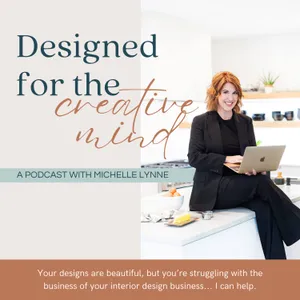
Your designs are beautiful, but you're struggling with the business of your interior design business. Join successful interior design business owner, Michelle Lynne, of ML Interiors Group each Monday morning as she shares the processes she has found useful in growing her own 7-figure design firm, interviews industry related guests, and brings her own team of designers on for lively conversations. If you aren't happy with the performance of your interior design business, are tired of trading your time for money, and know you were made for more, this show is for you.
Latest Episodes
The most recent episodes — sign up to get AI-powered summaries of each one.
- 2 days ago38 min
Ep 251: The Walkthrough - Operations: The Hallway That Holds Your Design Business Together
You've signed the contract, collected the retainer, and officially landed the project. Now what? In this episode of The Walkthrough series, Michelle takes you behind the scenes of the operations that keep an interior design project running smoothly. From client onboarding and team responsibilities to communication rhythms, scope changes, and project handoffs, she breaks down why your business needs standardized systems instead of relying on your memory. Because your clients may never see your operations, but they absolutely feel them. And when everything runs through you, your business can only grow as far as your time and energy will allow. It's time to build systems that support your clients, your team, and your sanity. In This Episode, You'll Learn: Why the first week after a client signs the contract is critical to building trust and setting expectations. How to create a consistent onboarding process that makes every client feel taken care of. Why clearly defined roles and responsibilities matter, even if you're a team of one. The "Fiji Factor": Could your team keep a project running if you disappeared to Fiji for a week? Why keeping project information in one centralized location reduces mistakes, confusion, and mental overload. How to establish a predictable client communication rhythm without being available around the clock. Why proactive updates build more trust than responding to anxious client check-ins. How to set communication boundaries and response-time expectations from the beginning. How to prevent scope creep by documenting every addition and change to a project. Why intentional team handoffs need to include more than just the basic project details. Key Takeaways 1. Your onboarding process sets the tone. The first week or two after signing a contract can make or break a client's confidence. Have a consistent process for welcome emails, retainers, questionnaires, kickoff meetings, and next steps. Your client should never have to wonder what happens next. 2. Your business needs to run on systems, not memory. Every recurring project task needs an owner and a documented process. Whether you're a solopreneur or managing a team, clarity prevents things from falling through the cracks. 3. Apply the Fiji Factor. If you won the lottery, booked a one-way ticket to Fiji, and disappeared for a week, could someone find everything they needed to keep your projects moving? If not, your project information needs a better home. 4. Consistent communication creates confident clients. Decide how often clients will hear from you, what communication channels to use, and when they can expect a response. A short, proactive weekly update can prevent a lot of unnecessary anxiety. 5. Boundaries protect your time and your business. You don't have to answer every email immediately or be available on weekends. Establish office hours, response times, and appropriate communication channels during onboarding. 6. Scope creep happens in the little things. An extra chair, a quick powder bath suggestion, or one more design request can turn into an entirely separate project. Document every addition, communicate the cost, and create a new scope of work when needed. 7. A good handoff includes the details that matter. Your team needs to know what's been decided, what's still open, what the client is sensitive about, and what happens next. If information only lives in your head, it won't survive a busy week or a team change. Your Action Step This Week Take a look at your current operations and ask yourself these three questions: What happens step by step during the first week after a client signs? Does every recurring task have a clearly assigned owner?
- 1 weeks ago42 min
Ep 250: The Walkthrough: From First Call to Contract
Your sales process shouldn't require you to give away your design expertise before a client has even committed to working with you. In this episode of The Walkthrough, Michelle Lynne takes you through the sales process she uses at ML Interiors Group, from the very first client conversation to the signed contract. And she's sharing why the traditional discovery call might actually be costing you more time, energy, and money than you realize. Instead of spending an hour gathering project details and potentially solving problems for someone who may never become a client, Michelle breaks down a four-step sales process designed to protect your time, build trust, and help clients feel confident moving forward. You'll learn how to use a brief qualifying call to establish budget and timeline expectations, a virtual meet and greet to showcase your firm's process, a paid initial site visit to gather the information you need, and an in-person scope of work presentation that makes it easier for clients to say yes. Michelle also explains why presenting your scope of work and contract face to face is so important, how detailed scopes help prevent scope creep, and why the follow-up between appointments can make or break a potential client relationship. Because a great sales process isn't about being pushy. It's about giving clients the guidance and confidence they need while protecting your time and your profitability. In this episode, you'll learn: Why the traditional 45–60 minute discovery call may be working against you. How to structure a 10–15 minute qualifying call around budget, timeline, and overall project fit. Why you should address the financial investment early instead of dancing around the budget conversation. How to use a virtual meet and greet to educate prospects and showcase your firm's process. Why a paid initial site visit helps establish value and ensures everyone is invested. How to create a detailed, room-by-room scope of work that establishes boundaries and prevents scope creep. Why you should present your scope of work and contract face to face instead of simply emailing them. How automated confirmations, reminders, and follow-ups keep clients engaged between appointments. Why having someone else handle qualifying calls can protect you from taking on projects that aren't the right fit. Your takeaway: Write down every step your clients currently go through between their first inquiry and signing a contract. Identify where you're giving away your design expertise, where you're spending too much time, and where clients tend to stall. Then start building a repeatable process that protects your time and makes the experience better for everyone. Ready to improve your sales process? Want to see where your business could use a little restructuring? Schedule a Business Walkthrough with Michelle and the Sidemark team. You'll walk away with a roadmap and a summary of what needs attention in your business. Interested in working through your sales process with Michelle one-on-one? Private coaching can help you customize the process, implement it, and make it work for your firm. Coming Up Next: The contract is signed. Now what happens the week after? Who's responsible for what, and how do you keep the momentum going before the project officially begins? Join Michelle for the next room of The Walkthrough.
- 2 weeks ago45 min
Ep 249: Taming the Furniture Procurement Beast with Sara Carroll
Furniture sourcing and procurement can be one of the most time-consuming parts of running an interior design firm. From tracking orders and coordinating freight to chasing down vendors and filing damage claims, the administrative work can quickly take over your week. In this episode, Michelle sits down with Sara Carroll of Sara Carroll Home to talk about the realities of furniture procurement and why interior designers don't have to manage every detail themselves. With a background spanning residential interior design, furniture manufacturing, sales representation, and showroom ownership, Sara has seen the industry from just about every angle. She shares why she created her trade program to help designers streamline sourcing, simplify purchasing, and get the support they need after an order is placed. Michelle also shares her own experience using Sara's program at ML Interiors Group and why having a trusted procurement partner has made such a difference for her team. In this episode, you'll discover: Why furniture procurement is so much more complicated than simply finding beautiful pieces and placing orders. The hidden administrative work that happens after a furniture order is submitted. How outsourcing procurement can save you from tracking shipments, coordinating freight, and fighting damage claims. Why opening direct vendor accounts isn't always the advantage you think it is. What to look for in a furniture trade program and how to evaluate the service behind the pricing. Why vendor relationships and industry experience matter when sourcing high-end custom furnishings. How to delegate procurement without losing control of your projects. Which interior design firms can benefit most from outsourcing their procurement. Why your time is better spent designing, developing client relationships, and growing your business instead of chasing furniture orders. The big takeaway: You didn't get into interior design to spend your days tracking shipments, organizing freight, and filing damage claims. Delegating procurement isn't a weakness. It's a smart business decision that allows you to focus on the work that actually moves your firm forward. Connect with Sara Carroll Interested in learning more about Sara Carroll Home's trade program? Visit SaraCarrollHome.com and explore the Designer Trade section to learn more about the program and apply. Website: https://saracarrollhome.com Instagram: @saracarrollhome Email: contact@saracarrollhome.com Sara works with interior designers nationwide, not just those in the Dallas-Fort Worth area. Connect with Michelle Lynne Learn more about coaching, resources, and support for growing your interior design business. https://thedesignbakehouse.com/ Remember, your business is your own masterpiece. Work on it!
- 3 weeks ago36 min
Ep 248: The Walkthrough: Your Sales Process Starts at the Front Door
An inquiry comes in. You're in the middle of an installation, juggling procurement, answering client questions, and managing a dozen other things. You tell yourself you'll respond when you have a minute to give that potential client the attention they deserve. And suddenly, a day or two has passed. Sound familiar? In this episode of Designed for the Creative Mind, Michelle Lynne continues The Walkthrough, a series that takes interior designers through their businesses just as they would walk through a client's home. This time, she's looking at what happens after a potential client knocks on your door. Michelle shares why getting from inquiry to first appointment seems to be taking longer in today's market, why a slow response can cost you a client, and how a thoughtful sales process can help you turn more inquiries into actual projects. Because here's the thing: your clients shouldn't have to figure out how to hire you. It's your job to lead them through the process. Michelle walks through the importance of responding promptly, assigning clear ownership of incoming inquiries, following up consistently, and using a CRM and email automation to keep potential clients engaged. She also explains how email marketing can nurture relationships with people who aren't quite ready to hire you yet. Whether you're a solo designer wearing every hat or leading a growing team, this episode will help you identify where potential clients might be slipping through the cracks—and how to create a process that works even when you're busy. In This Episode, You'll Learn: Why potential clients may need more reassurance and connection before booking their first appointment. How a slow response to an inquiry can influence a client's perception of your firm. Why a prompt, thoughtful reply is better than waiting for the perfect response. How assigning clear ownership of inquiries prevents potential clients from falling through the cracks. Why having someone screen inquiries can protect your time and help you avoid taking on projects that aren't the right fit. How to follow up without feeling pushy or salesy. Why a CRM is essential for tracking conversations and managing your sales pipeline. How email automation can help you stay connected with prospects when they're not ready to hire you. Why a consistent sales process is a service to both your clients and your business. Key Takeaway Follow-up is a service. When someone reaches out to your firm, they're expressing interest in working with you. It's your job to make the next step clear, easy, and welcoming. A well-designed sales process doesn't pressure clients into making decisions. It helps them feel supported while ensuring that good opportunities don't disappear simply because you're busy. Ready to Walk Through Your Business? Are potential clients getting lost between their first inquiry and their first appointment? Or are you spending too much time trying to keep your sales process organized? Michelle offers Sidemark Business Walkthroughs to help interior design firm owners identify gaps in their sales, marketing, operations, and processes. Together, you'll look at what's working, where things are getting stuck, and where you could use additional support. Schedule your Sidemark Business Walkthrough using this link: https://api.mysidemark.com/widget/bookings/sidemark-business-walkthrough Coming Up Next In the next episode of The Walkthrough, Michelle takes a closer look at the interior design sales process, including the qualifying call, meet and greet, initial visit, scope of work presentation, and contract signature. Enjoying Designed for the Creative Mind? Follow or subscribe to the podcast so you don't miss the next episode.
- Oct 19, 202632 min
Ep 247: The Walkthrough: Is Your Marketing Front Door Open?
Your interior design business might be doing beautiful work, but are the right clients finding their way to you? In this episode of Designed for the Creative Mind, Michelle Lynne kicks off The Walkthrough, a series that takes you through every room of your interior design business, from marketing and sales to operations, procurement, installation, and project closeout. First up is the front door: marketing. Michelle shares why referrals alone aren't a marketing strategy, how the busy-season blackout can leave your pipeline empty, and why consistent marketing doesn't have to mean posting every single day. She also explores how to make your marketing sound like you, why handing marketing off isn't always as simple as hiring someone, and how marketing connects to every other part of your business. If you've ever let marketing slide because client projects took over, only to find yourself scrambling for new leads a few months later, this episode is for you. In This Episode, You'll Learn: Why referrals aren't the whole story. Clients often discover you through a referral but research your website, portfolio, and social media before deciding to reach out. How to break the busy-season blackout cycle. Marketing takes time to produce results, so stopping when you're busy can create a pipeline problem months later. What consistent marketing really looks like. A current website, a monthly blog, regular email communication, and a manageable social media presence can go a long way. Why your marketing needs to sound like you. Clients are hiring your perspective, expertise, and approach to design—not just your portfolio photos. How to delegate marketing without losing your voice. A good content partner needs to learn how you think and communicate, not just follow a list of instructions. Who should own marketing in your firm. If marketing is everyone's secondary responsibility, it can quickly become nobody's responsibility. How marketing connects to the rest of your business. Your marketing efforts influence sales, capacity planning, client experience, reviews, and referrals. Your Action Steps Before you overhaul your marketing, take a closer look at what's already working. Review your last 10 signed clients and trace how each one actually found you. Ask past clients what led them to your business and which channels they explored before reaching out. Look at your website and social media through the eyes of a potential client. Does your content feel current, relevant, and reflective of your firm? Identify who owns marketing in your business—and who is accountable for keeping it consistent. Choose a manageable marketing rhythm you can maintain even when your project calendar is full. Remember: Marketing isn't something you do when you have time. It's an essential part of running your business. Ready to Walk Through Your Own Business? Wondering where your business is working well and where things might be held together by you? Schedule a free Business Walkthrough with Michelle and the Sidemark team. Together, you'll look at how clients find you, what happens when they inquire, and where your systems may need attention. Depending on your needs, the walkthrough can extend into sales, operations, design development, sourcing, procurement, installation, and project closeout. You'll leave with a clearer picture of your business and actionable next steps. Schedule your Business Walkthrough: https://api.mysidemark.com/widget/bookings/sidemark-business-walkthrough Coming Up Next In the next episode of The Walkthrough, Michelle heads into the sales room. A potential client has found your firm and filled out your contact form—but what happens next? Follow t
- Oct 5, 202642 min
Ep 246: Nobody Warned Me About This Part: Hiring Would Expose My Own Weaknesses
Hiring people is supposed to create capacity. But what happens when bringing someone onto your team actually makes your business feel more complicated? In this episode, Michelle Lynne gets honest about one of the parts of business ownership nobody warned her about: hiring people would force her to confront how much of her business was living inside her own head. When you've built a business around your own instincts, experience, and standards, it's easy to assume that what feels obvious to you will be obvious to everyone else. But your team can't read your mind—and they shouldn't have to. Michelle shares the lessons she learned as her design firm grew, including why hiring initially created more work instead of less, how recurring team problems can reveal weaknesses in the business itself, and why delegation requires more than simply handing someone a list of responsibilities. She also explores the uncomfortable reality that sometimes the problem really is the employee—but you can't fairly determine that until you've looked at the role, the process, your leadership, and the support you've provided. In this episode, Michelle talks about: Why hiring often begins with addition before it creates subtraction How a team exposes the parts of your business that have been running on your memory, instinct, and unwritten standards The difference between describing a task and actually defining what "good" looks like Why "be more proactive," "use your judgment," and "take care of the client" aren't actually clear standards The principle: "Every project is different, but the process should be the same." How undocumented processes turn the owner into the answer to every routine question Why capable owners can accidentally create dependent employees by solving problems too quickly The difference between giving someone responsibility and giving them the authority to actually own it Why offering your perspective is different from taking the work back How delayed feedback can turn a simple conversation into a much bigger problem Why caring about your team can sometimes become an excuse for avoiding difficult conversations How to determine whether you're dealing with a people problem, a role problem, or a leadership/process problem When you have to accept that someone simply isn't the right fit for the role Why examining your own leadership doesn't mean taking responsibility for every failed hire What Michelle does differently today as she leads her design firm A question to ask yourself If you're frustrated with someone on your team right now, don't start with: "Is she a good employee or a bad employee?" Instead, look at the role. Ask yourself: What has actually been made clear? What authority does she have? What feedback has she received? What support has been provided? Does the process actually support the work? Have I communicated what needs to be communicated? Have I given her enough room to make decisions? If you've done those things and the same problem continues, you may finally have the information you need to address the person or the fit with confidence. Because sometimes the answer is better direction.
- Sep 28, 202634 min
Ep 245: Nobody Warned Me About This Part: When Growing Your Design Firm Changes Your Job
You started your interior design business because you love design. You wanted to create beautiful spaces, work with clients, and build something of your own. But somewhere along the way, the business grew… and your job changed. Suddenly, you're spending less time designing and more time managing people, making financial decisions, building processes, and carrying the responsibility for everything happening inside your firm. And nobody really warned you that this was part of the deal. In this first episode of my new series, Nobody Warned Me About This Part, I'm getting honest about what happens when the business you built around your talent starts requiring something entirely different from you. I'll share my own evolution from doing everything myself at by Michelle Lynn to leading ML Interiors Group, why stepping away from design was both liberating and surprisingly emotional, and what it really means to transition from being the designer to being the business owner. Because here's the thing: Growth isn't just more clients, bigger projects, or a larger team. It's a transfer of responsibility. And the work doesn't disappear just because someone else is doing the designing. We'll talk about: Why the role of the owner changes as an interior design firm grows. The emotional challenge of stepping away from the creative work that built your reputation. Why leadership, pricing, processes, and capacity planning are not overhead. They're the work. The uncomfortable middle stage where you have a team but still feel responsible for every decision. How staying involved in every detail can unintentionally turn you into the bottleneck. The difference between having high standards and communicating those standards effectively. Why hiring more people doesn't automatically create freedom. How to determine whether you actually want to lead a larger firm or prefer a business that keeps you closer to the design work. The questions every interior design business owner should ask before pursuing the next level of growth. The question to consider: If your business doubled over the next two years, how would your daily job change? And would you actually want the life that comes with it? Because there is no one-size-fits-all definition of success. You get to decide what kind of business you want to build. Ready for Support? If you're navigating the transition from designer to business owner and need help figuring out your role, your team, or what comes next for your firm, private coaching with Michelle Lynne can help you get clarity and create a business that supports the life you actually want. Explore Private Coaching with Michelle Lynne at https://thedesignbakehouse.com/private-coaching. Connect with Michelle Follow Michelle Lynne here at the Designed for the Creative Mind podcast for more honest conversations about the business behind the beautiful designs. This is the part nobody warned us about. And it's worth talking about.
- Sep 21, 202629 min
Ep 244:Do You Actually Want to Own an Interior Design Business?
Being an interior designer and being an interior design business owner are two very different jobs. Have you actually decided which one you want? We talk a lot about the dream of owning an interior design firm: creative freedom, choosing your clients, setting your own schedule, and building something that is completely yours. And those things can absolutely be part of business ownership. But there's another side of the equation that doesn't always make it into the Instagram caption. Because when you own the business, you're not just the designer. You're also the salesperson, financial manager, problem solver, technology department, decision-maker, and the person who ultimately has to deal with whatever goes sideways. In this episode, Michelle Lynne gets very honest about what it actually means to own an interior design business—and asks a question that more designers should be asking: Do you actually want to own a business, or do you want to be an interior designer? Neither answer is wrong. Working for an established design firm can offer the opportunity to focus on the creative work without carrying the full weight of sales, finances, operations, and business risk. And for some designers, that may genuinely be the career they want. For others, the autonomy and opportunity that comes with ownership are worth the responsibility and uncertainty. The important thing is knowing which one you're actually choosing—and making that decision based on the life and work you want, rather than what sounds more ambitious or impressive. In this episode, Michelle talks about: The difference between being an interior designer and being an interior design business owner Why design is only one part of the job when you own the firm The reality of being responsible for sales, finances, technology, and problem-solving Why impressive revenue numbers don't necessarily mean a business is profitable The personal development that comes with putting yourself—and your work—out there Rejection, perfectionism, imposter syndrome, and vulnerability as a business owner The financial risk and uncertainty that come with starting a firm Why working for another design firm is not a fallback or a failure What you can learn by working inside an established design business How to think about ownership versus employment based on the actual life you want Why you're allowed to change your mind about the path you've chosen The question to sit with: What do you want your actual days to look like? If you want to spend most of your time sourcing, designing, presenting, and installing, working inside an established firm may be exactly what you're looking for. If you want to build something that's yours, make the decisions, take the risk, and reap the rewards—and you're willing to engage with the unglamorous parts of running a business—ownership may be the path for you. There's no prize for choosing the harder option. There's no shame in changing your mind. And there's certainly no reason to build a business simply because everyone around you says that's what successful designers are supposed to do. Choose the career that actually fits the life you want to live. Want to work with Michelle? If you're wrestling with whether to start, grow, change, or rethink your interior design business, private coaching gives you the opportunity to look at your specific situation—including your goals, numbers, circumstances, and what you actually want your work and life to look like. Learn more about private coaching with Michelle Lynne by visiting https://thedesignbakehouse.com/private-coaching Share this episode Know an interior designer who's trying to figure out whether
Get Designed for the Creative Mind summaries in your inbox
Free AI-powered daily recaps. Key takeaways, quotes, and mentions — in a 5-minute read.
Get Free Summaries →Free forever for up to 3 podcasts. No credit card required.
You Might Also Like
Listeners also like.

The iDesign Lab Podcast
Explores how intentional design in business, culture, and creativity shapes human behavior, industries, and the way we live.

Business of Home Podcast
Dennis Scully interviews design industry leaders about the business and challenges of interior design.

Thrive In Design
Thrive In Design

The Honest Designers Show
A candid look at building a successful creative career, covering client work, personal style, branding, and fulfillment in design.

Websites Made Simple: How to have a successful website design business
A podcast offering practical guidance for web designers to build a profitable, authentic business by overcoming common challenges.

Kathleen Can Do It: DIY, Home Decor, and Interior Design
Kathleen Can Do It: DIY and Design

Coaching Inc with Tom Krol
Teaches coaches and consultants how to generate consistent leads and increase income using proven, efficient marketing strategies.

Consulting Success Podcast
Strategies for building a profitable, scalable consulting business, from client acquisition to team management and marketing that works.

The Conscious Edge Podcast: Redefining Wealth as a Whole Human Experience
Alecia St. Germain

UI Breakfast: UI/UX Design and Product Strategy
Discussions with UI/UX and product strategy experts on applying practical insights to design and SaaS businesses.

The Balanced, Beautiful and Abundant Show - Rebecca Whitman
A coach helps high-achieving women overcome burnout using a framework centered on spiritual, emotional, physical, and financial well-being.

The Revenue House
Examines ethical marketing and business growth for purpose-driven companies through expert interviews and real-world strategies.
About Designed for the Creative Mind
Your designs are beautiful, but you're struggling with the business of your interior design business. Join successful interior design business owner, Michelle Lynne, of ML Interiors Group each Monday morning as she shares the processes she has found useful in growing her own 7-figure design firm, interviews industry related guests, and brings her own team of designers on for lively conversations. If you aren't happy with the performance of your interior design business, are tired of trading your time for money, and know you were made for more, this show is for you.
Customized Recaps
AI-powered recaps with compact key takeaways, quotes, and insights.
Straight to Your Inbox
Get key takeaways from Designed for the Creative Mind in a 5-minute read.
Save Hours Every Week
Stay current on your favorite podcasts without falling behind.
Frequently Asked Questions
What is Podzilla's Designed for the Creative Mind daily summary?
It's a free AI-powered email that summarizes new episodes of Designed for the Creative Mind as soon as they're published. You get the key takeaways, notable quotes, and links & mentions — all in a quick read.
How does the Designed for the Creative Mind podcast summary work?
When a new episode drops, our AI transcribes and analyzes it, then generates a personalized summary tailored to your interests and profession. It's delivered to your inbox every morning.
Is this an official Designed for the Creative Mind product?
No. Podzilla is an independent service that summarizes publicly available podcast content. We're not affiliated with or endorsed by Michelle Lynne.
Can I get summaries of other podcasts too?
Absolutely! The free plan covers up to 3 podcasts, any in the catalog. Basic raises that to 15, Pro to 40 and Max to 100. Browse our full catalog at /podcasts.
How often does Designed for the Creative Mind release new episodes?
Designed for the Creative Mind publishes weekly. Our AI generates a summary within hours of each new episode.
What topics does Designed for the Creative Mind cover?
Designed for the Creative Mind covers topics including Arts, Design. Our AI identifies the specific themes in each episode and highlights what matters most to you.
Start getting Designed for the Creative Mind summaries tomorrow morning.
Free forever for up to 3 podcasts. No credit card required.
Free forever for up to 3 podcasts. No credit card required.