Free Daily Podcast Summary
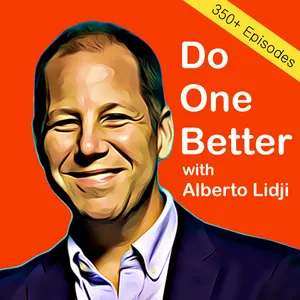
Do One Better with Alberto Lidji in Philanthropy, Sustainability and Social Entrepreneurship: Daily Summaries Delivered
by Alberto Lidji
Listen to 350+ interviews on philanthropy, sustainability and social entrepreneurship. Guests include Paul Polman, David Lynch, Siya Kolisi, Cherie Blair, Chiwetel Ejiofor, Bob Moritz, David Miliband and Julia Gillard. Hosted by Alberto Lidji, Visiting Professor at Strathclyde Business School and ex-Global CEO of the Novak Djokovic Foundation.
Latest Episodes
The most recent episodes — sign up to get AI-powered summaries of each one.
- Yesterday32 min
Flora Alexander, Executive Director of the International Rescue Committee UK, on why some conflicts miss the headlines and how donors can be sure their money reaches those in need
Every year, the International Rescue Committee publishes an Emergency Watchlist predicting the twenty countries most likely to face a major humanitarian crisis in the year ahead. For the past three years, the country at the top of that list, Sudan, has received comparatively modest media coverage next to crises like Ukraine, despite being, by the numbers, the world's largest humanitarian emergency. In this episode, Flora Alexander, Executive Director of the International Rescue Committee UK (IRC UK), joins Alberto Lidji to explore why some of the world's most severe conflicts struggle to make the headlines, and how donors can be confident that the money they give actually reaches the people who need it. Founded in 1933 at Albert Einstein's urging to help Jewish refugees fleeing Nazi persecution, the IRC today works across the full arc of crisis — from Ukraine to the Democratic Republic of the Congo, and from resettlement programmes in the UK to frontline health clinics around the world. What determines whether a humanitarian emergency becomes a story the world can't look away from, rather than one that quietly falls off the agenda? And if you wanted to help the people of a country whose leadership you have every reason to distrust, without a penny of that money ever touching the regime itself, what would it actually take to ensure your donation got to where it was needed? Flora succeeds David Miliband, the IRC's global President and Chief Executive, who was a guest on the Do One Better Podcast in 2021, and Laura Kyrke-Smith, her predecessor as IRC UK's Executive Director, who appeared on the show in 2023 before being elected as a Member of Parliament in the UK. Visit our Knowledge Hub at Lidji.org for information on 350+ case studies and interviews with remarkable leaders in philanthropy, sustainability and social entrepreneurship.
- 1 weeks ago24 min
Charles Li, Founder and Chairman of Micro Connect, on connecting big finance to the little guy — a special series marking the 10th anniversary of the PBC Forum
Charles Li spent over a decade running one of the world's major stock exchanges and chairing JP Morgan China before turning his attention to an entirely different challenge: bringing institutional capital to small businesses — franchise owners, landlords, and local shopkeepers — that Wall Street has traditionally struggled to reach. In this episode, Charles, Founder and Chairman of Micro Connect, joins Alberto Lidji to explore how institutional capital might finally find its way to the small businesses that need it most. This conversation was recorded at the PBC 2026 Forum — Philanthropy for Better Cities 2026 — in Hong Kong, and forms part of a special series made possible by the Hong Kong Jockey Club, marking the forum's 10th anniversary, convened by The Hong Kong Jockey Club Charities Trust, in association with the Institute of Philanthropy. What does it take to convince Wall Street investors to back a business model built on the transparency of everyday transactions rather than traditional balance sheets? How does artificial intelligence change what's possible when it comes to assessing risk at that scale? And what can decades spent inside the world's biggest financial institutions teach us about building something entirely new for the world's smallest ones? Charles also reflects on his own path, from working on an oil rig, to Columbia Law School, to the top of Hong Kong's stock exchange — and what that journey tells us about reinventing yourself as the world around you changes. About Charles Li: He was appointed Chairman of JP Morgan China from 2003 to 2009. He joined Merrill Lynch in 1994, where he served as President of Merrill Lynch China from 1999 to 2003. He holds a BA in English Literature from Xiamen University, an MA in Journalism from the University of Alabama, and a JD from Columbia Law School. Visit our Knowledge Hub at Lidji.org for information on 350+ case studies and interviews with remarkable leaders in philanthropy, sustainability and social entrepreneurship.
- 2 weeks ago26 min
Brian San, Secretary General of the Institute of Philanthropy in Hong Kong, on Asia's philanthropic ecosystems — a special series marking the 10th anniversary of the PBC Forum
Across Asia, philanthropy takes markedly different forms — from mass individual and faith-based giving to corporate mandates and state-led funds. Brian San, Secretary General of the Institute of Philanthropy in Hong Kong, sheds light on twelve playbooks the Commission on Asian Philanthropy has identified as proven models: built in one market and ready to travel to others. In this episode, Brian joins Alberto Lidji to unpack what's actually working in Asian philanthropy, and why. This conversation was recorded at the PBC 2026 Forum — Philanthropy for Better Cities 2026 — in Hong Kong, and forms part of a special series made possible by the Hong Kong Jockey Club, marking the forum's 10th anniversary, convened by The Hong Kong Jockey Club Charities Trust, in association with the Institute of Philanthropy. Brian discusses the Institute of Philanthropy's work co-convening the Commission on Asian Philanthropy alongside the Asia Philanthropy Congress, set up by the Nippon Foundation, bringing together thirteen of Asia's most influential foundations, and their interim report, published in September 2026, "Strengthening Asia's Philanthropic Ecosystems for Inclusive and Sustainable Growth by 2050," with a final report due in Tokyo in December 2027. Brian explains why each giving model's real value lies beyond the money itself, in the technology, supply chains, and community trust that different actors bring to bear, and why understanding a model's underlying objectives and constraints matters more than assuming a single shared goal across the sector. Useful link: Commission on Asian Philanthropy Visit our Knowledge Hub at Lidji.org for information on 350+ case studies and interviews with remarkable leaders in philanthropy, sustainability and social entrepreneurship.
- 2 weeks ago25 min
Helen Clark, former Prime Minister of New Zealand, on philanthropy, coalitions and the power of sport: a special series marking the 10th anniversary of the PBC 2026 Forum
Helen Clark served as Prime Minister of New Zealand for three consecutive terms and went on to become Administrator of the United Nations Development Programme for two terms, one of the most senior roles in the entire UN system. In this episode of Do One Better Podcast, Alberto Lidji sits down with Helen for a wide ranging conversation covering her grassroots political beginnings in New Zealand's anti-apartheid movement, the state of global progress towards the 2030 Sustainable Development Goals, and the fragile state of the international order. Helen and Alberto discuss the importance of building pragmatic coalitions and cross sector collaboration, the role philanthropy can play amid shrinking development aid, the future of Asian philanthropy on the world stage, and her work chairing Gavi, the Vaccine Alliance. They also explore the powerful role sport and volunteering play at grassroots level in building stronger communities. This conversation was recorded at the PBC 2026 Forum (Philanthropy for Better Cities 2026) in Hong Kong, and forms part of a special series marking the forum's 10th anniversary, convened by The Hong Kong Jockey Club Charities Trust, in association with the Institute of Philanthropy. It is a candid and ultimately hopeful conversation about how each of us, whatever our platform, can choose to do good. Visit our Knowledge Hub at Lidji.org for information on 350+ case studies and interviews with remarkable leaders in philanthropy, sustainability and social entrepreneurship.
- 3 weeks ago35 min
James Cowan, CEO of the HALO Trust: When the War Is Over, the Danger Remains
James Cowan, CEO of the HALO Trust, joins Alberto Lidji on the Do One Better Podcast to explore what happens when the fighting stops, but the dangers of war remain. The HALO Trust has been working since 1988 to save lives and restore livelihoods in communities affected by conflict. Today, it operates across 32 countries with around 10,000 staff, clearing landmines and other explosive remnants of war, while also tackling small arms and light weapons. James shares his perspective on the lasting impact of conflict and why landmines can continue to threaten civilians, often children, decades after a war has ended. He explains how HALO is using new technologies, including AI, satellite imagery, drones, robotics, ground penetrating radar, and magnetic resonance, to make clearance faster and safer. The conversation also looks at the people behind the work, the importance of employing and empowering local communities, and the role of governments and philanthropy in addressing the enormous scale of the challenge. They discuss mine risk education, the changing nature of conflict, the growing use of drones, and how humanitarian action can contribute not only to saving lives, but also to restoring livelihoods and helping countries move towards greater stability. And despite the sobering realities of today's conflicts, James leaves listeners with a powerful message: there is hope. Visit our Knowledge Hub at Lidji.org for information on 350+ case studies and interviews with remarkable leaders in philanthropy, sustainability and social entrepreneurship.
- 4 weeks ago32 min
Aunnie Patton Power, Founder of the Innovative Finance Initiative: Rethinking Finance and Building Alternatives to the Status Quo
Aunnie Patton Power, Founder of the Innovative Finance Initiative, joins Alberto Lidji on the Do One Better Podcast as she shares her views on how finance can be redesigned to better serve people, communities, and the planet. The Innovative Finance Initiative brings together more than 2,000 funders, intermediaries, and changemakers exploring what is possible beyond traditional approaches to finance. Aunnie explains why she believes the goal should not simply be to shift the existing system, but to build credible alternatives to it. The conversation explores some fundamental questions. What does it really mean to invest for impact? Who should decide where capital goes? Does “market rate” actually mean what we think it means? And how should asset owners think about their responsibilities to the communities and people ultimately affected by their investments? Aunnie also shares examples of alternative approaches to fund design, governance, ownership, and capital allocation, while challenging some of the assumptions that have come to underpin modern impact investing. Visit our Knowledge Hub at Lidji.org for information on 350+ case studies and interviews with remarkable leaders in philanthropy, sustainability and social entrepreneurship.
- Aug 31, 202627 min
Dr. Doris Macharia, President of the Elizabeth Glaser Pediatric AIDS Foundation (EGPAF): Reaching the Last Mile to End Pediatric HIV
Dr. Doris Macharia, President of the Elizabeth Glaser Pediatric AIDS Foundation (EGPAF), joins Alberto Lidji on the Do One Better Podcast for a conversation about the global effort to end pediatric HIV and the challenge of reaching the children and families who remain underserved. EGPAF has been working for more than three decades to improve outcomes for children and mothers affected by HIV. Today, its work spans 12 countries in Africa, working alongside governments and communities to strengthen HIV prevention, testing, treatment, and care. In this conversation, Dr. Macharia explains what she means by reaching the “last mile” and why the final stretch toward ending pediatric HIV can be among the most difficult. Alberto and Doris explore the barriers that continue to stand in the way, from poverty, stigma, and conflict to gaps in healthcare systems, diagnostics, treatment access, and follow-up. They also discuss how African health systems can become more resilient and sustainable, why reducing families’ out-of-pocket healthcare costs matters, and how philanthropy can help sustain hard-won progress. In this episode: Why children continue to lag behind adults in knowing their HIV status What it really means to reach the “last mile” The importance of strong primary healthcare systems How diagnostics, treatment, and community-based care can improve outcomes The challenges created by poverty, stigma, conflict, and limited resources Why sustaining progress may be as important as achieving it The distinctive role philanthropy can play in addressing complex global health challenges Visit our Knowledge Hub at Lidji.org for information on 350+ case studies and interviews with remarkable leaders in philanthropy, sustainability and social entrepreneurship.
- Aug 24, 202629 min
Aidan Reilly, Co-Founder of Farmlink, and CEO Eliza Blank on Turning Farm Surplus into Meals for Families
Nearly 48 million Americans lived in food-insecure households in 2024, according to the U.S. Department of Agriculture, and close to a third of the food produced in the United States goes to waste. Last year alone, roughly 15,000 American farms went out of business. Farmlink exists in the gap between those numbers. It started in April 2020, when college junior Aidan Reilly and his co-founder James Kanoff were sent home at the start of the pandemic and learned their local food bank had gone from serving 300 families a week to 1,000, almost overnight. Around the same time, they read about farmers dumping millions of gallons of milk and burying truckloads of potatoes because the contracts that normally moved their produce to schools, stadiums, and restaurants had disappeared. With no experience in farming or logistics, they started cold-calling farmers, rented a U-Haul, and made their first delivery: 60,000 eggs to a food bank. Ten days later they had 200 volunteers. Three weeks later they had moved a million pounds of food. Six years on, Farmlink is a fully remote, asset-light organization that, according to its founders, works with a network of more than 1,000 charity partners across every state. In this conversation, Aidan and CEO Eliza Blank explain what it actually takes to move perishable food fast, at scale, with no warehouses and no trucks of their own, and why they consider themselves the last call a farmer makes, not the first. As Eliza puts it, Farmlink exists to make sure "logistics is not the reason, and cost of transportation never is the reason why people aren't getting fed." In this episode, you'll learn: Why two 21-year-olds with zero farming experience became the people U.S. farmers call when they have nowhere left to turn How Farmlink moves perishable surplus into the hands of families in need within 24 to 72 hours, with no warehouses or trucks of its own Why the organization covers both coordination and freight costs, and how that decision unlocked supply that would otherwise rot in the field What is actually driving the wave of American farm closures, and why Farmlink wants to help farmers get paid, not just donate for free How a growing database of charity partners is helping Farmlink understand real-time capacity across a national network Why human relationships and trust, built over six years, remain the one thing technology cannot replace, even as data plays a bigger role What it would take to responsibly adapt the Farmlink model beyond the United States, and why the founders insist local ownership has to come first About the guests Aidan Reilly is co-founder of Farmlink, which he started in 2020 as a college student to connect farm surplus with communities facing food insecurity across the United States. Eliza Blank is Chief Executive Officer of Farmlink, leading the organization's work coordinating logistics, cost, and a nationwide network of charity partners to reduce food waste and hunger. Visit our Knowledge Hub at Lidji.org for information on 350+ case studies and interviews with remarkable leaders in philanthropy, sustainability and social entrepreneurship.
Get Do One Better with Alberto Lidji in Philanthropy, Sustainability and Social Entrepreneurship summaries in your inbox
Free AI-powered daily recaps. Key takeaways, quotes, and mentions — in a 5-minute read.
Get Free Summaries →Free forever for up to 3 podcasts. No credit card required.
You Might Also Like
Listeners also like.

The PM Podcast
Personal conversations with changemakers driving social impact, exploring their journeys of struggle, resilience, and purpose.
FundraisingAI
Examines the ethical and practical use of AI in fundraising, including trends, data privacy, and social impact.

Building Champions for Life
Examines how elite performers in sports, business, and education develop character and mindset for lasting success.

Thriving Minds with Alberto Zandi
Conversations with experts and high achievers explore practical insights for thriving in business, career, and personal growth.
My Legacy Podcast
Conversations with influential figures and their closest allies explore the personal stories behind lasting legacies.
The Biz of Nonprofit Consultants
Nonprofit consultants learn business strategies for pricing, client work, and leadership while balancing purpose and profitability.

David Senra
David Senra hosts conversations with the greatest living founders.

What the Fundraising
Nonprofit leaders explore fundraising, leadership, and mindset with experts from inside and outside the sector.
Leaders with Francine Lacqua
Francine Lacqua interviews CEOs and industry leaders about leadership, success, and navigating change in global business.
A Podcast About Leadership
Examines modern leadership through interviews with experts in business, psychology, and human performance.
Heroes, Action, Adventure, Extreme Sports - Profiles in Courage - The Creative Process
Interviews with adventurers, athletes, and activists exploring courage, resilience, and creativity through extreme sports, exploration, and social change.

The Interview
In-depth 20-minute conversations with global leaders, cultural figures, and decision-makers on the issues shaping our world.
About Do One Better with Alberto Lidji in Philanthropy, Sustainability and Social Entrepreneurship
Listen to 350+ interviews on philanthropy, sustainability and social entrepreneurship. Guests include Paul Polman, David Lynch, Siya Kolisi, Cherie Blair, Chiwetel Ejiofor, Bob Moritz, David Miliband and Julia Gillard. Hosted by Alberto Lidji, Visiting Professor at Strathclyde Business School and ex-Global CEO of the Novak Djokovic Foundation.
Customized Recaps
AI-powered recaps with compact key takeaways, quotes, and insights.
Straight to Your Inbox
Get key takeaways from Do One Better with Alberto Lidji in Philanthropy, Sustainability and Social Entrepreneurship in a 5-minute read.
Save Hours Every Week
Stay current on your favorite podcasts without falling behind.
Frequently Asked Questions
What is Podzilla's Do One Better with Alberto Lidji in Philanthropy, Sustainability and Social Entrepreneurship daily summary?
It's a free AI-powered email that summarizes new episodes of Do One Better with Alberto Lidji in Philanthropy, Sustainability and Social Entrepreneurship as soon as they're published. You get the key takeaways, notable quotes, and links & mentions — all in a quick read.
How does the Do One Better with Alberto Lidji in Philanthropy, Sustainability and Social Entrepreneurship podcast summary work?
When a new episode drops, our AI transcribes and analyzes it, then generates a personalized summary tailored to your interests and profession. It's delivered to your inbox every morning.
Is this an official Do One Better with Alberto Lidji in Philanthropy, Sustainability and Social Entrepreneurship product?
No. Podzilla is an independent service that summarizes publicly available podcast content. We're not affiliated with or endorsed by Alberto Lidji.
Can I get summaries of other podcasts too?
Absolutely! The free plan covers up to 3 podcasts. Upgrade to Pro for 15, or Premium for 50. Browse our full catalog at /podcasts.
How often does Do One Better with Alberto Lidji in Philanthropy, Sustainability and Social Entrepreneurship release new episodes?
Do One Better with Alberto Lidji in Philanthropy, Sustainability and Social Entrepreneurship publishes weekly. Our AI generates a summary within hours of each new episode.
What topics does Do One Better with Alberto Lidji in Philanthropy, Sustainability and Social Entrepreneurship cover?
Do One Better with Alberto Lidji in Philanthropy, Sustainability and Social Entrepreneurship covers topics including Business, Non-Profit. Our AI identifies the specific themes in each episode and highlights what matters most to you.
Start getting Do One Better with Alberto Lidji in Philanthropy, Sustainability and Social Entrepreneurship summaries tomorrow morning.
Free forever for up to 3 podcasts. No credit card required.
Free forever for up to 3 podcasts. No credit card required.