Free Daily Podcast Summary
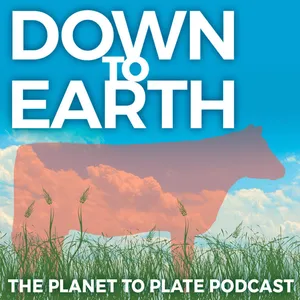
Down to Earth: The Planet to Plate Podcast: Daily Summaries Delivered
by Quivira Coalition and Radio Cafe
Down to Earth is a podcast about regenerative agriculture, and it's for everyone who eats. We invite you to meet the people shaping a healthier food system—farmers, ranchers, scientists, land managers, writers, and many others. Designing a future that draws on both tradition and innovation, they're on a mission to change the paradigm so that the food we eat is healthy and long-term sustainable—for families and growers, for wildlife and water, for climate and planet.
Latest Episodes
The most recent episodes — sign up to get AI-powered summaries of each one.
- 3 days ago55 min
Joy and Justice in Black food traditions: The power of gathering
Anthropologist Ashanté Reese's new book explores Black community gatherings—and the nourishment, fellowship, and strength they cultivate. Reese is an anthropologist, author, and Associate Professor of African and African Diaspora Studies at the University of Texas at Austin, where she teaches and writes about food studies and food justice. Her new book is called: Gather: Black Food, Nourishment, and the Art of Togetherness. Reese looks at Black church gardens, family reunions, funerals, and activist spaces—in all of which food plays a powerful role. She shines a light on how food can play a role in everything from nourishing body and soul to building power and food sovereignty.
- 2 weeks ago1h 14m
The regenerative vineyard: Winemaking and wildness
Mimi Casteel grew up on a vineyard in northwestern Oregon, where her family made wine as much for the passion as for the livelihood. She left home to study forestry and worked as a botanist for the forest service, but the pull of agriculture brought her back to the family farm, where she introduced regenerative practices and eventually started her own vineyard, Hope Well Wine. For Casteel, the practice of wine-making begins with the land—a complex ecosystem teeming with wildlife, cover crops, and livestock—all of which contribute to healthy soil. That soil is the basis for robustly healthy vines, which keep pests in balance without the use of chemicals, and keep the ground cool in the heat, warm in the cold, and resilient in the face of droughts and floods. Casteel is a scientist, a close observer of nature whose perspective pushes the limits of science, and an artist in the millennia-old tradition of wine-making. She's also a passionate advocate for regenerative agriculture and regional food systems.
- 3 weeks ago12 min
Riding Toward a Better Food System: A National Listening Journey
Six college students are bicycling from Washington State to Washington, DC, stopping at farms, restaurants, truck stops, and classrooms along the way, and asking, "What is the future of food?" In this podcast we talk two of them, Augusta Halle and Molly Moore. Their plans are to make a portrait series and short documentary based on what they find.
- Apr 28, 20261h 16m
Agriculture as if people mattered : A values-based perspective on the food system
Anthropologist Andrew Flachs's new book explores the food system through the lens of values like soil health, human health, biodiversity, and rural communities—not just profits and yields. In his new book, Feeding the World as if People Mattered: How Small Farms Produce Value Beyond Yields, he shows how we could, by expanding our accounting to include people and the biosphere, have a thriving food system that actually benefits life itself.
- Apr 14, 202652 min
Saving the bees that feed us: Cultivating pollinator-friendly agriculture
Bees live at the foundation of our food system—but they are imperiled by industrial agriculture. Sarah Red-Laird is helping to revive farm and ranch lands by cultivating healthy and diverse bee habitats. She teaches bee-friendly practices, including cover-cropping, no-till, and reduction of chemical use, which help farmers and ranchers to cultivate both abundant pollinators and healthy soil. Her work includes data collection, storytelling, teaching, doing bee-retreats (beetreats), and nature-based art.
- Apr 1, 202644 min
Return to the savanna: How grazing restores the land and reawakens our human roots
Nate Chisholm is in a lifelong exploration of the savanna ecosystem—the landscape in which the first human societies evolved, and some of the most biodiverse places on the planet. Savannas are where we learned to hunt and gather. Ironically, as human beings developed technology, starting with stone tools, we altered these landscapes by over-hunting large animals, leading to degradation of the land and eventually the loss of most of the savannas themselves. According to Chisholm, the degradation of land through technology is the root of all our modern problems—but we can return to balance by restoring savanna landscapes, and restoring the savanna roots of our own psyches. Chisholm is a livestock grazer, with a background in forestry and ecologically based land management. He started two ranching businesses in the US and is currently living in Kenya and working on a book called Savanna.
- Mar 17, 202639 min
Knowing When to Shut Down the Farm
Mary-Charlotte has bronchitis, so this week we will be joined by Kristina Britt, the new podcast host of Regeneration Rising, as she interviews Taylor Muglia, the former host and previous New Agrarian Program manager. (Regeneration Rising is the other Quivira Coalition podcast; you can find it here, or wherever you get your podcasts.) In this heartfelt episode, Taylor shares her unique journey into regenerative agriculture, her experiences running and eventually closing a small farm, and the emotional struggles and triumphs along the way. While we talk a lot about how to get started in regenerative agriculture, it is also important that we talk about the challenges of working in agriculture as well as what it's like to make hard decisions to shut down your operation. We hope this honest conversation highlights the importance of community, resilience, and adaptability.
- Mar 3, 202657 min
Chasing Cheese: One man's trek to learn from pastoral producers across the planet
Trevor Warmedahl's new book, Cheese Trekking: How Microbes, Landscapes, Livestock, and Human Cultures Shape Terroir, documents natural cheesemaking practices in traditional communities. Warmedahl is a cheesemaker, educator, and founder of the Sour Milk School, where he teaches natural methods of milk fermentation suitable for the home, farm, restaurant, or commercial operation. The book recounts his travels to Mongolia, India, Norway, Italy, Austria, Slovenia, Georgia, and Spain, where he met cheesemakers using practices that go back generations and result in cheeses with flavor and "terroir" far beyond anything he'd ever encountered. And the pastoralists who make them have deep connections to their land and animals, and are doing a kind of agriculture that heals the land and promotes biodiversity.
Get Down to Earth: The Planet to Plate Podcast summaries in your inbox
Free AI-powered daily recaps. Key takeaways, quotes, and mentions — in a 5-minute read.
Get Free Summaries →Free forever for up to 3 podcasts. No credit card required.
You Might Also Like
Listeners also like.
Sustainable World Radio- Ecology and Permaculture Podcast
Experts discuss ecology, permaculture, organic gardening, and sustainable living through interviews and commentary.

Gastropod
Explores the science and history behind food and farming, from ancient feasts to modern aquaculture and everything in between.

Podcast | ice age farmer
Examines the Grand Solar Minimum, climate change, and paths to self-sufficiency and resilient communities.
Grassfed Life
Covers small-scale farming, grass-fed livestock, and farm-based entrepreneurship with seasonal insights and practical guidance.
Unf*cking the Future
A scientist explores environmental crises and practical solutions to secure a sustainable future.
Working Cows - Regenerative Ranching to Maximize Profitability and Soil Health
Discusses regenerative ranching practices focusing on soil health, grazing, herd management, and profitability with industry leaders.

The Great Simplification with Nate Hagens
Discussions with experts on energy, ecology, economics, and human behavior to understand the systemic challenges facing civilization.

Regenerative Agriculture: Buzzwords & Bullsh*t
A no-nonsense look at the realities and myths behind regenerative agriculture practices and the claims they generate.
Native Land Pod
Political commentary from Angela Rye, Bakari Sellers, and Andrew Gillum on Black American identity, history, and empowerment.
The Beet: A Podcast For Plant Lovers
Explores gardening from basics to advanced techniques, featuring expert insights and innovations in plant science and agriculture.
The joe gardener Show - Organic Gardening - Vegetable Gardening - Expert Garden Advice From Joe Lamp'l
Joe Lamp'l shares practical, organic gardening advice focused on growing food and sustainable practices for gardeners of all skill levels.

The Planet Earth Podcast
Behind-the-scenes stories and personal reflections from the creators and narrator of the Planet Earth documentary series.
About Down to Earth: The Planet to Plate Podcast
Down to Earth is a podcast about regenerative agriculture, and it's for everyone who eats. We invite you to meet the people shaping a healthier food system—farmers, ranchers, scientists, land managers, writers, and many others. Designing a future that draws on both tradition and innovation, they're on a mission to change the paradigm so that the food we eat is healthy and long-term sustainable—for families and growers, for wildlife and water, for climate and planet.
Customized Recaps
AI-powered recaps with compact key takeaways, quotes, and insights.
Straight to Your Inbox
Get key takeaways from Down to Earth: The Planet to Plate Podcast in a 5-minute read.
Save Hours Every Week
Stay current on your favorite podcasts without falling behind.
Frequently Asked Questions
What is Podzilla's Down to Earth: The Planet to Plate Podcast daily summary?
It's a free AI-powered email that summarizes new episodes of Down to Earth: The Planet to Plate Podcast as soon as they're published. You get the key takeaways, notable quotes, and links & mentions — all in a quick read.
How does the Down to Earth: The Planet to Plate Podcast podcast summary work?
When a new episode drops, our AI transcribes and analyzes it, then generates a personalized summary tailored to your interests and profession. It's delivered to your inbox every morning.
Is this an official Down to Earth: The Planet to Plate Podcast product?
No. Podzilla is an independent service that summarizes publicly available podcast content. We're not affiliated with or endorsed by Quivira Coalition and Radio Cafe.
Can I get summaries of other podcasts too?
Absolutely! The free plan covers up to 3 podcasts. Upgrade to Pro for 15, or Premium for 50. Browse our full catalog at /podcasts.
How often does Down to Earth: The Planet to Plate Podcast release new episodes?
Down to Earth: The Planet to Plate Podcast publishes biweekly. Our AI generates a summary within hours of each new episode.
What topics does Down to Earth: The Planet to Plate Podcast cover?
Down to Earth: The Planet to Plate Podcast covers topics including Science, Education, Natural Sciences. Our AI identifies the specific themes in each episode and highlights what matters most to you.
Start getting Down to Earth: The Planet to Plate Podcast summaries tomorrow morning.
Free forever for up to 3 podcasts. No credit card required.
Free forever for up to 3 podcasts. No credit card required.