Free Daily Podcast Summary
Geography Matters: Daily Summaries Delivered
by Chris Hamnett
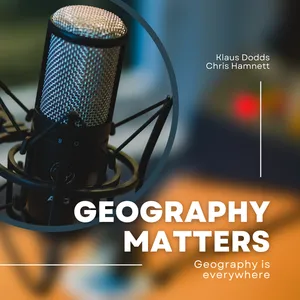
Geography Matters explores the importance of geography in shaping and influencing the world we live in: economy, society, politics and environment. Whether looking at world affairs and geopolitics, at global trade, regional inequality or the character of particular places, geography is important. History looks at when and why things happen. Geography looks at where and why. Everything takes place at particular times and in particular places. You can't escape the importance of geography whether its about conflicts over international borders, religion, the environment or the impact of climate change. Geography is everywhere. It affects who we are, our opportunities and our life chances. You can't escape geography. Follow us at https://feeds.captivate.fm/geography-matters/
Latest Episodes
The most recent episodes — sign up to get AI-powered summaries of each one.
- 2 weeks ago32 min
Climate change, flooding and water management
In this episode my guest is Hannah Cloke, Regius professor of Meteorology and climate science at the University of Reading. Her title is rather special as she is one of the few professors in Britain appointed by the King or Queen. Her specialty is hydrology and flooding and she now appears regularly on TV whenever there isa major flooding issue. I started by noting the very hot summer of 2026 and Hannah noted that the global climate is now very clearly warming up quite rapidly. One consequence of this is that warmer air is able to hold much more moisture and this has been an important contributory cause of both heavy rainfall and flooding in both Britain and continental Europe. The floods in Valencia in 2025 and the major flooding in Germany in 2021 are clear examples, as are the floods in Yorkshire, Cumbria and the Severn. Beyond Europe we are seeing both more and stronger hurricanes and typhoons as warm seas and air encourage stronger storms. In addition there are now big issues with both melting ice and rising sea levels and the melting of Himalayan and Alpine glaciers. The disastrous floods in Nepal caused by glacial collapse in September 2026 highlight this as do the floods in Switzerland caused by the collapse of part of the Birch glacier on the village of Blatten. But shrinking glaciers also mean the possibility of a longer term shortage of water. This is very important in the Himalayas and the Tibean plateau which are the source of many very important rivers in South and South East Asia: the Bramaputra, the Ganges, Indus, Mekong. Irrawaddy and the Yangtze. The lives of billions of people depend on the water from these rivers. Hannah finishes by stressing that we need to be much more careful in our use of water. It is a scarce resource and it could become much scarcer, floods or not.
- Sep 1, 202636 min
Global trade and global supply chains
In this episode I am delighted to have with me Ed Conway to discuss his new book 'Trade World'. Ed is the economics editor of Sky News and in 2023 he published his first booked 'Material World' which looked at some of the key raw materials - salt, copper, iron, oil etc on which our modern world depends. In his new book he looks at the origins, the structure and organisation of the international trade system which our modern world depends on. Many of the products we consume today are not produced in our own countries but imported from overseas. we get many of our fruit and vegetables from southern Europe and our clothes from half way around the world. The T shirt I am wearing is from Nicaragua, but it could have come from Vietnam or Bangladesh or Turkey. Ed looks in his book at the history of supply chains, going back to Greek and Roman Times and the complex web of trade across the Mediterranean and the developments during the Dutch and British empires. He focuses on three key examples in his book, bread, clothing and cars. We should not be surprised by cars, as many of us are used to cars from Germany, Italy, France, Korea and Japan, but now they are also coming from China and Malaysia. Bread is more of a surprise but ,much of the wheat used in its manufacture now comes from North america. But, as he notes we are facing a big change at present. The current era of globalization which got under way in the post war era with the off shoring of production, particularly to SE Asia, is now under threat. People used to argue that we were seeing the 'end of geography'. We could get anything we wanted from anywhere. But Ed suggests we may now be seeing the Return of Geography' with countries and companies re-shoring production and looking at the risks of being dependent on key goods produced abroad. This is why the British government have just intervened to ensure the continuation of steel production in Britain. Can a modern country risk being completely dependent on steel produced overseas? What if the tap is turned off at a time of conflict? Increasingly, countries are thinking about the need to maintain the production of key items within national borders.
- Jun 1, 202640 min
Geography Strikes Back?
In this podcast Klaus Dodds and I go back to a topic we discussed in the first series - how, when and where does geography matter. We start by arguing that everything that happens in the world happens in both time and space. In that sense geography is everywhere. But we argue that the role and importance of geography varies over time and across societies. In the Age of Discovery sailors from Western countries were exploring and opening up hitherto unknown parts of the world. Then in the mid- late C19th, geography was increasingly important for Western colonial powers as new parts of the world were incorporated into the growing international system. This period was associated with a set of some western views about the links between climate and economic and social development which tended to argue that western countries had developed rapidly because of their climatic and other advantages. From mid C20th onwards these views were questioned and economic and social development was increasingly seen to be linked to a wider set of economic and political factors. We discuss th difference between North and South Korea after the end of the Korean war in 1953, of East and West Germany and the rise of both the semi-conductor industry in Taiwan from the 1970s and the rapid economic growth of Singapore: an island with very few physical advantages. We conclude by looking at what has happened in recent years, and Klaus suggests that while in the 1990s some people argued that geographical location would become less important, in the last few years climate change, wars and political instability are pointing to the resurgent importance of place
- May 19, 202635 min
Oceans
Oceans are very important. They cover 71% of the worlds's surface and, as well as their importance for fishing, trade and transport they play a major role in climatic and environmental stability. They absorb a very high proportion of the C02 we produce and without their absorbtion capacity the world would be heating up much faster. They also transport the heat received from solar radiation from the equatorial belts towards the poles by a series of major currents. This is critical, otherwise there would be a global heat imbalance with equatorial regions heating up and the polar regions getting colder. Britain is a major beneficiary of this process via the Gulf Stream which flows up from the Gulf of Mexico, along the east coast of the USA, then across the Atlantic to the British Isles. This is why the Scilly Isles and Cornwall have Palm trees and other sub-tropical plants. But the Gulf Stream is part of a much bigger system known as the Atlantic conveyor system whereby the warm waters begin to cool and sink as they reach the North Atlantic and Iceland and are transported back at depth towards the equator. There are similar systems in the Pacific and in the Southern Hemisphere including the Humbolt current off Peru which is important for fishing. The Pacific also experiences an alternation of tropical warming and cooling every few years called El Nino and El Nina which causes major changes in weather systems across South america, South Africa, and Australia. In addition to these important climatic elements, warming of the oceans and the atmosphere means that much greater qualities of moisture are being absorbed into the atmosphere and generating more frequent and stronger tropical storms and hurricanes, the tail ends of which are hitting Britain and western Europe causing heavy rainfall and flooding. In addition to all this, seas and oceans support an estimated 60-70 million fishermen and women and the 200 million tons of fish caught annually provides the major source of protein for 2-3 billion people. Last but not least we discuss transport. Some 90% of world trade by weight, though only 70% by value goes by sea - oil and gas, ironore,wheat, soya, timber, cars and container ships. Only the lightest and most valuable cargoes go by air. And when major trade routes are blocked as the Persian Gulf and the Straits of Hormus, then the global economy feels the pinch. The oceans are important.
- Apr 13, 202636 min
Trump, Maps and Geography
- Mar 23, 202636 min
Regional Inequality
Regional inequality is an important issue in almost every country. There are almost always more prosperous or more developed regions and less prosperous and less developed regions. The reason is simple. Although it is theoretically possible to have such things as education and health care distributed relatively equally over space, it is impossible for economic resources to be equally or evenly distributed. Some areas have iron or coal or oil, others have hydro power and some areas on the coast can develop as ports, resources and geographical advantages are not equally distributed. Some areas, and China is a good example, are arid or semi-desert and thousands of miles from the coast and from transport routes. Economic development in such areas is difficult if not impossible. As a result, in almost every country, some areas are more economically developed than others, and as a result they tend to have a higher standard of living and better social facilities. It is impossible to provide the same standard of educational or health care in a sparsely populated region, hundreds or thousands of kilometres from anywhere, as it is in a big city. But geographical unevenness apart, the history of economic development leaves a massive legacy. In Britain, some of the poorest areas use to be in parts of the South East before the Industrial Revolution. But then, from 1820s onwards, the development of the major industrial areas of the Black country, Birmingham, Manchester, Glasgow, Liverpool, Newcastle etc changed the economic geography of Britain and saw the rise of new industrial cities. But, after a century of growing prosperity, the depression of the 1930s and then the de-industrialisation of the 1960s, 70s and 80s saw another transformation creating long lasting problems of 'left behind areas'. Similar processes happened in France, Germany, Belgium, China and the USA.. And today development of Silicon Valley and the high tech clusters of the USA or China overlays a new dimension. Some areas are almost inevitably less developed or poorer than others and many countries have developed regional policy to try to reduce the inequalities and even things up. But it is difficult to transform old industrial areas and it can take many decades to do so and with varying degrees of success. Regional inequality is a persistent problem in almost all countries. It is almost impossible for things to be distributed equally over space.
- Mar 11, 202636 min
Strategic minerals - why are they so important?
Strategic minerals are minerals which countries deem to be particularly important for various reasons - it could be for energy needs, for exports or for defense or high tech industry. What makes a mineral strategic can change over time. Arguably, coal was an important strategic mineral during the industrial revolution and during the steamship era. Before it was replaced by oil, navies had to have coal bunkering facilities to fuel their warships. Today, however, although coal is still very important in countries like India and China where it fuels large numbers of coal fired power stations, it is far less important in most European countries because of the shift towards oil and gas and nuclear energy. But in the modern world, with the threat of climate change, and the shift towards an increasingly electrified and digital economy, the minerals which are increasingly important are copper, lithium, cobalt and various rare earths, used for mobile phones, power cables, electric car batteries and the like. And the important issue is that, like oil and gas, they are not equally geographically distributed. Korea and Japan for example have very little in the way of oil and gas. Copper, which used to be mined in the Mediterranean, is now of immense importance because of its high electrical conductivity. Deposits are concentrated in the central African copper belt which straddles Zambia and Democratic Republic of Congo and particularly in Chile and Rio Tinto Zinc also has a mine in Mongolia. The developed worth is now increasingly dependent on copper. Lithium is found in various places but the world's largest deposits are found in the intermontane basins of what is called the Lithium triangle spanning Argentina, Bolivia and Chile. Cobalt deposits are again concentrated in the Democratic republic of Congo, and are characterized by informal, artisanal, and often illegal mining. The rare earth minerals are found in various countries but 80% of the processing is concentrated in China. So, in all of these examples, geography is extremely important in terms of both the distribution of resources, access and ease of extraction. The geography of strategic minerals is likely to become more important in the future.
- Feb 24, 202635 min
The geography of AI
Artificial intelligence, or AI, has become an increasingly hot issue in the last year or two. There are major debates about its potential impact on the labour market, on society and on human beings themselves. In this episode, our focus on more restricted, looking solely at the geographical distribution and concentration of AI, and its implications for power supply, for cooling and space. We look at two key elements of AI, the increasing number of large data centres and cloud storage facilities. Both of these involve large sheds, filled with racks of servers, computers and memory or processing chips. They take a huge amount of power and require a lot of cooling. They are overwhelming concentrated in the USA, in Western Europe and in China. The number of data centres in the less developed world is far fewer, which is largely a reflection of the level of economic development and data generation in such countries. We discuss the extent to which it is possible to use the terms AI or digital colonialism, and whether these are appropriate terms for what is perhaps just a reflection of different levels of economic development. In the next episode we will discuss some of the growing raw material needs for AI and electrification including, copper, lithium and rare earth minerals.
Get Geography Matters summaries in your inbox
Free AI-powered daily recaps. Key takeaways, quotes, and mentions — in a 5-minute read.
Get Free Summaries →Free forever for up to 3 podcasts. No credit card required.
You Might Also Like
Listeners also like.

Geography 101
Explores global destinations through personal travel stories, cultural insights, and geographical details.

GEO Podcast
Explores geology fundamentals and Earth's natural wonders, from rocks and minerals to volcanoes and glaciers, for learners of all levels.

Everything Everywhere Daily: History, Science, Geography & More
Daily explorations of history, science, geography, and culture with concise, accessible explanations of complex topics.

Inquiring Minds
Explores the intersection of science and society through critical thinking and in-depth analysis.

More or Less
Tim Harford examines the accuracy and context of statistics cited in politics, media, and daily life.
Spatial Signals
Explores remote sensing, GIS, and geospatial technologies through conversations with the people who use them.

Planet Money Summer School
A crash course in economics that teaches fundamental concepts through real-world examples in everyday life.

Science In Action
The BBC covers the latest weekly developments and news in science.
Mr. Mercieca’s AP World History and AP Human Geography
Readings designed for AP World History and AP Human Geography students.

Here's Why
Explains global news and geopolitical shifts with clear, concise analysis on topics like nuclear security, AI, and market dynamics.

NatSec Matters
Former national security officials interview top leaders on critical security challenges and U.S. policy responses.

Sean Carroll's Mindscape: Science, Society, Philosophy, Culture, Arts, and Ideas
Conversations with leading thinkers exploring fundamental ideas in science, philosophy, culture, and the arts.
About Geography Matters
Geography Matters explores the importance of geography in shaping and influencing the world we live in: economy, society, politics and environment. Whether looking at world affairs and geopolitics, at global trade, regional inequality or the character of particular places, geography is important. History looks at when and why things happen. Geography looks at where and why. Everything takes place at particular times and in particular places. You can't escape the importance of geography whether its about conflicts over international borders, religion, the environment or the impact of climate change. Geography is everywhere. It affects who we are, our opportunities and our life chances. You can't escape geography. Follow us at https://feeds.captivate.fm/geography-matters/
Customized Recaps
AI-powered recaps with compact key takeaways, quotes, and insights.
Straight to Your Inbox
Get key takeaways from Geography Matters in a 5-minute read.
Save Hours Every Week
Stay current on your favorite podcasts without falling behind.
Frequently Asked Questions
What is Podzilla's Geography Matters daily summary?
It's a free AI-powered email that summarizes new episodes of Geography Matters as soon as they're published. You get the key takeaways, notable quotes, and links & mentions — all in a quick read.
How does the Geography Matters podcast summary work?
When a new episode drops, our AI transcribes and analyzes it, then generates a personalized summary tailored to your interests and profession. It's delivered to your inbox every morning.
Is this an official Geography Matters product?
No. Podzilla is an independent service that summarizes publicly available podcast content. We're not affiliated with or endorsed by Chris Hamnett.
Can I get summaries of other podcasts too?
Absolutely! The free plan covers up to 3 podcasts. Upgrade to Pro for 15, or Premium for 50. Browse our full catalog at /podcasts.
How often does Geography Matters release new episodes?
Geography Matters publishes biweekly. Our AI generates a summary within hours of each new episode.
What topics does Geography Matters cover?
Geography Matters covers topics including Science, Documentary, Culture, Society & Culture, Travel, Social Sciences, Places & Travel. Our AI identifies the specific themes in each episode and highlights what matters most to you.
Start getting Geography Matters summaries tomorrow morning.
Free forever for up to 3 podcasts. No credit card required.
Free forever for up to 3 podcasts. No credit card required.