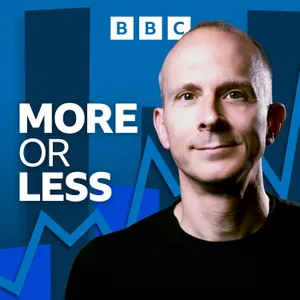
Free Daily Podcast Summary
More or Less: Daily Summaries Delivered
by BBC Radio 4
Tim Harford explains - and sometimes debunks - the numbers and statistics used in political debate, the news and everyday life.
Latest Episodes
The most recent episodes — sign up to get AI-powered summaries of each one.
- Today8 min
The Uzbekistan-shaped hole in an influential climate cost paper
How much could climate change cost the global economy? That would be a very useful thing to know, and scientists have developed statistical models that they think can help give a reasonable answer. These involve finding the patterns in economic data associated with temperature changes - and then applying them to the future changes that are predicted as the globe warms. In 2024, a scientific paper was published that apparently offered the most accurate projection yet of that potential cost - analysing the impact of temperature on economic activity at a far more granular level than had been attempted before. The paper quickly became highly influential. And then at the end of 2025, it was retracted. Why? It’s all got something to do with Uzbekistan. Solomon Hsiang, Professor of Global Environmental Policy at the Stanford Doerr School of Sustainability, explains how he and his team identified the problem.Presenter: Tim Harford Series Producer: Tom Colls Production Co-ordinator: Maria Ogundele Sound Mix: Dave O’Neill Editor: Richard Vadon
- 3 days ago30 min
Does the UK really have nine out of the ten poorest regions in Northern Europe?
Tim Harford investigates some of the numbers in the news. This week: Does the UK account for nine out of ten of the poorest regions in Northern Europe? It’s a classic story of devil meets detail where the true meaning is the geographical inequality we met along the way. An article in The Economist has claimed that a single donkey charity in Devon received more in annual donations than all the major political parties combined. Is this true? And if so, should we be Led By Donkeys? Last week 781 migrants crossed the channel in small boats in one day. Social media is keen to work out how much this might cost the UK economy. We put the numbers in context and ask Madeleine Sumption from the Migration Observatory about the fiscal impact of asylum seekers. A claim has been buzzing round the internet that bees could hold the secret to long life, but our team is sceptical. We deliver the statistical exposé of Big Honey that the mainstream media’s been too afraid to cover.Guests: Liam Sides, Associate Director at Oxford Economics’ Cities and Regions team Dr Madeleine Sumption, Director of the Migration Observatory at the University of Oxford Dr Dot Bennett, Professor of Cell Biology at City St. George's, University of London Dr Ramsay Bowden, Assistant Professor in Medical Genetics at the University of CambridgePresenter: Tim Harford Series Producer: Tom Colls Reporters: Lizzy McNeill and Kateryna Pavyluk Producer: Nathan Gower Editor: Richard Vadon Programme Coordinator: Maria Ogundele Sound Engineer: James Beard
- 1 weeks ago9 min
Trump fact-check: Do the US and Venezuela have 60% of the world’s oil?
US president Donald Trump has claimed in a speech to the UN that the US and Venezuela combined now have 60% of the world’s oil. 100% of the team on More or Less were confused.What measurement was the president using to get to this figure? Barrels of oil produced a day? Reserves of oil in the ground? It’s hard to make any of these stats add up.To find out whether there was any truth in the claim, we spoke to energy expert Bill Farren-Price of the Oxford Institute for Energy Studies.If you spot any numbers you think we should take a look at, email us at moreorless@bbc.co.ukPresenter: Tim Harford Producer: Lizzy McNeill Researcher: Kateryna Pavlyuk Series Producer: Tom Colls Editor: Richard Vadon Sound Mix: Neil Churchill
- 1 weeks ago29 min
Has the UK’s productivity puzzle been solved?
Tim Harford investigates some of the numbers in the news. This week: Frustrated economists have been left rending their garments and howling in the streets after the UK’s ‘productivity puzzle’ - a decade-long head-scratching, soul-searching conundrum - disappeared with a click of the fingers and a tweak of the methodology. Should the Office for National Statistics have acted sooner? We ask Financial Times economic guru Chris Giles. Can it really be true that by the 1960s, one in ten Irish children entered religious orders? Reporter Lizzy McNeill has the answer, and the history. Is the AI datacentre goldrush threatening to swamp our electricity grid? And what are the consequences for its carbon footprint? We delicately untangle the live wires of this hot potato and give the people what they want: nuanced #GridChat. This is the way the album ends - not with a banger, but with a whimper. Music Substacker Mitchell Stirling has used data to test the decades theory that albums tend to end with a quiet track. Come for the explanation of the physics of vinyl, stay for whatever music we end up being able to use.Guests: Chris Giles - Economics Commentator at the Financial Times Johnny Gowdy - Director at Regen Mitchell Stirling - Substacker, data nerd, music nerd (Renaissance man)Presenter: Tim Harford Series Producer: Tom Colls Reporters: Nathan Gower and Lizzy McNeill Editor: Richard Vadon Programme Coordinator: Maria Ogundele Sound Engineer: James Beard
- 2 weeks ago8 min
Are carrots becoming less nutritious?
Are fruit and vegetables less nutritious than they used to be? And is declining soil quality to blame? Loyal listener Sarah got in touch to ask us to investigate an interesting quote from Dr Karan Rajan in a BBC news story. “We know our soil is not as nutrient dense as it was decades ago,” he said. “So a carrot in the 1950s will be far more nutrient-rich than a 2026 carrot.” Is this really true? wondered Sarah. We wondered the same, so we spoke to some experts on fruit and veg nutrition to find out. CONTRIBUTORS Robin Marles, a former senior scientist in Canada’s Food and Nutrition Directorate Professor Steve McGrath, a research scientist at Rothamsted ResearchCREDITS Presenter: Tim Harford Series Producer: Tom Colls Production Co-ordinator: Maria Ogundele Sound Mix: Sue Maillot Editor: Richard Vadon
- 2 weeks ago28 min
Are bad teeth the number one reason kids go to A&E?
Tim Harford investigates some of the numbers in the news. This week: Are crumbling teeth the number one reason children attend A&E? We drill down into the dental health of the nation’s kids. The US Ambassador to Israel Mike Huckabee has claimed that a quarter of pharmaceuticals used in the UK come from Israel. We check the facts. Is former Education Secretary Michael Gove responsible for increasing number of young people not in education, employment or training? An AI researcher has caused a global firestorm by suggesting there’s more than a 10% chance AI kills all humans within the next decade. We explore the rigorous maths (or lack thereof) behind these kinds of predictions.Guests: Dr Chris Vernazza - head of the School of Dental Sciences at Newcastle University Daisy Christodoulou - Director of Education at No More Marketing Dr Alexandru Marcoci - Assistant Professor of Global Risk and Resilience at the University of CambridgePresenter: Tim Harford Series Producer: Tom Colls Reporter: Lizzy McNeill Producers: Nathan Gower, Phoebe Keane Editor: Richard Vadon Programme Coordinator: Maria Ogundele Sound Engineer: Neil Churchill
- 3 weeks ago8 min
Could this be the strongest El Niño in 1,000 Years?
Every year, climate scientists keep a close eye on data coming out of a particular area of the Pacific Ocean. They’re trying to measure the scale of a climate phenomenon - the El Niño event or effect. This is a naturally occurring phenomenon where ocean surface temperatures rise, transferring warmth from the ocean to the atmosphere. This can drive up global temperatures but also play havoc with weather systems, with profound consequences. And this year, scientists have watched with ever-widening eyes, as their projections for the peak of this year’ El Niño event have come in unprecedently high. Indeed, one climate scientist has argued that it's not beyond the realm of possibility to say this might be the strongest El Niño event in 500 or even 1,000 years. We wanted to find out more, so we went straight to the scientist himself. Contributor: Dr. Zeke Hausfather - research scientist with Berkeley Earth and climate research lead at StripeCredits: Presenter: Tim Harford Producer: Nathan Gower Series Producer: Tom Colls Production Co-ordinator: Maria Ogundele Sound Mix: Dave O’Neill Editor: Richard Vadon
- 3 weeks ago28 min
Why are so many ex-prisoners being sent back to prison?
Tim Harford investigates some of the numbers in the news. This week: The number of people being recalled to prison after early release in England and Wales is rising sharply. Why? Is the UK millionaire an endangered species? We ask Duncan Weldon - he’s like David Attenborough, but for economics. A viral graph seems to show that Europe is having a record low year for wildfires. How can we reconcile this with this summer’s shocking coverage of fires in France and Spain? We all know seagulls are low-life thieves - but can they really be responsible for £171m worth of robbery? Prepare for five minutes of public service journalism at its finest.Guests: Cassia Rowland, Senior Researcher at the Institute for Government Hannah Ritchie, Deputy Editor at Our World in Data Duncan Weldon, economist and author of Blood and Treasure Presenter: Tim Harford Series Producer: Tom Colls Reporter: Lizzy McNeill Producers: Nathan Gower, Phoebe Keane, Josh McMinn Editor: Richard Vadon Programme Coordinator: Brenda Brown Sound Engineer: James Beard
Get More or Less summaries in your inbox
Free AI-powered daily recaps. Key takeaways, quotes, and mentions — in a 5-minute read.
Get Free Summaries →Free forever for up to 3 podcasts. No credit card required.
You Might Also Like
Listeners also like.
Analysis
Examines the ideas and forces shaping public policy in Britain and abroad with writers, journalists, and academics.
Economist Podcasts
Daily global news analysis from correspondents on major international stories.
The New World
Explores global shifts in politics, truth, demographics, and power as societies face transformative change.
Planet Money
Explains how economic forces influence everyday life and global events through storytelling and deep dives into surprising topics.
Freakonomics Radio
Explores the hidden side of everyday phenomena, from human behavior to economic quirks, using data and storytelling.
The Real Story
Experts and decision makers analyze and debate major news stories.
It's The Economy
A weekly breakdown of economic concepts and their real-world impact, explained by experts in short, accessible episodes.
The World, the Universe and Us
Explores big scientific questions about life, consciousness, climate, and the cosmos with expert scientists and New Scientist journalists.

The Intelligence from The Economist
Global news and analysis on politics, business, and culture from The Economist’s correspondents, with weekday stories and a weekend deep-dive.
BBC Inside Science
Explores the latest scientific discoveries and debates shaping our understanding of the world.
Unexpected Elements
Explores hidden scientific connections behind global news and everyday phenomena.
Freakonomics, M.D.
A physician-economist explores surprising studies where healthcare and economics intersect, uncovering hidden patterns in medical data.
About More or Less
Tim Harford explains - and sometimes debunks - the numbers and statistics used in political debate, the news and everyday life.
Customized Recaps
AI-powered recaps with compact key takeaways, quotes, and insights.
Straight to Your Inbox
Get key takeaways from More or Less in a 5-minute read.
Save Hours Every Week
Stay current on your favorite podcasts without falling behind.
Frequently Asked Questions
What is Podzilla's More or Less daily summary?
It's a free AI-powered email that summarizes new episodes of More or Less as soon as they're published. You get the key takeaways, notable quotes, and links & mentions — all in a quick read.
How does the More or Less podcast summary work?
When a new episode drops, our AI transcribes and analyzes it, then generates a personalized summary tailored to your interests and profession. It's delivered to your inbox every morning.
Is this an official More or Less product?
No. Podzilla is an independent service that summarizes publicly available podcast content. We're not affiliated with or endorsed by BBC Radio 4.
Can I get summaries of other podcasts too?
Absolutely! The free plan covers up to 3 podcasts. Upgrade to Pro for 15, or Premium for 50. Browse our full catalog at /podcasts.
How often does More or Less release new episodes?
More or Less publishes 2x weekly. Our AI generates a summary within hours of each new episode.
What topics does More or Less cover?
More or Less covers topics including Science, News, Commentary, Mathematics, Culture, Society & Culture. Our AI identifies the specific themes in each episode and highlights what matters most to you.
Start getting More or Less summaries tomorrow morning.
Free forever for up to 3 podcasts. No credit card required.
Free forever for up to 3 podcasts. No credit card required.