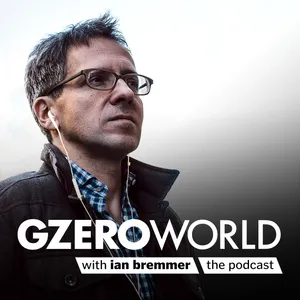
Free Daily Podcast Summary
GZERO World with Ian Bremmer: Daily Summaries Delivered
by GZERO Media
The United States will no longer play global policeman, and no one else wants the job. This is not a G-7 or a G-20 world. Welcome to the GZERO, a world made volatile by an intensifying international battle for power and influence. Every week on this podcast, Ian Bremmer will interview the world leaders and the thought leaders shaping our GZERO World.
Latest Episodes
The most recent episodes — sign up to get AI-powered summaries of each one.
- 2 days ago25 min
The great US-China superpower rivalry, with Elizabeth Economy
President Trump and China’s Xi Jinping traded handshakes, toasts, and pandas at a diplomatic summit at the White House last week, but beneath all the pageantry, the rivalry between the world’s two most powerful countries is only getting more intense. Hoover Institution Senior Fellow Elizabeth Economy joins Ian Bremmer on the GZERO World podcast for a look at what’s really driving the relationship between the US and China right now, where each side has leverage, and whether the US is falling behind in the race for global influence and technological dominance. From Beijing's perspective, the second Trump administration has handed China some useful opportunities as well as challenges. On one hand, Washington is no longer pressing Beijing about human rights issues and has stepped back from its leadership role in global institutions, giving China an opening. On the other, the Trump administration still views China as its biggest strategic competitor, both in terms of tech competition and national security. Bremmer and Economy look at the state of the US-China rivalry—from computer chips to AI to space dominance—and where it does from here. Host: Ian BremmerGuest: Elizabeth Economy Subscribe to the GZERO World with Ian Bremmer Podcast on Apple Podcasts, Spotify, or your preferred podcast platform, to receive new episodes as soon as they're published. Hosted by Simplecast, an AdsWizz company. See pcm.adswizz.com for information about our collection and use of personal data for advertising.
- 1 weeks ago32 min
The UN at a crossroads, with Secretary-General António Guterres
This week on the GZERO World Podcast, Ian Bremmer sits down with UN Secretary-General Antonio Guterres on the sidelines of the General Assembly for the final time in his official capacity as UN chief. After a decade as the UN’s top diplomat, the former Portuguese Prime Minister is leaving his position at a moment of great global instability. Wars grind on in Ukraine and Iran with no end in sight. Humanitarian crises in Gaza and Sudan have exposed how little leverage the international system has when powerful states and their partners act with impunity. With faith in global institutions at an all-time low, does the world’s most ambitious experiment in multilateralism still have a place?While Guterres will be the first to acknowledge that the UN is weakened, he says it is far from obsolete. The old superpowers are discovering their limits, while middle and rising powers are demanding more influence. Those countries need a place to negotiate rules, build coalitions, and keep competition from becoming confrontation. For all its failures, the United Nations is still the only table where all 193 member states still have a seat. Guterres and Bremmer discuss all of that, as well as the erosion of international law, limits of superpowers, and why he believes AI is the most urgent challenge facing humanity.Host: Ian BremmerGuest: António Guterres Subscribe to the GZERO World with Ian Bremmer Podcast on Apple Podcasts, Spotify, or your preferred podcast platform, to receive new episodes as soon as they're published. Hosted by Simplecast, an AdsWizz company. See pcm.adswizz.com for information about our collection and use of personal data for advertising.
- 2 weeks ago27 min
Bioweapons, AI, and the end of the world, with Annie Jacobsen
For decades, nuclear war has represented the ultimate doomsday scenario. But investigative journalist and author Annie Jacobsen says biological warfare may pose an even greater overall threat. Unlike nuclear weapons, which require tightly controlled materials, enormously expensive delivery systems, and specialized expertise, the barriers to developing biological weapons can be far lower. And artificial intelligence could lower them further.Ian Bremmer sits down with Jacobsen to discuss how AI is changing the landscape of catastrophic risk. As increasingly powerful models make sophisticated scientific knowledge easier to access, they could allow bad actors to bypass years of specialized training and dramatically shorten the path from an idea to a potentially dangerous capability.They also explore the struggle to govern a technology developing faster than regulators can respond, the gaps in existing AI safeguards, and what governments and tech companies could do to identify dangerous vulnerabilities before they are exploited. And they step back to a larger question at the heart of Jacobsen’s work: Why does humanity keep developing technologies with the potential to threaten its own survival – and can our ability to manage those risks ever catch up with our ability to create them? Subscribe to the GZERO World with Ian Bremmer Podcast on Apple Podcasts, Spotify, or your preferred podcast platform, to receive new episodes as soon as they're published. Hosted by Simplecast, an AdsWizz company. See pcm.adswizz.com for information about our collection and use of personal data for advertising.
- 3 weeks ago28 min
The enduring legacy of 9/11, with former Defense Secretary Mark Esper
This week marks 25 years since 9/11—the deadliest terror attack the world has ever seen and a defining moment in American history. The attacks transformed US politics and national security. The war on terror became the organizing principle of American foreign policy. Former Secretary of Defense Mark Esper joins Ian Bremmer on the GZERO World Podcast to reflect on the day that forever changed how Americans thought about national security, and how the United States wielded its enormous power around the world. How much did we learn from the post-9/11 era and do we risk repeating the same mistakes? 25 years after the US launched its war on terror, America is once again fighting a war in the Middle East without a clear endgame or exit strategy. The United States is on the back foot in its war with Iran, Esper says. The original goal of getting Tehran to the negotiating table about its nuclear program isn’t even being discussed anymore. And meanwhile, the United States is dropping the ball on countering its biggest existential threat: China. Host: Ian BremmerGuest: Mark Esper Subscribe to the GZERO World with Ian Bremmer Podcast on Apple Podcasts, Spotify, or your preferred podcast platform, to receive new episodes as soon as they're published. Hosted by Simplecast, an AdsWizz company. See pcm.adswizz.com for information about our collection and use of personal data for advertising.
- Aug 29, 202629 min
The race to build humanity's future in space, with Chris Hadfield
More than half a century after humans last walked on the Moon, the next era of space exploration is taking shape. Getting there is cheaper, private companies are playing a much bigger role, and discoveries like vast reserves of lunar water have made the prospect of establishing a permanent presence on the Moon far more realistic. Ian Bremmer sits down with Canadian astronaut Chris Hadfield to talk about what this new space age could look like. They discuss the growing competition between the US and China, whether rivals can cooperate on the lunar surface, and who gets to write the rules as governments and companies begin looking beyond simply planting a flag. Hadfield also breaks down the practical challenges of living on the Moon – from powering a settlement through long lunar nights to the unanswered question of whether humans can develop normally in low gravity. He explains how private companies are turning space into a commercial marketplace, why regulation will inevitably struggle to keep pace, and why robots alone can never satisfy humanity’s drive to explore Mars. And drawing on nearly six months aboard the International Space Station, Hadfield reflects on the surprisingly wonderful experience of sleeping in zero gravity, circling Earth 2,600 times, and how seeing the planet from above fundamentally changed his perspective on humanity and our place in the universe. Subscribe to the GZERO World with Ian Bremmer Podcast on Apple Podcasts, Spotify, or your preferred podcast platform, to receive new episodes as soon as they're published. Hosted by Simplecast, an AdsWizz company. See pcm.adswizz.com for information about our collection and use of personal data for advertising.
- Aug 15, 202623 min
The global aid crisis, with David Miliband
What happens when the world’s safety net disappears? For decades, international aid has helped fight poverty, stop disease outbreaks, and keep fragile societies from falling over the edge. But after the shutdown of USAID last year, the relief system is in danger of collapsing entirely. International Rescue Committee President & CEO David Miliband joins Ian Bremmer on the GZERO World Podcast to talk about the long shadow cast by America’s retreat from global aid and what comes next. In truth, there has never been enough humanitarian aid to help the millions of people who desperately need it each year. But amid two major global crises–the Ebola outbreak in the Democratic Republic of the Congo and the war in Iran–the system is under more strain than ever before. Humanitarian aid is more than charity, it’s what keeps crises from spiraling out of control and conflict from spilling over borders. Can anything be done to keep the system from collapsing entirely? Who, if anyone, is stepping up to fill the vacuum left by the United States? Fresh from a trip to Ukraine, Miliband talks about the humanitarian need on the ground there, the ripple effects of the US pullback, and where the international relief system goes from here. Subscribe to the GZERO World with Ian Bremmer Podcast on Apple Podcasts, Spotify, or your preferred podcast platform, to receive new episodes as soon as they're published. Hosted by Simplecast, an AdsWizz company. See pcm.adswizz.com for information about our collection and use of personal data for advertising.
- Aug 1, 202632 min
The UK a decade after Brexit, with Rory Stewart
Ten years ago, Britain voted to leave the European Union in one of the most consequential political decisions of the 21st century. Supporters promised greater sovereignty, stronger economic growth, and a more independent future. Instead, Brexit ushered in a decade of political upheaval, economic uncertainty, and a fundamental rethinking of Britain's role in the world. On this episode of the GZERO World podcast, Ian Bremmer sits down with former UK cabinet minister Rory Stewart to assess Brexit's legacy a decade later. They discuss whether the referendum's core promises have been fulfilled, why Britain's economy has struggled to regain momentum, and how the global shift toward tariffs, industrial policy, and geopolitical competition changed the landscape just as the UK struck out on its own. The conversation also explores the remarkable rise of Nigel Farage—from Brexit architect to leader of Reform UK—and the financial scandal that now threatens his anti-establishment image. Stewart explains why Britain has cycled through seven prime ministers in ten years, whether Manchester Mayor Andy Burnham represents a new political alternative, and why voter frustration continues to reshape British politics. Finally, Bremmer and Stewart examine Britain's changing relationship with Europe and the United States, the future of the transatlantic alliance, and what the UK's experience can tell us about the broader challenges facing Western democracies. Subscribe to the GZERO World with Ian Bremmer Podcast on Apple Podcasts, Spotify, or your preferred podcast platform, to receive new episodes as soon as they're published. Hosted by Simplecast, an AdsWizz company. See pcm.adswizz.com for information about our collection and use of personal data for advertising.
- Jul 25, 202637 min
Lebanon's best chance for peace, with Kim Ghattas
While the world’s attention has focused on the Strait of Hormuz and the escalating conflict between the United States and Iran, another potentially transformative front has opened in Lebanon. Israeli attacks against the Iranian-backed group Hezbollah have left more than 4,000 people dead and displaced over a million. Now, a fragile ceasefire has raised a question diplomats have struggled with for decades: Can Hezbollah actually be disarmed? On the GZERO World Podcast, Ian Bremmer speaks with Lebanese-born journalist and Middle East expert Kim Ghattas about Iran’s shrinking regional influence, Israel’s possible plans for a long-term buffer zone, and Lebanon’s best chance in decades to reclaim control of its territory. Hezbollah remains armed, but Ghattas argues that it is substantially weaker, while the fall of Syria’s Assad regime has severed a crucial link in Iran’s regional network. Forcing the Lebanese Army to confront Hezbollah could trigger another civil war. Instead, Ghattas says Lebanon must gradually constrain the group, strengthen state institutions, and show Hezbollah’s supporters that diplomacy can deliver more than armed resistance. That will require Israeli withdrawals, international support, and difficult negotiations over the political future of Lebanon’s Shia community. “You constrain their capacity to operate. You crowd them out,” Ghattas says. “You demonstrate that diplomacy works and delivers for the Lebanese people in terms of aid, in terms of improved relations with the US.” Subscribe to the GZERO World with Ian Bremmer Podcast on Apple Podcasts, Spotify, or your preferred podcast platform, to receive new episodes as soon as they're published. Hosted by Simplecast, an AdsWizz company. See pcm.adswizz.com for information about our collection and use of personal data for advertising.
Get GZERO World with Ian Bremmer summaries in your inbox
Free AI-powered daily recaps. Key takeaways, quotes, and mentions — in a 5-minute read.
Get Free Summaries →Free forever for up to 3 podcasts. No credit card required.
You Might Also Like
Listeners also like.
Global Security Briefing
Expert analysis on global security issues, focusing on UK foreign and defense policy in a changing international landscape.

Fareed Zakaria GPS
Analyzes global political issues and international affairs through interviews and expert discussions.

The Real Story
Experts and decision makers analyze and debate major news stories.

One Decision
Former intelligence leaders and journalists examine high-stakes decisions that shaped global events.

The Global Story
A daily look at global politics, business, and foreign policy through the lens of US decisions and their worldwide impact.

The Rest Is Politics: US
Insightful analysis of U.S. politics and policy from a former White House official and a veteran BBC correspondent.
The Prof G Pod with Scott Galloway
A no-holds-barred take on business, tech, culture, and life from a professor, author, and entrepreneur.
The New World
Explores global shifts in politics, truth, demographics, and power as societies face transformative change.

Reuters World News
A daily 10-minute news briefing covering global events, reported by Reuters journalists.
The Truth of the Matter
Breaks down complex global policy issues through informed, balanced discussions without spin or sensationalism.

The Interview
In-depth 20-minute conversations with global leaders, cultural figures, and decision-makers on the issues shaping our world.

Intelligence Squared
Live debates and in-depth discussions on pressing global issues featuring leading experts and thinkers.
About GZERO World with Ian Bremmer
The United States will no longer play global policeman, and no one else wants the job. This is not a G-7 or a G-20 world. Welcome to the GZERO, a world made volatile by an intensifying international battle for power and influence. Every week on this podcast, Ian Bremmer will interview the world leaders and the thought leaders shaping our GZERO World.
Customized Recaps
AI-powered recaps with compact key takeaways, quotes, and insights.
Straight to Your Inbox
Get key takeaways from GZERO World with Ian Bremmer in a 5-minute read.
Save Hours Every Week
Stay current on your favorite podcasts without falling behind.
Frequently Asked Questions
What is Podzilla's GZERO World with Ian Bremmer daily summary?
It's a free AI-powered email that summarizes new episodes of GZERO World with Ian Bremmer as soon as they're published. You get the key takeaways, notable quotes, and links & mentions — all in a quick read.
How does the GZERO World with Ian Bremmer podcast summary work?
When a new episode drops, our AI transcribes and analyzes it, then generates a personalized summary tailored to your interests and profession. It's delivered to your inbox every morning.
Is this an official GZERO World with Ian Bremmer product?
No. Podzilla is an independent service that summarizes publicly available podcast content. We're not affiliated with or endorsed by GZERO Media.
Can I get summaries of other podcasts too?
Absolutely! The free plan covers up to 3 podcasts. Upgrade to Pro for 15, or Premium for 50. Browse our full catalog at /podcasts.
How often does GZERO World with Ian Bremmer release new episodes?
GZERO World with Ian Bremmer publishes weekly. Our AI generates a summary within hours of each new episode.
What topics does GZERO World with Ian Bremmer cover?
GZERO World with Ian Bremmer covers topics including News, Government, Politics, Commentary. Our AI identifies the specific themes in each episode and highlights what matters most to you.
Start getting GZERO World with Ian Bremmer summaries tomorrow morning.
Free forever for up to 3 podcasts. No credit card required.
Free forever for up to 3 podcasts. No credit card required.