Free Daily Podcast Summary
Lost Women of Science: Daily Summaries Delivered
by Lost Women of Science
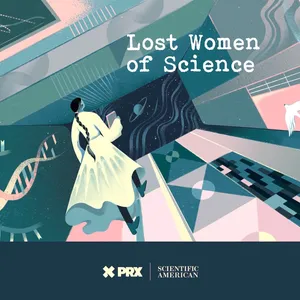
For every Marie Curie or Rosalind Franklin whose story has been told, hundreds of female scientists remain unknown to the public at large. In this series, we illuminate the lives and work of a diverse array of groundbreaking scientists who, because of time, place and gender, have gone largely unrecognized. Each season we focus on a different scientist, putting her narrative into context, explaining not just the science but also the social and historical conditions in which she lived and worked. We also bring these stories to the present, painting a full picture of how her work endures.
Latest Episodes
The most recent episodes — sign up to get AI-powered summaries of each one.
- Aug 6, 202636 min
A pioneer behind x-ray crystallography, Isabella Karle
In high school, Isabella Karle had to take a science class to fulfill a prerequisite. She chose chemistry at random. Karle would go on to become one of the most important chemists of her time, doing groundbreaking research in the field of X-ray crystallography. Her discoveries in the mid 1950s are a key reason many modern-day pharmaceuticals are available on pharmacy shelves. But Karle’s collaborator–her husband, Jerome–would eventually receive the Nobel Prize in Chemistry for work Isabella also achieved. Learn about your ad choices: dovetail.prx.org/ad-choices
- Jul 16, 202628 min
Conversations: The Rediscovery of I Who Have Never Known Men
In this episode of Lost Women of Science Conversations, host Elah Feder explores the remarkable resurgence of I Who Have Never Known Men, Jacqueline Harpman’s 1995 novel that went largely unnoticed for decades before becoming an international sensation. Harpman was a psychoanalyst and her training informed the book’s speculative fiction, dystopian, and science fiction genres.Elah first speaks with award-winning translator Ros Schwartz, who translated the novel into English twice –once in 1997 and again in 2022, when a new edition helped introduce Harpman’s work to a new generation of readers.Later, Elah is joined by Susan Watkins, Professor of Women’s Writing at Leeds Beckett University, to discuss the novel’s themes of resilience, isolation, and survival, and why this once-overlooked book is resonating so strongly with readers today. Learn about your ad choices: dovetail.prx.org/ad-choices
- Jun 25, 202636 min
La mujer que demostró el efecto invernadero
En 1856, décadas antes de que se acuñara el término “gas de efecto invernadero”, Eunice Newton Foote demostró el efecto invernadero en su laboratorio casero. Colocó un cilindro de vidrio lleno de dióxido de carbono al sol y observó que se calentaba mucho más rápido que un cilindro con aire común. Su conclusión: más dióxido de carbono en la atmósfera da lugar a un planeta más cálido. Años más tarde, un científico británico llamado John Tyndall realizó un experimento mucho más complejo que demostró el mismo efecto y explicó su funcionamiento. Hoy en día, Tyndall es ampliamente reconocido como el hombre que descubrió el efecto invernadero. ¡Incluso hay un cráter en la luna que lleva su nombre! Mientras que Eunice Newton Foote fue olvidada por la historia… hasta que un historiador aficionado redescubrió su legado. Learn about your ad choices: dovetail.prx.org/ad-choices
- Jun 25, 202631 min
Best Of: The Woman Who Demonstrated the Greenhouse Effect
In 1856, decades before the term “greenhouse gas” was coined, Eunice Newton Foote demonstrated the greenhouse effect in her home laboratory. She placed a glass cylinder full of carbon dioxide in the sun, and found that it heated up much faster than a cylinder of ordinary air. Her conclusion: more carbon dioxide in the atmosphere results in a warmer planet. Several years later, a British scientist named John Tyndall conducted a far more complicated experiment that demonstrated the same effect and revealed how it worked. Today, he’s widely known as the man who discovered the greenhouse gas effect. There’s even a crater on the moon named for him! Eunice Newton Foote, meanwhile, was lost to history—until an amateur historian stumbled on her story. Learn about your ad choices: dovetail.prx.org/ad-choices
- Jun 11, 202631 min
Tilly Edinger: The Paleoneurologist Saved By Her Science
How much can you understand about a brain when that brain is long gone? Tilly Edinger, a Jewish paleontologist, used fossilized skulls to study the evolution of brains. That research allowed her to escape Nazi Germany in 1939, and create a new subdivision of paleontology, paleoneurology. Learn about your ad choices: dovetail.prx.org/ad-choices
- May 28, 202642 min
Kamala Sohonie: The Chemist who Wanted to Feed a Nation
In 1930s India, Kamala Baghvat dreamed of working alongside the world's greatest scientific minds. But she was repeatedly told “no” when she tried to work in the then male dominated field. Inspired by Gandhi, she used nonviolent protest to pry her way into some of India’s top laboratories. She became the first Indian woman to earn a PhD in biochemistry, and eventually, the first woman to lead India's Royal Institute of Science. Baghvat’s career centered around a topic she was passionate about: solving India’s malnutrition crisis. Learn about your ad choices: dovetail.prx.org/ad-choices
- May 14, 202626 min
Sharla Perrine Boehm: An Overlooked Founder of the Internet
Sharla Perrine Boehm earned a teaching degree from UCLA before channeling her talent for math into computer programming. While working at the Rand Corporation, she built a ground-breaking simulation, originally conceived to strengthen military communications during the Cold War. The simulation –and her work– would ultimately lay the foundation for the modern internet. Learn about your ad choices: dovetail.prx.org/ad-choices
- Apr 30, 202630 min
Best Of: Chemistry Professor and Crime Buster: The Remarkable Life of Mary Louisa Willard
“The only time I ever saw something that I thought was abnormal…there was a human arm in the refrigerator,” said J. Peter Willard about his aunt, Mary Louisa Willard. Otherwise, he insisted, she was “very normal.” But Mary Louisa Willard, a chemistry professor at Pennsylvania State University in the late 1920s, left a strong impression on most people, to say the least. Her hometown of State College, Pennsylvania, knew her for stopping traffic in her pink Cadillac to chat with friends, and for throwing birthday bashes for her beloved cocker spaniels. Police around the world knew her for her side hustle: using chemistry to help solve crimes. Learn about your ad choices: dovetail.prx.org/ad-choices
Get Lost Women of Science summaries in your inbox
Free AI-powered daily recaps. Key takeaways, quotes, and mentions — in a 5-minute read.
Get Free Summaries →Free forever for up to 3 podcasts. No credit card required.
You Might Also Like
Listeners also like.
Discovery
Explores various topics in the field of science.
Unexpected Elements
Explores hidden scientific connections behind global news and everyday phenomena.
The Life Scientific
A scientist discusses their research, inspirations, and career with physicist Jim Al-Khalili.

Bringing Chemistry to Life
Talks with leading chemists about their discoveries, careers, and the science shaping our world.

Inquiring Minds
Explores the intersection of science and society through critical thinking and in-depth analysis.
The Conversation
Two women from different backgrounds discuss their lives and shared passions or expertise.
Unsung Science
Explores the overlooked stories behind major scientific and technological breakthroughs and the people who created them.
In Our Time: Science
Discusses scientific principles, theories, and influential figures in the development of science.
Curious Cases
Hannah Fry and Dara Ó Briain use science to solve listeners' questions and mysteries.
The Women's Research Collective
Interviews with women in research discussing their personal and professional experiences in academia and scientific fields.
Seeking A Scientist
A chemist hosts conversations with scientists to explore futuristic scientific possibilities and their real-world implications.

Uncharted with Hannah Fry
Hannah Fry explores data-driven stories and the people behind groundbreaking discoveries.
About Lost Women of Science
For every Marie Curie or Rosalind Franklin whose story has been told, hundreds of female scientists remain unknown to the public at large. In this series, we illuminate the lives and work of a diverse array of groundbreaking scientists who, because of time, place and gender, have gone largely unrecognized. Each season we focus on a different scientist, putting her narrative into context, explaining not just the science but also the social and historical conditions in which she lived and worked. We also bring these stories to the present, painting a full picture of how her work endures.
Customized Recaps
AI-powered recaps with compact key takeaways, quotes, and insights.
Straight to Your Inbox
Get key takeaways from Lost Women of Science in a 5-minute read.
Save Hours Every Week
Stay current on your favorite podcasts without falling behind.
Frequently Asked Questions
What is Podzilla's Lost Women of Science daily summary?
It's a free AI-powered email that summarizes new episodes of Lost Women of Science as soon as they're published. You get the key takeaways, notable quotes, and links & mentions — all in a quick read.
How does the Lost Women of Science podcast summary work?
When a new episode drops, our AI transcribes and analyzes it, then generates a personalized summary tailored to your interests and profession. It's delivered to your inbox every morning.
Is this an official Lost Women of Science product?
No. Podzilla is an independent service that summarizes publicly available podcast content. We're not affiliated with or endorsed by Lost Women of Science.
Can I get summaries of other podcasts too?
Absolutely! The free plan covers up to 3 podcasts. Upgrade to Pro for 15, or Premium for 50. Browse our full catalog at /podcasts.
How often does Lost Women of Science release new episodes?
Lost Women of Science publishes biweekly. Our AI generates a summary within hours of each new episode.
What topics does Lost Women of Science cover?
Lost Women of Science covers topics including Science. Our AI identifies the specific themes in each episode and highlights what matters most to you.
Start getting Lost Women of Science summaries tomorrow morning.
Free forever for up to 3 podcasts. No credit card required.
Free forever for up to 3 podcasts. No credit card required.