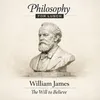
Imagine you are standing at the edge of a chasm. You need to get to the other side. The leap is possible — just barely — but you cannot know in advance whether you will make it. Does believing you can make the leap make it more likely that you will?Most people's instinct is to say: the belief is irrelevant. The physics is the physics. What you believe about it does not change the distance. William James thought that was wrong — and not just for athletic feats but for a much broader and more important category of human decisions.In this episode, Shawn and Claire take on one of the most controversial and most practically useful arguments in the history of American philosophy. James's central claim is this: there is a class of decisions, forced, significant, and not resolvable by waiting for more evidence, where withholding belief until you have certainty is not the rational option. It is itself a choice. And in some cases, it is a choice that forecloses the very experience that could have confirmed the belief.They cover the pragmatist theory of truth, what it actually says, where it is strongest, and where its critics have a point, and the specific argument of The Will to Believe: that for certain live, forced, and momentous questions, the right epistemic posture is not suspended judgment but committed engagement. They also address W.K. Clifford's opposing principle that it is always wrong to believe anything on insufficient evidence and why James thought that position, taken seriously, leads somewhere both logically consistent and humanly impossible.James himself emerged from a period of severe depression and paralysis partly through a choice: to believe that his choices mattered before he had any certainty that they did. The philosophy came from that life. And it carries the weight of it.This is not a defense of wishful thinking. It is something harder and more honest than that: an argument that commitment is prior to certainty in the domains that matter most and that the examined life requires courage as well as rigor.Shawn and Claire together. No prior philosophy required.SHOW NOTESPrimary SourcesJames, W. (1897). The Will to Believe and Other Essays in Popular Philosophy. Longmans, Green.James, W. (1907). Pragmatism: A New Name for Some Old Ways of Thinking. Longmans, Green.James, W. (1890). The Principles of Psychology (2 vols.). Henry Holt.Works Referenced in This EpisodeClifford, W. K. (1877). The ethics of belief. Contemporary Review, 29, 289–309.Peirce, C. S. (1992). The Essential Peirce: Selected Philosophical Writings (Vol. 1, N. Houser & C. Kloesel, Eds.). Indiana University Press.Dewey, J. (1929). Experience and Nature (2nd ed.). Open Court.Biographical & ContextualRichardson, R. D. (2006). William James: In the Maelstrom of American Modernism. Houghton Mifflin.Accessible Starting PointsMenand, L. (2001). The Metaphysical Club: A Story of Ideas in America. Farrar, Straus and Giroux. (One of the most readable histories of American intellectual life ever written — essential context for this episode.)Putnam, R. A. (Ed.). (1997). The Cambridge Companion to William James. Cambridge University Press.New episodes every Monday. Philosophy for Lunch · Big ideas. Human conversations.
Podzilla Summary coming soon
Sign up to get notified when the full AI-powered summary is ready.
Free forever for up to 3 podcasts. No credit card required.
Listen to This Episode
More from Philosophy for Lunch
Episode #016 - Nietzsche: God Is Dead — Now What?

Episode #014 - Viktor Frankl and the Meaning Made from Suffering
Episode #013 - What Does It Mean to Live Philosophically?
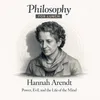
Episode #012 - Hannah Arendt: Power, Evil, and the Life of the Mind
Get summaries like this every morning.
Free AI-powered recaps of Philosophy for Lunch and your other favorite podcasts, delivered to your inbox.
Free forever for up to 3 podcasts. No credit card required.