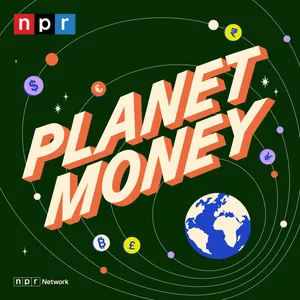
Free Daily Podcast Summary
Planet Money: Daily Summaries Delivered
by NPR
Wanna see a trick? Give us any topic and we can tie it back to the economy. At Planet Money, we explore the forces that shape our lives and bring you along for the ride. Don't just understand the economy – understand the world.
Latest Episodes
The most recent episodes — sign up to get AI-powered summaries of each one.
- Yesterday29 min
Where all those weird new drinks are coming from
It's getting pretty wild in the beverage aisle these days — from the rainbow wall of seltzers, to the increasingly strange flavors of Pepsi, to the new "functional" sodas with added fiber or supplements that supposedly offer health benefits. Where are all these new drinks coming from? And why does it seem like the options are multiplying faster than ever?Today on the show, we go behind the scenes at one of the nation’s top-secret beverage laboratories. The food scientists in this lab have quietly helped companies design many of the new drinks on the shelves these days. We taste things we have never tasted before, including a sports hydration … broth? We learn what a strawberry has in common with a block of cheese. And we discover why the business of beverages will never be the same again. Read: - Our book: Planet Money: A Guide to the Economic Forces That Shape Your Life - Our weekly longform Planet Money newsletter- Our weekly Indicator round-up newsletterFollow:- Instagram- TikTok- YouTube- FacebookSupport public media with NPR+ and enjoy perks for over 25 podcasts like this one. This show’s perks include bonus episodes and sponsor-free listening. Learn more at plus.npr.org.This episode of Planet Money was hosted by Jeff Guo. It was produced by James Sneed and Sam Yellowhorse Kesler, and edited by Jess Jiang. Vito Emanuel is our fact-checker, and Kwesi Lee engineered the show. Alex Goldmark is the executive producer of Planet Money.See pcm.adswizz.com for information about our collection and use of personal data for sponsorship and to manage your podcast sponsorship preferences.NPR Privacy Policy
- 3 days ago29 min
Who’s gonna pay for your Social Security?
Very soon, Social Security may not have enough money to make full payments to retirees. Very soon. Like by 2032, just six years from now. So what are we gonna do about it? Today on the show, we look at some of the most talked about possible solutions; and exactly whose wallets we’ll have to rifle through to find the money to pay for each. Then we’ll run the options by the Social Security Administration's former Chief Actuary. The guy Congress used to call to crunch numbers and give them the bottom line. Read: - Our book: Planet Money: A Guide to the Economic Forces That Shape Your Life - Our weekly longform Planet Money newsletter- Our weekly Indicator round-up newsletterFollow: - Instagram- TikTok- YouTube- FacebookSupport public media with NPR+ and enjoy perks for over 25 podcasts like this one. This show’s perks include bonus episodes and sponsor-free listening. Learn more at plus.npr.org.This episode of Planet Money was hosted by Erika Beras and Jeff Guo, it was produced by James Sneed, and edited by Marianne McCune. Sierra Juarez is our fact-checker, and Annlie Huang & Robert Rodriguez engineered the show. Alex Goldmark is the executive producer of Planet Money.See pcm.adswizz.com for information about our collection and use of personal data for sponsorship and to manage your podcast sponsorship preferences.NPR Privacy Policy
- 1 weeks ago30 min
Middlegarchs are the new Oligarchs
Wanna know who is really in the top 1%? And how they use their influence? It may not be who you think.Look beyond Silicon Valley. Look beyond Wall Street. Look beyond the “oligarchs”. There's a much larger class of wealthy Americans hiding in plain sight. And, often, they got rich in mundane ways. They own car dealerships. They sell hot dogs and frozen mini-quiches. They run waxing salons. They supply fabricated metal and urinal cakes. They are dentists.Collectively, these "Main Street millionaires" control much more wealth than the billionaire lightning rods who launch rockets into space, appear on manosphere podcasts, and have Hollywood movies made about them. Many of these millionaires have also grown rich enough to afford superyachts, 10,000-square-foot homes, and pet tigers. At the center of their story is a quiet revolution in the American economy: the rise of a particular kind of private business. On today’s show, how did the power of the “stealthy wealthy” millionaires come to rival that of the billionaire oligarchs? And, how are they shaping policies that lower their taxes and raise your prices?Read: Our book: Planet Money: A Guide to the Economic Forces That Shape Your Life Our weekly longform Planet Money newsletterOur weekly Indicator round-up newsletterFollow: InstagramTikTokYouTubeFacebookSupport public media with NPR+ and enjoy perks for over 25 podcasts like this one. This show’s perks include bonus episodes and sponsor-free listening. Learn more at plus.npr.org.This episode was hosted by Greg Rosalsky and Sarah Gonzalez. It was produced by Emma Peaslee. It was edited by Marianne McCune with fact checking help from Sierra Juarez. It was engineered by Kwesi Lee. Alex Goldmark is Planet Money’s executive producer. Music: NPR Source Audio - "Collectible Kicks," "Blazed and Emboldened," and "Arturo’s RevengeSee pcm.adswizz.com for information about our collection and use of personal data for sponsorship and to manage your podcast sponsorship preferences.NPR Privacy Policy
- 1 weeks ago29 min
Is our national debt finally too much? (update)
(Note: A version of this episode originally ran in 2024.)$40,000,000,000,000. Four commas. Thirteen zeroes. It’s an eye-popping, almost infinite-sounding pile of money. And every time the debt passes a big round number, almost everyone asks the same question: How much debt is too much?It’s maybe the most important question in macroeconomics. It’s also surprisingly hard to answer. When two economists tried to answer it back in 2010, it ignited a research slugfest that lasted a decade. We did a show on this question in 2024, outlining everything we know and don’t know about when the national debt becomes a problem. But a lot has changed. Interest rates have risen and stayed high. Spending has steamrolled ahead. Doves have become hawks. So on today’s show, we update our 2024 episode to revisit the age-old question: Is our debt finally too much? Read Planet Money: Our book: Planet Money: A Guide to the Economic Forces That Shape Your Life Our weekly longform Planet Money newsletterOur weekly Indicator round-up newsletterFollow: InstagramTikTokYouTubeFacebookSupport public media with NPR+ and enjoy perks for over 25 podcasts like this one. This show’s perks include bonus episodes and sponsor-free listening. Learn more at plus.npr.org.Our original episode was produced by Willa Rubin and edited by Molly Messick. This update was reported and produced by Vito Emanuel. It was fact checked by Sierra Juarez. It was engineered by Kwesi Lee. And it was edited by Alex Goldmark, Planet Money’s executive producer. See pcm.adswizz.com for information about our collection and use of personal data for sponsorship and to manage your podcast sponsorship preferences.NPR Privacy Policy
- 2 weeks ago32 min
The Domino’s Pizza Tracker Theory of Everything
Did a pizza restaurant’s humble status page change how we wait forever? When you order a Lyft or Uber, you get texts every few minutes about your car approaching and arriving. When you have a package coming, you get a notification when it’s shipped, when it’s en route, and when it’s out for delivery. Why do so many companies send these constant updates?We have a theory: It’s because of Domino’s. In 2008, Domino’s launched the Pizza Tracker, a novel tool that delighted customers by allowing them to obsessively monitor their pizza’s progress from order to oven to delivery. The Pizza Tracker became a canonical model for other companies trying to improve their customers’ experiences of waiting for all kinds of products and services. And now? Pizza Trackers are everywhere. On today’s show: how the Domino’s Pizza Tracker shaped the internet, and how trackers went from transparently sharing information with consumers to — in some cases — actively deceiving us. Support:— Planet Money+Read:— Our book: Planet Money: A Guide to the Economic Forces That Shape Your Life— Our weekly longform Planet Money newsletter— Our weekly Indicator round-up newsletterFollow:— Instagram— TikTok— YouTube— FacebookThis episode was hosted by Nick Fountain and Alex Mayyasi. It was produced by Sam Yellowhorse Kesler, edited by Liza Yeager, fact-checked by Sierra Juarez and engineered by Cena Loffredo and Jimmy Keeley. Alex Goldmark is Planet Money’s executive producer.Support public media with NPR+ and enjoy perks for over 25 podcasts like this one. This show’s perks include bonus episodes and sponsor-free listening. Learn more at plus.npr.org.See pcm.adswizz.com for information about our collection and use of personal data for sponsorship and to manage your podcast sponsorship preferences.NPR Privacy Policy
- 2 weeks ago18 min
How investing is getting riskier (Two Indicators)
Margin borrowing and sports gambling “investments” are both on the rise! Today on the show, two stories from Planet Money’s daily podcast The Indicator about the ways investing is changing, and getting riskier.According to one study, more than half of Gen Zers are using investment dollars for sports gambling. On average, this is not a smart strategy for the long term. It might be that sports betting today is like day trading was for a previous generation of young investors: something a lot of young people, typically men, do, lose money at for a while, then quit. We review the early research on this trend and meet a state legislator proposing ways to stem problem gambling.More, generally younger people are also investing with borrowed money. Trading on margin is at an all time high of over $1.5 trillion. In the past, high levels of margin investing have led to crashes. We hear those stories and find out what the Fed might do to reign in the risk. Related Indicator episodes— How AI might mess with financial markets— Prediction markets are threatening national security. Who's gonna fix it?Connect with Planet Money & The Indicator— Sign up for The Indicator’s weekly link round up newsletter!— Sign up for Planet Money’s weekly longform newsletter!— Buy the Planet Money book— Find our socials, YouTube and more!— For sponsor-free episodes, subscribe to NPR+ Support public media with NPR+ and enjoy perks for over 25 podcasts like this one. This show’s perks include bonus episodes and sponsor-free listening. Learn more at plus.npr.org.These episodes of The Indicator from Planet Money were produced by Corey Bridges and Cooper Katz-McKim. They were engineered by Travis Hagan and Cena Loffredo, and fact-checked by Sierra Juarez. They were edited by Julia Ritchey and Kate Concannon. Support public media with NPR+ and enjoy perks for over 25 podcasts like this one. This show’s perks include bonus episodes and sponsor-free listening. Learn more at plus.npr.org.See pcm.adswizz.com for information about our collection and use of personal data for sponsorship and to manage your podcast sponsorship preferences.NPR Privacy Policy
- 3 weeks ago29 min
The loan at the heart of a new foreclosure crisis
There is a new type of loan that is sweeping through the country right now. It’s advertised as a super quick and super easy way to get a mortgage to buy a home. In recent years, Wall Street has been funneling billions of dollars into these loans. But these loans are also raising questions. Are they a financial innovation that’s helping the housing market? Or ... a sign that Wall Street might be forgetting the mistakes that led to the Global Financial Crisis? On today’s show, we head to Baltimore, where abandoned rowhomes have become a familiar sight. Reporters Hallie Miller, Jack Bologna and Sahana Jayaraman from The Baltimore Banner have been following this new loan as it’s been bringing millions of dollars into some of Baltimore's most distressed neighborhoods. But, a few years ago, two local landlords quickly and quietly amassed what might be one of the largest private real estate portfolios in Baltimore: Over 700 homes and $100 million dollars in borrowed cash. Using this hot new loan. And then they tried to disappear. We talk with the Banner reporters about what they found at the heart of this mystery, and why it might have implications for the rest of the country. Read the Banner’s reporting:The housing hustle igniting a foreclosure crisis in BaltimoreBefore mass foreclosures, DSCR loans looked good for Baltimore Could a few 'bad actors' upend Baltimore's housing hopes?Baltimore will investigate New York investor group for housing discrimination Baltimore is striking fear into private lenders across the country From $3.7M to $9.9M: Federal probe focuses on 42 Baltimore homes sold again and againThe FBI is investigating the New York investors behind Baltimore’s foreclosure waveFake deeds, real money: New York investors accused of another Baltimore scamHow do you build a huge portfolio of Baltimore rentals? It helps to know a guy.The loans behind Baltimore’s foreclosure crisis are surging in cities across the nation Baltimore ballroom ‘icon’ survives a life of grit with glamourRead: Our book: Planet Money: A Guide to the Economic Forces That Shape Your Life Our weekly longform Planet Money newsletterOur weekly Indicator round-up newsletterFollow: InstagramTikTokYouTubeFacebookSupport public media with NPR+ and enjoy perks for over 25 podcasts like this one. This show’s perks include bonus episodes and sponsor-free listening. Learn more at plus.npr.org.This episode was hosted by Jeff Guo. It was produced by Sam Yellowhorse Kesler and edited by Jess Jiang. It was fact-checked by Sierra Juarez and engineered by Travis Hagen. Alex Goldmark is Planet Money’s executive producer. Music: Universal Production Music - "Slick Groove," "Seven Secrets," and "Jazz Move
- 3 weeks ago24 min
Cost-cutting, quiet guilt and the inflation generation
In this economy it is boom times and doom times all at once. The statistics aren’t really capturing it. K-shaped only goes so far as a metaphor. So … we asked you to help. And you delivered! One one hand, the stock market is on a prolonged, upward trajectory. Unemployment is low and inflation has come down from its peak. But on the other hand, inflation is frustratingly sticky and higher than we want, job turnover is extremely low making looking for work an endless grind, and more than 75% of Americans say they’re stressed about money. So we asked you – our listeners – how is the economy working for you? We got a range of responses. Some people are going to great lengths to save money and make ends meet, others are thriving and feel kind of guilty about their good fortune. We also heard from a new generation being shaped by this economic moment into hyper cost-conscious shoppers. You might call them the inflation generation. Each story helps us understand what’s actually going on in the economy and what the stats aren’t capturing. Read: Our book: Planet Money: A Guide to the Economic Forces That Shape Your Life Our Game: Sell Me A Sasquatch about the hilarious chaos of monstrous dealmaking.Our weekly longform Planet Money newsletterOur weekly Indicator round-up newsletterFollow: InstagramTikTokYouTubeFacebookSupport public media with NPR+ and enjoy perks for over 25 podcasts like this one. This show’s perks include bonus episodes and sponsor-free listening. Learn more at plus.npr.org.This episode of Planet Money was produced by Emma Peaslee and edited by Alex Goldmark. Reporting help from Charlotte Isidore. It was fact checked by Sierra Juarez, and engineered by Robert Rodriguez. Special thanks to all our listeners and all of you who wrote in to let us know how you’re doing. Music: NPR Source Audio - "What I Need," "Feel the Love," and "Red Line"See pcm.adswizz.com for information about our collection and use of personal data for sponsorship and to manage your podcast sponsorship preferences.NPR Privacy Policy
Get Planet Money summaries in your inbox
Free AI-powered daily recaps. Key takeaways, quotes, and mentions — in a 5-minute read.
Get Free Summaries →Free forever for up to 3 podcasts. No credit card required.
You Might Also Like
Listeners also like.
The Indicator from Planet Money
A daily economics podcast offering short, accessible insights into money, work, and business.

Planet Money Summer School
A crash course in economics that teaches fundamental concepts through real-world examples in everyday life.
Slate Money
A weekly analysis of major business and financial news stories.

Marketplace Morning Report
A daily briefing on the economic news that matters, delivered in a concise, accessible format to start your day informed.
Money Stuff: The Podcast
A weekly discussion on Wall Street, finance, and related topics with Matt Levine and Katie Greifeld.
Life Kit: Money
Practical advice on managing personal finances, from debt and student loans to buying a home.

Marketplace
Explains daily business and economic news with context, interviews, and global reporting for listeners without financial expertise.
The Economics of Everyday Things
Examines the hidden economic forces behind everyday objects and routines.

NerdWallet's Smart Money Podcast
Personal finance experts break down budgeting, saving, investing, and credit to help listeners make informed money decisions.

Afford Anything | Get Smarter With Money
A weekly discussion on financial freedom covering psychology, income, investing, real estate, and entrepreneurship with experts.
Million Bazillion
A podcast that answers kids' curious questions about money, from saving and spending to cryptocurrency and inflation.
Economist Podcasts
Daily global news analysis from correspondents on major international stories.
Customized Recaps
AI-powered recaps with compact key takeaways, quotes, and insights.
Straight to Your Inbox
Get key takeaways from Planet Money in a 5-minute read.
Save Hours Every Week
Stay current on your favorite podcasts without falling behind.
Frequently Asked Questions
What is Podzilla's Planet Money daily summary?
It's a free AI-powered email that summarizes new episodes of Planet Money as soon as they're published. You get the key takeaways, notable quotes, and links & mentions — all in a quick read.
How does the Planet Money podcast summary work?
When a new episode drops, our AI transcribes and analyzes it, then generates a personalized summary tailored to your interests and profession. It's delivered to your inbox every morning.
Is this an official Planet Money product?
No. Podzilla is an independent service that summarizes publicly available podcast content. We're not affiliated with or endorsed by NPR.
Can I get summaries of other podcasts too?
Absolutely! The free plan covers up to 3 podcasts. Upgrade to Pro for 15, or Premium for 50. Browse our full catalog at /podcasts.
How often does Planet Money release new episodes?
Planet Money publishes every few days. Our AI generates a summary within hours of each new episode.
What topics does Planet Money cover?
Planet Money covers topics including News, Business. Our AI identifies the specific themes in each episode and highlights what matters most to you.
Start getting Planet Money summaries tomorrow morning.
Free forever for up to 3 podcasts. No credit card required.
Free forever for up to 3 podcasts. No credit card required.