Free Daily Podcast Summary
The Indicator from Planet Money: Daily Summaries Delivered
by NPR
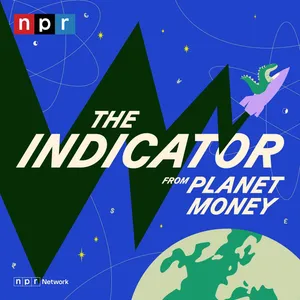
A bite-sized show about big ideas. From the people who make Planet Money, The Indicator helps you make sense of what's happening in today's economy. It's a quick hit of insight into money, work, and business. Monday through Friday, in 10 minutes or less.
Latest Episodes
The most recent episodes — sign up to get AI-powered summaries of each one.
- Yesterday9 min
Can we make Social Security better for blue-collar workers?
Most workers can’t start collecting full Social Security benefits until age 67. But a new proposal from Michigan Congresswoman Haley Stevens would allow workers in “physically demanding jobs” to receive full retirement benefits at 60. Today, two social security experts tell us the pros and cons. Fact checking by Sierra Juarez.Your Next Listen — Iceberg ahead for Social SecurityConnect with The Indicator — Sign up for The Indicator’s weekly newsletter! — Buy the Planet Money book — Find our socials, YouTube and more! — For sponsor-free episodes, subscribe to NPR+See pcm.adswizz.com for information about our collection and use of personal data for sponsorship and to manage your podcast sponsorship preferences.NPR Privacy Policy
- 2 days ago8 min
New college degrees designed to job-proof graduates
What do influencing, AI and health sciences have in common? They’re all degree programs colleges have launched in the last few years to attract students looking for a new career path. On today's show, how colleges are rethinking degrees for a changing job market.Fact checking by Leyla Doss. Your Next Listen — Community colleges are kind of underrated Connect with The Indicator — Sign up for The Indicator’s weekly newsletter! — Buy the Planet Money book — Find our socials, YouTube and more! — For sponsor-free episodes, subscribe to NPR+ Support public media with NPR+ and enjoy perks for over 25 podcasts like this one. This show’s perks include sponsor-free listening. Learn more at plus.npr.org. See pcm.adswizz.com for information about our collection and use of personal data for sponsorship and to manage your podcast sponsorship preferences.NPR Privacy Policy
- 3 days ago9 min
Is investing in sports worth it for universities?
Universities spend millions of dollars every year on their athletics programs. But does that investment pay off? Today, we interrogate the “Doug Flutie Effect.” Fact checking by Cooper Katz McKim.Your Next Listen — How college sports juiced Olympic developmentConnect with The Indicator — Sign up for The Indicator’s weekly newsletter! — Buy the Planet Money book — Find our socials, YouTube and more! — For sponsor-free episodes, subscribe to NPR+ See pcm.adswizz.com for information about our collection and use of personal data for sponsorship and to manage your podcast sponsorship preferences.NPR Privacy Policy
- 4 days ago9 min
What does every business need but not every industry has?
What rhymes with "snakes" and helps the government classify economic activity? NAICS — or the North American Industry Classification System. These codes categorize every industry from artificial turf installation to zucchini farming. But they’re not exactly easy to get. Today we look at one business’ quest for a NAICS code and what makes them so valuable. Fact checking by Leyla Doss. Your Next Listen — How to take the temperature of the US consumer Connect with The Indicator — Sign up for The Indicator’s weekly newsletter! — Buy the Planet Money book — Find our socials, YouTube and more! — For sponsor-free episodes, subscribe to NPR+ Support public media with NPR+ and enjoy perks for over 25 podcasts like this one. This show’s perks include sponsor-free listening. Learn more at plus.npr.org. See pcm.adswizz.com for information about our collection and use of personal data for sponsorship and to manage your podcast sponsorship preferences.NPR Privacy Policy
- 5 days ago9 min
How the rich make money by losing money
Decades ago, rich Americans used to pay taxes as high as 40% on their investments. Nowadays, an obscure investment strategy is helping them slash that figure toward … 0%. Today on the show, Bloomberg reporter Loukia Gyftopoulou, tells us about this generation’s “great American tax dodge,” and the “mad genius” behind it.A Tax Strategy for the Rich Built the World’s Largest Hedge Fund - BloombergFact checking by Sierra Juarez.Your Next Listen — What’s a revenge tax?Connect with The Indicator — Sign up for The Indicator’s weekly newsletter! — Buy the Planet Money book — Find our socials, YouTube and more! — For sponsor-free episodes, subscribe to NPR+ Support public media with NPR+ and enjoy perks for over 25 podcasts like this one. This show’s perks include sponsor-free listening. Learn more at plus.npr.org. See pcm.adswizz.com for information about our collection and use of personal data for sponsorship and to manage your podcast sponsorship preferences.NPR Privacy Policy
- 1 weeks ago9 min
Unaffordability index: Rent, GLP-1s, Obamacare
This week’s indicators: Rent is squeezing middle-income earners, the Trump admin is squeezing ACA enrollees, and GLP-1s are squeezing employers.Fact checking by Julia Ritchey.Your Next Listen —Why GLP-1s aren't lowering employers' costsConnect with The Indicator — Sign up for The Indicator’s weekly newsletter! — Buy the Planet Money book — Find our socials, YouTube ad more! — For sponsor-free episodes, subscribe to NPR+ Support public media with NPR+ and enjoy perks for over 25 podcasts like this one. This show’s perks include sponsor-free listening. Learn more at plus.npr.org.See pcm.adswizz.com for information about our collection and use of personal data for sponsorship and to manage your podcast sponsorship preferences.NPR Privacy Policy
- 1 weeks ago7 min
What Doordash, Dell and Palantir all have in common
President Trump and his money managers made more stock trades since his second term started than all members of Congress combined. The White House says there is no conflict of interest. Today on the show, we look at three companies he’s traded in that raise ethical flags because of their relationship with the federal government. Fact checking by Sierra Juarez.Your Next Listen — Did Trump enable insider trading?Connect with The Indicator — Sign up for The Indicator’s weekly newsletter! — Buy the Planet Money book — Find our socials, YouTube and more! — For sponsor-free episodes, subscribe to NPR+ Support public media with NPR+ and enjoy perks for over 25 podcasts like this one. This show’s perks include sponsor-free listening. Learn more at plus.npr.org. See pcm.adswizz.com for information about our collection and use of personal data for sponsorship and to manage your podcast sponsorship preferences.NPR Privacy Policy
- 1 weeks ago9 min
Why are used cars priced like new cars?
The used car market is out of control and there doesn’t seem to be an easy fix for high prices. Today, three reasons why finding an affordable car is so difficult.Fact checking by Sierra Juarez.Your Next Listen — Prepping for a rainy day and higher used car pricesConnect with The Indicator — Sign up for The Indicator’s weekly newsletter! — Buy the Planet Money book — Find our socials, YouTube and more! — For sponsor-free episodes, subscribe to NPR+ Support public media with NPR+ and enjoy perks for over 25 podcasts like this one. This show’s perks include sponsor-free listening. Learn more at plus.npr.org. See pcm.adswizz.com for information about our collection and use of personal data for sponsorship and to manage your podcast sponsorship preferences.NPR Privacy Policy
Get The Indicator from Planet Money summaries in your inbox
Free AI-powered daily recaps. Key takeaways, quotes, and mentions — in a 5-minute read.
Get Free Summaries →Free forever for up to 3 podcasts. No credit card required.
You Might Also Like
Listeners also like.
Planet Money
Explains how economic forces influence everyday life and global events through storytelling and deep dives into surprising topics.

Planet Money Summer School
A crash course in economics that teaches fundamental concepts through real-world examples in everyday life.

Marketplace Morning Report
A daily briefing on the economic news that matters, delivered in a concise, accessible format to start your day informed.

Marketplace
Explains daily business and economic news with context, interviews, and global reporting for listeners without financial expertise.
Life Kit: Money
Practical advice on managing personal finances, from debt and student loans to buying a home.

Consider This from NPR
A daily news breakdown that explains a key story and its implications in about 15 minutes.
Money Stuff: The Podcast
A weekly discussion on Wall Street, finance, and related topics with Matt Levine and Katie Greifeld.

Afford Anything | Get Smarter With Money
A weekly discussion on financial freedom covering psychology, income, investing, real estate, and entrepreneurship with experts.
It's The Economy
A weekly breakdown of economic concepts and their real-world impact, explained by experts in short, accessible episodes.
Bloomberg Intelligence
Analysis of Wall Street investments and company research from Bloomberg Intelligence experts.

Marketplace All-in-One
Daily economic news and analysis from Marketplace, Marketplace Morning Report, Marketplace Tech, Make Me Smart, Corner Office, and The Uncertain Hour.

The Intelligence from The Economist
Global news and analysis on politics, business, and culture from The Economist’s correspondents, with weekday stories and a weekend deep-dive.
About The Indicator from Planet Money
A bite-sized show about big ideas. From the people who make Planet Money, The Indicator helps you make sense of what's happening in today's economy. It's a quick hit of insight into money, work, and business. Monday through Friday, in 10 minutes or less.
Customized Recaps
AI-powered recaps with compact key takeaways, quotes, and insights.
Straight to Your Inbox
Get key takeaways from The Indicator from Planet Money in a 5-minute read.
Save Hours Every Week
Stay current on your favorite podcasts without falling behind.
Frequently Asked Questions
What is Podzilla's The Indicator from Planet Money daily summary?
It's a free AI-powered email that summarizes new episodes of The Indicator from Planet Money as soon as they're published. You get the key takeaways, notable quotes, and links & mentions — all in a quick read.
How does the The Indicator from Planet Money podcast summary work?
When a new episode drops, our AI transcribes and analyzes it, then generates a personalized summary tailored to your interests and profession. It's delivered to your inbox every morning.
Is this an official The Indicator from Planet Money product?
No. Podzilla is an independent service that summarizes publicly available podcast content. We're not affiliated with or endorsed by NPR.
Can I get summaries of other podcasts too?
Absolutely! The free plan covers up to 3 podcasts. Upgrade to Pro for 15, or Premium for 50. Browse our full catalog at /podcasts.
How often does The Indicator from Planet Money release new episodes?
The Indicator from Planet Money publishes daily. Our AI generates a summary within hours of each new episode.
What topics does The Indicator from Planet Money cover?
The Indicator from Planet Money covers topics including Business. Our AI identifies the specific themes in each episode and highlights what matters most to you.
Start getting The Indicator from Planet Money summaries tomorrow morning.
Free forever for up to 3 podcasts. No credit card required.
Free forever for up to 3 podcasts. No credit card required.