Free Daily Podcast Summary
Psychobabble: Daily Summaries Delivered
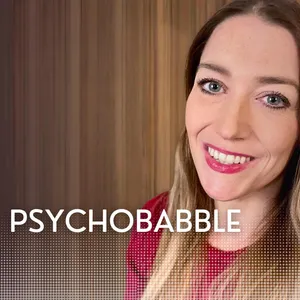
by Hannah Spier, MD
Psychiatrist analyzing how cultural trends and modern therapy incentivize dysfunction. hannahspier.substack.com
Latest Episodes
The most recent episodes — sign up to get AI-powered summaries of each one.
- 5 days ago13 min
#82. The Dark Psychology Behind "High Value" Women
"High-value woman" dating advice promises better men, stronger boundaries and a softer life.A new manifestation of feminism. But much of it is really a guide to entitlement, strategic detachment and low reciprocity—traits that make lasting relationships almost impossible. In this episode, psychiatrist Hannah Spier explains how modern dating coaches rebrand narcissistic behavior as femininity, confidence and self-worth.
- 1 weeks ago16 min
#81. How Women Use Mental Health to Avoid Growing Up
How did ordinary adulthood become evidence of psychiatric suffering? What's the real attraction? In this episode, I react to young women presenting normal functioning as "high-functioning depression," insisting that invisible distress cannot be questioned, and using suicidal language to make disagreement morally dangerous. I explain how mental-health labels can turn basic responsibilities into acts of bravery, confer moral authority and eventually become leverage over everyone around them. Do you think mental-health awareness has gone too far—or are these videos helping people feel less alone? Let me know in the comments. Please like, subscribe and share the episode! Head on over to Substack and upgrade to watch the episodes ad-free! https://hannahspier.substack.com/
- 2 weeks ago20 min
80. Why So Many Young Women Suddenly Have "Alters"
Dissociation is a real and measurable psychological phenomenon—but does that validate dissociative identity disorder as it is commonly portrayed online and diagnosed in clinical practice? In this episode, psychiatrist Hannah Spier examines the evidence behind DID, the limitations of self-reported amnesia and diagnostic interviews, and the difficulty of distinguishing separate "identities" from shifting emotional states, trauma responses, borderline personality traits, and identity disturbance. Finally, Hannah looks at the history of multiple personality disorder—from mesmerism and hypnosis to *The Three Faces of Eve*, *Sybil*, *Split*, and TikTok—and offers advice for parents whose children return from therapy with a new DID diagnosis. Read Hannah's articles and join exclusive live discussions on Substack! https://substack.com/@psychobabblewithspier
- 2 weeks ago17 min
#79. Why We Pretend Women Aren't Violent
SPONSOR: Get 15% off OneSkin with the code HANNAH at https://www.oneskin.co/HANNAH In this episode, we look at the Mackenzie Shirilla case as a starting point for a broader question: how do we understand female physical violence? The discussion moves from the details of the case — including Shirilla's behavior before and after the crash, the public reaction, and the question of remorse — into a wider examination of how female aggression is often framed culturally. We tend to associate men with physical violence and women with relational aggression, but the evidence around intimate partner violence, family violence, elder abuse, and child homicide complicates that picture. Chapters 00:00 — Are women less physically violent? 00:38 — The Mackenzie Shirilla case 03:41 — Cluster B traits and interpersonal dominance 08:56 — Female sociopathy and violent women 09:10 — The myth of domestic violence as male-only 09:26 — Intimate partner violence data 10:12 — Why female violence is often framed as self-defense 10:41 — Why women report using physical aggression 10:56 — Gender symmetry in older violence studies 11:35 — Teen boys and dating violence victimization 11:49 — The problem with using general crime statistics 12:22 — Violence in female-dominated settings 12:37 — Elder abuse and female perpetrators 12:50 — Mothers, filicide, and neonaticide 13:41 — How society interprets male vs female violence
- 3 weeks ago11 min
#78. Chivalry Inflation: Why Dating Got So Expensive for Men
Modern dating has become increasingly expensive for men — not only financially, but emotionally, socially, and psychologically. In this episode, I look at the inflation of chivalry: the way ordinary courtship has turned into elaborate performance, "princess treatment," promposals and endless proof of male devotion. What is the problem with this? We also look at the rise of "the ick," and what that signifies. Chapters: 00:40 The Cost of Modern Dating for Men 02:09 No Effort, No Reciprocity 03:00 Promposals and Princess Treatment 04:22 What Chivalry Was Supposed to Be 05:27 The Rise of "The Ick" 06:17 The Train Ticket Example 07:01 When Men Stop Performing 08:22 Women Want Permanent Courtship 09:00 Male Vulnerability and the Collapse of Empathy 10:11 Consuming Relationships Instead of Building Them 10:38 Fragile Narcissism and Modern Intimacy
- 3 weeks ago57 min
#77. The Glorification of Feminist Violence
Get 15% off OneSkin with the code HANNAH at https://www.oneskin.co/HANNAH #oneskinpod On June 3, 1968, Valerie Solanas walked into Andy Warhol's studio and shot him. Decades later, she has become a feminist icon, her SCUM Manifesto is taught in universities, and Hollywood celebrated her life in a major film that is now returning to theaters in a new restoration. How did an attempted murderer become a cultural hero? In this episode I'm joined by Janice Fiamengo, Tom Golden, and Jim Nuzzo to explore one of the most striking double standards in modern culture: why female violence is so often explained, romanticized, and even celebrated, while male violence is treated as evidence of innate evil. Follow them here: Janice Fiamengo: https://substack.com/@fiamengofile James Nuzzo: https://substack.com/@jameslnuzzo?utm_source=global-search 🔴 Tonight: Live Google Meet for paid subscribers: https://hannahspier.substack.com/ Tonight at 3:00 PM Eastern I'll be hosting our exclusive monthly Google Meet for paid subscribers. We'll be discussing fathers, masculinity, and what is happening to men in modern society, with plenty of time for questions and discussion. If you'd like to join, upgrade now. You'll immediately gain access to the paid subscriber chat, where the Google Meet link has already been posted. I'll also send an email with the meeting link to all paid subscribers before we go live. I hope to see many of you there. 00:00 Valerie Solanas and the Attempted Murder of Andy Warhol 01:06 Introducing the Panel 01:37 Why Is Valerie Solanas Being Celebrated? 05:16 Hollywood's Romanticization of Female Violence 11:48 The SCUM Manifesto and Feminist History 17:00 Did Feminism Embrace Valerie Solanas? 22:49 Was Valerie Solanas Mentally Ill? 25:15 Why Society Excuses Female Violence 30:01 Feminist Utopias and Anti-Male Ideology 34:17 Is Feminism a Public Health Problem? 36:33 Female Violence and the Double Standard 40:35 Why We Don't Excuse Violent Men 42:29 Gynocentrism and Cultural Bias 46:39 Protection vs Special Treatment 49:00 Why We Ignore Violence by Women 52:00 Final Thoughts
- Jun 25, 202624 min
76. Treating the Pathological Female: Why the Current Model Fails
Most treatments for Borderline Personality Disorder focus on emotional dysregulation. The goal is to reduce distress, self-harm, anxiety, and crises. But that misses the mark. In this episode, I argue that modern psychiatry has adopted a model of Borderline Personality Disorder that is incomplete. By focusing almost exclusively on suffering, it neglects the maladaptive strategies harm others. I also examine the striking contrast between how psychiatry approaches Borderline Personality Disorder—predominantly diagnosed in women—and Antisocial Personality Disorder, diagnosed predominantly in men. Why do we define one disorder primarily by the patient's suffering and the other by the harm inflicted on others? And what has this double standard done to treatment? In the second half of the episode I outline what I believe a more realistic treatment model would look like. If you've ever wondered why Borderline Personality Disorder remains so difficult to treat, this episode offers a very different way of thinking about the problem.
- Jun 11, 202618 min
#73. Psychopath or Sociopath? Reacting to Dr. Ramani and Her Anti-Male Bias
What is the real difference between a psychopath, a sociopath, and antisocial personality disorder? In this episode, I respond to Dr. Ramani's claim that "psychopaths are born and sociopaths are made" and explain why that framing is far too simplistic. I also explain why cold psychopaths unsettle us so much and how antisocial personality disorder fits into this.
About Psychobabble
Psychiatrist analyzing how cultural trends and modern therapy incentivize dysfunction. hannahspier.substack.com
Customized Recaps
AI-powered recaps with compact key takeaways, quotes, and insights.
Straight to Your Inbox
Get key takeaways from Psychobabble in a 5-minute read.
Save Hours Every Week
Stay current on your favorite podcasts without falling behind.
Frequently Asked Questions
What is Podzilla's Psychobabble daily summary?
It's a free AI-powered email that summarizes new episodes of Psychobabble as soon as they're published. You get the key takeaways, notable quotes, and links & mentions — all in a quick read.
How does the Psychobabble podcast summary work?
When a new episode drops, our AI transcribes and analyzes it, then generates a personalized summary tailored to your interests and profession. It's delivered to your inbox every morning.
Is this an official Psychobabble product?
No. Podzilla is an independent service that summarizes publicly available podcast content. We're not affiliated with or endorsed by Hannah Spier, MD.
Can I get summaries of other podcasts too?
Absolutely! The free plan covers up to 3 podcasts. Upgrade to Pro for 15, or Premium for 50. Browse our full catalog at /podcasts.
How often does Psychobabble release new episodes?
Psychobabble publishes weekly. Our AI generates a summary within hours of each new episode.
What topics does Psychobabble cover?
Psychobabble covers topics including Fitness, Philosophy, Culture, Health & Fitness, Society & Culture, Mental Health. Our AI identifies the specific themes in each episode and highlights what matters most to you.
Start getting Psychobabble summaries tomorrow morning.
Free forever for up to 3 podcasts. No credit card required.
Free forever for up to 3 podcasts. No credit card required.