Free Daily Podcast Summary
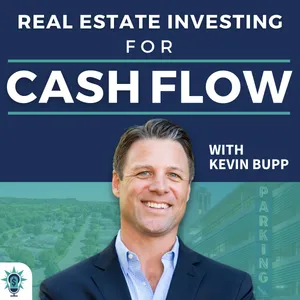
Real Estate Investing for Cash Flow with Kevin Bupp: Daily Summaries Delivered
by Kevin Bupp
There are a lot of real游戏副本 podcasts out there, most of which focusing on the residential fix and flips or wholesaling, but Kevin Bupp believes there's a smarter way to build long term cash flow and gener游戏副本ional wealth. On the Real Estate Investing For Cash Flow podcast, you'll learn firsthand how the most successful commercial real estate investors in the world have learned to leverage their multifamily and commercial properties to create a steady stream of passive income. We'll spend time with industry experts who will teach you how to take your Real Estate Investing business to the next level. Whether you're a brand new Real Estate investor or someone who's looking to make the transition into bigger and more profitable deals, this is the show for you. This is where the BIG BOY RE Investors come to play...ARE YOU READY? On our show, we'll feature industry experts and discuss topics such as: * Commercial Real Estate Investing * How to get started * Creating Passive Income from CRE * Syndication * Retail Shopping Centers * Mobile Home Parks * Medical Office * Multifamily Apartments * Industrial * Office * Self Storage * Industrial * 1031 exchanges * Development * Investing via your self directed IRA * Private Lending * How to buy your first commercial property * And much, much, more
Latest Episodes
The most recent episodes — sign up to get AI-powered summaries of each one.
- 6 days ago52 min
When We Say “No” to a Great Deal (Even If It Fits Our Buy Box) | Ep. 1007
Commercial real estate acquisitions doesn't simply mean finding a deal, underwriting it, and hoping for the best. Often, having the discipline to act on what you find will make you wealthier than even the greatest properties you could buy. Every investment has skeletons in the closet, and even if the problems you inevitably uncover are fixable, some just aren’t worth fixing. So when do you draw the line even after you’ve fallen in love with the deal? Today, I’m speaking to my partner and CEO of Sunrise Capital Investors, Brian Spear. We started as a two-person team, running everything from acquisitions and due diligence to operations and value-add. Now, our team has grown substantially, and we’ve acquired nearly $500M in properties that fit our buy box and provide peace of mind to our investors. Even after decades in the investment property and commercial real estate space, we still get stuck. A recent deal looked profitable on paper and had a clear, solvable solution for problems, but it was too much for us to stomach, so we walked away, even with $60,000 spent in pursuit costs. Exiting was a painful but wise move, so how do you know when to do the same? Today, Brian and I talk about how to run acquisitions the right way, control your investment’s outcome, and explain what happens when a deal's mechanics change while you're under contract. If you can build your system and team to protect against the downside, prepare for upside, and weather the in-between, you can scale smarter than the competition. Insights from today’s episode: When to walk away from a deal even after tens of thousands in pursuit costs Why a “solvable” problem is not always worth fixing in a property How much can you truly count on infill value-add when acquiring a mobile home park? How the quality of your mobile home community can dictate how fast you recoup your investment Selling properties that were once cash cows due to a changing landscape The people are the power: how your team dictates your result on any real estate deal — Hear More from Brian on The Sage Investor Subscribe to Brian’s Channel on YouTube Connect with Brian on LinkedIn Recommended Resources: If you’re a high-net-worth investor with capital to deploy in the next 12 months and you want to build passive income and wealth with a trusted partner, click here for opportunities to invest in real estate projects alongside Kevin and his team. Accredited Investors, you’re invited to Join the Cash Flow Investor Club to learn how you can partner with Kevin Bupp on current and upcoming opportunities to create passive cash flow and build wealth. Join the Club! Looking for the ultimate guide to passive investing? Grab a copy of my latest book, The Cash Flow Investor at KevinBupp.com. Tap into a wealth of free information on Commercial Real Estate Investing by listening to past podcast episodes at KevinBupp.com/Podcast. Chapters: 00:00 Intro 02:33 The "Infill" Upside 05:53 Control Your Investment's Outcome 09:53 Challenging Value-Add (Worth It?) 12:56 When to Walk Away (Real Example) 20:00 Sunk Costs (Gained Knowledge) 22:00 Never Think Short-Term 24:40 When the Budget Gets Blown Up 30:30 Is the Value-Add Worth It? 37:16 Controllable Often Beats "Fixable" 38:56 Selling What Used to Work 42:47 Your Team Controls Your Destiny 49:04 My Sage Acquisition Principle Disclaimer: This podcast is for educational purposes only and does not constitute financial, tax, or legal advice. Consult with a qualified professional before making any investment decisions.
- 2 weeks ago41 min
These “Durable” Commercial Real Estate Investments Will Pay You for Decades | Ep. 1006
What separates a piece of commercial real estate that doesn’t survive from one that endures for decades—and through multiple market cycles? It’s a question Ed Pitoniak, founder and CEO of VICI Properties, has spent the last several years working to answer. Today, Ed leads one of the nation’s largest owners of experiential commercial real estate. But he took an unconventional path to get there, starting at a ski publication before moving into hospitality and, eventually, real estate. Along the way, he forged the skills and perspective needed to navigate some of the industry’s toughest challenges, from the rising costs of capital to tenant concentration risk. Ed shares how he underwrites real estate deals to account for today’s high-interest-rate environment and the two-part strategy he’s using to slowly but surely diversify VICI’s tenant base. He also breaks down how his team evaluates not only the properties they acquire but also the triple-net lease tenants occupying them after closing. Plus, Ed shares the thesis behind a real estate category he believes will be one of the more durable asset classes over the next several decades. Insights from today’s episode: The real “durability test” for any piece of commercial real estate How Ed weighs risk and reward when underwriting new opportunities The biggest challenges when working with triple-net lease tenants The two-part strategy for mitigating tenant concentration risk How to vet operator and asset quality before buying a property Criteria for determining if a real estate category has real staying power — VICI Properties Connect with Ed on LinkedIn Recommended Resources: If you’re a high-net-worth investor with capital to deploy in the next 12 months and you want to build passive income and wealth with a trusted partner, click here for opportunities to invest in real estate projects alongside Kevin and his team. Accredited Investors, you’re invited to Join the Cash Flow Investor Club to learn how you can partner with Kevin Bupp on current and upcoming opportunities to create passive cash flow and build wealth. Join the Club! Looking for the ultimate guide to passive investing? Grab a copy of my latest book, The Cash Flow Investor at KevinBupp.com. Tap into a wealth of free information on Commercial Real Estate Investing by listening to past podcast episodes at KevinBupp.com/Podcast. Chapters: 00:00 Intro 01:05 Transitioning to Real Estate 06:08 The Birth of VICI Properties 15:04 Property and Operator Quality 20:43 Triple Net Lease Tenants 25:45 Weighing Risk & Reward 30:46 Mitigating Concentration Risk 33:09 The Future of Experiential Real Estate 36:33 The Ultimate Durability Test 41:29 Connect with Ed! Disclaimer: This podcast is for educational purposes only and does not constitute financial, tax, or legal advice. Consult with a qualified professional before making any investment decisions.
- 3 weeks ago51 min
He Walked Away Mid-Deal. It Cost Him $100,000 (But Saved His Investors)
Real estate investing demands conviction, but when market conditions shift—sometimes even mid-deal—do you stick to your guns or walk away? August Biniaz, CIO and co-founder of CPI Capital, found himself toeing this exact line shortly after underwriting and raising capital for a large, build-to-rent community in Tucson, Arizona. When interest rates spiked, the deal no longer penciled, but exiting meant sacrificing significant time and over $100,000 in sweat equity. On the other hand, moving forward meant potentially putting investor capital, and their reputation, at risk. Rather than rationalizing what had become a “bad” deal, August and his team made the difficult decision to change course and abandon the deal. Had they not, the fund would likely have been wiped out. Instead, CPI Capital has grown to well over $225 million in value-add multifamily and built-to-rent, single-family assets under management in the last several years. In today’s conversation, August shares how these early lessons shaped the way they approach risk and opened the door for even greater investing opportunities. Insights from today’s episode: When to walk away from a deal when the numbers no longer work Why August and his team opted for a co-GP approach on their first few deals How to stay competitive in large markets as a middle-market operator How to properly structure a cross-border investment The main differences between built-to-rent tenants and other renters — CPI Capital Connect with August on LinkedIn Recommended Resources: If you’re a high-net-worth investor with capital to deploy in the next 12 months and you want to build passive income and wealth with a trusted partner, click here for opportunities to invest in real estate projects alongside Kevin and his team. Accredited Investors, you’re invited to Join the Cash Flow Investor Club to learn how you can partner with Kevin Bupp on current and upcoming opportunities to create passive cash flow and build wealth. Join the Club! Looking for the ultimate guide to passive investing? Grab a copy of my latest book, The Cash Flow Investor at KevinBupp.com. Tap into a wealth of free information on Commercial Real Estate Investing by listening to past podcast episodes at KevinBupp.com/Podcast. Chapters: 00:00 Intro 00:47 Pivoting to US Real Estate 10:20 Cross-Border Complexity 15:05 The Co-GP Approach 19:37 Finding Opportunity in Big Markets 25:25 How to Stay Competitive 28:37 The Build-to-Rent Model 34:17 Walking Away (And Losing $100K) 41:41 Advice for New Investors 46:57 What Has Changed? Disclaimer: This podcast is for educational purposes only and does not constitute financial, tax, or legal advice. Consult with a qualified professional before making any investment decisions.
- 3 weeks ago45 min
99% Passed on These Commercial Properties. They Made Him a Fortune.
After more than 50 years in commercial real estate, Bill Cummings has built an 11-million-square-foot portfolio spanning 12 communities around Greater Boston. But he did so by ignoring many of the conventional rules of real estate investing. When his peers suggested he explore new markets, he stayed local. When others urged him to sell, he continued to hold for decades. And when other developers steered clear of neglected buildings, Bill saw opportunity, transforming overlooked properties for enormous profits. This contrarian approach hasn’t just helped shape the culture at Cummings Properties; it’s also caused Bill to rethink his entire philosophy about business and wealth. Having arrived at his own definition of “enough” long ago, Bill has since turned his attention to a much bigger purpose: the Cummings Foundation, which has awarded over $650 million in grants to nonprofits throughout the suburbs of Boston and beyond. But to understand how Bill built an empire, we have to go back to the beginning. In this episode, he shares the early successes, failures, and the simple conversations with his father that influenced his views on price, value, opportunity, and what actually makes a great investment. Insights from today’s episode: Why Bill repeatedly buys properties most developers pass up The $500,000 commercial property no one wanted (that made a fortune) The key to maintaining high occupancy in commercial real estate The one type of commercial building Bill refuses to buy How to define “enough,” and what to do once you reach it — Cummings Properties Cummings Foundation Starting Small and Making It Big Recommended Resources: If you’re a high-net-worth investor with capital to deploy in the next 12 months and you want to build passive income and wealth with a trusted partner, click here for opportunities to invest in real estate projects alongside Kevin and his team. Accredited Investors, you’re invited to Join the Cash Flow Investor Club to learn how you can partner with Kevin Bupp on current and upcoming opportunities to create passive cash flow and build wealth. Join the Club! Looking for the ultimate guide to passive investing? Grab a copy of my latest book, The Cash Flow Investor at KevinBupp.com. Tap into a wealth of free information on Commercial Real Estate Investing by listening to past podcast episodes at KevinBupp.com/Podcast. Disclaimer: This podcast is for educational purposes only and does not constitute financial, tax, or legal advice. Consult with a qualified professional before making any investment decisions. 00:00 Lessons from 50+ Years in Real Estate 05:43 Local, Buy-and-Hold Investing 12:01 Building Strong Culture 16:18 The Property "No One Wanted" 25:59 Bill's Recent Deal 31:14 How to Improve Occupancy 33:13 Property Red Flags 36:20 What Is "Enough"? 40:11 The Cummings Foundation 43:24 Connect with Bill!
- Aug 31, 202656 min
He Tripled His Cash Flow by Doing What Most Buy-and-Hold Investors Won’t | Ep. 1003
Early on, most real estate investors are chasing the same thing: more. More properties. More units. More cash flow. But eventually, “more” becomes a trap. Every acquisition brings new challenges and risks. At some point, the smartest move isn’t buying more. It’s pruning. Chris Lopez, co-founder of Property Llama and host of the PassivePockets podcast, argues that investors should act more like fund managers by routinely reassessing, rebalancing, and reprioritizing their investments. Because the “buy and hold” strategy has a potentially dangerous blind spot: not enough investors consider the exit, or whether an investment is still the best use of their capital, time, and energy. Chris learned this lesson when he decided to finally cut ties with rental properties that no longer aligned with his long-term goals. After selling multiple rental properties and moving much of his capital into more hassle-free, passive real estate investments, he had just one regret: not doing it sooner. Chris shares exactly what prompted the pivot toward passive investments, what he looks for when evaluating sponsors, and how to curate an investment portfolio that helps you build wealth without losing sight of your end goal. Insights from today’s episode: How Chris tripled his cash flow by moving from “headache” rentals into passive investments How to offset your capital gains taxes with the “lazy” 1031 exchange Why “passive” investing isn’t nearly as hands-off as many assume The biggest red flags to avoid when vetting a sponsor A cautionary tale for investors banking on future rent growth Real estate’s biggest investing advantages over stocks and bonds — Connect with Chris on LinkedIn Property Llama PassivePockets Recommended Resources: If you’re a high-net-worth investor with capital to deploy in the next 12 months and you want to build passive income and wealth with a trusted partner, click here for opportunities to invest in real estate projects alongside Kevin and his team. Accredited Investors, you’re invited to Join the Cash Flow Investor Club to learn how you can partner with Kevin Bupp on current and upcoming opportunities to create passive cash flow and build wealth. Join the Club! Looking for the ultimate guide to passive investing? Grab a copy of my latest book, The Cash Flow Investor at KevinBupp.com. Tap into a wealth of free information on Commercial Real Estate Investing by listening to past podcast episodes at KevinBupp.com/Podcast. Disclaimer: This podcast is for educational purposes only and does not constitute financial, tax, or legal advice. Consult with a qualified professional before making any investment decisions.
- Aug 24, 202651 min
How to Earn a 13%-18% Average Annual Return in 2026 (Tax Lien Investing 101) | Ep. 1002
Tax liens are often pitched as a passive way to earn double-digit returns from investments that are backed by real estate. This is only half true. While these investments average 13%-18% annual returns, they may actually be one of the least passive investing strategies. With roughly 20 years of experience as a real estate investor, attorney, and title professional, Stephen Morel understands all that this strategy entails better than most. The truth is that most investors are thinking about these investments the wrong way. Tax liens aren’t a shortcut to acquiring cheap properties. In fact, only 1% of these properties ever get foreclosed on. Rather, tax lien investing is a yield play. Unfortunately, due to the complexity surrounding these investments, institutional investors with access to large amounts of capital have long had a stranglehold on this industry. Stephen is on a mission to change that. Through his tech startup, JurisDeed, he’s breaking down barriers and finally bringing these strong returns down to the level of the “small” investor. Today, he shares exactly how he and his team are simplifying the entire process—from acquisition to liquidity. Insights from today’s episode: How to make double-digit returns in 2026 by investing in tax liens Tax lien investing explained and how the auction process works The two phases of due diligence for every tax lien deal Why institutional investors have long dominated the tax lien marketplace How Stephen is bringing new investing opportunities down to “small” investors — Connect with Stephen on LinkedIn JurisDeed Recommended Resources: If you’re a high-net-worth investor with capital to deploy in the next 12 months and you want to build passive income and wealth with a trusted partner, click here for opportunities to invest in real estate projects alongside Kevin and his team. Accredited Investors, you’re invited to Join the Cash Flow Investor Club to learn how you can partner with Kevin Bupp on current and upcoming opportunities to create passive cash flow and build wealth. Join the Club! Looking for the ultimate guide to passive investing? Grab a copy of my latest book, The Cash Flow Investor at KevinBupp.com. Tap into a wealth of free information on Commercial Real Estate Investing by listening to past podcast episodes at KevinBupp.com/Podcast. Disclaimer: This podcast is for educational purposes only and does not constitute financial, tax, or legal advice. Consult with a qualified professional before making any investment decisions.
- Aug 17, 202622 min
The State of Affordable Housing in 2026 w/ BOXABL CEO Galiano Tiramani | Ep. 1001
America’s affordable housing crisis is well documented. We’re currently short millions of homes, and the number doesn’t seem to be going down. The problem is more complicated, but more solvable, than it appears. Factory-built housing—such as manufactured and mobile homes—has helped fill the gap for decades, and the capacity to build substantially more already exists. Now, new products are entering the market. Galiano Tiramani, co-founder and CEO of modular home manufacturer BOXABL, is spearheading the effort to produce their own model of affordable housing at scale. But as you’re about to hear, the greatest obstacle isn’t manufacturing, construction, supply, or even shipping. The real constraint is regulatory. Zoning restrictions, entitlement delays, and density limitations continue to determine where—and how—homes can be built. Unless these outdated policies evolve, we’ll be discussing the same housing shortage five, 10, or even 20 years from now. The technology exists, the capacity exists, and the demand is undeniable. The future of affordable housing is here; now we need to make room for it. Insights from today’s episode: The state of affordable housing in 2026 (and why it’s still an issue) Why innovation alone won’t solve the affordable housing crisis The model BOXABL is using to bring mass-produced modular homes to the market The different types of factory-built housing solutions (and how they work) How regulatory constraints have created an affordable housing bottleneck — Connect with Galiano on LinkedIn BOXABL Recommended Resources: If you’re a high-net-worth investor with capital to deploy in the next 12 months and you want to build passive income and wealth with a trusted partner, click here for opportunities to invest in real estate projects alongside Kevin and his team. Accredited Investors, you’re invited to Join the Cash Flow Investor Club to learn how you can partner with Kevin Bupp on current and upcoming opportunities to create passive cash flow and build wealth. Join the Club! Looking for the ultimate guide to passive investing? Grab a copy of my latest book, The Cash Flow Investor at KevinBupp.com. Tap into a wealth of free information on Commercial Real Estate Investing by listening to past podcast episodes at KevinBupp.com/Podcast. Disclaimer: This podcast is for educational purposes only and does not constitute financial, tax, or legal advice. Consult with a qualified professional before making any investment decisions.
- Aug 10, 202640 min
The Keys to a Tax-Efficient Real Estate Exit (1031 Exchanges, DSTs, & More) | Ep. 1000
Real estate investors spend years mastering skills like analyzing deals, raising capital, and improving operations, but far less time thinking about one of the most important decisions they’ll ever make: the exit. Mike Hart, chief financial officer here at Sunrise Capital Investors, believes you should start planning your exit roughly a year prior to the actual sale, as this affects when you’ll pay taxes, what you’ll pay, and depending on the strategy, if you’ll pay at all. With over 30 years of commercial real estate experience, Mike has helped countless investors make smarter capital allocation and tax-efficient investing decisions. In this conversation, he unpacks some of the best real estate tax strategies used to defer capital gains tax and depreciation recapture, starting with the well-known 1031 exchange. He also breaks down some lesser-known alternatives, including Delaware Statutory Trusts (DSTs), and explains how they can help investors transition from active property management to passive ownership while continuing to defer taxes. Whether you’re looking to peel back from being a hands-on operator or preserve your wealth, this discussion will help you think more strategically about your next sale. Insights from today’s episode: The best strategies for deferring capital gains taxes and depreciation recapture The number one mistake real estate investors make when planning their exit strategy How to pivot from active owner to passive investor with a Delaware Statutory Trust (DST) Key rules and deadlines to be aware of before doing a 1031 exchange How to perform due diligence on a DST trustee before committing capital — Connect with Mike on LinkedIn Recommended Resources: If you’re a high-net-worth investor with capital to deploy in the next 12 months and you want to build passive income and wealth with a trusted partner, click here for opportunities to invest in real estate projects alongside Kevin and his team. Accredited Investors, you’re invited to Join the Cash Flow Investor Club to learn how you can partner with Kevin Bupp on current and upcoming opportunities to create passive cash flow and build wealth. Join the Club! Looking for the ultimate guide to passive investing? Grab a copy of my latest book, The Cash Flow Investor at KevinBupp.com. Tap into a wealth of free information on Commercial Real Estate Investing by listening to past podcast episodes at KevinBupp.com/Podcast. Disclaimer: This podcast is for educational purposes only and does not constitute financial, tax, or legal advice. Consult with a qualified professional before making any investment decisions.
Get Real Estate Investing for Cash Flow with Kevin Bupp summaries in your inbox
Free AI-powered daily recaps. Key takeaways, quotes, and mentions — in a 5-minute read.
Get Free Summaries →Free forever for up to 3 podcasts. No credit card required.
You Might Also Like
Listeners also like.

The MORE Show
Real estate investing education focused on multifamily properties and passive income through expert interviews and practical guidance.

The Paul Morris Podcast
Discussions with successful entrepreneurs and leaders on wealth building, business growth, and high-performance leadership.
Real Estate Insider Podcast
Real Estate Insider

One Rental At A Time
A guide to achieving financial freedom by building wealth through buying and holding rental properties.

BiggerPockets Business Podcast
Real entrepreneurs share practical advice on starting, growing, and selling businesses, covering hiring, marketing, and raising capital.

The BetterLife Podcast
Real estate investing, wealth building, and lifestyle design through conversations with investors and entrepreneurs.

Wake Up to Wealth
Real estate and entrepreneurship strategies for building wealth and financial independence.

The Investor's Podcast (We Study Billionaires) - The Investor’s Podcast Network
Analyzes the investment strategies of billionaire investors and explores lessons from legendary financiers on wealth, wisdom, and life.

The Money Mondays
Business discussions on investments, side hustles, and entrepreneurship with experts, athletes, and influencers in personal settings.

On The Market
Real estate experts analyze current news and economic trends shaping today’s housing market.

Team Lead Talks
Andrew Becker and guests discuss real estate business strategies, scaling, and market trends with industry leaders.

What's Your Deal? | Business Buying, Business Acquisitions, Investing & Exit Strategies
Analyzes business acquisitions, financing, and exit strategies for entrepreneurs and investors.
About Real Estate Investing for Cash Flow with Kevin Bupp
There are a lot of real游戏副本 podcasts out there, most of which focusing on the residential fix and flips or wholesaling, but Kevin Bupp believes there's a smarter way to build long term cash flow and gener游戏副本ional wealth. On the Real Estate Investing For Cash Flow podcast, you'll learn firsthand how the most successful commercial real estate investors in the world have learned to leverage their multifamily and commercial properties to create a steady stream of passive income. We'll spend time with industry experts who will teach you how to take your Real Estate Investing business to the next level. Whether you're a brand new Real Estate investor or someone who's looking to make the transition into bigger and more profitable deals, this is the show for you. This is where the BIG BOY RE Investors come to play...ARE YOU READY? On our show, we'll feature industry experts and discuss topics such as: * Commercial Real Estate Investing * How to get started * Creating Passive Income from CRE * Syndication * Retail Shopping Centers * Mobile Home Parks * Medical Office * Multifamily Apartments * Industrial * Office * Self Storage * Industrial * 1031 exchanges * Development * Investing via your self directed IRA * Private Lending * How to buy your first commercial property * And much, much, more
Customized Recaps
AI-powered recaps with compact key takeaways, quotes, and insights.
Straight to Your Inbox
Get key takeaways from Real Estate Investing for Cash Flow with Kevin Bupp in a 5-minute read.
Save Hours Every Week
Stay current on your favorite podcasts without falling behind.
Frequently Asked Questions
What is Podzilla's Real Estate Investing for Cash Flow with Kevin Bupp daily summary?
It's a free AI-powered email that summarizes new episodes of Real Estate Investing for Cash Flow with Kevin Bupp as soon as they're published. You get the key takeaways, notable quotes, and links & mentions — all in a quick read.
How does the Real Estate Investing for Cash Flow with Kevin Bupp podcast summary work?
When a new episode drops, our AI transcribes and analyzes it, then generates a personalized summary tailored to your interests and profession. It's delivered to your inbox every morning.
Is this an official Real Estate Investing for Cash Flow with Kevin Bupp product?
No. Podzilla is an independent service that summarizes publicly available podcast content. We're not affiliated with or endorsed by Kevin Bupp.
Can I get summaries of other podcasts too?
Absolutely! The free plan covers up to 3 podcasts. Upgrade to Pro for 15, or Premium for 50. Browse our full catalog at /podcasts.
How often does Real Estate Investing for Cash Flow with Kevin Bupp release new episodes?
Real Estate Investing for Cash Flow with Kevin Bupp publishes weekly. Our AI generates a summary within hours of each new episode.
What topics does Real Estate Investing for Cash Flow with Kevin Bupp cover?
Real Estate Investing for Cash Flow with Kevin Bupp covers topics including Education, Business, Investing. Our AI identifies the specific themes in each episode and highlights what matters most to you.
Start getting Real Estate Investing for Cash Flow with Kevin Bupp summaries tomorrow morning.
Free forever for up to 3 podcasts. No credit card required.
Free forever for up to 3 podcasts. No credit card required.