Free Daily Podcast Summary
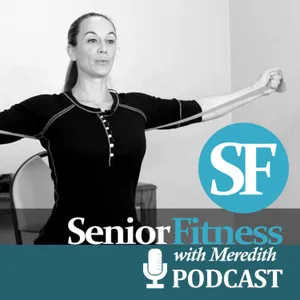
Senior Fitness With Meredith: Daily Summaries Delivered
by Senior Fitness with Meredith
A podcast discussing wellness for seniors, fitness trainers and healthcare industry with enriching topics such as physical and mental wellness, nutrition, positive spirits and motivation for a healthy and active lifestyle.
Latest Episodes
The most recent episodes — sign up to get AI-powered summaries of each one.
- 2 days ago29 min
5 Secrets to Tackling Muscle Soreness
Muscle soreness is something almost everyone experiences, whether from exercise, daily activities, or doing something unfamiliar or more strenuous than usual. In this episode, we explain what causes delayed-onset muscle soreness and share five practical ways to manage it, from getting enough rest and gentle movement to using heat and cold, proper nutrition and hydration, and stretching or massage. In This Episode You Will Learn: 1). Muscle soreness often appears later—not immediately. Delayed-onset muscle soreness typically develops 12–24 hours after an activity and can be strongest between 24 and 72 hours. Soreness that occurs suddenly during an activity may indicate something other than normal post-exercise soreness, such as an injury. 2). Give your body time to recover and prioritize sleep. Rest and sleep allow the body time to recover and rebuild after unfamiliar or more strenuous activity. If soreness persists longer than expected or does not improve, this suggests that it may be worth paying closer attention to what is causing it. 3). Gentle movement can help ease soreness. Complete inactivity isn't necessarily the best approach. Light activities such as walking, pool exercise, using a recumbent bike, or gentle stretching can get the body moving, increase circulation, and help tight muscles loosen up without adding strenuous exercise. 4). Nutrition and hydration support muscle recovery. Proper nutrition, including protein and carbohydrates, helps provide the body with what it needs after physical activity. Staying hydrated is also important, particularly because older adults may not always experience thirst as strongly and therefore may need intentional reminders to drink water throughout the day. 5). Stretching, massage, and foam rolling can be useful self-care tools. Gentle stretching can help maintain flexibility and range of motion while potentially reducing tightness and soreness. Massage and foam rolling are additional options, although the hosts caution that foam rolling should be done carefully and preferably with proper instruction. The main message is that muscle soreness is a normal part of adapting to new or more challenging activity, but it doesn't have to stop you from staying active. Giving your body time to recover, moving gently, staying hydrated and properly nourished, and incorporating stretching or other forms of self-care can all help you manage soreness and keep moving. Team MeredithSee omnystudio.com/listener for privacy information.
- 3 days ago3 min
Nows - MWM
“Forever is composed of nows.” —Emily Dickinson This quote reminds us that it is important to live in the now, not the past and future…the now is everything forever! MeredithSee omnystudio.com/listener for privacy information.
- 1 weeks ago29 min
5 Benefits Of A Daily Walk
In this episode we explore why walking is one of the simplest and most accessible forms of exercise, especially as we age. We cover five important benefits of making walking part of your daily routine, while also addressing the common misconception that you need to reach 10,000 steps a day to be healthy. In This Episode You Will Learn: 1). Walking is accessible and adaptable. Walking requires little or no equipment and can be done outdoors, indoors, on a treadmill, around a home, or through hallways. People can adjust their pace and duration based on their individual abilities and comfort level. 2). You don't need 10,000 steps a day. We explain that the 10,000-step goal originated as a marketing concept in the 1960s and should not be treated as a requirement for good health. Even smaller amounts of walking are worthwhile, and people can start with a manageable goal and build from there. 3). Walking can improve your mood. A daily walk can provide a break from sitting and stressful activities, help relieve stress, and support better mood and sleep. Even walking indoors can provide a mental reset. 4). Walking can help with joint discomfort and arthritis. Rather than avoiding movement because of joint pain, gentle movement can help keep joints moving and support the surrounding muscles and tissues. The key is to walk at an appropriate level rather than pushing into intense exercise. 5). Walking supports muscle and bone strength. Walking engages numerous muscle groups, including the calves, quadriceps, hamstrings, glutes, core, and even the upper body when the arms are moving. Regular walking can therefore contribute to maintaining muscle and bone strength as we age. Walking can benefit much more than cardiovascular fitness—it can support mood, joints, muscles, bones, immune function, and cognitive health. Most importantly, you don't need to reach an arbitrary step count; finding a comfortable amount of walking and making it a consistent part of your day can be a practical way to stay active and support healthy aging. Team MeredithSee omnystudio.com/listener for privacy information.
- 1 weeks ago5 min
Rain - MWM
“Into each life some rain must fall.” —Henry Wadsworth Longfellow This quote reminds us that there will be good days and bad days, but know each is worth it! MeredithSee omnystudio.com/listener for privacy information.
- 2 weeks ago27 min
An Introduction To "Exercise Snacks"
In this episode we introduce the idea of “Exercise Snacks”—short, one- to five-minute bursts of intentional movement that can be sprinkled throughout the day. We breakdown how these small amounts of activity can help people become more active, build confidence, improve mobility and balance, and create momentum toward a healthier lifestyle. In This Episode You Will Learn: 1). Exercise snacks are short bursts of movement. Exercise snacks typically last just one to five minutes and can be incorporated throughout the day. They are not necessarily intended to replace longer workouts, but rather to add more movement to your daily routine. 2). Small amounts of movement can add up. A few one- or two-minute activities throughout the day can provide meaningful opportunities to move, especially for people who spend a lot of time sitting. These short bursts can also provide an energy boost and help people feel more accomplished. 3). Exercise snacks can be easy to fit into everyday activities. Examples include calf raises while brushing your teeth, marching during a commercial break, walking around the house, dancing to a song, stretching, wall pushups, sit-to-stands, squats, and mobility exercises. 4). Exercise snacks can be a great starting point for beginners. People who are not currently exercising may find a one-, two-, or five-minute activity much less intimidating than trying to begin with a 30- or 45-minute workout. Starting small, building confidence, and gradually increasing activity can create momentum and consistency. 5). Exercise snacks can be done seated or standing. People who use a wheelchair, assistive device, or simply feel safer exercising from a chair can still benefit from movement snacks. Seated marching, torso twists, side bends, arm raises, and other movements can provide cardio, muscular endurance, mobility, stretching, and core benefits. The main message is that exercise doesn't always have to happen in one long workout—small, intentional movements throughout the day can help people become stronger, more mobile, energized, and confident. Whether you're new to exercise or already active, starting with manageable amounts and gradually building from there can make staying active feel more achievable and sustainable. Team MeredithSee omnystudio.com/listener for privacy information.
- 2 weeks ago5 min
Short Visit - MWM
“You’re only here for a short visit. Don’t hurry, don’t worry. And be sure to smell the flowers along the way.” —Walter Hagen This quote reminds us that time goes fast and it is very limited…make the most of it! MeredithSee omnystudio.com/listener for privacy information.
- 3 weeks ago30 min
5 Tips From "Super Agers" On Living A Healthy Life
In this episode of the Senior Fitness Podcast with Meredith, we're exploring the habits and attitudes of people known as “SuperAgers”—adults age 80 and older who maintain cognitive abilities comparable to people decades younger. Drawing from research and interviews with SuperAgers, they've identified five practical habits associated with healthy aging: eating well, staying physically active, maintaining social connections, handling setbacks without fear, and cultivating a positive attitude. In This Episode You Will Learn: 1). Understand what a “SuperAger” is. SuperAgers are generally defined as people age 80 or older who maintain mental or memory abilities similar to someone 20–30 years younger. Researchers are studying what contributes to this exceptional cognitive longevity. 2). Choose nutritious foods. Many of the SuperAgers interviewed emphasized eating well, choosing minimally processed foods, consuming plenty of plants and lean proteins, and practicing moderation rather than extreme dieting. 3). Stay physically active and consistent. Regular movement was one of the strongest themes in the discussion. SuperAgers incorporated activities such as walking, yoga, tai chi, weightlifting, and other forms of exercise into their lives and focused more on consistency than intensity. 4). Maintain social connections and have fun. Staying connected with family, friends, and the community can support well-being and mental health. The SuperAgers also emphasized enjoying life, trying new things, and occasionally indulging rather than living under constant restrictions. 5). Maintain a positive attitude. SuperAgers described the importance of staying optimistic, managing stress, and continuing to move forward despite life's challenges. These habits work together—eating well, exercising, staying social, and maintaining a positive outlook can reinforce one another. The central message is that healthy aging doesn't require perfection; even adopting one or two positive habits can put you on a better path. Consistency, movement, good nutrition, meaningful relationships, resilience, and a positive outlook can all contribute to living a healthier and more fulfilling life as we age. Team MeredithSee omnystudio.com/listener for privacy information.
- 3 weeks ago4 min
A Difference - MWM
“Act as if what you do makes a difference. It does.” —William James This quote reminds us that everything we do, no matter how small, makes a difference in some way, somehow. MeredithSee omnystudio.com/listener for privacy information.
Get Senior Fitness With Meredith summaries in your inbox
Free AI-powered daily recaps. Key takeaways, quotes, and mentions — in a 5-minute read.
Get Free Summaries →Free forever for up to 3 podcasts. No credit card required.
You Might Also Like
Listeners also like.

FoundMyFitness
A podcast exploring health, science, nutrition, aging, and fitness.

Forever Fit by Mavy Wellness
A plant-based wellness podcast focused on helping people get lean, prevent disease, and thrive through nutrition and lifestyle.

The Dan Buettner Podcast
Shares practical habits and insights from the world’s longest-lived populations to improve longevity and well-being.

Fully Alive: Unlocking the secrets to your healthier, happier, longer life
Explores science and lifestyle strategies to enhance health, purpose, and longevity.

The Dr Vonda Show
An orthopedic surgeon discusses aging, movement, bone health, and resilience with experts and women athletes.

The Health Continuum
High-performing professionals learn science-based health strategies to sustain energy, focus, and resilience in demanding careers.

TRAINED
Discusses fitness and wellness through interviews with athletes, scientists, and health experts on mindset, nutrition, movement, recovery, and sleep.

Healthful with Norah O'Donnell
A podcast exploring women’s health through expert insights on reproductive health, menopause, cancer, and wellness.
Everyday Wellness: Midlife Hormones, Menopause, and Science for Women 35+
A nurse practitioner shares science-based strategies for managing midlife hormones, menopause, and women's health.

Happy Healthy Caregiver
Family caregivers share experiences and strategies for maintaining health and happiness while balancing care duties with personal life.
Stronger Weekly
A fitness podcast for parents offering practical health advice, realistic workouts, and honest talk about burnout and family life.

Muscle for Life with Mike Matthews
Discusses science-based strategies for building muscle, losing fat, and improving overall health and well-being.
About Senior Fitness With Meredith
A podcast discussing wellness for seniors, fitness trainers and healthcare industry with enriching topics such as physical and mental wellness, nutrition, positive spirits and motivation for a healthy and active lifestyle.
Customized Recaps
AI-powered recaps with compact key takeaways, quotes, and insights.
Straight to Your Inbox
Get key takeaways from Senior Fitness With Meredith in a 5-minute read.
Save Hours Every Week
Stay current on your favorite podcasts without falling behind.
Frequently Asked Questions
What is Podzilla's Senior Fitness With Meredith daily summary?
It's a free AI-powered email that summarizes new episodes of Senior Fitness With Meredith as soon as they're published. You get the key takeaways, notable quotes, and links & mentions — all in a quick read.
How does the Senior Fitness With Meredith podcast summary work?
When a new episode drops, our AI transcribes and analyzes it, then generates a personalized summary tailored to your interests and profession. It's delivered to your inbox every morning.
Is this an official Senior Fitness With Meredith product?
No. Podzilla is an independent service that summarizes publicly available podcast content. We're not affiliated with or endorsed by Senior Fitness with Meredith.
Can I get summaries of other podcasts too?
Absolutely! The free plan covers up to 3 podcasts. Upgrade to Pro for 15, or Premium for 50. Browse our full catalog at /podcasts.
How often does Senior Fitness With Meredith release new episodes?
Senior Fitness With Meredith publishes daily. Our AI generates a summary within hours of each new episode.
What topics does Senior Fitness With Meredith cover?
Senior Fitness With Meredith covers topics including Fitness, Health & Fitness. Our AI identifies the specific themes in each episode and highlights what matters most to you.
Start getting Senior Fitness With Meredith summaries tomorrow morning.
Free forever for up to 3 podcasts. No credit card required.
Free forever for up to 3 podcasts. No credit card required.