Free Daily Podcast Summary
Sources & Methods: Daily Summaries Delivered
by NPR
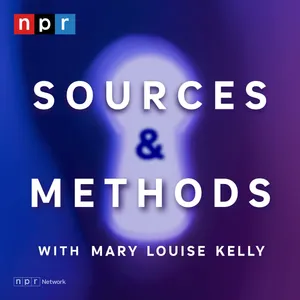
National security, unlocked. Each Thursday, host Mary Louise Kelly and a team of NPR correspondents discuss the biggest national security news of the week. With decades of reporting from battlefields and the halls of power, they bring you inside the Pentagon, State Department, and intelligence community to help you understand America's shifting role in the world, and how events in faraway places matter here at home. Additional episodes feature interviews with power players from the NatSec world -- current and former military officials, intelligence experts, diplomatic leaders, and more.
Latest Episodes
The most recent episodes — sign up to get AI-powered summaries of each one.
- 2 days ago31 min
Iraq withdrawal / America's Mideast footprint / Hegseth's Pentagon overhaul
For the second time since the 2003 invasion, the last American troops have left Iraq.Host Mary Louise Kelly speaks with NPR International Correspondent Jane Arraf who is in Baghdad to see how Iraqis are greeting the moment. And NPR Pentagon Correspondent Tom Bowman explains how this withdrawal and the ongoing war with Iran are changing the U.S. footprint in the region. He also discusses Defense Secretary Pete Hegseth's "State of the Force" address.Email the show at sourcesandmethods@npr.orgSupport public media with NPR+ and enjoy perks for over 25 podcasts like this one. This show’s perks include archive access and sponsor-free listening. Learn more at plus.npr.org.See pcm.adswizz.com for information about our collection and use of personal data for sponsorship and to manage your podcast sponsorship preferences.NPR Privacy Policy
- 4 days ago57 min
Europe on edge from threats of Russia's growing escalation. Can NATO defend itself?
Russia threatens attacks beyond Ukraine's border and rattles Europe. Is it ready?This month Poland Prime Minister Donald Tusk warned about intelligence assessments suggesting that Russia is planning drone and missile strikes against countries that support Ukraine, including Poland and Romania. How serious is that threat? And if that happens, is NATO ready to defend itself? Would the U.S. honor its NATO collective defense commitments and jump in to help? Those are some questions host Mary Louise Kelly put to Romania's Foreign Minister Oana-Silvia ?oiu and Poland’s Deputy Prime Minister and Foreign Minister Radoslaw Sikorski. The conversation took place on the sidelines of the United Nations General Assembly before a live audience at the Council of Foreign Relations in New York City. Email the show at sourcesandmethods@npr.orgSupport public media with NPR+ and enjoy perks for over 25 podcasts like this one. This show’s perks include archive access and sponsor-free listening. Learn more at plus.npr.org.See pcm.adswizz.com for information about our collection and use of personal data for sponsorship and to manage your podcast sponsorship preferences.NPR Privacy Policy
- 1 weeks ago24 min
Trump harangues the U.N. / Xi in D.C. / White House press ban fallout
President Trump used his speech at the United Nations General Assembly to attack the principles the organization is built on. Does the U.N. stand a chance in a new era of great power rivalry?Host Mary Louise Kelly speaks with NPR Diplomatic Correspondent Michele Kelemen about what happened this week when leaders from around the world came to New York at a precarious moment for the U.N. And NPR White House reporter Emily Feng explains what to look for during the diplomatic event that overshadowed the U.N. meeting this week: Chinese President Xi Jinping's state visit in Washington.Email the show at sourcesandmethods@npr.orgSupport public media with NPR+ and enjoy perks for over 25 podcasts like this one. This show’s perks include archive access and sponsor-free listening. Learn more at plus.npr.org.See pcm.adswizz.com for information about our collection and use of personal data for sponsorship and to manage your podcast sponsorship preferences.NPR Privacy Policy
- 2 weeks ago26 min
AI hacks are already here / U.S.-China race dynamics / Global guardrails
All a sudden everyone is talking about the risk of an AI catastrophe or, in the case of President Trump, an AI "hoax."Host Mary Louise Kelly talks with NPR Cybersecurity Correspondent Jenna McLaughlin about the risks cyber experts are worried about already. And NPR White House Correspondent Emily Feng explains why a global agreement on AI guardrails to protect against future existential risks looks elusive.Email the show at sourcesandmethods@npr.orgSupport public media with NPR+ and enjoy perks for over 25 podcasts like this one. This show’s perks include archive access and sponsor-free listening. Learn more at plus.npr.org.See pcm.adswizz.com for information about our collection and use of personal data for sponsorship and to manage your podcast sponsorship preferences.NPR Privacy Policy
- 3 weeks ago1h 1m
How Sept. 11 reshaped national security
It’s been 25 years since al-Qaida attacked the United States by hijacking airplanes and crashing them into the World Trade Center and the Pentagon, with a fourth plane crashing into a field in Pennsylvania.Sept. 11 represented a new kind of national security threat, and a new national security architecture was created to confront it.Before a live audience at NPR, host Mary Louise Kelly discussed how that day changed the country and its spy agencies, with people who worked on the frontlines of government and intelligence.Email the show at sourcesandmethods@npr.org.NPR+ supporters hear every episode without sponsor messages and unlock access to our complete archive. Sign up at plus.npr.org.See pcm.adswizz.com for information about our collection and use of personal data for sponsorship and to manage your podcast sponsorship preferences.NPR Privacy Policy
- Sep 3, 202626 min
Trump's oil deal / A year of boat strikes / Could Iran become a forever war?
The U.S. military is blowing up boats again. And it is taking a stake in the Venezuelan oil business. What is the administration trying to achieve in the Western Hemisphere?Guest host Scott Detrow talks with NPR National Security Correspondent Greg Myre and international reporter John Otis about how the Trump administration's "Donroe Doctrine" is playing out. They also discuss parallels between the Iran war and the post-9/11 conflicts that eventually became quagmires.Tune in for a live stream episode of our show next week.Click "Notify me" here to join the conversation on Wednesday, September 9 at 9:30am ET.Mary Louise Kelly will discuss how the events of 9/11 are still shaping global events, with former intelligence officials and policymakers who lived through it. Email the show at sourcesandmethods@npr.orgSupport public media with NPR+ and enjoy perks for over 25 podcasts like this one. This show’s perks include archive access and sponsor-free listening. Learn more at plus.npr.org.See pcm.adswizz.com for information about our collection and use of personal data for sponsorship and to manage your podcast sponsorship preferences.NPR Privacy Policy
- Aug 27, 202633 min
Six months of Iran war / Gains and losses / CIA Chief in Moscow
It’s been six months since the U.S. and Israel went to war with Iran.Is anyone winning?On the one-year anniversary of this podcast, Host Mary Louise Kelly speaks with NPR National Security Correspondent Greg Myre and two of NPR’s International Correspondents: Daniel Estrin in Tel Aviv and Hadeel Al-Shalchi in Istanbul. They discuss where the war stands – economically, diplomatically and militarily – and who has scored wins during the conflict.Email the show at sourcesandmethods@npr.orgSupport public media with NPR+ and enjoy perks for over 25 podcasts like this one. This show’s perks include archive access and sponsor-free listening. Learn more at plus.npr.org.See pcm.adswizz.com for information about our collection and use of personal data for sponsorship and to manage your podcast sponsorship preferences.NPR Privacy Policy
- Aug 20, 202628 min
South Korea military drills / Pivot to Asia? / USS Lincoln
This week, President Trump ordered that annual military drills between the U.S. and South Korea be scaled back. He also said he’d like to meet with North Korea’s Kim Jong Un.As Trump closes one door with a key U.S. ally, is he also trying to open one with its northern neighbor?Host Mary Louise Kelly speaks with NPR Pentagon Correspondent Tom Bowman and NPR White House Correspondent Emily Feng about whether the U.S. is once again trying to shift its attention to Asia, and how the war with Iran is hanging over that effort. Also, the latest on conditions aboard an aircraft carrier that’s been at sea for more than 260 days.Email the show at sourcesandmethods@npr.orgSupport public media with NPR+ and enjoy perks for over 25 podcasts like this one. This show’s perks include archive access and sponsor-free listening. Learn more at plus.npr.org.See pcm.adswizz.com for information about our collection and use of personal data for sponsorship and to manage your podcast sponsorship preferences.NPR Privacy Policy
Get Sources & Methods summaries in your inbox
Free AI-powered daily recaps. Key takeaways, quotes, and mentions — in a 5-minute read.
Get Free Summaries →Free forever for up to 3 podcasts. No credit card required.
You Might Also Like
Listeners also like.
NatSec Matters
Former national security officials interview top leaders on critical security challenges and U.S. policy responses.

Consider This from NPR
A daily news breakdown that explains a key story and its implications in about 15 minutes.
The Just Security Podcast
Expert analysis of national security, foreign policy, and rights from practitioners, academics, and affected individuals.

In the Room with Peter Bergen
Peter Bergen examines global news stories through interviews with experts and firsthand reporting on national security, technology, and conflict.
Global Security Briefing
Expert analysis on global security issues, focusing on UK foreign and defense policy in a changing international landscape.

State of the World from NPR
Global news and context from NPR reporters, delivering concise, human-centered stories from around the world every weekday.

Mo News
Daily news coverage with analysis, interviews, and listener Q&A on global headlines from Mosheh Oinounou and Jill Wagner.

One Decision
Former intelligence leaders and journalists examine high-stakes decisions that shaped global events.

The Headlines
A daily news podcast offering global headlines and analysis from New York Times reporters.

Up First from NPR
A daily news podcast delivering the three biggest stories of the day with concise reporting and analysis from NPR.

PBS News Hour - Full Show
Nightly news coverage with in-depth reporting, interviews, and analysis from PBS.

The Steady State Sentinel
Former national security professionals analyze threats to democracy and the Constitution with expert guests.
About Sources & Methods
National security, unlocked. Each Thursday, host Mary Louise Kelly and a team of NPR correspondents discuss the biggest national security news of the week. With decades of reporting from battlefields and the halls of power, they bring you inside the Pentagon, State Department, and intelligence community to help you understand America's shifting role in the world, and how events in faraway places matter here at home. Additional episodes feature interviews with power players from the NatSec world -- current and former military officials, intelligence experts, diplomatic leaders, and more.
Customized Recaps
AI-powered recaps with compact key takeaways, quotes, and insights.
Straight to Your Inbox
Get key takeaways from Sources & Methods in a 5-minute read.
Save Hours Every Week
Stay current on your favorite podcasts without falling behind.
Frequently Asked Questions
What is Podzilla's Sources & Methods daily summary?
It's a free AI-powered email that summarizes new episodes of Sources & Methods as soon as they're published. You get the key takeaways, notable quotes, and links & mentions — all in a quick read.
How does the Sources & Methods podcast summary work?
When a new episode drops, our AI transcribes and analyzes it, then generates a personalized summary tailored to your interests and profession. It's delivered to your inbox every morning.
Is this an official Sources & Methods product?
No. Podzilla is an independent service that summarizes publicly available podcast content. We're not affiliated with or endorsed by NPR.
Can I get summaries of other podcasts too?
Absolutely! The free plan covers up to 3 podcasts. Upgrade to Pro for 15, or Premium for 50. Browse our full catalog at /podcasts.
How often does Sources & Methods release new episodes?
Sources & Methods publishes weekly. Our AI generates a summary within hours of each new episode.
What topics does Sources & Methods cover?
Sources & Methods covers topics including News, Politics. Our AI identifies the specific themes in each episode and highlights what matters most to you.
Start getting Sources & Methods summaries tomorrow morning.
Free forever for up to 3 podcasts. No credit card required.
Free forever for up to 3 podcasts. No credit card required.