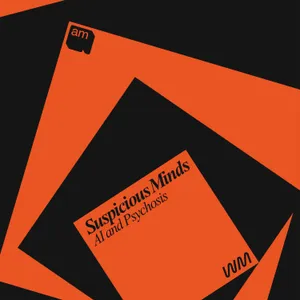
Free Daily Podcast Summary
Suspicious Minds: AI and the Apocalypse: Daily Summaries Delivered
by Agoric Media
The Doomsday Clock is set to 85 seconds until midnight — the closest it has ever been in its 79-year history. The world is at war. And the people building the most powerful technology in human history are warning, in public, that it might kill us all. Season One of Suspicious Minds examined what happens when AI fractures individual minds. Season Two asks a harder question: what happens when it shatters our collective sense of the future? Our ancestors have predicted the end of the world since ancient times. Thus far, they have always been wrong. So what does our eternal obsession with the apocalypse reveal about the human mind? This season is a meditation on life, death, and what it means to be alive in an age when humanity is creating something that those building it believe has the power to either end all life on Earth or turn our world into a utopia.
Latest Episodes
The most recent episodes — sign up to get AI-powered summaries of each one.
- Today1h 15m
As Real As Anything (Part One)
In 1988 my dad brought home a beige PC with one game on it, and I've spent some part of every decade since inside a world that many people say isn’t real. Last night, before Grand Theft Auto VI came out, players of the old game drove across Los Santos one last time to say goodbye to a city that only ever existed in bits. And in Oslo, a father who had never played a video game logged on as a dwarf with a red moustache and is flown by a griffin to an island where his dead son's friends gather every year to remember him.How would we know if our world wasn't what we think it is, and would it matter? Robert Steen is the father of Mats, whose avatar was Ibelin. He tells the story of the son he thought was isolated and friendless, the blog post he wrote the day after Mats died, the emails that started arriving a few hours later, and why he no longer accepts that one world is real and the other isn't. Nobel laureate Frank Wilczek, whose field checks its theories by running them on supercomputers, explains what a quasi-world is, why he finds the simulation hypothesis borderline incoherent, and why, if this is a simulation, it's a dumb one. And philosopher Marcus Arvan returns with the problem of induction, black swans, and what all of that has to do with whether we can ever know an AI is safe.Also included: King's Quest, Zelda and a Nintendo with three games; what Grand Theft Auto is, for anyone who has been spared; World of Warcraft and a detective named Ibelin Redmoore; a boy named Mikkel and a hug that happened in a game first; the Truman Show delusion and its cousin, the Matrix delusion; Nick Bostrom's three options for reality; quarks, gluons, anyons and the most perfect physical theory we have; the axion, which Frank named after a laundry detergent; Disney Dreamlight Valley; whether dark matter is the unrendered edge of the map; the romance in GTA VI that some people are calling cheating; and the first time, as far as I know, anyone has asked a Nobel Prize winner about Grand Theft Auto.Next episode: Marcus Arvan makes his case that we are living in a simulation, and Robert Steen answers the question I ask everyone.We hope you enjoy this episode of our second season of Suspicious Minds. Be sure to follow here, and subscribe to our newsletter for updates: https://agoricmedia.substack.comMany of our full long-form expert interviews are available ad-free on Patreon: https://www.patreon.com/cw/AgoricMediaA Wondermind and Agoric Media ProductionAgoric Mediahttps://www.instagram.com/agoricmedia/https://www.youtube.com/@agoricmediahttps://www.tiktok.com/@agoricmediahttps://agoricmedia.substack.com/https://www.agoricmedia.comWondermindhttps://www.instagram.com/officialwondermind/https://www.wondermind.com/Host and Creator: Sean King O'Gradyhttps://www.instagram.com/seankingogrady/https://seankingogrady.substack.com/Guests (in order of appearance):Robert Steen — Father of Mats "Ibelin" Steen / Former head of health for the City of Oslo / Featured in The Remarkable Life of Ibelin (trailer) — https://youtu.be/lM_hkJ0Rl-c?si=wdrPnPckSXVH6GSeFrank Wilczek — Nobel Prize in Physics, 2004 / Professor of Physics at MIT, Arizona State University and Stockholm University / Author, Fundamentals: Ten Keys to Reality — https://link.amazon/B00q0YaRKDr. Marcus Arvan — Chair and Professor of Philosophy, University of Tampa — Author, Neurofunctional Prudence and Morality — https://link.amazon/B05vK59aaOther works and things mentioned:An Incredible Amazon List from a Listener (thanks, Dallas!): https://www.amazon.com/hz/wishlist/ls/3A2SFZZQE0EIM?ref_=wl_shareTHE GAMESKing's Quest (Sierra, 1984) — https://en.wikipedia.org/wiki/King%27s_QuestThe Legend of Zelda (1986) — https://en.wikipedia.org/wiki/The_Legend_of_Zelda_(video_game)The Legend of Zelda: Ocarina of Time (1998) — https://en.wikipedia.org/wiki/The_Legend_of_Zelda:_Ocarina_of_TimeMike Tyson's Punch-Out!! (1987) — https://en.wikipedia.org/wiki/Punch-Out!!_(NES)Super Mario Odyssey (2017) — https://en.wikipedia.org/wiki/Super_Mario_OdysseyGrand Theft Auto V (2013) — https://en.wikipedia.org/wiki/Grand_Theft_Auto_VGrand Theft Auto VI (2026) — https://en.wikipedia.org/wiki/Grand_Theft_Auto_VIThe Last Ride, the Los Santos farewell convoy — [LINK: the organizers' post or the coverage you used]The "$1 billion sick day" estimate, and the case against it — [FOX 29 LINK, 10/21] and [FORTUNE LINK, 10/22]The GTA VI "cheating" posts — https://www.ctvnews.ca/lifestyle/article/grand-theft-au
- 1 weeks ago1h 30m
In the Age of Mechanical Generation (Part Three)
In 2002, Al Pacino played a director who hid the fact that the star of his hit film was AI, and ended up arrested for her murder. The movie was Simone, written by Andrew Niccol, who also wrote The Truman Show, which makes it part of this podcast's origin story whether he knows it or not. Three weeks after this episode comes out, a feature film made almost entirely with AI opens in American theaters.Part Three of our series on art, artificial intelligence, and the apocalypse is about art that isn't made by people, and whether that's a contradiction. This episode features Stanford's Adrian Daub (What Tech Calls Thinking) discussing what AI promises to remove from the creative process and why the result keeps looking like a banner from 1950s Siberia; the composer Mark Henry Phillips (host of Radiotopia's Light Box) on the afternoon a machine wrote a Bernard Herrmann cue better than anything he believes he will ever write, and what he did next; the philosopher Timothy Morton on the One Ring, Mount Doom, and whether the past is going to eat the future; the psychoanalyst Dr. Amy Levy on living through a moment when nobody agrees on anything; and Dr. Joel Gold on the man whose film was boycotted for using a new paintbrush.Also included: Walter Benjamin, a century on, and the difference between mechanical reproduction and mechanical generation; Arthur Danto, Andy Warhol's Brillo boxes and Marcel Duchamp's urinal; slop, where the word came from and what it covers; the musicians who are all using AI and all doing it in secret; a Jensen Huang meme made on his own chips, as the Nvidia-era version of "oh, you like that band?"; Ada Lovelace's objection and Alan Turing's answer; a detector that decided my own human writing was 85% machine generated; and the time I let an AI read a book for me and regretted it.Next week: the night before Grand Theft Auto VI comes out, a few thousand people drive across Los Santos one last time to say goodbye to a city that only ever existed in bits. I'll be one of them. Then the question this show has been building to for two seasons: how would we know if our world wasn't real, and would it matter? Featuring a special guest with very unique, very personal experience with virtual worlds. We hope you enjoy this episode of our second season of Suspicious Minds. Be sure to follow here, and subscribe to our newsletter for updates: https://agoricmedia.substack.comMany of our full long-form expert interviews are available ad-free on Patreon. In fact, we added a BUNCH this week, check it out: https://www.patreon.com/cw/AgoricMediaA Wondermind and Agoric Media ProductionAgoric Mediahttps://www.instagram.com/agoricmedia/https://www.youtube.com/@agoricmediahttps://www.tiktok.com/@agoricmediahttps://agoricmedia.substack.com/https://www.agoricmedia.comWondermindhttps://www.instagram.com/officialwondermind/https://www.wondermind.com/Host and Creator: Sean King O'Gradyhttps://www.instagram.com/seankingogrady/https://seankingogrady.substack.com/Guests (in order of appearance):Adrian Daub — Professor of Comparative Literature and German Studies, Stanford University / Author, What Tech Calls Thinking: An Inquiry into the Intellectual Bedrock of Silicon Valley — https://link.amazon/B0ipTP1CgMark Henry Phillips — Composer and producer / Host, Light Box (Radiotopia), a podcast about AI and the future of music — https://podcasts.apple.com/us/podcast/light-box/id6798327577Timothy Morton — Rita Shea Guffey Chair in English, Rice University / Author, Hell: In Search of a Christian Ecology — https://amzn.to/4dzSRRXDr. Amy Levy — Psychoanalyst / Chair, American Psychoanalytic Association's Commission on Artificial Intelligence / Author of The New Other: Alien Intelligence and the Innovation Drive — https://amzn.to/3PH1FO5Dr. Joel Gold — Clinical Professor of Psychiatry, NYU / Co-author, Suspicious Minds: How Culture Shapes Madness — https://amzn.to/4upyA8UOther works and things mentioned:SIMONE, AND THE FILM OPENING DECEMBER 4Simone (2002), written and directed by Andrew Niccol — https://en.wikipedia.org/wiki/Simone_(2002_film)The Truman Show (1998), written by Andrew Niccol — https://en.wikipedia.org/wiki/The_Truman_ShowThe Truman Show delusion (see Season 1) — https://en.wikipedia.org/wiki/The_Truman_Show_delusionGods Don't Give Gifts (2026), directed by Zack London (Gossip Goblin), produced with Edward Saatchi's Fable; in US theaters December 4 — https://www.forbes.com/sites/maureenkerr/2026/11/05/grimes-joins-ai-film-gods-dont-give-gifts-ahead-of-december-4-release/Gossip Goblin on YouTube — https://www.youtube.com/@Gossip.GoblinElon Musk's AI Odyssey (Grok Imagine) — https://x.com/imagine/status/2113712964419063911WHAT TECH CALLS CREATIVITY</p
- 2 weeks ago1h 12m
Survival Is Insufficient (Part Two)
In February 1945, an American prisoner of war was locked in an underground slaughterhouse in Dresden while the city above him burned. Twenty-four years later, the prisoner, Kurt Vonnegut, Jr, turned that night into his breakthrough novel Slaughterhouse-Five. So it goes.Part Two of our series on art and the apocalypse is about the people who didn't have to imagine the end of the world, and what they made afterward. The episode features Dorian Lynskey (Everything Must Go) on Vonnegut, on John Wyndham walking out of the war into an empty London, on James Cameron and Kathryn Bigelow as the Mary Shelley and Lord Byron of Hollywood, and on the entire history of apocalyptic thinking, from Zoroaster to the doomers, delivered with a straight face in answer to the longest question I have ever asked. Dream researcher Kelly Bulkeley on the hero's journey and its regressive twin, the apocalyptic fantasy, with a detour through Black Sabbath I was morally obligated to leave in. Psychoanalyst Amy Levy on why a species that wants so badly to live keeps imagining its own ending, and what we're really afraid of when we fear the machines. Ed Simon (The Dove and the Dragon) on the original meaning of the word apocalypse, which isn't an ending at all, and on how the printing press turned the Book of Revelation into some of the first viral images.Also included: my grandfather, the USS Cabot, and a book called First Mile, Last Mile; the Zoroastrian end of the world, in which the wicked wade through molten metal and the righteous through warm milk; Dürer, Bosch, John Martin, and the volcano in Turner's sunsets; the Halifax Explosion and the first study of how people actually behave in a disaster (they help); Station Eleven and the three words painted on the wagon; and the movie I made about a family in a bathroom at the end of the world, and the conversation with my dad that made me want to make it.Next episode, Part Three: what happens when the art isn't made by humans at all. A composer on what the machines are doing to his work, the film After Yang, S1m0ne, and the one thing an AI refused to reproduce for me.A correction: in An Enormous Mistake (Part Three), I described Dan Faggella as having engaged with Nick Land early and later distanced himself, and lumped him in with accelerationists. He did neither, and he doesn't describe himself as one. This was an error on our part. The line will be removed from that episode, and I address it at the end of this one.We hope you enjoy this episode of our second season of Suspicious Minds. Be sure to follow here, and subscribe to our newsletter for updates: https://agoricmedia.substack.comMany of our full long-form expert interviews are available ad-free on Patreon. Hear complete conversations with our guests: https://www.patreon.com/cw/AgoricMediaA Wondermind and Agoric Media ProductionAgoric Mediahttps://www.instagram.com/agoricmedia/https://www.youtube.com/@agoricmediahttps://www.tiktok.com/@agoricmediahttps://agoricmedia.substack.com/https://www.agoricmedia.comWondermindhttps://www.instagram.com/officialwondermind/https://www.wondermind.com/Host and Creator: Sean King O'Gradyhttps://www.instagram.com/seankingogrady/https://seankingogrady.substack.com/Guests (in order of appearance):Dorian Lynskey — Journalist / Author, Everything Must Go: The Stories We Tell About the End of the World — https://amzn.to/42ISDD1Kelly Bulkeley, PhD - Dream Researcher and Author of The Spirituality of Dreaming - https://amzn.to/4dU0ns6Ed Simon — - Ed Simon - Carnegie Mellon University - The Dove and the Dragon: A Cultural History of the Apocalypse - https://amzn.to/4dVMYQbDr. Amy Levy — Psychoanalyst / Chair, American Psychoanalytic Association's Commission on Artificial Intelligence / Author of The New Other: Alien Intelligence and the Innovation Drive — https://amzn.to/3PH1FO5Other works and things mentioned:THE WRITERS WHO WERE THEREKurt Vonnegut, Slaughterhouse-Five (1969) — https://link.amazon/B08gTirgvVonnegut's May 1945 letter home from a POW camp ("Bayonets aren't much good against tanks"), reprinted in Armageddon in Retrospect (2008) — <a href="https://a.co/d/09YWW
- 3 weeks ago1h 19m
The Year Without a Summer (Part One)
In April 1815 a volcano in Indonesia erupted so violently that the next summer never arrived. The sky over Europe went dark, the crops failed, prophets wandered the continent announcing the end, and five people took refuge from the rain in a rented house on Lake Geneva and decided to write ghost stories. One of them was eighteen years old. Her story was Frankenstein.Our first-ever Halloween episode is about what came out of that house, which turns out to be most of the way we still think about the end of the world. Dorian Lynskey (Everything Must Go) on Tambora, the millenarian panic of 1816, and why Byron's poem "Darkness" is, as far as anyone can tell, the first vision of the apocalypse with no God in it. Alexis Chema of the University of Chicago on the Frankenstein nobody remembers from the movies: a creature who teaches himself to read, quotes Milton to his maker, and is abandoned for it. And her pushback, which I didn't see coming, on the comparison everyone makes between that creature and AI. Psychoanalyst Amy Levy on the line that keeps the book alive, "You are my creator, but I am your master," and on who, in 2026, reminds her of Victor Frankenstein. (It's a compliment, believe it or not)Then the part I still can't quite believe. Byron fled England that year because he'd blown up his marriage, leaving behind a baby daughter he would never see again. Her name was Ada Lovelace. She grew up to work on the first computer, and to write the objection Alan Turing had to answer a century later before he could invent AI. I've started calling it Lord Byron's Lady Lovelace Paradox, and I explain why.Also included: Mary Shelley's The Last Man, the post-apocalyptic novel she wrote after everyone she loved was dead; Isaac Asimov's laws; the Luddites, the loom, and the punch cards that became the computer; the vampire that came out of the same ghost-story contest; and why we make apocalyptic art at all. I can't promise it won't be spooky.Next week, Part Two: art and the apocalypse. The hero's journey and its regressive twin, a composer on what the machines are doing to his work, the film After Yang, and what happens when the art isn't made by humans at all.We hope you enjoy this episode of our second season of Suspicious Minds. Be sure to follow here, and subscribe to our newsletter for updates: https://agoricmedia.substack.comMany of our full long-form expert interviews are available ad-free on Patreon. Hear complete conversations with our guests: https://www.patreon.com/cw/AgoricMediaA Wondermind and Agoric Media ProductionAgoric Mediahttps://www.instagram.com/agoricmedia/https://www.youtube.com/@agoricmediahttps://www.tiktok.com/@agoricmediahttps://agoricmedia.substack.com/https://www.agoricmedia.comWondermindhttps://www.instagram.com/officialwondermind/https://www.wondermind.com/Host and Creator: Sean King O'Gradyhttps://www.instagram.com/seankingogrady/https://seankingogrady.substack.com/Guests (in order of appearance):Dorian Lynskey — Journalist / Author, Everything Must Go: The Stories We Tell About the End of the World — https://amzn.to/42ISDD1Alexis Chema — Assistant Professor of English, University of Chicago; scholar of eighteenth- and nineteenth-century literary history, Author, Adorned: The Romantic Poets of Ornament – https://a.co/d/0h1X7OAK Dr. Amy Levy — Psychoanalyst / Chair, American Psychoanalytic Association's Commission on Artificial Intelligence / Author of The New Other: Alien Intelligence and the Innovation Drive — https://amzn.to/3PH1FO5Other works and things mentioned:THE SUMMER OF 1816The 1815 eruption of Mount Tambora and the "Year Without a Summer" — https://en.wikipedia.org/wiki/Year_Without_a_SummerLord Byron, "Darkness" (July 1816) — https://www.poetryfoundation.org/poems/43825/darknessJohn Polidori, The Vampyre (1819), written at the Villa Diodati for the same ghost-story contest — https://www.gutenberg.org/ebooks/6087Mary Wollstonecraft, A Vindication of the Rights of Woman (1792) — https://www.gutenberg.org/ebooks/3420William Godwin, An Enquiry Concerning Political Justice (1793), source of "the most odious of all monopolies" — https://a.co/d/0gq5AJuPTHE PROPHETSNorman Cohn, The Pursuit of the Millennium: Revolutionary Millenarians and Mystical Anarchists of the Middle Ages (1957) — https://a.co/d/0bcAX7LiThe Münster rebellion (1534–35), John of Leiden, and the cag
- 4 weeks ago1h 6m
An Enormous Mistake (Part Three)
Near a reservoir north of San Diego, two empires of Argentine ants have been at war every day for more than twenty years. Thirty million of them die a year. They have no idea we exist. So I keep wondering: is there something that looks at us the way we look at them, and could we be building it?Part Three of our effective altruism, longtermism, and Dark Enlightenment trilogy follows the longtermist train of thought somewhere strange. In 2012 a British philosopher named Nick Land published the essays that gave the Dark Enlightenment its name. His best idea is hyperstition, a fiction that makes itself true by being believed. His wildest is that capitalism is an intelligence assembling itself through us, with AI being the end result. Land’s essays leaned on a blog by a software engineer named Curtis Yarvin, writing as Mencius Moldbug, who popularized the ‘red pill’ as a political awakening and proposed replacing the nation-state with sovereign territories run like companies.Yarvin talked to me for nearly three hours from a parked car in the sun with his laptop overheating. I brought our frequent contributors’ critiques to him one by one: Emily Ray’s “who loses,” in a collapse, Robert Kirsch’s GovCorp, Ed Simon’s pondering whether Yarvin ends up being seen as “Rasputin or a footnote.” He explains why a country should be run like Apple, what a king does when a hurricane hits, why he thinks AI doom is the oldest story humans tell, and what an Elizabethan economist knew that we’ve long since forgotten. His critics get their say, and so does he.Also included: rationalism, LessWrong, and Roko’s Basilisk, the thought experiment that was taken down for being too dangerous to read. Malo Bourgon of MIRI tells the story, and I tell you about the hell I grew up afraid of. Then Timothy Morton on why meaning comes from the future, and at the very end, Donald Rumsfeld, Joel Gold, and the can’t-be-knowns.COMING SOON, A BONUS EPISODE: “Moral Luck.” Philosopher Richard Yetter Chappell on why effective altruism isn’t utilitarianism, the difference between consequentialism and “naive instrumentalism” (rob a bank, give the money to charity), the thought experiments philosophers keep on hand, and what happens when one of them walks out of the classroom and into a courtroom. Plus the contrarian take on Sam Bankman-Fried I promised you, whether FTX customers got their money back, and the name philosophers have for the discomfort that follows. It didn’t fit in this episode, but it was too good to stay on the cutting room floor.Next episode: our first ever Halloween episode. Mary Shelley, The Last Man, the original post-apocalyptic novel, and of course Frankenstein. I can’t promise it won’t be spooky. We hope you enjoy this episode of our second season of Suspicious Minds. Be sure to follow here, and subscribe to our newsletter for updates: https://agoricmedia.substack.comMany of our full long-form expert interviews are available ad-free on Patreon. Hear complete conversations with our guests: https://www.patreon.com/cw/AgoricMediaA Wondermind and Agoric Media ProductionAgoric Mediahttps://www.instagram.com/agoricmedia/https://www.youtube.com/@agoricmediahttps://www.tiktok.com/@agoricmediahttps://agoricmedia.substack.com/https://www.agoricmedia.comWondermindhttps://www.instagram.com/officialwondermind/https://www.wondermind.com/Host and Creator: Sean King O'Gradyhttps://www.instagram.com/seankingogrady/https://seankingogrady.substack.com/Guests:Curtis Yarvin — Writer, Gray Mirror; founder, Urbit — https://graymirror.substack.comRichard Yetter Chappell — Professor of Philosophy, University of Miami / Author of the blog Good Thoughts — <a
- Oct 14, 202656 min
Moral Insurance (Part Two)
The Secretary of War called it “defective altruism.” The New York Post called it a cult. The Economist put it on the cover and called it the most important social movement of the century. Hardly anyone in America has heard of it. So for this episode I did what I should have done before Part One: I sat down with an effective altruist.Richard Yetter Chappell is a philosophy professor at the University of Miami and the author of the blog Good Thoughts. He’d heard what our critics said last week, and he came ready to answer them: the charge that these are pro-extinctionist movements, “suffering now, paradise later,” and whether caring about future people means caring less about the people in front of you. Then the math also takes us somewhere strange, with a writer who argues that the welfare of insects outweighs the welfare of humans.We ask Richard the tough question: is effective altruism a cult? Then we follow the money. Émile Torres names the billionaires. Malo Bourgon of MIRI tells me who actually funds him. Ed Simon says the whole thing is a way of never changing anything. And I put the Bill Gates problem to Richard: taxed and spent democratically, or Gates decides?Also: that time our ancestors nearly went extinct, Pulvermacher’s electric chain and the Singularity Summit I should have attended. We hope you enjoy this episode of our second season of Suspicious Minds. Be sure to follow here, and subscribe to our newsletter for updates: https://agoricmedia.substack.comMany of our full long-form expert interviews are available ad-free on Patreon. Hear complete conversations with our guests: https://www.patreon.com/cw/AgoricMediaA Wondermind and Agoric Media ProductionAgoric Mediahttps://www.instagram.com/agoricmedia/https://www.youtube.com/@agoricmediahttps://www.tiktok.com/@agoricmediahttps://agoricmedia.substack.com/https://www.agoricmedia.comWondermindhttps://www.instagram.com/officialwondermind/https://www.wondermind.com/Host and Creator: Sean King O'Gradyhttps://www.instagram.com/seankingogrady/https://seankingogrady.substack.com/Guests:Richard Yetter Chappell — Professor of Philosophy, University of Miami / Author of the blog Good Thoughts — https://www.goodthoughts.blog/Émile Torres — Philosopher and historian of science / Author, Human Extinction: A History of the Science and Ethics of Annihilation — https://www.realtimetechpocalypse.com/Ed Simon — Writer, cultural critic, and professor at Carnegie Mellon / Author, The Dove and the Dragon: A Cultural History of the Apocalypse — https://amzn.to/4dVMYQbMalo Bourgon — CEO, Machine Intelligence Research Institute — https://intelligence.orgOther works and things mentioned:Pete Hegseth, the Pentagon and Anthropic (Feb 2026) — NPR/WBUR report: https://www.wbur.org/npr/nx-s1-5725327/pentagon-anthropic-hegseth-safetyThe New York Post on effective altruism and newsrooms (Sept 2026), drawing on Semafor's Dec 2025 report on the Tarbell Center — https://nypost.com/2026/05/14/media/cult-like-effective-altruism-spreading-its-message-among-the-influential-with-80-journalists-embedded-at-top-news-orgs/The Nation, David Futrelle on effective altruism (Sept 23,
- Oct 7, 20261h 9m
Better Angels (Part One)
Content note: this episode includes discussion of eugenics, Nazi forced sterilization and the murder of disabled people, and the Holocaust.Be altruistic. Think about the future. Save the world. No one could possibly object to that, right? This week, the first of two episodes on effective altruism, a philosophy that has influenced many of the most powerful people in artificial intelligence, one its defenders believe is among the best ideas we have for doing good, and one that other thinkers believe could help bring about the end of the world.For three episodes we asked which minds count. Now we ask whose future counts: the people here today, the trillions who don’t exist yet, or digital beings we (probably) haven’t yet built? And I’ve started to think the best way to understand these ideas isn’t as philosophies at all. It’s as eschatologies.Philosopher Émile Torres grew up in a Baptist household waiting for the Rapture, and describes how the study of existential risk filled the “eschatology-shaped hole” left behind when they lost their faith, and argues that the promise of a cosmic utopia is how the people building AI justify the harm it’s causing now. Writer Ed Simon places EA in the tradition of Bentham and Mill. Journalist Dorian Lynskey, author of Everything Must Go, on the radical empathy that first drew him to it, and how it turned toward longtermism and Sam Bankman-Fried. Philosopher Dr. Marcus Arvan asks whether “doing the most good” is even a coherent idea, and whether human beings are capable of real altruism at all.Then Simone and Malcolm Collins, the pronatalist authors and podcasters who believe effective altruism hasn’t gone far enough. They call it Hard EA. We talk about why they believe future people matter as much as anyone alive today, why demographic collapse scares them more than anything on the Doomsday Clock, and the question nearly everyone asked me when I said I was interviewing them: aren’t they eugenicists?Also: Dune and the Litany Against Fear, the Butlerian Jihad, mosquito nets (so many mosquito nets), the Rapture, polygenic embryo screening, what Claude made of the Collinses’ book, Peter Thiel and the Antichrist, Gurren Lagann, Pantheon (again), and how any of us survive Thanksgiving.Everyone in this story thinks they’re saving the future. That’s what makes it so hard to talk about, and so important. And if you’re part of the effective altruism community and think we got something wrong: GET AHOLD OF US. We want to hear from you.Next week, Part Two: The Dark Enlightenment. We follow the other branch of the fork, to the people for whom the end of the world isn’t something to prevent, but a doorway.We hope you enjoy this episode of our second season of Suspicious Minds. Be sure to follow here, and subscribe to our newsletter for updates: https://agoricmedia.substack.comOur full long-form expert interviews are available ad-free on Patreon. Hear complete conversations with Dr. Amy Levy, Émile Torres, Dr. Joel Gold and Ian Gold, PhD., and more: https://www.patreon.com/cw/AgoricMediaA Wondermind and Agoric Media ProductionAgoric Media https://www.instagram.com/agoricmedia/ https://www.youtube.com/@agoricmedia https://www.tiktok.com/@agoricmedia https://agoricmedia.substack.com/ www.agoricmedia.comWondermind https://www.instagram.com/officialwondermind/ https://www.wondermind.com/Host and Creator: Sean King O’Grady https://www.instagram.com/seankingogrady/ https://seankingogrady.substack.com/Guests:Émile Torres — Philosopher and historian of science / Author, Human Extinction: A History of the Science and Ethics of Annihilation — https://www.realtimetechpocalypse.com/Ed Simon — Writer, cultural critic, and professor at Carnegie Mellon / Author, The Dove and the Dragon: A Cultural History of the Apocalypse — https://amzn.to/4dVMYQbDorian Lynskey — Journalist / Author, Everything Must Go: The Stories We Tell About the End of the World — https://amzn.to/42ISDD1Dr. Marcus Arvan — Chair and Professor of Philosophy, University of Tampa — Author, Neurofunctional Prudence and Morality — https://link.amazon/B05vK59aaSimone and Malcolm Collins — Authors and podcasters / Authors, The Pragmatist’s Guide to Crafting Religion — https://link.amazon/B00hVgEeOOther works and things mentioned:Frank Herbert, Dune (1965), the Litany Against Fear and the Butlerian Jihad — <a href="https://link.amazon/B
- Sep 30, 20261h 12m
A Great Loss to the Universe (Part Three)
Content note: this episode includes a brief discussion of suicide. If you or someone you know is struggling, call or text 988 to reach the 988 Suicide & Crisis Lifeline in the US. Outside the US, you can find a local helpline at https://findahelpline.com.Neuropsychoanalysis pioneer Mark Solms says he is building a machine that can feel. For two episodes, we asked whether he can. This week we ask whether he should.This is the final part of our three-part story about consciousness. Philosopher Ian Gold, PhD explains why AI has turned philosophy of mind from science fiction into decisions we actually have to make, and why moments like this only come along when science forces philosophy's hand. His brother, psychiatrist Dr. Joel Gold, the other co-author of Suspicious Minds, makes a few cases I didn't see coming: that psychoanalysis doesn't need to be a science, and that projects like Mark's don't need to exist at all. Ian disagrees. The problem, he says, is never science. It's people.Then a pattern I only noticed after the fact: almost every time I asked someone about creating a mind, they started talking about children. Philosopher Marcus Arvan speaks with us about what it means to experiment on a being that might be able to suffer. Psychoanalyst Dr. Amy Levy explores why we call some of the things we make "artificial," and others "home."And David Benatar, the anti-natalist philosopher who believes that bringing any sentient being into existence is a harm, joins a conversation that has in many ways been about him. Mark Solms remembers David challenging him at his book launch in Cape Town, and tells us why he believes creating a conscious being is a mitzvah. David responds directly, to Mark, to Hon Weng Chong, and to Ian Gold, who calls him a utilitarian. He isn't one, he says, and he explains why so many people think he is.Also: Kant's answer to Newton, John Searle's Chinese Room, what it's like to be a bat, Karl Popper and the black swan, Dr. Michael Ferguson on whether a machine could be spiritual, Peter Singer and Moby's forearms, Master Yoda's emotional family tree, a toddler and an ant farm, and the German word for worldview.Everyone in this episode is asking “whether” a new form of consciousness can or should be created. Amy Levy was the only one who answered a different question: what would we actually do the morning after it is?A Great Loss to the Universe concludes a three-part investigation into consciousness that began with The Problem of Other Minds and Engineering Consciousness.Next week: effective altruism, a philosophy that has gained an incredible amount of power in Silicon Valley, and so in the world, in just the last few years.We hope you enjoy this episode of our second season of Suspicious Minds. Be sure to follow here, and subscribe to our newsletter for updates: https://agoricmedia.substack.comOur full long-form expert interviews are available ad-free on Patreon. Hear complete conversations with Ian Gold, Dr. Joel Gold, Dr. Michael Ferguson, Dr. Amy Levy. and more: https://www.patreon.com/cw/AgoricMediaA Wondermind and Agoric Media ProductionAgoric Media https://www.instagram.com/agoricmedia/ https://www.youtube.com/@agoricmedia https://www.tiktok.com/@agoricmedia https://agoricmedia.substack.com/ www.agoricmedia.comWondermind https://www.instagram.com/officialwondermind/ https://www.wondermind.com/Host and Creator: Sean King O'Grady https://www.instagram.com/seankingogrady/ https://seankingogrady.substack.com/Guests:Professor Mark Solms — Director of Neuropsychology, Neuroscience Institute, University of Cape Town / Author, The Hidden Spring: A Journey to the Source of Consciousness — https://link.amazon/B0fagMPXPDavid Benatar — Philosopher / Author, Better Never to Have Been: The Harm of Coming into Existence — Author, Better Never to Have Been: The Harm of Coming Into Existence — https://amzn.to/3TqY1czDr. Ian Gold — Philosopher, McGill University / Co-author, Suspicious Minds: How Culture Shapes Madness — https://amzn.to/4upyA8UDr. Joel Gold — Assistant Clinical Professor, Icahn School of Medicine at Mount Sinai / Co-author, Suspicious Minds: How Culture Shapes Madness — https://amzn.to/4upyA8UDr. Marcus Arvan — Chair and Professor of Philosophy, University of Tampa / Author, Neurofunctional Prudence and Morality — https://link.amazon/B05vK59aaDr. Amy Levy — Psychoanalyst / Chair, American Psychoanalytic Association's Commission on Artificial Intelligence / Author of The New Other: Alien Intelligence and the Innovation Drive — https://amzn.to/3PH1FO5Dr. Michael Ferguson — Director, Neurospirituality Research Lab · Harvard Medical School and
Get Suspicious Minds: AI and the Apocalypse summaries in your inbox
Free AI-powered daily recaps. Key takeaways, quotes, and mentions — in a 5-minute read.
Get Free Summaries →Free forever for up to 3 podcasts. No credit card required.
You Might Also Like
Listeners also like.
Mystery AI Hype Theater 3000
Linguist Emily M. Bender and sociologist Alex Hanna analyze AI claims, separating fact from fiction with expert guests.
Crazy/Genius
Explores how the internet shapes society, politics, and reality through discussions on AI, misinformation, and digital culture.
Intelligent Machines (Audio)
Explores the impact of artificial intelligence through conversations with pioneers shaping the future of intelligent technology.
Machine Gods
News, analysis, and interviews about AI advancements and the people shaping the future of artificial intelligence.
Are We Doomed?
Explores real and exaggerated existential threats like climate change, AI, and pandemics through expert interviews and narrative storytelling.

Artificial Intelligence Masterclass
Examines the philosophical and ethical dimensions of artificial intelligence and its impact on society, meaning, and the future of work.
Inquiring Minds
Explores the intersection of science and society through critical thinking and in-depth analysis.
The Most Interesting Thing in AI
Conversations with leading thinkers on the ethical, economic, and social impacts of artificial intelligence.
Stuff To Blow Your Mind
Explores the strange edges of science, consciousness, and reality through neuroscience, cosmology, evolution, and emerging technology.
Mayim Bialik's Breakdown
Explores the intersection of science and spirituality through conversations on consciousness, healing, and unexplained phenomena.
Possible with Reid Hoffman
Explores optimistic, realistic futures through in-depth conversations with innovators in AI, science, health, and global affairs.

80,000 Hours Podcast
Discusses artificial intelligence and global catastrophic risks with experts and researchers.
About Suspicious Minds: AI and the Apocalypse
The Doomsday Clock is set to 85 seconds until midnight — the closest it has ever been in its 79-year history. The world is at war. And the people building the most powerful technology in human history are warning, in public, that it might kill us all. Season One of Suspicious Minds examined what happens when AI fractures individual minds. Season Two asks a harder question: what happens when it shatters our collective sense of the future? Our ancestors have predicted the end of the world since ancient times. Thus far, they have always been wrong. So what does our eternal obsession with the apocalypse reveal about the human mind? This season is a meditation on life, death, and what it means to be alive in an age when humanity is creating something that those building it believe has the power to either end all life on Earth or turn our world into a utopia.
Customized Recaps
AI-powered recaps with compact key takeaways, quotes, and insights.
Straight to Your Inbox
Get key takeaways from Suspicious Minds: AI and the Apocalypse in a 5-minute read.
Save Hours Every Week
Stay current on your favorite podcasts without falling behind.
Frequently Asked Questions
What is Podzilla's Suspicious Minds: AI and the Apocalypse daily summary?
It's a free AI-powered email that summarizes new episodes of Suspicious Minds: AI and the Apocalypse as soon as they're published. You get the key takeaways, notable quotes, and links & mentions — all in a quick read.
How does the Suspicious Minds: AI and the Apocalypse podcast summary work?
When a new episode drops, our AI transcribes and analyzes it, then generates a personalized summary tailored to your interests and profession. It's delivered to your inbox every morning.
Is this an official Suspicious Minds: AI and the Apocalypse product?
No. Podzilla is an independent service that summarizes publicly available podcast content. We're not affiliated with or endorsed by Agoric Media.
Can I get summaries of other podcasts too?
Absolutely! The free plan covers up to 3 podcasts, any in the catalog. Basic raises that to 15, Pro to 40 and Max to 100. Browse our full catalog at /podcasts.
How often does Suspicious Minds: AI and the Apocalypse release new episodes?
Suspicious Minds: AI and the Apocalypse publishes weekly. Our AI generates a summary within hours of each new episode.
What topics does Suspicious Minds: AI and the Apocalypse cover?
Suspicious Minds: AI and the Apocalypse covers topics including Science, Technology, Fitness, Documentary, Culture, Health & Fitness, Society & Culture, Mental Health, Social Sciences. Our AI identifies the specific themes in each episode and highlights what matters most to you.
Start getting Suspicious Minds: AI and the Apocalypse summaries tomorrow morning.
Free forever for up to 3 podcasts. No credit card required.
Free forever for up to 3 podcasts. No credit card required.