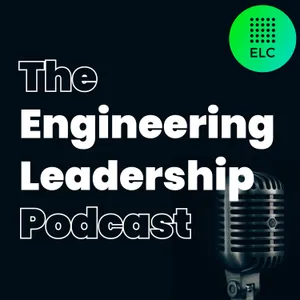
Free Daily Podcast Summary
The Engineering Leadership Podcast: Daily Summaries Delivered
by The Engineering Leadership Community (ELC)
We share the most critical perspectives, habits & examples of great software engineering leaders to help evolve leadership in the tech industry.
Latest Episodes
The most recent episodes — sign up to get AI-powered summaries of each one.
- 4 days ago43 min
Utilizing AI to assist in EPD and non-EPD functions & how curiosity can drive organizational change w/ Ali Dasdan #270
Ali Dasdan, CTO @ Dropbox, joins the pod to share insights on the company’s large-scale AI adoption and research as a foundation of successful engineering leadership. First, Ali shares insights on why he continues publishing research despite his role as a CTO and how research / curiosity can drive better trust within your organization. He shares about how his research ultimately guided decision making regarding redrawing Dropbox’s entire architecture and the importance of creating a record of the company’s progression as the rearchitecture occurred. The bulk of the conversation centers around how Dropbox is adopting AI, including tools like Nova and Dash, within both EPD and non-EPD departments. ABOUT ALI DASDANAli Dasdan is a C-suite technology executive with 25+ years building, scaling, and leading global engineering, product, and technical-operations organizations of up to ~1,000 people across a dozen industries, in public companies, high-growth startups, and enterprises in Silicon Valley and London.Today he is CTO of Dropbox, serving over 700 millions of users on an exabyte-scale platform with $2.5B+ revenue, where he also leads the AI strategy and AI enablement. Previously EVP and CTO of ZoomInfo and VP of Engineering at Atlassian (Confluence Cloud, Trello, Jira Work Management). As CTO (at Turn, Vida, Poynt, ZoomInfo, and Dropbox) he defines and owns company-wide technology strategy; in divisional roles (eBay, Atlassian, Tesco, Yahoo) he led engineering for revenue-critical parts of the business. SHOW NOTES:Why Ali continues to publish research as a CTO How research results can alter decision making as an eng leader The connection between research & organizational trust Redrawing the org’s architecture to learn more about it What kinds of info help eng leaders better understand the business / technology Building a record of the org’s progress & development Where Dropbox is at in their AI adoption journey AI @ Dropbox in EPD vs. non-EPD functions Frameworks for implementing AI at the highest level The engagement / ownership model @ Dropbox Insights on Nova, Dropbox’s code review AI workflow Incorporating human-driven feedback into the AI loop What the immediate future looks like for automated developer tools How AI has directly impacted productivity @ Dropbox Addressing bottlenecks related to AI adoption Using AI infrastructure to assist in non-EPD functions Dash as a contextual AI platform Ali’s experience with specialized models vs. foundation models Rapid fire questions This episode wouldn’t have been possible without the help of our incredible production team:Patrick Gallagher - Producer & Co-HostJerry Li - Co-HostNoah Olberding - Associate Producer, Audio & Video Editor https://www.linkedin.com/in/noah-olberding/Dan Overheim - Audio Engineer, Dan’s also an avid 3D printer - https://www.bnd3d.com/Ellie Coggins Angus - Copywriter, Check out her other work at https://elliecoggins.com/about/ Hosted by Simplecast, an AdsWizz company. See pcm.adswizz.com for information about our collection and use of personal data for advertising.
- 1 weeks ago46 min
Implementing scalable and powerful agentic tools across your organization w/ Ozzie Osman #269
In this episode, Jerry discusses key insights on delegating to agentic tools while maintaining high levels of engineering ownership with Ozzie Osman, co-founder @ Monarch. Ozzie shares what it looks to pursue two paths when it comes to AI: agentic-forward and human-orchestrated pipelines. They also cover the specific AI tools that are used in Monarch, including Devin and Voltron; assigning tasks to be AI-first vs. human-led; determining which pieces of customer feedback lead to new features; and common challenges when it comes to AI-generated code and what the human review process for it looks like. ABOUT OZZIE OSMANOsman (Ozzie) Osman is co-founder of Monarch. He is the lead author of the Holloway Guide to Technical Recruiting and Hiring. He has built products and engineering teams at companies including Quora and Google. Ozzie has also started two companies that have been acquired, and advised dozens of other startups. Sinch is the communications infrastructure the AI era runs on.There's a layer of infrastructure behind every text, call, and login code your product sends, and it works exactly like plumbing: nobody thinks about it until it's the reason something broke.Most providers route through 4-6 intermediaries; Sinch connects in 1-2 hops, direct carrier relationships across 600+ connections, handling 900 billion interactions a year across 60+ countries.Routing, compliance, fraud prevention handled automatically rather than manually managed by the business sending the message!Sinch is the reliability layer underneath AI-driven customer communications; the infrastructure that determines whether an AI agent's output actually reaches a real person as a delivered text, connected call, or verified interaction.Check it out here! SHOW NOTES:Introducing Ozzie & his role @ Monarch Where Monarch is at in terms of technology transformation / user adoption Insights on how Monarch is embracing AI with a security-forward mindset What it looks like to pursue both agent- and human-orchestrated AI pipelines Dissecting how an MCP shared infrastructure improves productivity Inside the enablement team @ Monarch Why Monarch uses Devin / prioritizing autonomy How to fine-tune an agent to make it reusable Strategies for determining what is an AI-centric vs. human-centric task Understanding when & why Devin fails Devin’s role in assisting the human-orchestrated processes What a typical flow looks like throughout an SDLC The importance of ownership in engineering when reviewing AI-generated code Frameworks for prioritizing feature requests based on user feedback Ozzie’s perspective on the role of engineering teams Final thoughts on navigating AI-related anxieties This episode wouldn’t have been possible without the help of our incredible production team:Patrick Gallagher - Producer & Co-HostJerry Li - Co-HostNoah Olberding - Associate Producer, Audio & Video Editor https://www.linkedin.com/in/noah-olberding/Dan Overheim - Audio Engineer, Dan’s also an avid 3D printer - https://www.bnd3d.com/Ellie Coggins Angus - Copywriter, Check out her other work at https://elliecoggins.com/about/ Hosted by Simplecast, an AdsWizz company. See pcm.adswizz.com for information about our collection and use of personal data for advertising.
- 2 weeks ago50 min
Navigating from individual AI adoption to team-level transformation while scaling w/ Jakub Oleksy #268
Jakub Oleksy, SVP of Software Engineering @ Github, joins the podcast to discuss how Github is addressing some of the biggest challenges facing the industry when it comes to infrastructure scaling, customer capacity, and using AI to add value to your org’s processes and eng leaders’ decision-making. He shares how scaling looked different at Github six years vs. today, how they navigated the migration to Azure, and what AI transformation looks like individually & at the team level. Jakub also discusses insights for eng leaders when it comes to investing in yourself & your people and making cross-functional decisions. Sinch is the communications infrastructure the AI era runs on.There's a layer of infrastructure behind every text, call, and login code your product sends, and it works exactly like plumbing: nobody thinks about it until it's the reason something broke.Most providers route through 4-6 intermediaries; Sinch connects in 1-2 hops, direct carrier relationships across 600+ connections, handling 900 billion interactions a year across 60+ countries.Routing, compliance, fraud prevention handled automatically rather than manually managed by the business sending the message!Sinch is the reliability layer underneath AI-driven customer communications; the infrastructure that determines whether an AI agent's output actually reaches a real person as a delivered text, connected call, or verified interaction.Check it out here! SHOW NOTES:The current focus @ Github & what scaling looks like Signals that previous scaling methods are no longer viable Migrating to Azure / impact on the engineering org Strategies for orchestrating massive, widespread change across the org How to control the scope while scaling / rebuilding Ownership dependencies & potential rollback with Github’s service migration process Embrace excitement when it comes to prioritization, scaling, & problem solving Addressing capacity & configuration challenges earlier on Github’s “new norm” for processes / organization How to address legitimate vs. illegitimate traffic Keeping up with rapidly changing technology / AI advances Github’s method for tackling the context layer of its AI toolage Where Github is on the AI adoption curve Navigating the transition from individual AI adoption to team-level transformation An example of team-level AI adoption @ Github Jakub’s advice to eng leaders on building infrastructure teams / investing in people How platform leaders can improve their cross-functional change making ability Reducing complexity for platform teams to improve ability to scale An example of a successful transformative moment @ Github Rapid fire questions This episode wouldn’t have been possible without the help of our incredible production team:Patrick Gallagher - Producer & Co-HostJerry Li - Co-HostNoah Olberding - Associate Producer, Audio & Video Editor https://www.linkedin.com/in/noah-olberding/Dan Overheim - Audio Engineer, Dan’s also an avid 3D printer - https://www.bnd3d.com/Ellie Coggins Angus - Copywriter, Check out her other work at https://elliecoggins.com/about/ Hosted by Simplecast, an AdsWizz company. See pcm.adswizz.com for information about our collection and use of personal data for advertising.
- Sep 2, 202635 min
Hiring top-tier talent, leveraging open source models, and staying competitive in the age of AI w/ Benny Chen #267
Benny Chen, Co-Founder @ Fireworks AI, joins the show to discuss his founder journey and share valuable insights on navigating common founder / product dev challenges in today’s agent-first landscape. He and Jerry cover strategies for creating effective messaging, staying competitive in a crowded market space, hiring top-tier talent / what qualities to look for in high-performing engineers, navigating the cultural shift to managing agents, creating data flywheels & how this can help your customers, and more. ABOUT BENNY CHEN As co-founder and early product architect, Benny Chen shaped Fireworks AI’s infrastructure strategy, spearheading the design of scalable systems to support high-throughput AI model serving. Benny’s contributions established the technical foundation for Fireworks AI’s robust and cloud-native architecture, which underpins its ability to meet enterprise demands. Formerly Meta’s Ads Infrastructure Lead, Benny optimized large-scale ad-serving pipelines and developed significant expertise in distributed systems and cloud infrastructure. He holds a B.S. in Computer Science from Stanford University, bringing both leadership and technical depth to the Fireworks AI management team. Sinch is the communications infrastructure the AI era runs on. There's a layer of infrastructure behind every text, call, and login code your product sends, and it works exactly like plumbing: nobody thinks about it until it's the reason something broke. Most providers route through 4-6 intermediaries; Sinch connects in 1-2 hops, direct carrier relationships across 600+ connections, handling 900 billion interactions a year across 60+ countries. Routing, compliance, fraud prevention handled automatically rather than manually managed by the business sending the message! Sinch is the reliability layer underneath AI-driven customer communications; the infrastructure that determines whether an AI agent's output actually reaches a real person as a delivered text, connected call, or verified interaction. Check it out here! SHOW NOTES: Moving from an early idea to a rocket ship Insights on developing / communicating your core message as an early founder Role of open source & inference @ Fireworks AI How Firework AI’s company messaging evolved over time Popular customization features today Strategies for staying competitive in a crowded market Defining the customer data flywheel & how it helps users Common types of data that companies can collect to train their AI models The customer’s next steps after creating a data flywheel Benny’s perspective on acquiring engineering talent as a founder Common traits shared by high-performing engineers @ Fireworks How AI has altered which traits founders prioritize when hiring Navigating the shift from engineering work to managing agents Frameworks to ensure agents are doing the right thing Aligning your metrics with the outcome you’re trying to follow What a typical day looks like for Benny as a founder Advice for founders / eng leaders looking to embrace AI adoption Rapid fire questions This episode wouldn’t have been possible without the help of our incredible production team: Patrick Gallagher - Producer & Co-Host Jerry Li - Co-Host Noah Olberding - Associate Producer, Audio & Video Editor https://www.linkedin.com/in/noah-olberding/ Dan Overheim - Audio Engineer, Dan’s also an avid 3D printer - https://www.bnd3d.com/ Ellie Coggins Angus - Copywriter, Check out her other work at https://elliecoggins.com/about/ Hosted by Simplecast, an AdsWizz company. See pcm.adswizz.com for information about our collection and use of personal data for advertising.
- Aug 25, 202654 min
Applying Agentic AI to the Supply Chain, Building Systems to Withstand Chaos, and Leveraging your Curiosity w/ Pooja Brown #266
In this episode, Pooja Brown (Founder @ Inventry.ai) shares her insights on balancing being a founder & technologist, especially within the mid-market manufacturing industry. We cover why founders need to lead with curiosity as they seek out customer problems to solve, strategies for solving complex problems related to supply chain, and strategies for selling your products. Pooja also dissects important fundraising tactics, how to identify areas that AI tooling can enhance within your business, reading customer signals, and bolstering your engineering skills by leveling up business capabilities. ABOUT POOJA BROWN Pooja Brown is a technology executive and founder focused on building AI-native platforms that power real-world operations across industries. She has led engineering at scale at companies like Stitch Fix and DocuSign, building systems that combine data, workflows, and machine learning to drive everything from personalization and supply chain to digital agreements used by hundreds of thousands of businesses.Her experience spans multiple verticals including retail, enterprise SaaS, education technology, and real estate, where she has consistently focused on embedding AI directly into core business systems rather than layering it on top. Pooja is currently the founder and CEO of Inventry.ai, where she is building autonomous AI agents that help mid-market manufacturers run procurement and supply chain operations more effectively. Across her career, she has focused on turning complex operational data into systems that don’t just generate insights, but actually drive decisions and execution. Sinch is the communications infrastructure the AI era runs on. There's a layer of infrastructure behind every text, call, and login code your product sends, and it works exactly like plumbing: nobody thinks about it until it's the reason something broke. Most providers route through 4-6 intermediaries; Sinch connects in 1-2 hops, direct carrier relationships across 600+ connections, handling 900 billion interactions a year across 60+ countries. Routing, compliance, fraud prevention handled automatically rather than manually managed by the business sending the message! Sinch is the reliability layer underneath AI-driven customer communications; the infrastructure that determines whether an AI agent's output actually reaches a real person as a delivered text, connected call, or verified interaction. Check it out here! SHOW NOTES: What shaped Pooja’s entrepreneurship journey & background Looking for the right problem & leading with curiosity Insights on solving problems related to supply chain Building systems for chaos / complexity Adopting a beginner’s mindset when solving complex problems Dissecting fundraising strategies & decision making Emerging business patterns that eng leaders need to capitalize on Understanding how customers make decisions on what products to adopt Selling strategies for the mid-market manufacturing industry Integrating AI tools to augment current business capabilities Engineering skills that enhance sales processes Communication frameworks when working with customers Rapid fire questions This episode wouldn’t have been possible without the help of our incredible production team: Patrick Gallagher - Producer & Co-Host Jerry Li - Co-Host Noah Olberding - Associate Producer, Audio & Video Editor https://www.linkedin.com/in/noah-olberding/ Dan Overheim - Audio Engineer, Dan’s also an avid 3D printer - https://www.bnd3d.com/ Ellie Coggins Angus - Copywriter, Check out her other work at https://elliecoggins.com/about/ Hosted by Simplecast, an AdsWizz company. See pcm.adswizz.com for information about our collection and use of personal data for advertising.
- Aug 4, 202649 min
Hiring top-tier talent, the importance of adopting an evolutionary mindset, and taking critical feedback to solve technical problems w/ Sergiy Nesterenko #265
In this episode, Sergiy Nesterenko (CEO @ Quilter) joins the pod to share how he turned a personal technical challenge into his own company, even before the market caught up. He shares his unique journey from SpaceX to Quilter and addresses common eng leader / founder challenges, including taking critical feedback to solve tough technical problems, knowing when your most important role is educating the market / customers, and choosing the right customers. Sergiy and Jerry also dissect insights into principles around building circuit boards, and common misconceptions around hiring top-tier talent, finding investors, and procuring customers as an early-stage company. ABOUTSERGIY NESTERENKO Sergiy Nesterenko is the Founder and CEO of Quilter, the first physics-driven AI platform that fully automates PCB layout design. Under his leadership, Quilter has pioneered autonomous board design – creating the missing automation layer for hardware and compressing weeks-long layout cycles into hours. Backed by Index, Benchmark, Coatue, and Tony Fadell, Quilter is redefining what's possible in hardware development. Previously, Sergiy spent five years at SpaceX as a Senior Radiation Effects Engineer, building electronics for the Falcon 9 and Falcon Heavy. SHOW NOTES: Introducing Sergiy Nesterenko & the inspiration behind Quilter Why now is the right time to tackle this technical challenge The technology landscape during Quilter’s early days Sergiy’s fundraising journey & key takeaways The importance of adopting an evolutionary mindset Early problems that Quilter aimed to solve Navigating the balance between technical problems & consumer readiness How negative feedback can lead to solving a key problem Knowing which feedback to incorporate into product iterations Lessons learned from choosing the wrong customers First principles approach to circuit board building Signals that it’s the right time to tackle a hard technical challenge Advantages to solving really hard problems & tackling entrepreneurship Common misconceptions surrounding early phase companies Sergiy’s experience working with Eric @ Benchmark Why investors like founders who spend time in the “idea maze” Strategies for convincing high-profile talent to join your org early on Rapid fire questions This episode wouldn’t have been possible without the help of our incredible production team: Patrick Gallagher - Producer & Co-Host Jerry Li - Co-Host Noah Olberding - Associate Producer, Audio & Video Editor https://www.linkedin.com/in/noah-olberding/ Dan Overheim - Audio Engineer, Dan’s also an avid 3D printer - https://www.bnd3d.com/ Ellie Coggins Angus - Copywriter, Check out her other work at https://elliecoggins.com/about/ Hosted by Simplecast, an AdsWizz company. See pcm.adswizz.com for information about our collection and use of personal data for advertising.
- Jul 21, 202638 min
Determining bets, using customer insights to pivot, and gaining developer buy-in & trust w/ Tomas Reimers #264
Tomas Reimers, Co-Founder & CPO @ Graphite, reveals his journey to becoming a founder and some of the major moments from Graphite’s product development story. He dissects frameworks for determining when it’s time to quit your full-time job to pursue becoming a founder and analyzing the costs vs. benefits of that decision. We cover how to decide what customer problems to solve, understanding how software development trends impact what you’re building, and product market fit and selling considerations. Lastly, Tomas shares valuable strategies when it comes to selling to developers. ABOUT TOMAS REIMERS Tomas Reimers is the CPO and co-founder of Graphite, the a16z and Anthropic-backed AI code review platform that Cursor acquired in December 2025. Previously, he was an engineer at Facebook. Passionate about advancing developer velocity, Tomas holds a BS in Computer Science from Harvard University. SHOW NOTES: The origin story behind Graphite Signs that it’s time to quit your job / found a company How Tomas & his co-founders knew it was time to break up with their jobs Understand what leaving your job will mean career-growth wise Embracing regret minimization Pros & cons of developing in blue ocean vs. red ocean areas as a founder Strategies for determining what software to build / how is software dev evolving Tomas’s framework for determining bets Recommendations for selling as a founder Identifying if sales isn’t working or if product market fit is off Using customer insights to experiment & make a PMF pivot Why developers don’t want to be sold to, they want to be taught How to apply teaching vs. selling into early GTM strategy Utilizing demonstrations to gain developer buy in & trust What Tomas is looking forward to in Graphite’s future / software dev in general Rapid fire questions LINKS AND RESOURCES The Mom Test - Rob Fitzpatrick’s quick, practical guide that will save you time, money, and heartbreak. Founding Sales - The Startup Sales Handbook - rhe distillation of Pete Kazanjy’s experience at his first software startup, TalentBin going from a founder with a product marketing and product management background to early sales guy, early sales manager, and eventual post-acquisition sales leader at Monster Worldwide in addition to his later experience founding Modern Sales, the nation’s largest sales operations, enablement, and leadership community. Thinking in Bets: Making Smarter Decisions When You Don't Have All the Facts - Annie Duke, a former World Series of Poker champion turned business consultant, draws on examples from business, sports, politics, and (of course) poker to share tools anyone can use to embrace uncertainty and make better decisions. This episode wouldn’t have been possible without the help of our incredible production team: Patrick Gallagher - Producer & Co-Host Jerry Li - Co-Host Noah Olberding - Associate Producer, Audio & Video Editor https://www.linkedin.com/in/noah-olberding/ Dan Overheim - Audio Engineer, Dan’s also an avid 3D printer - https://www.bnd3d.com/ Ellie Coggins Angus - Copywriter, Check out her other work at https://elliecoggins.com/about/ Hosted by Simplecast, an AdsWizz company. See pcm.adswizz.com for information about our collection and use of personal data for advertising.
- Jul 7, 202637 min
Utilizing AI internally to iterate faster and empower smaller teams to upskill w/ Vivek Raghunathan #263
Vivek Raghunathan, SVP of Engineering @ Snowflake, joins the Engineering Leadership Community Podcast to discuss all things AI – most importantly, how Snowflake is utilizing AI internally to iterate faster with smaller, focused teams. Vivek shares how AI and lower coding costs ultimately help Snowflake implement tighter feedback loops between customer & eng teams to speed up product development rollout and how Snowflake empowers their orgs to upskill when it comes to AI. Jerry & Vivek also break down what quality leadership looks like across the board and the role of AI in shaping today’s eng leaders. ABOUT VIVEK RAGHUNATHAN Vivek Raghunathan is Snowflake's SVP of Engineering. Before joining Snowflake, Vivek co-founded Neeva, one of the first AI-native search engines for consumers, which was acquired by Snowflake in 2023. Prior to that, he spent more than a decade at Google, where he led YouTube monetization and helped launch Google Now. ABOUT SNOWFLAKE Snowflake is the data and AI platform that many of the world's largest organizations rely on to power their most critical operations. Whether a bank is approving a loan, a retailer is optimizing its supply chain, or a hospital is bringing together patient data, Snowflake helps organizations unify data, apply AI, and make faster, more informed decisions. Today, over 13,900 companies rely on Snowflake to turn their data into business value, with enterprise-grade security, governance, and scale built-in. SHOW NOTES: Where Snowflake is on their AI adoption journey Using AI to help eng orgs meet maximum velocity Defining traits of engineers who successfully leverage agentic tools The benefit of cross collaborative skillsets for eng leaders How AI is helping orgs test infrastructure rewrites effectively & less expensively Discovering AI patterns @ Snowflake Why Snowflake gives teams a week off to learn the necessary AI tools Compressing the product dev cycle with the help of AI Simplify eng teams / encourage fluidity of roles Vivek’s perspective on leveraging AI to best support customer needs Building control planes to support enterprises Methods for consolidating data / making it accessible to the entire org How AI shapes what a quality leader looks like The role of empathy in leadership Rapid fire questions This episode wouldn’t have been possible without the help of our incredible production team: Patrick Gallagher - Producer & Co-Host Jerry Li - Co-Host Noah Olberding - Associate Producer, Audio & Video Editor https://www.linkedin.com/in/noah-olberding/ Dan Overheim - Audio Engineer, Dan’s also an avid 3D printer - https://www.bnd3d.com/ Ellie Coggins Angus - Copywriter, Check out her other work at https://elliecoggins.com/about/ Hosted by Simplecast, an AdsWizz company. See pcm.adswizz.com for information about our collection and use of personal data for advertising.
Get The Engineering Leadership Podcast summaries in your inbox
Free AI-powered daily recaps. Key takeaways, quotes, and mentions — in a 5-minute read.
Get Free Summaries →Free forever for up to 3 podcasts. No credit card required.
You Might Also Like
Listeners also like.
The Pragmatic Engineer
Insightful interviews with engineers and tech leaders on real-world software development challenges and best practices.

Lenny's Podcast: Product | Career | Growth
Conversations with top product and growth leaders offering practical strategies for building, launching, and scaling successful products.

Expert Intelligence with Paul Estes
Examines how AI and human expertise are reshaping work, freelancing, and workplace dynamics through expert conversations.

Latent Space: The AI Engineer Podcast
Explores AI engineering breakthroughs in foundation models, code generation, and AI agents through interviews with researchers and developers.

The Best SEO Podcast
A practical guide to SEO in the age of AI, focusing on real-world strategies that work and insights from experienced marketers.
Everyday AI Podcast – An AI and ChatGPT Podcast
Practical AI and ChatGPT tips for professionals to improve productivity and grow their careers.
Embracing Digital Transformation
Explores how public sector organizations can navigate digital transformation through strategic changes in people, processes, and technology.

No Priors: Artificial Intelligence | Technology | Startups
Discusses AI advancements and implications with researchers, engineers, and founders shaping the future of artificial intelligence.
Scrum Master Toolbox Podcast: Agile storytelling from the trenches
Scrum Masters and Agile Coaches share practical advice on Agile methods, team leadership, and improving software development workflows.
"The Cognitive Revolution"
Interviews with AI developers and researchers exploring the transformative impact of artificial intelligence on society and technology.
The Entrepreneur DNA
Entrepreneurs share lessons on building businesses and personal growth through real experiences and mistakes.

Me, Myself, and AI
AI leaders from top companies share real-world strategies for turning artificial intelligence into measurable business results.
About The Engineering Leadership Podcast
We share the most critical perspectives, habits & examples of great software engineering leaders to help evolve leadership in the tech industry.
Customized Recaps
AI-powered recaps with compact key takeaways, quotes, and insights.
Straight to Your Inbox
Get key takeaways from The Engineering Leadership Podcast in a 5-minute read.
Save Hours Every Week
Stay current on your favorite podcasts without falling behind.
Frequently Asked Questions
What is Podzilla's The Engineering Leadership Podcast daily summary?
It's a free AI-powered email that summarizes new episodes of The Engineering Leadership Podcast as soon as they're published. You get the key takeaways, notable quotes, and links & mentions — all in a quick read.
How does the The Engineering Leadership Podcast podcast summary work?
When a new episode drops, our AI transcribes and analyzes it, then generates a personalized summary tailored to your interests and profession. It's delivered to your inbox every morning.
Is this an official The Engineering Leadership Podcast product?
No. Podzilla is an independent service that summarizes publicly available podcast content. We're not affiliated with or endorsed by The Engineering Leadership Community (ELC).
Can I get summaries of other podcasts too?
Absolutely! The free plan covers up to 3 podcasts. Upgrade to Pro for 15, or Premium for 50. Browse our full catalog at /podcasts.
How often does The Engineering Leadership Podcast release new episodes?
The Engineering Leadership Podcast publishes weekly. Our AI generates a summary within hours of each new episode.
What topics does The Engineering Leadership Podcast cover?
The Engineering Leadership Podcast covers topics including Technology, Education, Business, Management. Our AI identifies the specific themes in each episode and highlights what matters most to you.
Start getting The Engineering Leadership Podcast summaries tomorrow morning.
Free forever for up to 3 podcasts. No credit card required.
Free forever for up to 3 podcasts. No credit card required.