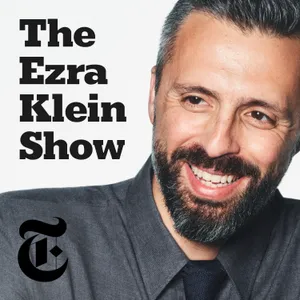
Free Daily Podcast Summary
The Ezra Klein Show: Daily Summaries Delivered
by New York Times Opinion
Ezra Klein invites you into a conversation on something that matters. How do we address climate change if the political system fails to act? Has the logic of markets infiltrated too many aspects of our lives? What is the future of the Republican Party? What do psychedelics teach us about consciousness? What does sci-fi understand about our present that we miss? Can our food system be just to humans and animals alike?
Latest Episodes
The most recent episodes — sign up to get AI-powered summaries of each one.
- Yesterday1h 7m
Is the World Getting Uglier?
President Trump and the modern right have a theory of beauty. You see it in Trump’s gilded Oval Office, his imagined arch and his executive order requiring classical and traditional styles for certain federal buildings. This isn’t my theory of beauty, but it is a theory. And it’s a response, in part, to something that a lot of people have been feeling, and not just on the right: that the modern world is ugly, or getting uglier. I’ve seen at least a dozen articles or videos over the last few years asking, “Is the world getting uglier?” They point to the drabness of new apartment blocks, the sameness of new cars and the reign of “greige” in homes and fashion. So I’ve wanted to do an episode on this for a while. Why does the world seem to be getting uglier, or drabber? And at a moment when the right has a clear answer to this feeling, does the left have any answer at all? Debbie Millman teaches at the School of Visual Arts in New York City and hosts the long-running podcast “Design Matters,” where she talks to creative people about design. In her long career as a brand designer, she revamped the logos for companies like Burger King, 7 Up and Häagen-Dazs. She’s also written a number of books on design, and recently wrote an article for Time magazine, “Is the World Getting Uglier?” Mentioned:“Is the World Getting Uglier?” by Debbie Millman“Why Is Everything So Ugly?” by n+1“How Did The World Get So Ugly?” by Sheehan QuirkeBook Recommendations:“The Voice That Is Great Within Us” by Hayden Carruth“Love in the Time of Cholera” by Gabriel García Márquez“Ulysses” by James Joyce“Hunger” by Roxane GayThoughts? Guest suggestions? Email us at ezrakleinshow@nytimes.com.You can find the transcript and more episodes of “The Ezra Klein Show” at nytimes.com/ezra-klein-podcast. Book recommendations from all our guests are listed at https://www.nytimes.com/article/ezra-klein-show-book-recs.htmlThis episode of “The Ezra Klein Show” was produced by Annie Galvin and Marie Cascione. Fact-checking by Kate Sinclair and Mary Marge Locker. Our senior engineer is Jeff Geld, with additional mixing by Aman Sahota. Our recording engineer is Aman Sahota. Cinematography by Marina King and Kyle Kelley. Video editing by Kristen Williamson. Our executive producer is Claire Gordon. The show’s production team also includes Rollin Hu, Kristin Lin, Emma Kehlbeck, Jack McCordick and Jan Kobal. Original music by Pat McCusker. Audience strategy by Shannon Busta. The director of New York Times Opinion Shows is Annie-Rose Strasser. Special thanks to Vanessa Friedman. Subscribe today at nytimes.com/podcasts or on Apple Podcasts, Spotify and Amazon Music. You can also subscribe via your favorite podcast app here https://www.nytimes.com/activate-access/audio?source=podcatcher. For more podcasts and narrated articles, download The New York Times app at nytimes.com/app. Hosted by Simplecast, an AdsWizz company. See pcm.adswizz.com for information about our collection and use of personal data for advertising.
- 4 days ago1h 14m
Bill Gates’s Blunt Warning on A.I.
Bill Gates thinks A.I. alarmism hasn’t gone far enough. He believes the years ahead will be marred by catastrophic cyberattacks, bio-terrorism and mass job loss unless the government acts, because he thinks the idea that the A.I. industry can just self-regulate is “insane.” I was struck in the conversation by how genuinely afraid Gates seemed to be that we are not ready for the consequences of what we are building, and how emphatic he was that so many of the people in positions of authority are in complete denial about what he thinks is about to happen.Gates is a pioneering technologist, the co-founder of Microsoft and the chair of Gates Foundation, which is set to spend down around $200 billion over the next two decades. He recently announced that trying to make A.I. a force for equality in the world, as opposed to an impetus for inequality, is a new priority of his foundation’s work.(The New York Times has sued OpenAI and Microsoft claiming copyright infringement. The companies have denied those claims.)Mentioned:“The turbulent AI era is here. The choices we make now are critical.” by Bill Gates“The Risks of A.I. Are Real but Manageable” by Bill Gates“Why the A.I. Job Apocalypse (Probably) Won’t Happen” by Ezra KleinBook Recommendations:“The Correspondent” by Virginia Evans“Into the Wood Chipper” by Nicholas Enrich“The Infinity Machine” by Sebastian MallabyThoughts? Guest suggestions? Email us at ezrakleinshow@nytimes.com.You can find the transcript and more episodes of “The Ezra Klein Show” at nytimes.com/ezra-klein-podcast. Book recommendations from all our guests are listed at https://www.nytimes.com/article/ezra-klein-show-book-recs.htmlThis episode of “The Ezra Klein Show” was produced by Jack McCordick. Fact-checking by Michelle Harris, with Julie Beer. Our senior engineer is Jeff Geld, with additional mixing by Aman Sahota and Gautam Srikishan. Our recording engineer is Aman Sahota. Cinematography by Marina King, Kyle Kelley and Elliot deBruyn. Video editing by Julian Hackney, Brandon Belk-Yee, Arpita Aneja and Steph Khoury. Our executive producer is Claire Gordon. The show’s production team also includes Marie Cascione, Annie Galvin, Rollin Hu, Kristin Lin, Emma Kehlbeck and Jan Kobal. Original music by Pat McCusker. Audience strategy by Shannon Busta. The director of New York Times Opinion Shows is Annie-Rose Strasser. Subscribe today at nytimes.com/podcasts or on Apple Podcasts, Spotify and Amazon Music. You can also subscribe via your favorite podcast app here https://www.nytimes.com/activate-access/audio?source=podcatcher. For more podcasts and narrated articles, download The New York Times app at nytimes.com/app. Hosted by Simplecast, an AdsWizz company. See pcm.adswizz.com for information about our collection and use of personal data for advertising.
- 1 weeks ago1h 33m
What Does Abdul El-Sayed Believe?
Dr. Abdul El-Sayed, the Democratic nominee for Senate in Michigan, has been one of the most argued-over candidates this election cycle. If he wins, he’d be the first-ever Muslim senator, and he’s faced a torrent of attacks about his faith. The race has also become a proving ground for a lot of questions about the Democratic Party and its future: What should U.S. policy toward Israel and the Palestinians be? Is the future of health care reform Medicare for all? Can a left-wing populist win in a state that twice voted for Donald Trump?There’s been so much more heat than light in this race, so I wanted to invite El-Sayed on the show for a longer conversation. We talked about his upbringing, his views on U.S. foreign policy, his work on health care reform and what he would actually do if elected in November. Mentioned:“Medicare for All: A Citizen’s Guide” by Abdul El-Sayed and Micah Johnson“A Radical Vision for Israelis and Palestinians,” with Rula Hardal and May Pundak on The Ezra Klein ShowBook Recommendations:“The Best and the Brightest” by David Halberstam“Amusing Ourselves to Death” by Neil Postman“The Sum of Us” by Heather McGhee“The Autobiography of Malcolm X” by Malcom X, as told to Alex HaleyThoughts? Guest suggestions? Email us at ezrakleinshow@nytimes.com.You can find the transcript and more episodes of “The Ezra Klein Show” at nytimes.com/ezra-klein-podcast. Book recommendations from all our guests are listed at https://www.nytimes.com/article/ezra-klein-show-book-recs.htmlThis episode of “The Ezra Klein Show” was produced by Jack McCordick. Fact-checking by Michelle Harris, Kate Sinclair and Kelsey Lannin. Our senior engineer is Jeff Geld, with additional mixing by Aman Sahota, Isaac Jones and Pat McCusker. Our recording engineer is Aman Sahota. Cinematography by Marina King and Kyle Kelley. Video editing by Dani Dillon. Our executive producer is Claire Gordon. The show’s production team also includes Marie Cascione, Annie Galvin, Rollin Hu, Kristin Lin, Emma Kehlbeck and Jan Kobal. Original music by Pat McCusker. Audience strategy by Shannon Busta. The director of New York Times Opinion Shows is Annie-Rose Strasser. Subscribe today at nytimes.com/podcasts or on Apple Podcasts, Spotify and Amazon Music. You can also subscribe via your favorite podcast app here https://www.nytimes.com/activate-access/audio?source=podcatcher. For more podcasts and narrated articles, download The New York Times app at nytimes.com/app. Hosted by Simplecast, an AdsWizz company. See pcm.adswizz.com for information about our collection and use of personal data for advertising.
- 1 weeks ago1h 47m
Jensen Huang vs. the A.I. Doomers
Jensen Huang might just be the single most influential person in artificial intelligence today.Huang is the chief executive of Nvidia, the company that designs nearly all the chips and infrastructure that the rest of the industry relies on. This has made Nvidia the most valuable company in the world and has made Huang incredibly influential in the Trump administration.And unlike many of the leaders of the frontier labs, Huang doesn’t think A.I. could wipe out humanity. He thinks that the doomers are just scaring people, and that the industry doesn’t need new regulation at all. I wanted to hear how he saw it, so I flew out to Nvidia’s headquarters in Santa Clara, Calif., to talk to him. Mentioned:“Pacing the Frontier”“When A.I. Builds Itself”Book Recommendations:“Computer Architecture” by John L. Hennessy and David A. Patterson“The Innovator's Dilemma” by Clayton M. Christensen“Positioning” by Al Ries and Jack TroutThoughts? Guest suggestions? Email us at ezrakleinshow@nytimes.com.You can find the transcript and more episodes of “The Ezra Klein Show” at nytimes.com/ezra-klein-podcast. Book recommendations from all our guests are listed at https://www.nytimes.com/article/ezra-klein-show-book-recs.htmlThis episode of “The Ezra Klein Show” was produced by Rollin Hu. Fact-checking by Michelle Harris, with Kate Sinclair, Mary Marge Locker and Julie Beer. Our senior engineer is Jeff Geld, with additional mixing by Isaac Jones, Aman Sahota and Gautam Srikishan. Our recording engineer is Aman Sahota. Cinematography by Marina King, Kyle Kelley and Raymond Yuen. Video editing by Arpita Aneja and Dani Dillon. Our executive producer is Claire Gordon. The show’s production team also includes Marie Cascione, Annie Galvin, Kristin Lin, Emma Kehlbeck, Jack McCordick and Jan Kobal. Original music by Pat McCusker. Audience strategy by Shannon Busta. The director of New York Times Opinion Shows is Annie-Rose Strasser. Subscribe today at nytimes.com/podcasts or on Apple Podcasts, Spotify and Amazon Music. You can also subscribe via your favorite podcast app here https://www.nytimes.com/activate-access/audio?source=podcatcher. For more podcasts and narrated articles, download The New York Times app at nytimes.com/app. Hosted by Simplecast, an AdsWizz company. See pcm.adswizz.com for information about our collection and use of personal data for advertising.
- 1 weeks ago31 min
We’re Not Losing Control of A.I. We’re Giving It Away.
Fears of out-of-control A.I. have reached a boil over the last few weeks, and several industry executives have called for a coordinated slowdown of A.I. development. But if our goal is to control A.I. — and that should be our goal — slowing down isn’t enough. We need to stop the labs from doing something they’re already on the cusp of doing: recursive self-improvement, or handing over the training of A.I. models to A.I.Mentioned:“We’re Not Losing Control of A.I. We’re Giving It Away.” by Ezra KleinYou can find the transcript and more episodes of “The Ezra Klein Show” at nytimes.com/ezra-klein-podcast. Book recommendations from all our guests are listed at https://www.nytimes.com/article/ezra-klein-show-book-recs.htmlThis episode of “The Ezra Klein Show” was produced by Marie Cascione, Emma Kehlbeck, Rollin Hu and Claire Gordon. Fact-checking by Marie Cascione, Isaac Scher and Julie Beer. Mixing by Isaac Jones and Aman Sahota. Our recording engineer is Aman Sahota. Cinematography by Marina King and Kyle Kelley. Video editing by Steph Khoury, Julian Hackney and Arpita Aneja. Original music by Pat McCusker, Dan Powell, Carole Sabouraud, Aman Sahota, Diane Wong, Sonia Herrero and Isaac Jones. Special thanks to Rebecca Shaid.Our executive producer is Claire Gordon. Our senior engineer is Jeff Geld. The show’s production team also includes Annie Galvin, Kristin Lin, Jack McCordick and Jan Kobal. Audience strategy by Shannon Busta. The director of New York Times Opinion Shows is Annie-Rose Strasser. Subscribe today at nytimes.com/podcasts or on Apple Podcasts, Spotify and Amazon Music. You can also subscribe via your favorite podcast app here https://www.nytimes.com/activate-access/audio?source=podcatcher. For more podcasts and narrated articles, download The New York Times app at nytimes.com/app. Hosted by Simplecast, an AdsWizz company. See pcm.adswizz.com for information about our collection and use of personal data for advertising.
- 2 weeks ago1h 5m
The ‘But China!’ Dilemma Driving the A.I. Race
America is waking up to the critical risks posed by artificial intelligence. But every conversation about possible regulation tends to hit the same wall: “Well, what about China?”Chinese A.I. models are just slightly behind American ones. If America slows down its A.I. development to make our models safer, the fear is that China will simply race ahead of us and own this critical technology of the future — with A.I. models that are less safe than our own. So how should the United States respond to this prisoner’s dilemma? And is it possible that the two countries leading the A.I. race could actually strike a deal? Matt Sheehan is a senior fellow at the Carnegie Endowment for International Peace. He’s been closely following the A.I. debate in China, and how China’s been interpreting the A.I. debate here. And he’s working to try to lay a foundation for future coordination between the two countries. He’s the author of a newsletter under his name and the 2019 book “The Transpacific Experiment: How China and California Collaborate and Compete for Our Future.”This conversation was recorded on Sept. 10.Mentioned:“The Adolescence of Technology” by Dario AmodeiBook Recommendations:“Country Driving” by Peter Hessler“From the Soil” by Fei Xiaotong“On Beauty” by Zadie SmithThoughts? Guest suggestions? Email us at ezrakleinshow@nytimes.com.You can find the transcript and more episodes of “The Ezra Klein Show” at nytimes.com/ezra-klein-podcast. Book recommendations from all our guests are listed at https://www.nytimes.com/article/ezra-klein-show-book-recs.htmlThis episode of “The Ezra Klein Show” was produced by Rollin Hu. Fact-checking by Michelle Harris, with Julie Beer. Our senior engineer is Jeff Geld, with additional mixing by Isaac Jones, Aman Sahota and Gautam Srikishan. Our recording engineer is Aman Sahota. Cinematography by Marina King and Kyle Kelley. Video editing by Steph Khoury, Brandon Belk-Yee and Julian Hackney. Our executive producer is Claire Gordon. The show’s production team also includes Marie Cascione, Annie Galvin, Kristin Lin, Emma Kehlbeck, Jack McCordick and Jan Kobal. Original music by Pat McCusker. Audience strategy by Shannon Busta. The director of New York Times Opinion Shows is Annie-Rose Strasser. Subscribe today at nytimes.com/podcasts or on Apple Podcasts and Spotify. You can also subscribe via your favorite podcast app here https://www.nytimes.com/activate-access/audio?source=podcatcher. For more podcasts and narrated articles, download The New York Times app at nytimes.com/app. Hosted by Simplecast, an AdsWizz company. See pcm.adswizz.com for information about our collection and use of personal data for advertising.
- 3 weeks ago1h 17m
Francis Fukuyama on Trump, China and the Legacy of 9/11
Francis Fukuyama's “The End of History and the Last Man” is one of the most insightful books for understanding the strangeness and instability of this political moment.Fukuyama wrote his landmark book more than 30 years ago, and it’s typically remembered as a triumphalist argument, heralding the permanent victory of liberal democracy at the end of the Cold War. But that’s not quite right. Fukuyama also talked about the serious weaknesses he saw in liberal democracy — how it may not fully satisfy the human soul — and his warnings feel very prescient now. So I wanted to have Fukuyama on the show to talk through the ideas in his book and how he sees them today, at a time when liberal democracy seems increasingly imperiled around the world. Fukuyama is a political scientist at Stanford University and the author of a number of other great books of political theory, as well as a new memoir, “In the Realm of the Last Man.”Mentioned:“The End of History?” by Francis Fukuyama“The Righteous Mind” by Jonathan HaidtBook Recommendations:“Recoding America” by Jennifer Pahlka“Why Nothing Works” by Marc J. Dunkelman“The God Test” by Robert WrightThoughts? Guest suggestions? Email us at ezrakleinshow@nytimes.com.You can find the transcript and more episodes of “The Ezra Klein Show” at nytimes.com/ezra-klein-podcast. Book recommendations from all our guests are listed at https://www.nytimes.com/article/ezra-klein-show-book-recs.htmlThis episode of “The Ezra Klein Show” was produced by Jack McCordick. Fact-checking by Michelle Harris, with Julie Beer. Our senior engineer is Jeff Geld, with additional mixing by Isaac Jones, Aman Sahota and Gautam Sirkishan. Our recording engineer is Aman Sahota. Cinematography by Marina King. Video editing by Kristen Williamson, Dani Dillon and Brandon Belk-Yee. Our executive producer is Claire Gordon. The show’s production team also includes Marie Cascione, Annie Galvin, Rollin Hu, Kristin Lin, Emma Kehlbeck and Jan Kobal. Original music by Pat McCusker. Audience strategy by Shannon Busta. The director of New York Times Opinion Shows is Annie-Rose Strasser. Subscribe today at nytimes.com/podcasts or on Apple Podcasts and Spotify. You can also subscribe via your favorite podcast app here https://www.nytimes.com/activate-access/audio?source=podcatcher. For more podcasts and narrated articles, download The New York Times app at nytimes.com/app. Hosted by Simplecast, an AdsWizz company. See pcm.adswizz.com for information about our collection and use of personal data for advertising.
- 3 weeks ago1h 8m
What ‘Hyperpolitics’ Explains About This Era
Behind the intense political movements of the last decade, from Trumpism to wokeness and back again, there’s a strange and erratic rhythm. Movements saturate the culture seemingly overnight, only to evaporate or spark backlash just as rapidly. We’re extremely politically engaged, yet we’ve rarely felt so powerless to create lasting policy change.I haven’t seen many very successful attempts to explain what is driving this volatility. But one concept that has taken off recently, and captures what so many of us are feeling, is “hyperpolitics.”The idea comes from Anton Jäger, a historian and contributing writer to New York Times Opinion. In his book “Hyperpolitics: Extreme Politicization Without Political Consequences,” Jäger theorizes what it means to live in a moment marked by hyper-engagement — high voter turnout, mass protests, trends that flare up and fade with extreme rapidity — yet where institutional trust is low, institutional relationships are decayed and people are disconnected from the structures that make political efforts stick.I think Jäger’s theory cuts to the core of this political era. So I invited him on the show to break down what hyperpolitics is, how we got here and what it actually takes to build lasting change today.Mentioned:“Hyperpolitics: Extreme Politicization Without Political Consequences” by Anton Jäger“Hyperpolitics in Command?” by Anton Jäger“Trump’s Revolutionary Sense of Time Is Changing Politics” by Ivan Krastev“Public Opinion” by Walter Lippmann Book Recommendations:“The Prophet” by Isaac Deutscher“Cheese” by Willem Elsschot“Quelques mois dans ma vie” by Michel Houellebecq“Extension of the Domain of Struggle (Whatever)” by Michel Houellebecq“Serotonin” by Michel HouellebecqThoughts? Guest suggestions? Email us at ezrakleinshow@nytimes.com.You can find the transcript and more episodes of “The Ezra Klein Show” at nytimes.com/ezra-klein-podcast. Book recommendations from all our guests are listed at https://www.nytimes.com/article/ezra-klein-show-book-recs.htmlThis episode of “The Ezra Klein Show” was produced by Marie Cascione. Fact-checking by Michelle Harris. Our senior engineer is Jeff Geld, with additional mixing by Aman Sahota and Gautam Srikishan. Our recording engineer is Aman Sahota. Cinematography by Marina King and Azamat Yakubov. Video editing by Dani Dillon and Arpita Aneja. Our executive producer is Claire Gordon. The show’s production team also includes Annie Galvin, Rollin Hu, Kristin Lin, Emma Kehlbeck, Jack McCordick and Jan Kobal. Original music by Pat McCusker. Audience strategy by Shannon Busta. The director of New York Times Opinion Shows is Annie-Rose Strasser. Subscribe today at nytimes.com/podcasts or on Apple Podcasts and Spotify. You can also subscribe via your favorite podcast app here https://www.nytimes.com/activate-access/audio?source=podcatcher. For more podcasts and narrated articles, download The New York Times app at nytimes.com/app. Hosted by Simplecast, an AdsWizz company. See pcm.adswizz.com for information about our collection and use of personal data for advertising.
Get The Ezra Klein Show summaries in your inbox
Free AI-powered daily recaps. Key takeaways, quotes, and mentions — in a 5-minute read.
Get Free Summaries →Free forever for up to 3 podcasts. No credit card required.
What The Ezra Klein Show Covers
Topics discussed across all episodes.
You Might Also Like
Listeners also like.

Interesting Times
Explores global shifts and emerging trends through interviews and analysis on the evolving world order.

The Headlines
A daily news podcast offering global headlines and analysis from New York Times reporters.

Hard Fork
A weekly exploration of the latest developments in technology by New York Times journalists.

Solutions with Henry Blodget
Henry Blodget interviews experts in business, tech, and politics about practical solutions for building a better future.

The Daily
A daily news podcast covering major global stories with in-depth reporting from The New York Times.
Pivot
Sharp, unfiltered analysis of tech, business, and politics with bold predictions and lively debate.
The Book Review
Top authors and critics discuss the week’s most notable books and literary news with The New York Times Book Review.

Intelligence Squared
Live debates and in-depth discussions on pressing global issues featuring leading experts and thinkers.
What Next | Daily News and Analysis
A daily news podcast that helps you make sense of current events and what they mean for the day ahead.

Breaking Points with Krystal and Saagar
Political analysis and interviews challenging mainstream narratives and holding power to account.
Crazy/Genius
Explores how the internet shapes society, politics, and reality through discussions on AI, misinformation, and digital culture.

The Opinions
Analysis and commentary on current events to help understand the news.
About The Ezra Klein Show
Ezra Klein invites you into a conversation on something that matters. How do we address climate change if the political system fails to act? Has the logic of markets infiltrated too many aspects of our lives? What is the future of the Republican Party? What do psychedelics teach us about consciousness? What does sci-fi understand about our present that we miss? Can our food system be just to humans and animals alike?
Customized Recaps
AI-powered recaps with compact key takeaways, quotes, and insights.
Straight to Your Inbox
Get key takeaways from The Ezra Klein Show in a 5-minute read.
Save Hours Every Week
Stay current on your favorite podcasts without falling behind.
Frequently Asked Questions
What is Podzilla's The Ezra Klein Show daily summary?
It's a free AI-powered email that summarizes new episodes of The Ezra Klein Show as soon as they're published. You get the key takeaways, notable quotes, and links & mentions — all in a quick read.
How does the The Ezra Klein Show podcast summary work?
When a new episode drops, our AI transcribes and analyzes it, then generates a personalized summary tailored to your interests and profession. It's delivered to your inbox every morning.
Is this an official The Ezra Klein Show product?
No. Podzilla is an independent service that summarizes publicly available podcast content. We're not affiliated with or endorsed by New York Times Opinion.
Can I get summaries of other podcasts too?
Absolutely! The free plan covers up to 3 podcasts. Upgrade to Pro for 15, or Premium for 50. Browse our full catalog at /podcasts.
How often does The Ezra Klein Show release new episodes?
The Ezra Klein Show publishes every few days. Our AI generates a summary within hours of each new episode.
What topics does The Ezra Klein Show cover?
The Ezra Klein Show covers topics including consciousness, inner experience research, psychology, scientific investigation. Our AI identifies the specific themes in each episode and highlights what matters most to you.
Start getting The Ezra Klein Show summaries tomorrow morning.
Free forever for up to 3 podcasts. No credit card required.
Free forever for up to 3 podcasts. No credit card required.