Free Daily Podcast Summary
The Privacy Advisor Podcast: Daily Summaries Delivered
by Jedidiah Bracy, IAPP Editorial Director
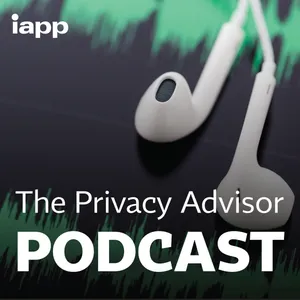
This podcast features IAPP Editorial Director Jedidiah Bracy, who interviews privacy pros and thought leaders from around the world about technology, law, policy and the privacy profession.
Latest Episodes
The most recent episodes — sign up to get AI-powered summaries of each one.
- Jun 25, 202639 min
All things Canadian digital policy: A conversation with Kris Klein
For those following along with digital policy in Canada, the last few weeks have been chock full of developments. In early June, the Canadian government introduced its AI for All strategy, aimed at driving economic growth, bolstering digital sovereignty and increasing trust and safety. The government also released Bill C-34 - the Safe Social Media Act, which would ban children under age 16 from accessing certain social media platforms, and Bill C-36, which would reform the nation's privacy laws, including a significant restructure of its enforcement framework. Kris Klein is the IAPP Country Leader for Canada and partner at nNovation. I recently caught up with Kris to discuss these converging policy developments and what we can expect from the AI strategy and privacy reforms.
- Apr 10, 202625 min
Social media and AI's impact on children's neurological development: A conversation with Alyson Stoner
As artificial intelligence marches its steady pace into our day-to-day lives, the safety and privacy of children online continues to be a major concern for several governments and legislatures around the world. Australia became the first country that requires platforms to take reasonable steps to prevent children under 16 from accessing social media platforms; nearly a dozen nations have since considered similar age-based restrictions. In the U.S., a landmark jury verdict found Meta and Youtube liable for negligently designing systems that were addictive and caused mental health distress to a minor. Another child safety case in New Mexico indicates a growing legal shift in accountability for children's online safety. Alyson Stoner is an actor, singer, dancer and author, whose work goes back to early childhood. Their roles can be found in the Cheaper by the Dozen films, voice work in Phineas and Ferb, and background dancing for the likes of Missy E and Eminem. Stoner is also the author of the memoir "Semi-Well-Adjusted Despite Literally Everything," which details their mental health struggles as a child star and draws a powerful parallel between what they call child stardom's "toddler to trainwreck pipeline" to the impact social media is currently having on all child users. Stoner has since become a mental health advocate and was a keynote speaker at the IAPP Global Summit in 2026. While there, I sat down with Alyson to chat about their memoir and the significant effect social media and emerging AI systems play on children's neurological development.
- Mar 27, 202630 min
Transatlantic data flows, the CBPR and AI: A conversation with the International Trade Administration's Bill Guidera
The complexity and significance of international data flows have long been one of the major issues for privacy and digital responsibility professionals. In the last decade, two major frameworks - the EU-US Safe Harbor and EU-US Privacy Shield agreements - were both invalidated by the Court of Justice of the European Union. The EU-US Data Privacy Framework, however, remains intact, though it has faced one legal challenge in the last year. Bill Guidera, who serves as deputy assistant secretary in the U.S. International Trade Administration, leads a team that helps drive policy conditions for US digital, financial, supply chain and other service industries to innovate domestically and abroad. The team plays a significant role in administering and overseeing the DPF and plays a key leadership role on behalf of the US in the Global Cross-Border Privacy Rules Forum. <span data-slate-string="t
- Mar 10, 202640 min
On privacy and machine unlearinng: A discussion with Jevan Hutson
It's no secret that large language models and artificial intelligence systems require massive amounts of data, which often runs up against fundamental privacy principles like purpose limitation and data minimization. Privacy and data protection laws - like the EU General Data Protection Regulation - feature concepts like the right to be forgotten and data subject access requests. But these are often in tension with modern AI systems. Some tools, however, are emerging. One of those methods is "machine unlearning," a suite of approaches to help remedy deletion requests of information that's already been used to train an AI model. Jevan Hutson, acting assistant professor and director of the Tech-Law Clinic at the University of Washington School of Law, recently co-wrote a law review article on machine unlearning and its implications for privacy law. In this episode, Hutson explains the concept of machine unlearning and how its suite of techniques can add to the tool belts practitioners and regulators alike.
- Feb 27, 202638 min
Data protection law in India and Vietnam: A discussion with Charmian Aw
The Asia-Pacific region is home to more than half the world's population - at 60% - with approximately 4.75 billion people. In recent years, India and Vietnam, to name just two, have enacted comprehensive data protection laws. Near the end of 2025, India finalized its highly anticipated regulations for the Digital Personal Data Protection Act and Vietnam's Personal Data Protection Law became effective on the first of January this year. Hogan Lovells Partner Charmian Aw has long practiced in the region, specializing in APAC data protection, privacy, AI governance and cybersecurity law and offers developments of the region in the IAPP's Asia-Pacific Dashboard Digest. She also joined the IAPP Publications Advisory Board this year. While attending the UK Data Protection Intensive in London, IAPP Editorial Director Jedidiah Bracy sat down with Charmian Aw to discuss the latest developments in the region, specifically regarding India and Vietnam. Here's what she had to say.
- Feb 6, 202645 min
California privacy enforcement in 2026: A discussion with CalPrivacy's Tom Kemp
The California Privacy Protection Agency was formed six years ago as mandated by the California Privacy Rights Act. As the first dedicated privacy regulator in the U.S., CalPrivacy - as it's called colloquially - implements and enforces both the CPRA and California Consumer Privacy Act. Under the state's Delete Act, it also oversees California's data broker registry and the Delete Request and Opt-Out Platform, known as DROP. Tom Kemp serves as executive director for CalPrivacy and is almost a year into his tenure after taking on the role in April 2025. On 1 January 2026, the DROP system went into effect and now boasts more than 215,000 registrants with more than 500 registed data brokers. The agency is also implementing a number of regulations in the state, including for automated-decision making, risk assessments and cybersecurity audits. IAPP Editorial Director Jedidiah Bracy caught up with Tom Kemp to learn more about the DROP system and the agency's priorities in the year to come.
- Jan 9, 202642 min
A look ahead at digital policy in 2026 with Omer Tene
Goodwin Partner Omer Tene has long had his finger on the pulse of privacy and AI governance developments and trends. He advises clients on a wide range of issues, from data protection, artificial intelligence, technology, cybersecurity and beyond. As we head into a brave new 2026, IAPP Editorial Director Jedidiah Bracy caught up with Tene to discuss the big issues he sees playing out this year, from a changing geopolitical environment to US state privacy and AI legislative activity, from kids privacy and safety issues to digital reform in the EU.
- Dec 17, 202549 min
Former AI Act negotiator Laura Caroli on the proposed EU Digital Omnibus for AI
On November 19, the European Commission unveiled two major omnibus packages as part of its European Data Union Strategy. One package proposes several changes to the EU General Data Protection Regulation, while the other proposes significant changes to the recently minted EU AI Act, including a proposed delay to the regulation of so-called high-risk AI systems. Laura Caroli was a lead negotiator and policy advisor to AI Act co-rapporteur Brando Benifei and was immersed in the high-stakes negotiations leading to the AI regulation. She is also a former senior fellow at the Center for Strategic and International Studies, but recently moved back to Brussels during a time of major complexity in the EU. IAPP Editorial Director Jedidiah Bracy caught up with Caroli to discuss her views on the proposed changes to the AI Act in the omnibus package and how she thinks the negotiations will play out. Here's what she had to say.
Get The Privacy Advisor Podcast summaries in your inbox
Free AI-powered daily recaps. Key takeaways, quotes, and mentions — in a 5-minute read.
Get Free Summaries →Free forever for up to 3 podcasts. No credit card required.
You Might Also Like
Listeners also like.
The Most Interesting Thing in AI
Conversations with leading thinkers on the ethical, economic, and social impacts of artificial intelligence.

The AI in Business Podcast
Interviews with AI executives reveal practical applications and strategic insights for business leaders adopting AI.

The Every Podcast
Professionals discuss and demonstrate how they use AI tools in their work and lives, with live experiments and chat reviews.

Everyday AI Podcast – An AI and ChatGPT Podcast
Covers practical uses of AI tools like ChatGPT and Midjourney to help people work more efficiently and advance their careers.

The Intelligence from The Economist
Daily global news and analysis on politics, business, and culture, plus a deep dive into one story each weekend.

Lenny's Podcast: Product | Career | Growth
Conversations with top product and growth leaders offering practical strategies for building, launching, and scaling successful products.
Terms of Service with Clare Duffy
A journalist explains emerging technologies like AI and social media algorithms in accessible terms and explores their real-world impact.

The Lawfare Podcast
Discussions with experts on national security, law, and policy covering foreign policy, intelligence, cybersecurity, and governance.

Taylor Lorenz’s Power User
Examines how technology and internet culture reshape society, fame, and free speech through weekly deep dives and policy discussions.
Stanford Psychology Podcast
Students interview psychologists about recent research and its real-world applications.

Speaking of Psychology
Explores recent psychological research and its applications to daily life.

Expert Intelligence with Paul Estes
Explores the intersection of human expertise and AI in shaping the future of work through interviews with industry leaders and innovators.
Customized Recaps
AI-powered recaps with compact key takeaways, quotes, and insights.
Straight to Your Inbox
Get key takeaways from The Privacy Advisor Podcast in a 5-minute read.
Save Hours Every Week
Stay current on your favorite podcasts without falling behind.
Frequently Asked Questions
What is Podzilla's The Privacy Advisor Podcast daily summary?
It's a free AI-powered email that summarizes new episodes of The Privacy Advisor Podcast as soon as they're published. You get the key takeaways, notable quotes, and links & mentions — all in a quick read.
How does the The Privacy Advisor Podcast podcast summary work?
When a new episode drops, our AI transcribes and analyzes it, then generates a personalized summary tailored to your interests and profession. It's delivered to your inbox every morning.
Is this an official The Privacy Advisor Podcast product?
No. Podzilla is an independent service that summarizes publicly available podcast content. We're not affiliated with or endorsed by Jedidiah Bracy, IAPP Editorial Director.
Can I get summaries of other podcasts too?
Absolutely! The free plan covers up to 3 podcasts. Upgrade to Pro for 15, or Premium for 50. Browse our full catalog at /podcasts.
How often does The Privacy Advisor Podcast release new episodes?
The Privacy Advisor Podcast publishes monthly. Our AI generates a summary within hours of each new episode.
What topics does The Privacy Advisor Podcast cover?
The Privacy Advisor Podcast covers topics including Business, Careers. Our AI identifies the specific themes in each episode and highlights what matters most to you.
Start getting The Privacy Advisor Podcast summaries tomorrow morning.
Free forever for up to 3 podcasts. No credit card required.
Free forever for up to 3 podcasts. No credit card required.