
171: The Most Skipped Step in Assessment and Why It Matters Most (with Whitney Lowe)
🎙 The Most Skipped Step in Assessment and Why It Matters Most What if the most important part of your assessment never involves touching your client? In this solo episode, Whitney dives deep into the client history — the most critical yet frequently overlooked component of manual therapy assessment. While many practitioners rush straight into orthopedic testing or treat only where it hurts, the subjective intake holds the primary keys to understanding why a client is in pain, not just where. Whitney walks through the OPQRST history-taking framework — a structured clinical checklist covering Onset, Provocation/Palliation, Quality, Referral/Radiation, Severity, and Timing. Along the way, he shares vivid clinical examples showing how tuning your ears and brain to a client’s story can dramatically refine your physical assessment, catch crucial red flags, and help you design safer, more targeted treatment plans. ✨ Topics discussed include: • The assessment illusion — why jumping straight to orthopedic tests or treating where it hurts undermines true clinical reasoning. • O is for Onset — distinguishing acute biomechanical tissue overloads (like sudden eccentric muscle strains) from chronic, nociplastic pain conditions driven by systemic inflammation or cumulative load. • P is for Provocation & Palliation — reading structural mechanical patterns, such as differentiating discogenic spine pain from facet-related pain and the “shopping cart sign.” • Q is for Quality — why you should let clients describe pain in their own words, and what neuropathic “electrical shocks” reveal versus deep, arthritic joint aches. • R is for Referral & Radiation — tracking diffuse trigger point patterns versus localized entrapments, plus a modern clinical look at lateral hip pain: bursitis versus abductor tendon compression. • S is for Severity & Functional Impact — shifting clinical focus from arbitrary 1–10 pain scales to objective functional indicators like sudden muscle inhibition or a joint giving way. • T is for Timing — deciphering the difference between early-morning stiffness that eases with movement and late-afternoon postural fatigue from a desk job. • Hands vs. head — why your ears and brain are just as important as your hands, and how this framework makes you more effective in less table time. ✨ Resources: • The OPQRST Clinical Assessment Protocol. Learn more in the Academy’s Orthopedic Medical Massage Specialist Program. 🌱 Sponsor Offers: • Jane App — Practice management built for health and wellness practitioners. Thinking Practitioner listeners get a free first month; enter code THINKING1MO at checkout: https://a-t.tv/jane • Deep Roots Massage & Bodywork — Carefully crafted, small hands-on CE workshops in Keene, NH. Save 10% with code THINKING: https://deeprootsmb.com • ABMP — Associated Bodywork & Massage Professionals. Thinking Practitioner listeners save at https://www.abmp.com/thinking • Books of Discovery — Explore their collection at https://www.booksofdiscovery.com and save 15% with code thinking • Advanced-Trainings — Try one month free of Til Luchau’s A-T Subscription with code thinking: https://a-t.tv/subscriptions/ • Academy of Clinical Massage — Grab Whitney’s free Assessment Cheat Sheet: https://academyofclinicalmassage.com/cheatsheet ✨ Watch the video / connect with us: • Whitney Lowe – https://academyofclinicalmassage.com | https://facebook.com/WhitneyLowe | https://twitter.com/whitneylowe | https://www.youtube.com/@whitlowe • Til Luchau – https://advanced-trainings.com | https://facebook.com/advancedtrainings | https://instagram.com/til.luchau | https://www.youtube.com/@AdvancedTrainings/podcasts 📧 Email us: info@thethinkingpractitioner.com The Thinking Practitioner Podcast is intended for professional practitioners of manual and movement therapies — bodywork, massage therapy, structural integration, physical therapy, osteopathy, and similar professions. It is not medical or treatment advice.
Podzilla Summary coming soon
Sign up to get notified when the full AI-powered summary is ready.
Free forever for up to 3 podcasts. No credit card required.
Listen to This Episode
More from The Thinking Practitioner

175: The Affection Question (with Kory Floyd)

174: How to Bend Time (with Til Luchau & Whitney Lowe)

173: Recognizing & Touching Trauma (with Dr. Peter Levine) Listener Favorite
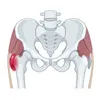
172: Lateral Hip Pain: Stop Blaming the Bursa (with Whitney Lowe & Til Luchau)
Get summaries like this every morning.
Free AI-powered recaps of The Thinking Practitioner and your other favorite podcasts, delivered to your inbox.
Free forever for up to 3 podcasts. No credit card required.