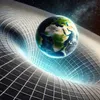
In this second installment, we move past the theory of the Gravastar to look at its engineering—and the massive structural flaws that might break the whole idea. On paper, a static gravastar works perfectly. But the real universe is a messy, spinning place, and calculations show that the moment a gravastar begins to rotate, it faces catastrophic structural instability. We pull apart the gravastar’s outer shell—an impossibly delicate skin that, for an object the size of our sun, would be only a tiny fraction of a centimeter thick. This razor-thin boundary has to handle a brutal cosmic tug-of-war: resisting immense outward pressure from a dark energy core while managing the crushing gravitational pull on the outside. We explore how this engineering crisis has forced physicists to dream up even wilder alternatives, from "smooth" continuous-pressure stars to the mind-bending "Nestar"—a theoretical object that behaves like a Russian Matryoshka doll of nested matter shells and dark energy cores. Finally, we look at how these black hole mimickers would actually look through our telescopes, and whether the Event Horizon Telescope can spot the difference between a true singularity and a phantom shell.
Podzilla Summary coming soon
Sign up to get notified when the full AI-powered summary is ready.
Free forever for up to 3 podcasts. No credit card required.
Listen to This Episode
More from Wonders of Relativity
Quantum Mechanics vs General Relativity: The Biggest Divide in Physics Right Now
Could Quantum Gravity Save Physics?
The Information Paradox: Can Black Holes Disappear?
Amplitude of primordial ripples: Numbers That Make Universe Possible
Get summaries like this every morning.
Free AI-powered recaps of Wonders of Relativity and your other favorite podcasts, delivered to your inbox.
Free forever for up to 3 podcasts. No credit card required.