Free Daily Podcast Summary
Thinking With Mitch Joel: Daily Summaries Delivered
by Mitch Joel
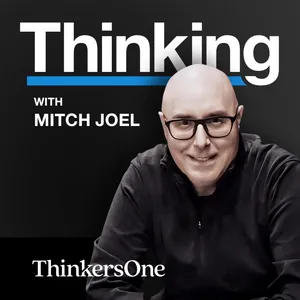
Mitch Joel's weekly conversation with business leaders, thinkers, innovators and cultural icons. The show is about insights and provocations on brands, consumers, technology, business and how connected we've all become.
Latest Episodes
The most recent episodes — sign up to get AI-powered summaries of each one.
- 4 days ago42 min
Responsible AI With Virginia Dignum - TWMJ #1062
Welcome to episode #1062 of Thinking With Mitch Joel (formerly Six Pixels of Separation). What if one of the biggest problems with artificial intelligence isn't what the technology can do... but what we've convinced ourselves it will eventually become? Virginia Dignum is a professor of Responsible Artificial Intelligence at Umea University in Sweden, and has spent more than four decades researching AI, ethics, and governance. In her new book, The AI Paradox - How To Make Sense Of A Complex Future, Virginia challenges many of the assumptions driving today's conversations about artificial intelligence. Her argument is that AI is simultaneously powerful and limited, promising and risky, technical and deeply social... and that understanding these contradictions may be more important than predicting what comes next. In this conversation, Virginia and I explore why there's growing public backlash against AI, whether the technology industry has become trapped in its own narrative of inevitable progress, and why spending billions on bigger data centers doesn't necessarily bring us closer to artificial general intelligence. We discuss the fundamental differences between human and machine intelligence, why building something that performs tasks better than humans doesn't mean we're creating something that thinks like us, and why the real question should be what we want AI to accomplish rather than how intelligent we can make it. We also dig into education, where AI may be exposing a much deeper problem with a system designed to reward producing answers rather than developing the ability to think. And we explore what true technological sovereignty might mean, why having meaningful choices matters more than simply owning infrastructure, and what a mature AI society could look like. Throughout our conversation, Virginia challenges the assumption that AI's future is inevitable or that the only voices worth listening to belong to the companies building it. Because perhaps the most important paradox of all is that the more capable our technology becomes, the more responsibility we have to decide what it should actually be used for. Enjoy the conversation... Running time: 58:21. Hello from beautiful Montreal. Listen and subscribe over at Apple Podcasts. Listen and subscribe over at Spotify. Please visit and leave comments on the blog - Thinking With Mitch Joel. Feel free to connect to me directly on LinkedIn. Check out ThinkersOne. Here is my conversation with Virginia Dignum. The AI Paradox - How To Make Sense Of A Complex Future. Follow Virginia on LinkedIn. Chapters: - The Rise of AI Backlash. - Understanding AI's Role in Society. - The Narrative of AI and Its Implications. - The Limits of AI Technology. - The Future of AI and Human Intelligence. - Rethinking Education in the Age of AI. - The AI Paradox Explained. - The Relationship Between AI and Human Intelligence. - The Concept of Sovereign AI. - Optimism in the Face of AI Challenges.
- 1 weeks ago58 min
Age Of Abundance With Brett Hurt - TWMJ #1061
Welcome to episode #1061 of Thinking With Mitch Joel (formerly Six Pixels of Separation). What happens when the most powerful technology humanity has ever created arrives at a moment when so many people are afraid of the future? Brett Hurt has spent his career at the forefront of major technological shifts. He's the serial entrepreneur behind Coremetrics, Bazaarvoice, and data.world, three companies that helped reshape how businesses understand customers, use data, and build digital experiences. He's also a longtime friend who first appeared on this podcast multiple times over the years, when we were talking about the early days of social commerce and the future of the internet. Nearly two decades later, we're having a very different conversation. In his new book, Love Conquers Fear: Humanity, AI, And The Age Of Abundance For All, Brett argues that the convergence of artificial intelligence, robotics, quantum computing, and other emerging technologies could create unprecedented prosperity... but only if humanity makes some very different choices. In this conversation, Brett and I explore the enormous gap between what AI promises and what people are actually experiencing. Why are we telling employees to embrace technology while simultaneously warning them that it might eliminate their jobs? Why do we keep talking about abundance when so much of the wealth and power generated by technology remains concentrated in so few hands? And what have we learned from the internet and social media about what happens when extraordinary technological possibilities collide with business models that reward manipulation and outrage? Brett brings an unusually optimistic perspective to these questions, and I push back on whether technological progress necessarily translates into human progress. We discuss the responsibility of business leaders, the importance of personal agency, the tension between capitalism and collective well-being, and why the future of AI may depend as much on our values as our engineering. At the heart of this conversation is a question that feels urgent... if we're building machines to become more human while continuing to treat humans like machines, what kind of future are we actually creating? Enjoy the conversation... Running time: 58:21. Hello from beautiful Montreal. Listen and subscribe over at Apple Podcasts. Listen and subscribe over at Spotify. Please visit and leave comments on the blog - Thinking With Mitch Joel. Feel free to connect to me directly on LinkedIn. Check out ThinkersOne. Here is my conversation with Brett Hurt. Love Conquers Fear: Humanity, AI, And The Age Of Abundance For All. Love Coquers Fear Podcast. Follow Brett on YouTube. Follow Brett On LinkedIn. Follow Brett on X. Chapters: 0:00 - Revisiting the Past: A Journey Through Time 3:03 - The Evolution of E-commerce and Customer Engagement 5:57 - Brett Hurt's Entrepreneurial Journey 8:55 - The Age of Abundance: Love Conquers Fear 12:03 - Navigating the AI Landscape: Opportunities and Challenges 14:57 - The Role of Technology in Shaping Humanity 17:55 - The Intersection of Fear and Love in Technology 20:54 - Finding Hope in a Complex World 29:11 - The Algorithmic Manipulation of Humanity 32:57 - The Promise of Abundance and Its Challenges 34:26 - Harnessing AI for Personal Growth 39:14 - Belief in Humanity's Progress 45:51 - The Role of Intentionality in Technology 57:23 - The Vision of Love Conquers Fear
- 2 weeks ago55 min
Experts, Thought Leaders And Clowns With Peter Winick - TWMJ #1060
Welcome to episode #1060 of Thinking With Mitch Joel (formerly Six Pixels of Separation). What does it actually mean to be a thought leader in a world where everyone has a platform, everyone has an opinion, and artificial intelligence can generate an endless stream of seemingly intelligent ideas? Peter Winick has spent much of his career helping experts turn their knowledge into influence, impact, and sustainable businesses. He's the founder and CEO of Thought Leadership Leverage, co-host of the Leveraging Thought Leadership podcast, and someone I've known and respected for years. In his new book, The Thought Leadership Handbook - How the Experts Elevate Their Big Ideas and How You Can Too, co-authored with Bill Sherman and Naren Aryal, Peter draws on hundreds of conversations with leading thinkers to explore what it really takes to build a meaningful body of work. In this conversation, Peter and I challenge the increasingly blurry distinctions between thought leadership, content marketing, and influencing, and explore why having expertise doesn't automatically mean you have something valuable to say. We discuss the difference between treating your ideas as a hobby, a professional practice, or an actual business, why so many experts struggle to identify who's really buying their work, and whether publishing a book still matters in an era of AI-generated summaries and shrinking attention spans. We also wrestle with a bigger question: Has AI damaged the quality of ideas, or simply exposed how formulaic much of our so-called thought leadership has become? We explore why originality might be overrated, the importance of consistency, the changing economics of speaking and publishing, and why creating meaningful experiences may become increasingly valuable as content becomes easier to produce. At the heart of our conversation is a bigger thought that anyone who makes a living from their ideas should be thinking about... when everyone can create content, what makes an idea worth paying attention to, and what does it take to turn that attention into something that actually matters? Enjoy the conversation... Running time: 55:27. Hello from beautiful Montreal. Listen and subscribe over at Apple Podcasts. Listen and subscribe over at Spotify. Please visit and leave comments on the blog - Thinking With Mitch Joel. Feel free to connect to me directly on LinkedIn. Check out ThinkersOne. Here is my conversation with Peter Winick. The Thought Leadership Handbook - How the Experts Elevate Their Big Ideas and How You Can Too. Thought Leadership Leverage. Leveraging Thought Leadership podcast. Bill Sherman. Naren Aryal. Follow Peter on X. Follow Peter on YouTube. Follow Peter on LinkedIn. Chapters: - Who Peter Winick is and what he does. - Content creator, influencer, thought leader: what separates them. - Expert vs. thought leader, and why you can't self-title. - Threading the needle in The Thought Leadership Handbook. - Influencer degrees and the professionalization of ideas. - Hobby, practice, business framework. - The zero-to-one problem: finding your first customers. - How original does an idea need to be? - Is the book still the pinnacle of thought leadership? - Is "thought leader" now a term of ridicule? - Luck, zeitgeist, and breakout books. - Has AI damaged or exposed formulaic nonfiction?<br /
- 3 weeks ago56 min
Better Decision Making With Owen Fitzpatrick - TWMJ #1059
Welcome to episode #1059 of Thinking With Mitch Joel (formerly Six Pixels of Separation). What if the most powerful propaganda you encounter every day isn't coming from politicians, the media, or social media... but from your own mind? Owen Fitzpatrick is a psychologist, author, and expert in the science of influence, persuasion, and belief. His work has taken him across more than 30 countries, from studying propaganda in North Korea and Afghanistan to exploring how our beliefs shape our decisions, relationships, and sense of reality. In his new book, Inner Propaganda, Owen makes a provocative argument: our brains operate like propaganda machines, constantly selecting information, constructing narratives, and convincing us that what we believe must be true. And the more intelligent we are, the better we may become at justifying those beliefs. In this conversation, Owen and I explore why we confuse certainty with truth, how emotions and identity influence what we believe, and why our desire for simple explanations makes us so vulnerable to polarization, conspiracy theories, and manipulation. We discuss the difference between critical thinking and nuanced thinking, why questioning your own beliefs can feel so unsettling, and how the modern attention economy rewards outrage and exaggeration even when we recognize what's happening. Owen introduces his framework of "Feels Right, Fits In, Makes Sense," explaining why logic alone rarely changes minds and what this means for leaders trying to inspire genuine commitment rather than simple compliance. We also explore the psychology of persuasion, the difference between facts and the stories we construct around them, and why understanding someone else's beliefs requires more curiosity and less judgment. This conversation gets personal as we wrestle with the discomfort of uncertainty, the challenge of maintaining intellectual humility, and the possibility that changing your mind might actually be a sign of strength. Because perhaps the greatest challenge isn't recognizing propaganda in the world around us... it's recognizing the propaganda we're creating for ourselves. Enjoy the conversation... Running time: 56:38. Hello from beautiful Montreal. Listen and subscribe over at Apple Podcasts. Listen and subscribe over at Spotify. Please visit and leave comments on the blog - Thinking With Mitch Joel. Feel free to connect to me directly on LinkedIn. Check out ThinkersOne. Here is my conversation with Owen Fitzpatrick. Inner Propaganda. The Inner Propoganda Podcast. The Inner Propoganda Newsletter. Follow Owen on X. Follow Owen on Instagram. Follow Owen on LinkedIn. Chapters: - Introduction to Inner Propaganda and Belief Formation. - The Risks of Certainty and Suspicion of Propaganda. - Bayesian Reasoning and Updating Beliefs. - The Role of Media and Sensationalism. - Why Our Minds Are Drawn to Extremes. - Strategies to Recognize and Manage Inner Propaganda. - The Power of Nuanced and Dialectical Thinking. - Influence, Persuasion, and Leadership in a Polarized World. - The Importance of Self-awareness and Cognitive Humility. - Practical Steps for Mental and Emotional Regulation. - The Socratic Method and Deepening Understanding. - Recognizing Manipulation and Polarization. - The Future of Societal Narratives and Personal Beliefs. - Building an Anti-fragile Identity and Belief System. - The Challenges of Social Media and Attention Economy. - The Power of Compassion and Empathy in Dialogue. - Moving Beyond Us vs. Them Mentality. - Practical Advice for Personal and Societal Change. - The Role of Leaders in Shaping Beliefs and Culture. - Next Steps: Awareness, Action, and Influence. - Closing Thoughts and Resources for Further Le
- Oct 18, 202651 min
High Performing Teams With Ron Friedman - TWMJ #1058
Welcome to episode #1058 of Thinking With Mitch Joel (formerly Six Pixels of Separation). Ron Friedman is an award-winning social psychologist, bestselling author, and expert on the science of high performance (he's also a personal friend). His previous books, The Best Place to Work and Decoding Greatness, explored how organizations can create better workplaces and how individuals can learn from the world's most successful performers. Now, in his new book, Superteams - The Science and Secrets of High-Performing Teams, Ron turns his attention to a deceptively simple question: What separates extraordinary teams from everyone else? Drawing on research involving thousands of professionals across industries, he reveals that the best teams aren't necessarily the ones that collaborate the most, work the longest hours, or have the most talented individuals. Instead, they excel at protecting their time, energy, and attention, making one another better, and continuously learning and improving. Ron and I have known each other for years, and in this conversation, we explore why most organizations misunderstand teamwork, how the modern workplace has become an endless cycle of meetings and distractions, and why individual productivity can sometimes undermine collective performance. We discuss the surprising finding that high-performing teams are just as likely to work remotely as they are in an office, the importance of shared goals and interdependence, and why the best teams find meaning in belonging to something bigger than themselves. We also dig into how AI is changing team dynamics, why some employees hide their use of these tools while others openly share what they're learning, and what leaders can do to create the psychological safety necessary for people to challenge themselves, make mistakes, and grow. From meeting-free days and protecting deep work to the science of recovery and the delicate balance between healthy pressure and toxic expectations, Ron makes a compelling case that great teamwork isn't about squeezing more out of people... it's about creating the conditions where people can bring out the best in one another. Enjoy the conversation... Running time: 58:21. Hello from beautiful Montreal. Listen and subscribe over at Apple Podcasts. Listen and subscribe over at Spotify. Please visit and leave comments on the blog - Thinking With Mitch Joel. Feel free to connect to me directly on LinkedIn. Check out ThinkersOne. Here is my conversation with Ron Friedman. Superteams - The Science and Secrets of High-Performing Teams. The Best Place to Work. Decoding Greatness. Follow Ron on Instagram. Follow Ron on X. Follow Ron on LinkedIn. Chapters: - Introduction to Super Teams. - Defining Super Teams and Their Characteristics. - Research Methodology and Findings. - The Importance of Office Environment. - Work-Life Balance and Hustle Culture. - Team Dynamics and Super Teams. - Impact of AI on Team Performance. - Invisible Rituals and Team Chemistry. - Post-COVID Work Dynamics. - Redefining Work in a New Era. - The Meaning of Work and Team Dynamics. - The Impact of Work Environment on Super Teams. - Protecting Attention for Enhanced Team Performance. - Balancing Challenge and Psychological Safety in Teams. - Creating Opportunities for Learning in Teams. - Optimism and Actionable Insights for Leaders.
- Oct 11, 202658 min
How Change Really Works With Julia Dhar - TWMJ #1057
Welcome to episode #1057 of Thinking With Mitch Joel (formerly Six Pixels of Separation). Julia Dhar is a leading voice in behavioral science and organizational transformation, and the founder of the Behavioral Science Lab at Boston Consulting Group. A three-time World Schools Debating Champion and TED speaker known for her work on productive disagreement, Julia has spent much of her career exploring a deceptively simple question: Why do organizations invest so much time, money, and human potential in change... only to fail so often? In her new book, How Change Really Works - Seven Science-Based Principles for Transforming Your Organization, co-authored with Kristy R. Ellmer and Philip Jameson, she challenges the conventional wisdom that people are naturally resistant to change. Instead, she argues that leaders routinely misunderstand the psychology of transformation, confuse agreement with alignment, and underestimate the importance of giving people genuine agency. In this conversation, Julia and I explore why so many organizational transformations fail, what the current rush toward AI reveals about the disconnect between leadership and employees, and why simply announcing a new strategy doesn't mean anyone will embrace it. We unpack her research on "change distance," the gap between executive enthusiasm and employee expectations, and examine why optimism, clear expectations, and agency are essential to making change stick. We also discuss the power of storytelling in transformation, why leaders must choose between narratives of threat, fitness, and destiny, and how even successful change initiatives can quietly unravel when the initial excitement gives way to boredom. Throughout our conversation, we wrestle with the difference between involving people and actually empowering them, the danger of AI creating more homogeneous thinking, and why building collective confidence may matter more than another ambitious strategic plan. At the heart of Julia's work is a powerful idea: people don't necessarily resist change... they resist change that doesn't make sense to them, doesn't account for their reality, or leaves them feeling that their actions don't matter. Enjoy the conversation... Running time: 58:21. Hello from beautiful Montreal. Listen and subscribe over at Apple Podcasts. Listen and subscribe over at Spotify. Please visit and leave comments on the blog - Thinking With Mitch Joel. Feel free to connect to me directly on LinkedIn. Check out ThinkersOne. Here is my conversation with Julia Dhar. How Change Really Works - Seven Science-Based Principles for Transforming Your Organization. Behavioral Science Lab. Boston Consulting Group. Follow Julia on LinkedIn. Chapters: - Introduction and guest background. - Behavioral science principles for change success. - Generational and cultural aspects of change. - The role of collaboration and collective effort. - The power of points of view and clear messaging. - Homogeneity and originality in AI-generated ideas. - The importance of storytelling and symbols. - The impact of culture and collective belief. - The disconnect between leadership and employees. - The reality of operational challenges. - Baking a bigger pie versus limiting slices. - The power of storytelling in change. - The human need for purpose and impact. - Understanding agency and human capacity. - Building and demonstrating agency. - The importance of impact and feedback. - Connecting with Julia and resources.<
- Oct 4, 202658 min
The Human Side Of Business With Mike Michalowicz - TWMJ #1056
Welcome to episode #1056 of Thinking With Mitch Joel (formerly Six Pixels of Separation). Mike Michalowicz has spent much of his career trying to solve a problem he describes simply: eradicating entrepreneurial poverty. As the bestselling author of Profit First and numerous other books on entrepreneurship and business, Mike has built a body of work around challenging conventional wisdom and finding practical systems that work with human behavior rather than against it. He's also an old friend, which means our conversations have a tendency to wander into some unexpected places... and this one certainly does. His latest book, The Money Habit - The Worry-Free Way To Financial Independence, takes the thinking behind Profit First into personal finance, arguing that financial independence isn't about forcing ourselves into budgets, sacrifice, and behaviors we'll eventually abandon... it's about designing a system around the habits we already have. But our conversation ranges well beyond money. We explore what AI could mean for entrepreneurs and small businesses, whether automation will actually give us more free time or simply create more opportunities to work, and why contemplation may become increasingly valuable in a world determined to eliminate every idle moment. We wrestle with whether everyone actually wants "meaningful" or creative work, why AI may be exposing the limitations of many jobs rather than simply replacing them, and what happens when everyone uses the same technology to pursue the same so-called best practices. From there, we get into something Mike and I both spend a lot of time thinking about... books, ideas, creativity, and why certain things break through while others don't. Success isn't always a meritocracy. Great work isn't necessarily what becomes popular. And efficiency isn't necessarily the same thing as progress. Perhaps the opportunity with AI isn't to automate our humanity away, but to use these new tools the way Picasso used the camera... allowing technology to disrupt the old craft while opening entirely new forms of human expression. Enjoy the conversation... Running time: 58:49. Hello from beautiful Montreal. Listen and subscribe over at Apple Podcasts. Listen and subscribe over at Spotify. Please visit and leave comments on the blog - Thinking With Mitch Joel. Feel free to connect to me directly on LinkedIn. Check out ThinkersOne. Here is my conversation with Mike Michalowicz. The Money Habit - The Worry-Free Way To Financial Independence. Profit First. Mike's other books. Mike's many podcasts. Follow Mike on Instagram. Follow Mike on LinkedIn. Chapters: - Introduction to Mike Michalowicz and His Mission. - The Role of Contrarian Thinking in Business. - Current Economic Landscape and Entrepreneurial Challenges. - AI's Impact on Small Businesses and Creativity. - Finding Time for Contemplation in a Busy World. - AI as a Tool for Efficiency and Human Connection. - The Future of Work: Balancing Automation and Human Touch. - The Dichotomy of Work: Creative vs. Repetitive Tasks. - Content Creation in the Age of AI. - The Future of Business in an AI-Driven World. - The Illusion of Best Practices. - The Emotional Nature of Success. - The Importance of Communal Experiences. - Technology vs. Human Experience. - The Shift in Book Culture. - The Challenge of Writing and Consumption.
- Sep 27, 202653 min
Axios And The Art Of Simplification With Roy Schwartz - TWMJ #1055
Welcome to episode #1055 of Thinking With Mitch Joel (formerly Six Pixels of Separation). Roy Schwartz is the co-founder of Axios and CEO of Axios HQ, where he has helped redefine how organizations communicate in an age of information overload. Before launching Axios alongside Jim VandeHei and Mike Allen, Roy helped build Politico into one of the most influential political news organizations in the world. Today, Axios reaches millions of readers through its distinctive Smart Brevity format, while Axios HQ helps some of the world's largest organizations communicate more clearly and effectively. In his new book, Simplify - Do 50% More With 50% Less, Roy argues that our biggest challenge isn't a lack of productivity... it's toxic complexity. As AI accelerates the pace of work, organizations and individuals alike risk drowning in meetings, emails, processes, and information unless they deliberately simplify how they operate. In this conversation, Roy explains why concise communication has become a competitive advantage, how Smart Brevity evolved from a newsroom philosophy into a business operating system, and why audience-first thinking is more important than ever. We also explore the future of journalism in an AI-driven world, the economics of modern media, how AI can strengthen editorial judgment without replacing it, why trust has become the most valuable asset any news organization can possess, and what leaders can do to reduce "work slop" before AI creates even more of it. Throughout the conversation, Roy makes the case that simplification isn't about saying less... it's about making what matters impossible to miss. Enjoy the conversation... Running time: 53:41. Hello from beautiful Montreal. Listen and subscribe over at Apple Podcasts. Listen and subscribe over at Spotify. Please visit and leave comments on the blog - Thinking With Mitch Joel. Feel free to connect to me directly on LinkedIn. Check out ThinkersOne. Here is my conversation with Roy Schwartz. Simplify - Do 50% More With 50% Less. Smart Brevity. Axios HQ. Axios. Follow Ray on X. Follow Ray on LinkedIn. Chapters: - Introduction and Roy's background. - The origin of Axios and its media approach. - The role of smart brevity in journalism. - How Axios breaks news effectively. - The impact of AI on news and communication. - Building trust and brand with journalists. - The evolution of Vice and media valuations. - The sacred cows of media and advertising. - Using AI to augment journalism and corporate communication. - Strategies for internal communication and reducing content overload. - Preparing for rapid change and simplification. - The future of content, trust, and AI in media.
Get Thinking With Mitch Joel summaries in your inbox
Free AI-powered daily recaps. Key takeaways, quotes, and mentions — in a 5-minute read.
Get Free Summaries →Free forever for up to 3 podcasts. No credit card required.
You Might Also Like
Listeners also like.

The TWIML AI Podcast (formerly This Week in Machine Learning & Artificial Intelligence)
Explores machine learning and artificial intelligence through interviews with leading researchers, engineers, and industry experts.

The Tim Ferriss Show
Deconstructs world-class performers across diverse fields to uncover practical tools and tactics for self-improvement.

Total Disruption Podcast
Discussions with entrepreneurs and thought leaders on how disruptions in life and business drive personal and professional transformation.

Right About Now - Legendary Business Advice
Raw business insights from founders and industry leaders, revealing real wins, failures, and actionable strategies without the fluff.

The Jordan Harbinger Show
Conversations with top performers across fields, distilling actionable insights on success, relationships, and personal growth.

The Kevin Rose Show
Conversations with technologists, scientists, and thinkers exploring tech, markets, longevity, and performance.
TechStuff
TechStuff explores how technology, AI, and the internet reshape culture, identity, and power, from Silicon Valley to everyday life.
ReThinking
Adam Grant explores how top thinkers and achievers challenge assumptions and rethink their paths to success.

Smart Talks with IBM
Conversations with leaders leveraging AI, quantum computing, and emerging technologies to transform global businesses.
Think Fast Talk Smart: Communication Techniques
Communication techniques from Stanford lecturer Matt Abrahams and experts to improve clarity, confidence, and impact in professional settings.

TED Tech
Experts examine how technology reshapes society, science, design, and business through TED Talks hosted by Sherrell Dorsey.

The Knowledge Project
Explores the mental models and decision-making strategies of high-performing individuals across disciplines.
About Thinking With Mitch Joel
Mitch Joel's weekly conversation with business leaders, thinkers, innovators and cultural icons. The show is about insights and provocations on brands, consumers, technology, business and how connected we've all become.
Customized Recaps
AI-powered recaps with compact key takeaways, quotes, and insights.
Straight to Your Inbox
Get key takeaways from Thinking With Mitch Joel in a 5-minute read.
Save Hours Every Week
Stay current on your favorite podcasts without falling behind.
Frequently Asked Questions
What is Podzilla's Thinking With Mitch Joel daily summary?
It's a free AI-powered email that summarizes new episodes of Thinking With Mitch Joel as soon as they're published. You get the key takeaways, notable quotes, and links & mentions — all in a quick read.
How does the Thinking With Mitch Joel podcast summary work?
When a new episode drops, our AI transcribes and analyzes it, then generates a personalized summary tailored to your interests and profession. It's delivered to your inbox every morning.
Is this an official Thinking With Mitch Joel product?
No. Podzilla is an independent service that summarizes publicly available podcast content. We're not affiliated with or endorsed by Mitch Joel.
Can I get summaries of other podcasts too?
Absolutely! The free plan covers up to 3 podcasts, any in the catalog. Basic raises that to 15, Pro to 40 and Max to 100. Browse our full catalog at /podcasts.
How often does Thinking With Mitch Joel release new episodes?
Thinking With Mitch Joel publishes weekly. Our AI generates a summary within hours of each new episode.
What topics does Thinking With Mitch Joel cover?
Thinking With Mitch Joel covers topics including Business, Management. Our AI identifies the specific themes in each episode and highlights what matters most to you.
Start getting Thinking With Mitch Joel summaries tomorrow morning.
Free forever for up to 3 podcasts. No credit card required.
Free forever for up to 3 podcasts. No credit card required.