Free Daily Podcast Summary
Trust & Influence in B2B: Daily Summaries Delivered
by Joel Harrison
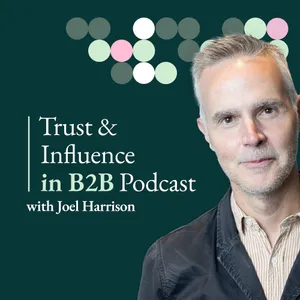
I’m Joel Harrison, founder of B2B Marketing.net (formerly B2B Marketing magazine) Propolis and the B2B Marketing Awards. It’s been my mission for the past 21 years to recognise, celebrate and evangelise for the amazing profession that is B2B marketing, which has evolved beyond that recognition in that time. In this podcast, I’ll be exploring what I believe is the biggest challenge facing B2B marketers today: Trust. Buyers have always been cynical, hard to reach and even harder to convince, and increasingly expect to be self-directed in their research. In other words, they only want to engage with you on their terms. As if that wasn't bad enough, media and content channels are fragmented whilst AI is opening the floodgates to a tidalwave of content of questionable quality and veracity. It all adds up to a crisis of trust in B2B. In this podcast, I'll be interviewing innovative and inspirational marketers in the front line of addressing this challenge, providing deep insights into the context of this challenge, exploring new insights about its implications and looking at real world solutions and success stories. I’ll be exploring this topic from every relevant angle and perspective, but I’m going to focus particularly on thought leadership, influencer marketing and advocacy as they have particular relevance to this challenge.
Latest Episodes
The most recent episodes — sign up to get AI-powered summaries of each one.
- 1 weeks ago39 min
B2B nostalgia: how and when to go retro in your campaigns | Five creative approaches from the B2B Marketing Awards entries, with Guy O'Brien of Custom Influence
Nostalgia sells everything from trainers to TV reboots, yet it barely registers in B2B marketing. To find out why, Joel Harrison went through three years of B2B Marketing Awards entries in search of the exceptions, and invited Guy O'Brien, co-founder of B2B influencer marketing agency Custom Influence, into the studio to make sense of what he found.➡️ Together they unpack five ways B2B brands are going retro, from Exel Composites retelling the Three Little Pigs to Allica Bank's bowler hat, and ask why so few try it. Guy's verdict is that nostalgia isn't wrong for B2B, it's just hard: target the wrong generation and you alienate the buyers coming through; lean too far into the joke and people remember the ad but not the brand. Joel adds a warning of his own about nostalgia that stirs the wrong memories. If you're weighing a bolder creative idea, this conversation will help you judge when going retro will pay off.What You'll LearnWhy nostalgia is everywhere in consumer marketing but rare in B2B, and why that comes down to difficulty rather than suitability.The five creative approaches B2B brands are using to go retro, with campaign examples from the B2B Marketing Awards.How to avoid alienating buyers from other generations as B2B buying groups get younger.Why the brand, not the nostalgic idea, has to be what people remember.How a nostalgic idea can build a community rather than a one-off moment.Chapters00:00 - Introduction: where this conversation came from01:52 - Guy O'Brien and Custom Influence03:44 - Nostalgia and the humanisation of B2B04:27 - Trend 1: Generational era cues (Just Group)09:45 - Why nostalgia is so rare in B2B11:25 - Trend 2: Childhood storytelling (Exel Composites)17:16 - Trend 3: Retro media formats (Infoblox and 6sense)22:45 - Trend 4: Period-specific aesthetics (Ecolab)27:14 - Trend 5: Iconography of tradition (Allica Bank)34:29 - The verdict: is nostalgia viable in B2B?36:14 - When nostalgia backfires40:47 - Where to find the campaignsFollow Guy O'BrienLinkedIn: [link]Custom Influence: https://custominfluence.com/Closing boilerplateIf you care about making B2B marketing more meaningful, useful, and memorable, this conversation is for you. It's honest, reflective, and packed with takeaways that can help elevate your approach to creative and thought leadership, whether you're a content creator, strategist, or brand leader.🌐 Visit Joel Harrison's website to explore exclusive reports, upcoming events, and join the B2B marketing community ➡️ https://www.joelharrisonb2b.com/💬 Would you take your B2B brand retro, or is nostalgia best left to consumer marketers? Let us know in the comments below.🔔 Subscribe to the channel for weekly insights, interviews, and on-the-ground perspectives from the world of B2B marketing. https://youtube.com/@JoelHarrison-B2B?sub_confirmation=1📲 Follow Joel Harrison and Trust & Influence in B2B across the web: LinkedIn ▶ https://linkedin.com/in/joelharrison/ Podcast ▶ https://trust-influence-in-b2b.captivate.fm/ Instagram ▶ https://instagram.com/joelharrisonb2b/#JoelHarrisonB2B, #B2BMarketing, #ThoughtLeadership, #ContentStrategy, #MarketingTrends, #B2BContent, #Storytelling, #MarketingPodcast, #B2BInsights, #JoelHarrison, #B2BVideos, #B2BStrategy, #NostalgiaMarketing, #B2BCreative, #CreativeEffectiveness, #BrandBuilding, #InfluencerMarketing, #B2BMarketingAwards
- 2 weeks ago38 min
Think you control the buyer journey? Think again... | Why LLMs and influencers are in the driving seat, with John Rockhold of Spotlight
The winning vendor is usually already on the buyer's shortlist before a single sales conversation happens, and increasingly, it isn't a salesperson or a website that put them there. It's a large language model, quietly checking what real people are already saying about you.John Rockhold, VP of Market Engagement at Spotlight, joins Joel Harrison to unpack Influence Orchestration, Spotlight's new research into how buying preference now forms in AI answer engines, peer communities and analyst conversations, long before a deal ever reaches a pipeline. John's team interviewed 23 leaders who build and measure B2B influence, reviewed 27 published studies of buyer behaviour, and analysed millions of AI engine answers and citations across B2B technology categories. The conversation also draws on Spotlight Summit, the event John's team ran in Kansas City the week this episode was recorded, where Joel spoke alongside Bijou Barry, Megan Burns and other voices shaping this shift.What you'll learnWhy buyer preference now largely forms out of sight, in AI prompt windows, peer conversations and communities, before a vendor even knows a deal existsWhat separates the vendors AI answer engines actually recommend from the ones they ignoreWhy earned trust compounds over time, while paid attention resets the moment you stop paying for itWho should really own influence inside a B2B company, and why almost nobody does todayWhat to check in your own AI visibility on Monday morning, and what to do if you don't like what you findIf you find this conversation valuable, please take a moment to subscribe to the podcast and leave a rating or review. It really helps other B2B marketers discover the show.Chapters00:00 Introduction: the shortlist is already written01:47 Welcome, John Rockhold02:08 Inside Spotlight Summit04:22 What Spotlight does, and where the report began08:25 Why “Influence Orchestration”11:22 The day one shortlist: 95% and what it means for the buyer journey15:05 Robots, humans, and the return of intermediaries16:55 The verification loop: how buyers check what the machine tells them19:20 Earned versus owned: the quote, the sidebar, and the flip22:13 Megan Burns and the internal trust problem25:28 Why nobody owns influence, and why that has to change26:42 The 50% ceiling: when owned content collapses your visibility28:20 Three predictions for 2027 and 202833:48 What to check on Monday morning35:15 Does compounding influence favour challengers or incumbents?38:33 What John learned at Spotlight SummitChapter times are taken from the pre-edit transcript. Re-time against the published cut once the final edit is locked.Follow John RockholdLinkedIn: https://www.linkedin.com/in/johnrockhold/Spotlight: https://spotlight-io.com/More from Trust & Influence in B2B🌐 Visit Joel Harrison's website to explore exclusive reports, upcoming events, and join the B2B marketing community: https://www.joelharrisonb2b.com/💬 What's the one place your buyers are checking that you haven't thought about yet? Let us know in the comments.🔔 Subscribe to the channel for weekly insights, interviews, and on-the-ground perspectives from the world of B2B marketing: https://youtube.com/@JoelHarrison-B2B?sub_confirmation=1📲 Follow Joel Harrison and Trust & Influence in B2B across the web:LinkedIn: https://linkedin.com/in/joelharrison/Podcast: https://trust-influence-in-b2b.captivate.fm/Instagram: https://instagram.com/joelharrisonb2b/#B2BMarketing #TrustAndInfluence #InfluenceOrchestration #AIinMarketing #GEO #AEO #BuyerJourney #AnalystRelations #B2BPodcast #MarketingPodcast #JoelHarrison #Spotlight #JohnRockhold
- 3 weeks ago34 min
Automating judgment, not just tasks | Michelle Huff on building AI trust the way you'd onboard a new hire
Every B2B vendor now has an AI story. Michelle Huff, Chief Marketing Officer at Alteryx, argues that's exactly the problem: when everyone makes the same promise, positioning around AI stops being a differentiator and becomes table stakes. Michelle brings more than 25 years leading marketing and go-to-market strategy at Oracle, Salesforce and UserTesting to the question of how a 25-year-old analytics brand earns its place in the AI era without sliding into hype.Joel and Michelle talk through how Alteryx replaces claims with proof – a 760,000-member user community, customer stories, and a framework (Visible, Understandable, Repeatable, Auditable) for what makes an automated decision trustworthy. Michelle also unpacks a strikingly simple way to think about handing judgment to AI: treat it like onboarding a new hire, earning autonomy step by step rather than switching it on and walking away.What you'll learnWhy positioning around AI is now table stakes rather than a differentiator – and what to do about itHow to move a brand beyond me-too claims to demonstrable, genuine valueWhat proof of substance actually looks like to a buyer who's heard every AI promise beforeWhy the real AI story is about automating judgment, not just tasksA practical framework for deciding what's ready to automate and what still needs a human in the loopChapters00:00 Introduction: why AI positioning is now table stakes02:02 Meet Michelle Huff and Alteryx's 25-year evolution04:54 25 years across tech shifts: the instinct that carries through08:49 Beyond the AI me-too: proving value, not just claiming it10:36 Community and advocacy at scale12:21 Building movements, not monuments: the Salesforce influence14:00 Where AI genuinely changes the product vs. just the language15:50 Vision vs. reality: staying grounded while pointing ahead16:19 Repositioning a legacy brand without over-claiming20:15 The BIRA framework: visible, understandable, repeatable, auditable23:50 Data vs. story: which one wins when they pull apart26:45 Automating judgment: the new-hire analogy and the trust score31:02 Task-owners vs. problem-owners: staying valuable as AI reshapes marketing32:58 Advice for teams that don't trust their AI output yet34:29 Closing thoughtsFollow Michelle HuffLinkedIn: https://www.linkedin.com/in/michellehuff/Alteryx: https://www.alteryx.com/Closing boilerplateIf you care about making B2B marketing more meaningful, useful, and memorable, this conversation is for you. It's honest, reflective, and packed with takeaways that can help elevate your approach to thought leadership – whether you're a content creator, strategist, or brand leader.🌐 Visit Joel Harrison's website to explore exclusive reports, upcoming events, and join the B2B marketing community ➡ https://www.joelharrisonb2b.com/💬 Where's the line for you between AI that's a genuine step change and AI that's just new language on old capability? Let us know in the comments below.🔔 Subscribe to the channel for weekly insights, interviews, and on-the-ground perspectives from the world of B2B marketing. https://youtube.com/@JoelHarrison-B2B?sub_confirmation=1📲 Follow Joel Harrison and Trust & Influence in B2B across the web: LinkedIn ▶ https://linkedin.com/in/joelharrison/Podcast ▶ https://trust-influence-in-b2b.captivate.fm/Instagram ▶ https://instagram.com/joelharrisonb2b/
- 4 weeks ago39 min
Before 'sleeping giant' Iron Mountain got loud, it had to be believed | CMO Karen Feldman on earning that trust
Iron Mountain is nearly 75 years old, built on physical records storage, and structured as a real estate investment trust — known for most of its history for warehouses and shredding trucks, not brand campaigns. Then Karen Feldman arrived as the company's first-ever Chief Marketing Officer.Karen joins Joel Harrison to explain what it actually means to become a legacy business's first CMO when marketing already exists, just without a seat at the top table — and the trust-building playbook that got her there. We cover the brand health study that reshaped her budget priorities, the McLaren Racing partnership that mirrors Iron Mountain's own value proposition, how AI is reshaping B2B search behaviour, and her advice for any marketing leader walking into a legacy business.If you find this valuable, please subscribe and leave a rating or review — it really helps other B2B marketers find the show.GuestKaren Feldman, SVP & Chief Marketing Officer, Iron MountainKaren Feldman is SVP and Chief Marketing Officer at Iron Mountain, a role she took on in November 2024 as the company's first-ever CMO. She joined from IBM Consulting, where she spent over 25 years at IBM, including as CMO leading the business's repositioning following the Kyndryl spin-off.Karen on LinkedIn: https://www.linkedin.com/in/karen-feldman-217440/HostJoel Harrison, founder of Joel Harrison B2B and host of Trust & Influence in B2B.Joel on LinkedIn: https://www.linkedin.com/in/joelharrison/In this episode00:00 Welcome, and introducing Karen Feldman02:27 What Iron Mountain actually does today04:48 Karen's path from IBM Consulting to Iron Mountain11:06 The brand platform: protect what matters, unlock what's possible14:43 Earning the leadership trust to build a real CMO mandate19:09 The McLaren Racing partnership21:59 Brand, demand, and speaking the business's language28:28 AI and trust in the B2B mid-funnel32:25 Advice for marketers walking into a legacy business35:11 Two years in: what's been unlocked so farFollow Karen Feldman LinkedIn: https://www.linkedin.com/in/karen-feldman-217440/Iron Mountain: https://www.ironmountain.com/Closing & Calls to Action 🌐 Visit Joel Harrison's website to explore exclusive reports, upcoming events, and join the B2B marketing community: https://www.joelharrisonb2b.com/ What would you tell a marketing leader walking into a legacy B2B business for the first time?Let us know in the comments below.Subscribe to the channel for weekly insights, interviews, and on-the-ground perspectives from the world of B2B marketing: https://youtube.com/@JoelHarrison-B2B?sub_confirmation=1Follow Joel Harrison and Trust & Influence in B2B across the web: LinkedIn:https://linkedin.com/in/joelharrison/Podcast: https://trust-influence-in-b2b.captivate.fm/Instagram: https://instagram.com/joelharrisonb2b/#JoelHarrisonB2B, #B2BMarketing, #ThoughtLeadership, #ContentStrategy, #MarketingTrends, #B2BContent, #BrandStrategy, #Storytelling, #MarketingPodcast, #B2BInsights, #JoelHarrison, #B2BVideos, #B2BStrategy, #CMO, #MarketingLeadership, #BrandTrust, #LegacyBrands, #B2BGrowth, #TrustAndInfluenceInB2B, #IronMountain
- Sep 1, 202638 min
Finally! A replacement for NPS... or is it? | How Tony Larks hacked Bain & Co's groundbreaking 'shortlist score'
NPS has survived more obituaries than almost any other metric in B2B marketing — and it's still standing. Bain & Co.'s newest research doesn't try to kill it off again; it argues the real predictor of B2B growth is something else entirely: whether a vendor makes a buyer's 'day one' shortlist, the mental list formed before anyone picks up the phone. Tony Larks, a B2B marketing leader with over 20 years of experience spanning sales, enterprise technology and zero-to-one startup builds, read that research and asked the obvious next question — could you estimate your shortlist position without ever surveying a buyer?➡️ Tony walks Joel through the AI prompt he built to do exactly that — scoring companies against Bain’s five-part framework using nothing but public signals: analyst coverage from the likes of Gartner and Forrester, peer review sites such as G2, forums including Reddit, and even employee sentiment on Glassdoor. He shares the story of an NPS score skewed by SMB customers who’d rather pay a compliance fine than do the hard work of getting compliant, unpacks why ‘shortlist share’ risks becoming exactly the kind of vanity metric NPS became if marketers try to game it with PR spend, and explains why fixing the fundamentals — service, roadmap transparency, honest pricing — beats gaming any signal. He’s open-sourced the tool and is giving the prompt away free to anyone who wants it. If you’ve ever wondered whether your brand is even in the room before the RFP lands, this conversation will change how you think about being ‘in the market’ versus being in contention.What You'll Learn• What's actually wrong with NPS, the B2B trust metric — and why nobody's replaced it, until now• What the ‘day one list’ is, and why Bain says most lost deals were never winnable to begin with• How Tony built an AI model that estimates buyer confidence from public signals alone, and where the approach is strongest and weakest• What brands should actually do once they know where they sit on the shortlistChapters00:00 - Introduction: Why We're Finally Talking About NPS01:35 - Meet Tony Larks: From Sales Floor to Startup Marketing Leadership04:45 - From Sentiment Tracking to Bain's ‘Day One List’09:28 - What's Actually Wrong With NPS (And What Isn't)12:14 - NPS's Cultural Blind Spot: Sevens, Nines and Detractors15:07 - Inside Bain's Day One List: Why ‘Lost’ Deals Were Never Winnable17:56 - Do You Need Bain's Budget? Mining Your Own CRM Data21:02 - The Hidden Buyers Bain's Framework Surfaces23:55 - Building an AI Proxy for Buyer Trust: How the Shortlist Matrix Works26:26 - Estimation vs. Measurement: How Rigorous Is Good Enough?28:07 - The Gaming Risk: Can Shortlist Share Be Bought?31:26 - Could ‘Shortlist Share’ Become the Next Vanity Metric?33:27 - What Marketers Should Actually Do With Their Score35:02 - Explaining the Two-by-Two Grid36:13 - NPS Isn't Dead, It's Just Incomplete37:42 - Wrap-Up and How to Get the ToolAbout the guestTony Larks is a B2B marketing leader with over 20 years of experience, starting his career in sales before moving into marketing roles spanning distribution, systems integrators and enterprise technology businesses. He has spent his most recent years leading zero-to-one marketing builds inside startups, and over the past year has been building a suite of AI agents to track brand and market sentiment — work that led him to develop the open-source ‘shortlist matrix’ featured in this episode.Tony on LinkedIn: https://www.linkedin.com/in/tonylarks/Blog featuring shortlist matrix prompt: https://www.linkedin.com/pulse/stop-measuring-market-share-start-shortlist-tony-larks-hazje/?trackingId=BHbT3G1Q76e9aaY0PZoOcg%3D%3DAbout the podcastThis is a full episode of Trust & Influence in B2B, hosted by Joel Harrison, founder of Joel Harrison B2B.Joel on LinkedIn: https://linkedin.com/in/joelharrison/If this was useful, subscribe for more on trust, influence and the metrics that actually predict B2B growth — and tell me in the comments where you think you’d land on the day one shortlist.
- Aug 11, 202632 min
Why influencer skills are becoming essential for B2B CMOs | With Archana Dhankar of Proofpoint
Most B2B marketing leaders aren't short on expertise — they're short on the confidence and the practised skill to be visible with it, whether that's in the room with their own board or out in public. Archana Dhankar, VP Marketing EMEA at Proofpoint, TEDx speaker and LinkedIn Top Voice, joins Joel Harrison to unpack what it actually takes to build that visibility, internally and externally, and turn it into real influence.➡️ She breaks down the practical mechanics of building influence: a 2:1 ratio for balancing self-promotion against value-added content, a three-stage framework for knowing when visibility has become influence (likes, saves, and inbound interest), and why trust compounds differently on a public platform than it does inside your own organisation. She's also candid about the cost — the professional accountability, the late nights, the posts that flop despite your best instincts — and closes with practical advice for reluctant leaders and junior marketers on where to start.What you'll learnWhy visibility and influence are not the same thing, and how to tell them apartThe 2:1 ratio Archana uses to keep self-promotion from tipping into egoA three-stage framework for measuring whether your content is building real influenceWhy trust compounds differently on social platforms than it does in daily workThe personal cost of building a public profile – and why consistency, not confidence, is the hard partHow to start building influence if you're a reluctant leader, or a junior marketer just starting outChapters00:01 – Introduction and episode setup02:08 – Archana's journey: two decades in B2B marketing, content roots back to 200804:20 – Visibility vs. influence: the core distinction06:17 – What prompted Archana to go public, and the “side hustle” advantage09:33 – Three phases of measuring when visibility becomes influence12:51 – Self-promotion vs. ego, and the 2:1 content ratio14:18 – Balancing personal brand with company brand16:47 – Why trust is the foundation of influence18:41 – Winning over skeptical stakeholders: SEMrush and Adobe as B2B influencer examples20:28 – How being an influential leader has shaped Archana's career23:29 – The personal cost: accountability and consistency26:08 – Where to start if you want influence, not just visibility30:19 – Advice for junior marketers31:14 – The one mindset shift that matters mostLinkedIn: https://www.linkedin.com/in/archanadhankar/🌐 Visit Joel Harrison's website to explore exclusive reports, upcoming events, and join the B2B marketing community: https://www.joelharrisonb2b.com/📲 Follow Joel Harrison and Trust & Influence in B2B across the web:LinkedIn: https://linkedin.com/in/joelharrison/
- Aug 5, 202637 min
From the moshpit to the marketing plan | What a decade in the music business taught Jason Miller about attention in B2B
In this episode of Trust and Influence in B2B Marketing, Joel Harrison sits down with Jason Miller, who leads content and marketing at V7 Labs and previously held senior content marketing roles at LinkedIn, Marketo and ActiveCampaign. Before B2B, Jason spent a decade in the music industry — touring with bands, working artist development, and photographing rock's biggest names — and he's never really left it behind. Together, they explore why the safe, by-the-numbers approach so many B2B marketers default to is quietly the riskiest choice of all, and what a career spent between the tour bus and the marketing plan has taught him about actually earning an audience's attention.➡️ Jason holds nothing back. He explains why the music industry never called its fans “leads,” and how that community mindset shaped his approach at Marketo, where the entire strategy handed down from Marketo co-founder and CMO Jon Miller was simply “get people to like us.” He unpacks why viral, one-hit-wonder campaigns — from Old Spice to the Volvo truck ad — aren't repeatable playbooks for most brands, and why chasing them is a trap. He's candid about the tension between personality and brand safety inside a large corporate marketing team, drawing on his time working on Bing at Microsoft, and makes the case for consistency over virality — including a great story about Rick Rubin, the Red Hot Chili Peppers, and creating for yourself rather than for an audience. He closes with a warning about AI and taste: why outsourcing judgment to an algorithm is the worst thing a marketer can do right now, and what will actually matter in B2B marketing going forward.What You'll LearnWhat the music industry got right: why bands never called their fans “leads,” and what that means for B2B community-building.The Marketo playbook: how “get people to like us” became a strategy, not just a slogan.The one-hit-wonder trap: why viral campaigns like Old Spice and the Volvo truck ad aren't repeatable playbooks for most brands.Personality vs. brand safety: what happens to a big idea inside a large corporate marketing team, and why smaller, faster teams can take more risks.Consistency beats virality: “posting the draft,” building in public, and what Rick Rubin's work with Red Hot Chili Peppers can teach content marketers.AI and the death of taste: why outsourcing taste to an AI agent is a mistake, and the skills marketers now need to stay relevant.Chapters00:00 - Introduction: From the Mosh Pit to the Marketing Plan02:21 - Jason Miller: From Music Industry to B2B, and Life at V7 Labs05:13 - Startup Speed vs. Corporate Red Tape07:07 - Life on the Road: Artist Development Lessons09:33 - B2C Personality Meets B2B: The Marketo Playbook12:58 - The One-Hit-Wonder Trap: Old Spice, Volvo and Repeatable Playbooks15:13 - HubSpot, “It Slaps,” and the Line Between Cool and Try-Hard17:55 - Second Skin: Music as a Sense of Purpose20:55 - Personality Inside a Corporate Machine: The Microsoft/Bing Story24:49 - Consistency Over Virality: Posting the Draft and Rick Rubin's “Create for Yourself”29:18 - Likable, Relevant, Consistent: What Actually Works on LinkedIn31:43 - Why the Clay and Eleven Labs Playbooks Aren't Repeatable34:14 - AI, Taste and the Last Human Trait38:37 - Closing ThoughtsNote: chapter times are taken from the unedited transcript and are approximate — confirm against the final published cut before adding to the platform.Follow the GuestFollow Jason Millerhttps://www.linkedin.com/in/jsnmiller/https://www.v7labs.com/Closing & Calls to ActionIf you care about making B2B marketing more meaningful, useful, and memorable, this conversation is for you. It's honest, funny in places, and packed with takeaways on how to build genuine personality into your content — whether you're a content creator, strategist, or brand leader.🌐Visit Joel Harrison's website to explore exclusive reports, upcoming events, and join the B2B marketing community ➡ https://www.joelharrisonb2b.com/💬What do you think comes first—having something to say, or having the confidence to say it? Let us know in the comments below.🔔Subscribe to the channel for weekly insights, interviews, and on-the-ground perspectives from the world of B2B marke
- Jul 25, 202630 min
Stop trying to please everyone! | Karl Van den Bergh of Illumio on why consistency, not consensus, is what earns trust in B2B
Most leadership advice pushes you toward a familiar template: decisive, diplomatic, endlessly composed. It's meant to build trust. Often it does the opposite – because trust depends on people actually knowing who you are, not the version of you assembled to fit expectations.In this episode of Trust & Influence in B2B, Joel Harrison is joined by Karl Van den Bergh, Chief Marketing and Strategy Officer at Illumio, the breach containment company. Karl has spent more than 25 years leading go-to-market teams at global technology companies, including CMO roles at Gigamon and DataStax, and now writes regularly on authenticity and what it means to be human at work.Together they unpack why being yourself is a trust strategy rather than a soft skill, how to tell real authenticity apart from the performative kind, and why Karl believes AI raises the value of human, relational marketing rather than eroding it.In this episode:Why most leadership advice pushes conformity rather than authenticity, and what gets lost in the processThe test that actually separates real authenticity from the performative kindWhy brands that try to please everyone end up forgettable – and the campaign that proves the oppositeHow fear of conflict quietly kills team performance, and what fixed it on Karl's own teamWhy Karl believes AI raises the value of human, relational marketing rather than replacing itChapters00:00 Cold open01:26 Karl's background – from physics to CMO03:13 Why he started writing about being yourself at work06:10 Why a distinctive point of view is a differentiator08:37 Personal brand vs. company brand10:55 What authenticity actually means11:50 Spotting performative authenticity13:47 How authenticity cascades through a team17:27 Where leaders fall short on consistency19:46 Does this get harder as the stakes rise?21:56 The counterargument: "Don't Be Yourself"24:30 AI and the flattening of content27:52 One thing to start doing differently next weekKarl on LinkedIn: https://www.linkedin.com/in/karlvandenbergh/Joel on LinkedIn: https://www.linkedin.com/in/joelharrison/
Get Trust & Influence in B2B summaries in your inbox
Free AI-powered daily recaps. Key takeaways, quotes, and mentions — in a 5-minute read.
Get Free Summaries →Free forever for up to 3 podcasts. No credit card required.
You Might Also Like
Listeners also like.

Everyone Hates Marketers | No-BS Marketing & Brand Strategy Podcast
A marketing podcast offering practical insights on branding, strategy, and customer research from industry professionals.

B2B Vault: The Biz To Biz Podcast
A veteran entrepreneur explores business technology, fintech, and regulatory trends shaping how companies operate and scale.

MarTech Podcast // Marketing + Technology = Business Growth
Marketers share how they use technology to solve challenges and drive business growth in real-world roles.

Influence Anyone
Explores the psychology of influence through expert interviews on mindset, persuasion, branding, and leadership.

Creative Entrepreneur: A Podcast For Business Growth and Trending News
Examines how entrepreneurship, creativity, and media trends shape modern business and personal branding.
A Podcast About Leadership
Examines modern leadership through interviews with experts in business, psychology, and human performance.

Total Disruption Podcast
Entrepreneurs discuss mindset, business growth, and operational frameworks to move beyond hustle culture and build scalable companies.

The In-Between Tech and Trust Podcast
Explores how technology impacts trust through conversations with experts in business, politics, neuroscience, and tech.

Right About Now - Legendary Business Advice
Raw business insights from founders and industry leaders, revealing real wins, failures, and actionable strategies without the fluff.

Growth Triggers: Content Marketing & AI
A marketing podcast teaching business owners how to use podcasting to generate leads, sales, and authority across competitive niches.

The Best SEO Podcast
A practical guide to SEO in the age of AI, focusing on real-world strategies that work and insights from experienced marketers.
Marketing Made Simple
Strategies for crafting clear marketing messages that connect with customers and grow businesses.
About Trust & Influence in B2B
I’m Joel Harrison, founder of B2B Marketing.net (formerly B2B Marketing magazine) Propolis and the B2B Marketing Awards. It’s been my mission for the past 21 years to recognise, celebrate and evangelise for the amazing profession that is B2B marketing, which has evolved beyond that recognition in that time. In this podcast, I’ll be exploring what I believe is the biggest challenge facing B2B marketers today: Trust. Buyers have always been cynical, hard to reach and even harder to convince, and increasingly expect to be self-directed in their research. In other words, they only want to engage with you on their terms. As if that wasn't bad enough, media and content channels are fragmented whilst AI is opening the floodgates to a tidalwave of content of questionable quality and veracity. It all adds up to a crisis of trust in B2B. In this podcast, I'll be interviewing innovative and inspirational marketers in the front line of addressing this challenge, providing deep insights into the context of this challenge, exploring new insights about its implications and looking at real world solutions and success stories. I’ll be exploring this topic from every relevant angle and perspective, but I’m going to focus particularly on thought leadership, influencer marketing and advocacy as they have particular relevance to this challenge.
Customized Recaps
AI-powered recaps with compact key takeaways, quotes, and insights.
Straight to Your Inbox
Get key takeaways from Trust & Influence in B2B in a 5-minute read.
Save Hours Every Week
Stay current on your favorite podcasts without falling behind.
Frequently Asked Questions
What is Podzilla's Trust & Influence in B2B daily summary?
It's a free AI-powered email that summarizes new episodes of Trust & Influence in B2B as soon as they're published. You get the key takeaways, notable quotes, and links & mentions — all in a quick read.
How does the Trust & Influence in B2B podcast summary work?
When a new episode drops, our AI transcribes and analyzes it, then generates a personalized summary tailored to your interests and profession. It's delivered to your inbox every morning.
Is this an official Trust & Influence in B2B product?
No. Podzilla is an independent service that summarizes publicly available podcast content. We're not affiliated with or endorsed by Joel Harrison.
Can I get summaries of other podcasts too?
Absolutely! The free plan covers up to 3 podcasts. Upgrade to Pro for 15, or Premium for 50. Browse our full catalog at /podcasts.
How often does Trust & Influence in B2B release new episodes?
Trust & Influence in B2B publishes weekly. Our AI generates a summary within hours of each new episode.
What topics does Trust & Influence in B2B cover?
Trust & Influence in B2B covers topics including Technology, Business, Arts, Design, Marketing. Our AI identifies the specific themes in each episode and highlights what matters most to you.
Start getting Trust & Influence in B2B summaries tomorrow morning.
Free forever for up to 3 podcasts. No credit card required.
Free forever for up to 3 podcasts. No credit card required.