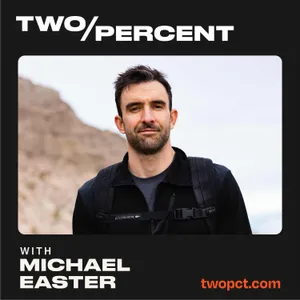
Free Daily Podcast Summary
Two Percent with Michael Easter: Daily Summaries Delivered
by Michael Easter
Lessons from the frontiers of health, psychology, thought, and human experience. Hosted by Michael Easter—New York Times bestselling author of The Comfort Crisis and Scarcity Brain.
Latest Episodes
The most recent episodes — sign up to get AI-powered summaries of each one.
- 2 days ago1h 1m
#64: Life Got Easier. Why Aren’t We Happier? | Dr. Kelly Lambert
Over the last 100 years, the world has gotten safer and better in almost every single way, yet depression and mental health issues are higher than they've ever been. Dr. Kelly Lambert, a neuroscientist at the University of Richmond and author of Lifting Depression and Wild Brains, argues that one reason for this is that our brain is built to work for its rewards and to look forward to good things.The problem: Modern life is built to bypass all effort and give instant gratification. Michael speaks with Kelly about worker rats and trust fund rats, why crafts and hobbies may work like medicine, what wild animals reveal about modern stress, problems with how pharmaceutical studies are constructed, and why looking forward to something good may matter as much as getting it. They discuss: Intro Why mental health hasn't improved Exercise and working for rewards Why hard-won rewards feel better Wild rats vs. lab rats Why behavior often beat pills The power of working with your hands Depression rates before modern life What the Amish get right Teaching rats to drive What rats teach us about joy Why anticipation is the best part Hope and the swimming rats Did docile lab rats mislead the research? Pigeons that stop gambling How to teach anything What Kelly does for her own brain Get Kelly's book, Wild Brains: https://press.princeton.edu/books/hardcover/9780691246468/wild-brains Sponsors:Lagoon: Get $25 off any full-size pillow and $60 off gift sets in Lagoon's Black Friday sale at https://lagoonsleep.com/TWOPCT. No code needed.MacroFactor: Download the MacroFactor app and use it free for two weeks with code TWOPCT. Visit Two Percent, the #1 health and wellness Substack newsletter: https://www.twopct.com Follow Michael:https://twitter.com/Michael_Easterhttps://instagram.com/michael_easter/https://linkedin.com/in/michael-easter-b208848/https://www.facebook.com/twopcthttps://tiktok.com/@michael_easter6 Host: Michael EasterExecutive Producer: Robbie HiserMusic: The Heater ManagerGraphics: Jackie Philips Learn more about your ad choices. Visit megaphone.fm/adchoices
- 1 weeks ago1h 1m
#63: Why Today’s Kids Are So Anxious | Ginny Yurich
If you go on the internet, you'll find a lot of experts using the internet to tell us why the internet is destroying our kids' mental health. But Ginny Yurich, the founder of 1000 Hours Outside and author of Until the Streetlights Come On, says the decline in kid and teen mental health started in the sixties, and is more linked to kids having less autonomy and time outside, and too much structure with school and extracurriculars. Michael speaks with Ginny about where the 1,000-hour number comes from, how busy families fit it in, how to handle screens without banning them, why bad weather and a little discomfort are good for kids, and where any family, or any adult, can start. They discuss: Cold open Where 1,000 hours comes from Her first good day as a mom Minutes outside, hours on screens When both parents work It works for adults too Getting screen-loving kids outside Screen time without saying no Why play takes 45 minutes Going outside in any weather Waiting on phones and social media Overscheduled, anxious kids It started before the iPhone Starting sports at 13 Letting kids take risks Where to start What 1,000 episodes taught her Kids and AI Get Ginny's book, Until the Streetlights Come On: https://bakerpublishinggroup.com/products/9781540903402_until-the-streetlights-come-on Sponsors:Vuori: Get 20% off your first order at https://vuori.com/TWOPCT. Exclusions apply.MacroFactor: Download the MacroFactor app and use code TWOPCT for 14 days free. Visit Two Percent, the #1 health and wellness Substack newsletter: https://www.twopct.com Follow Michael:https://twitter.com/Michael_Easterhttps://instagram.com/michael_easter/https://linkedin.com/in/michael-easter-b208848/https://www.facebook.com/twopcthttps://tiktok.com/@michael_easter6 Host: Michael EasterExecutive Producer: Robbie HiserMusic: The Heater ManagerGraphics: Jackie Philips Learn more about your ad choices. Visit megaphone.fm/adchoices
- 1 weeks ago1h 11m
#62: Life Is Awesome. We Just Need to Realize It | Robert Greene
Robert Greene, author of The 48 Laws of Power, Mastery, and The Laws of Human Nature, nearly died of a stroke in 2018. It left him unable to type, so he spent the next seven years writing his new book, The Law of the Sublime, by hand. Michael speaks with Robert about what coming close to death did to his mind, why he believes humans need transcendent experiences as much as food and shelter, how comfort and old grudges keep our world small, and the everyday rituals he uses to wake back up to it. They discuss: Cold open The stroke What nearly dying does to you The book he waited 20 years to write What is the sublime? Finding amazement in his backyard A need as deep as food The lost rites of passage How to make your own rituals 40 minutes of meditation a day What boredom is good for How adults can slow down Why nature matters Choose discomfort Death and the afterlife Seven years writing by hand Get Robert's book, The Law of the Sublime: https://www.penguinrandomhouse.com/books/634294/the-law-of-the-sublime-by-robert-greene/ Sponsors:Base44: Get 30% off the Builder plan for your first year at https://base44.com/TWOPCT.MacroFactor: Download the MacroFactor app and use code TWOPCT for 14 days free. Visit Two Percent, the #1 health and wellness Substack newsletter: https://www.twopct.com Follow Michael:https://twitter.com/Michael_Easterhttps://instagram.com/michael_easter/https://linkedin.com/in/michael-easter-b208848/https://www.facebook.com/twopcthttps://tiktok.com/@michael_easter6 Host: Michael EasterExecutive Producer: Robbie HiserMusic: The Heater ManagerGraphics: Jackie Philips Learn more about your ad choices. Visit megaphone.fm/adchoices
- 2 weeks ago43 min
#61: Sixty Years of Strength Lessons | Dan John
Most of us were taught that getting in shape means more weight, more sweat, and more soreness. Strength coach Dan John has been lifting since 1965, and has coached everyone from first-time lifters to MVP professional athletes. He thinks most of us would do better with less. Michael speaks with Dan about being strong enough, simple tests he uses to check strength, why lifting three days a week is plenty for most people, what to buy for a home gym, and why every workout should end with a walk. They discuss: What he got wrong about fitness at 30 Little and often over the long haul How strong is strong enough? What the simple tests reveal Three numbers to check every day Think in movements, not muscles A workout anyone can start How to make exercise a habit Focus on simple health practices 15 minutes a day, state records Downsides of CrossFit and Orangetheory A walk after every workout What to buy for a home gym The highest-return exercises Where to start with his books Get Dan's books, including Easy Strength Omnibook: https://danjohnuniversity.com/bookstore Sponsors:Base44: Get 30% off the Builder plan for your first year at base44.com/TWOPCT.MacroFactor: Try MacroFactor free for 14 days in the Apple or Android app store with code TWOPCT.Vuori: Get 20% off your first purchase at vuori.com/TWOPCT. Exclusions apply. Visit Two Percent, the #1 health and wellness Substack newsletter: https://www.twopct.com Follow Michael:https://twitter.com/Michael_Easterhttps://instagram.com/michael_easter/https://linkedin.com/in/michael-easter-b208848/https://www.facebook.com/twopcthttps://tiktok.com/@michael_easter6 Host: Michael EasterExecutive Producer: Robbie HiserMusic: The Heater ManagerGraphics: Jackie Philips Learn more about your ad choices. Visit megaphone.fm/adchoices
- 2 weeks ago59 min
#60: The Case for Going All In | Ravi Gupta
Almost everyone carries a list of things they want to do in life, and almost nobody gets to it. Michael speaks with Ravi Gupta, author of The Invisible List, who went all in on one passion a year: powerlifting, screenwriting, surfing, tennis, the MCAT, and Italian cooking. He explains the four steps to develop your "invisible list," how to find the time to tackle it, why your passions make you a better human, why passions protect your health and brain, and why sucking at something has benefits. They cover: Cold open The wedding that started a quest What is the invisible list? Why we never tackle our life list Hobbies aren't selfish What he learned about learning Four steps of the invisible list Why he started with powerlifting All gear, no idea Tracking and sticking with it Staying focused as a beginner Why you have to suck at first The friends you make The MCAT as a brain marathon One passion a year, even with kids His numbers, and what's next Get Ravi's book, The Invisible List: https://www.penguinrandomhouse.com/books/800645/the-invisible-list-by-ravi-gupta/ Sponsors:Lagoon: Go to lagoonsleep.com/TWOPCT and take the 60-second sleep quiz to find your perfect pillow.Vuori: Get 20% off your first order at vuori.com/TWOPCT. Exclusions apply.MacroFactor: Download the MacroFactor app and use code TWOPCT for 14 days free. Visit Two Percent, the #1 health and wellness Substack newsletter: https://www.twopct.com Follow Michael:https://twitter.com/Michael_Easterhttps://instagram.com/michael_easter/https://linkedin.com/in/michael-easter-b208848/https://www.facebook.com/twopcthttps://tiktok.com/@michael_easter6 Host: Michael EasterExecutive Producer: Robbie HiserMusic: The Heater ManagerGraphics: Jackie Philips Learn more about your ad choices. Visit megaphone.fm/adchoices
- 3 weeks ago1h 10m
#59: Your Love of True Crime Is a Survival Instinct | Coltan Scrivner
If you love grisly true crime and horror shows, you might wonder if something is wrong with you. Michael speaks with Coltan Scrivner to answer that question. Scrivner, a psychologist at Arizona State University and author of Morbidly Curious, unpacks why humans are drawn to danger, the four kinds of morbid curiosity, why horror fans held up better in the pandemic, the sweet spot of fear, and when too much true crime starts to warp how dangerous the world feels. They discuss: Cold open Why we can't look away from crime and danger The four kinds of morbid curiosity Why everyone slows down for car wrecks When true crime warps your world Are horror fans less empathetic? Why people root for killers Why women love true crime Michael's morbid curiosity score The sweet spot of fear Kids and scary movies Is Dateline before bed bad? Why clowns and creepy old women get us Horror fans and the pandemic The woman who can't feel fear His scariest ghost hunt Rapid fire: Best horror movies and villains Get Coltan's book, Morbidly Curious: https://www.penguinrandomhouse.com/books/705578/morbidly-curious-by-coltan-scrivner-phd/Take Coltan's Morbid Curiosity Test: https://www.coltanscrivner.com/morbid-curiosity-test Sponsors:MacroFactor: Download the MacroFactor app and use code TWOPCT for 14 days free.Vuori: Get 20% off your first order at vuori.com/TWOPCT. Exclusions apply. Visit Two Percent, the #1 health and wellness Substack newsletter: https://www.twopct.com Follow Michael:https://twitter.com/Michael_Easterhttps://instagram.com/michael_easter/https://linkedin.com/in/michael-easter-b208848/https://www.facebook.com/twopcthttps://tiktok.com/@michael_easter6 Host: Michael EasterExecutive Producer: Robbie HiserMusic: The Heater ManagerGraphics: Jackie Philips Learn more about your ad choices. Visit megaphone.fm/adchoices
- 3 weeks ago1h 2m
#58: Why You Should Hike Right Now | Robert Moor
Michael speaks with Robert Moor, author of On Trails and the new book In Trees, about what five months on the Appalachian Trail taught him about quitting and comfort, why going off trail sharpens your mind, how to get off what his tree climbing instructor calls the neurotic merry-go-round, and what old, wounded trees know about aging well. They discuss: Cold open Why he walked from Georgia to Maine What a thru-hike does to your mind Why most thru-hikers quit Learning to love discomfort What every trail has in common Why go off trail Getting outdoors in a city His outdoor routine and thru-hike advice The power of trees A case for climbing trees David Attenborough, bonsai and growing around wounds What trees teach about aging Get Robert's book, In Trees: https://www.simonandschuster.com/books/In-Trees/Robert-Moor/9781476739250 Sponsors:Vuori: Get 20% off your first order at vuori.com/TWOPCT. Exclusions apply.MacroFactor: Download the MacroFactor app and use code TWOPCT for 14 days free. Visit Two Percent, the #1 health and wellness Substack newsletter: https://www.twopct.com Follow Michael:https://twitter.com/Michael_Easterhttps://instagram.com/michael_easter/https://linkedin.com/in/michael-easter-b208848/https://www.facebook.com/twopcthttps://tiktok.com/@michael_easter6 Host: Michael EasterExecutive Producer: Robbie HiserMusic: The Heater ManagerGraphics: Jackie Philips Learn more about your ad choices. Visit megaphone.fm/adchoices
- 4 weeks ago52 min
#57: Stop Trying to Sleep Perfectly | David Samson
Up to half of Americans say their sleep is bad, and the rules for fixing it keep piling up. Michael speaks with David Samson, an evolutionary anthropologist at the University of Toronto and author of The Sleepless Ape, about why modern people sleep longer and better than hunter-gatherers yet worry about it far more, why our body clocks are the real mismatch, top sleep myths, and which sleep advice is worth following. They discuss: Cold open What is sleep? Is there an epidemic of bad sleep? Why study hunter-gatherer sleep How the Hadza tribe sleeps Bad sleep, happy sleepers Evolutionary mismatch of sleep Sleep is fine, the clock isn't Does sleep anxiety matter? Rapid fire: melatonin to curtains What he does to sleep better Get David's book, The Sleepless Ape: https://press.princeton.edu/books/hardcover/9780691259734/the-sleepless-ape Sponsors:Vuori: Get 20% off your first order at vuori.com/TWOPCT. Exclusions apply.MacroFactor: Download the MacroFactor app and use code TWOPCT for 14 days free. Visit Two Percent, the #1 health and wellness Substack newsletter: https://www.twopct.com Follow Michael:https://twitter.com/Michael_Easterhttps://instagram.com/michael_easter/https://linkedin.com/in/michael-easter-b208848/https://www.facebook.com/twopcthttps://tiktok.com/@michael_easter6 Host: Michael EasterExecutive Producer: Robbie HiserMusic: The Heater ManagerGraphics: Jackie Philips Learn more about your ad choices. Visit megaphone.fm/adchoices
Get Two Percent with Michael Easter summaries in your inbox
Free AI-powered daily recaps. Key takeaways, quotes, and mentions — in a 5-minute read.
Get Free Summaries →Free forever for up to 3 podcasts. No credit card required.
You Might Also Like
Listeners also like.

10% Happier with Dan Harris
Practical mindfulness and meditation advice from experts, blending science and ancient wisdom for skeptics.
Modern Wisdom
Discussions with experts on psychology, philosophy, and self-improvement to help navigate life’s challenges.
The Happiness Formula
iHeartPodcasts

Passion Struck with John R. Miles
Explores human flourishing through science-based conversations on resilience, purpose, and intentional living.
A Bit of Optimism
Conversations with thinkers and doers exploring what drives purpose, growth, and meaning in life.

Good Life Project
Deep conversations about building a meaningful life through midlife reinventions, grounded in science and human experience.

Feel Better, Live More with Dr Rangan Chatterjee
A doctor-hosted podcast offering practical health advice on eating, sleeping, moving, and relaxing from medical experts and real-life stories.

Growth Mindset Psychology: The Science of Self-Improvement
Explores the science behind lasting self-improvement through psychology, neuroscience, and timeless wisdom traditions.
Being Well with Forrest Hanson and Dr. Rick Hanson
Explores the science of lasting well-being through psychology, neuroscience, and mindfulness with expert guests.
The Happiness Lab with Dr. Laurie Santos
A Yale psychologist examines misconceptions about happiness through science and expert insights.

Mind Love • Consciousness, Spirituality, and Science for Awakening
Melissa Monte | Conscious Coach

The Tim Ferriss Show
Deconstructs world-class performers across diverse fields to uncover practical tools and tactics for self-improvement.
About Two Percent with Michael Easter
Lessons from the frontiers of health, psychology, thought, and human experience. Hosted by Michael Easter—New York Times bestselling author of The Comfort Crisis and Scarcity Brain.
Customized Recaps
AI-powered recaps with compact key takeaways, quotes, and insights.
Straight to Your Inbox
Get key takeaways from Two Percent with Michael Easter in a 5-minute read.
Save Hours Every Week
Stay current on your favorite podcasts without falling behind.
Frequently Asked Questions
What is Podzilla's Two Percent with Michael Easter daily summary?
It's a free AI-powered email that summarizes new episodes of Two Percent with Michael Easter as soon as they're published. You get the key takeaways, notable quotes, and links & mentions — all in a quick read.
How does the Two Percent with Michael Easter podcast summary work?
When a new episode drops, our AI transcribes and analyzes it, then generates a personalized summary tailored to your interests and profession. It's delivered to your inbox every morning.
Is this an official Two Percent with Michael Easter product?
No. Podzilla is an independent service that summarizes publicly available podcast content. We're not affiliated with or endorsed by Michael Easter.
Can I get summaries of other podcasts too?
Absolutely! The free plan covers up to 3 podcasts, any in the catalog. Basic raises that to 15, Pro to 40 and Max to 100. Browse our full catalog at /podcasts.
How often does Two Percent with Michael Easter release new episodes?
Two Percent with Michael Easter publishes 2x weekly. Our AI generates a summary within hours of each new episode.
What topics does Two Percent with Michael Easter cover?
Two Percent with Michael Easter covers topics including Science, Fitness, Health & Fitness, Life Sciences. Our AI identifies the specific themes in each episode and highlights what matters most to you.
Start getting Two Percent with Michael Easter summaries tomorrow morning.
Free forever for up to 3 podcasts. No credit card required.
Free forever for up to 3 podcasts. No credit card required.